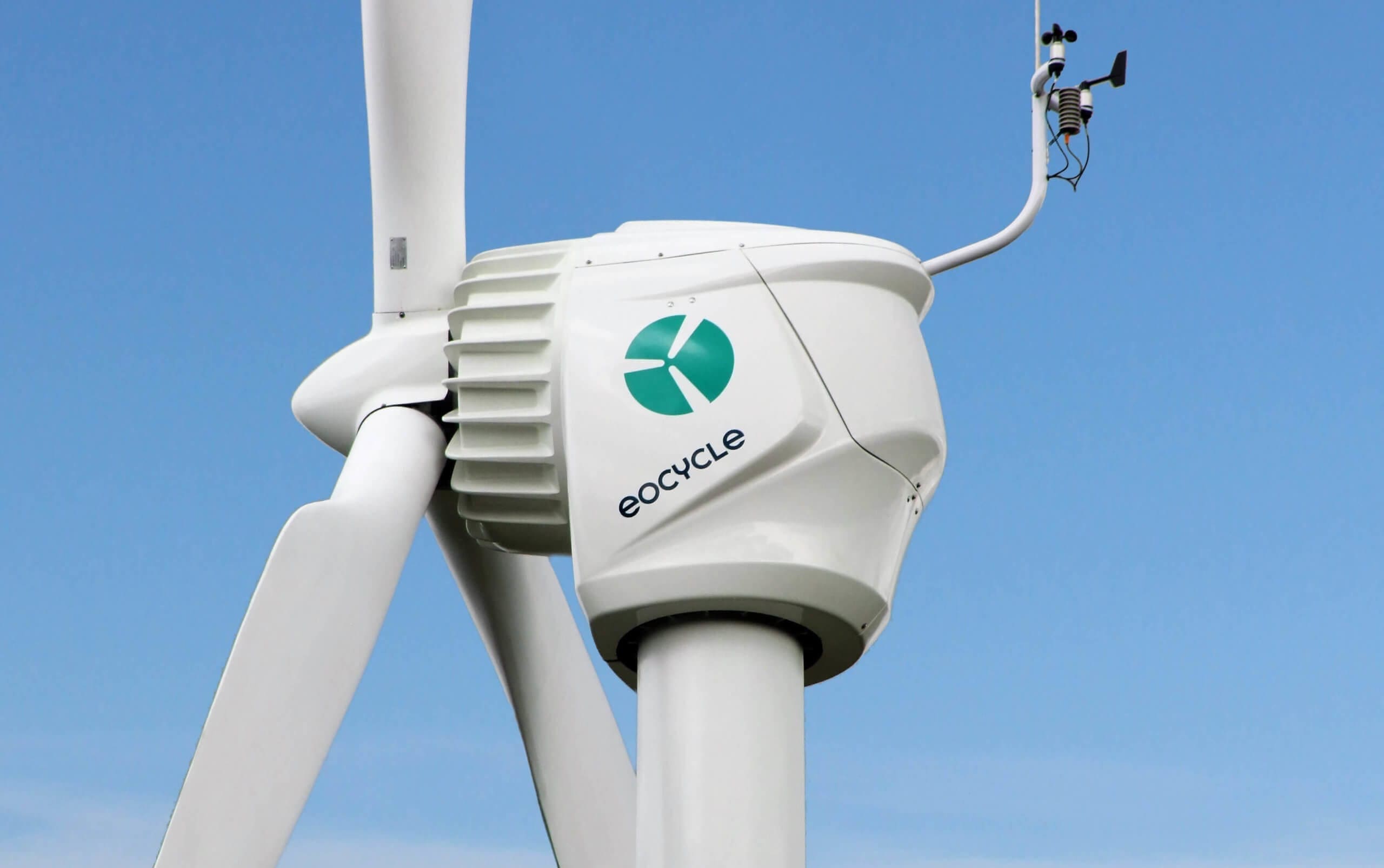
Commercial small wind turbine generating distributed power for farm operations
Direct drive small wind turbine powering industrial facility behind the meter
B2B Procurement & Technical Standard

Small Wind Turbines: The Global B2B Guide to Direct-Drive On-Site Power

How forward-thinking commercial enterprises, agricultural operations, and microgrid operators leverage 25 kW to 90 kW small wind turbines to achieve energy independence, eliminate demand charges, and lock in sub-$0.05/kWh LCOE for 30 years.

2001Canadian Engineering Pioneer
30 YearsEngineered Design Lifespan
98%+Verified Fleet Availability
25–90 kWGearbox-Free Direct Drive

Strategic Context & Market Intelligence

Rethinking Behind-the-Meter Energy: Why Global Buyers Choose Small Wind Turbines

In an era of volatile utility tariffs, grid congestion, and stringent Scope 2 carbon mandates, commercial and industrial enterprises can no longer rely solely on legacy power purchase agreements. While commercial solar PV has expanded rapidly, operational profile mismatches—such as night shifts, heavy winter loads, feedyard ventilation, grain drying, and cold storage refrigeration—expose facilities to exorbitant peak demand tariffs.

Small wind turbines (25 kW to 90 kW) serve as the ultimate physical energy hedge. Operating behind the meter, direct-drive distributed wind generators extract high-density kinetic energy from boundary-layer winds, delivering clean, grid-compliant electrical power directly to your main distribution panel 24 hours a day, 365 days a year.

Unlike rooftop solar installations, which produce power only during daylight hours and demand massive surface areas, a modern commercial small wind turbine requires a footprint of less than 50 square meters while producing up to 5 times more energy per square meter occupied. For commercial farms, industrial campuses, remote mines, and regional microgrids, distributed wind is the foundation of energy sovereignty.

Eocycle direct drive small wind turbine operating in extreme environment

Financial & Operational Fundamentals

Why Enterprise Procurement Managers Standardize on Eocycle Small Wind Turbines

Evaluating distributed energy assets requires looking beyond initial capital expenditure to lifetime Levelized Cost of Energy (LCOE), operational availability, and grid integration capability.

Financial ROI icon

Unbeatable Financial Return

Lock in a predictable baseline power cost of $0.04 to $0.07/kWh over a 30-year operational horizon. Typical capital payback is achieved within 4 to 7 years when leveraging net metering, tax incentives, and carbon offsets.
Business decarbonization icon

Supply Chain Decarbonization

Satisfy stringent Scope 2 emissions audits from enterprise buyers and global supply chain frameworks (CBAM, ISO 50001, SEC ESG mandates) with highly visible, auditable on-site zero-emission generation.

Clean grid-quality electricity icon

Grid-Quality Power Delivery

Integrated full-power electronic converters output pure sine-wave AC power with total harmonic distortion (THD) under 2.5%, ensuring complete protection for delicate industrial automation and variable frequency drives.

Land optimization icon

Maximum Land Efficiency

Occupy minimal ground space while generating vast annual megawatt-hours. Surrounding acreage remains 100% usable for row crops, cattle grazing, parking lots, or industrial storage facilities.

Product Selection Matrix

Engineering Recommended Small Wind Turbine Platforms

Selecting the right power rating, rotor diameter, and control topology is critical to maximizing annual energy production (AEP) across varying wind speed regimes.
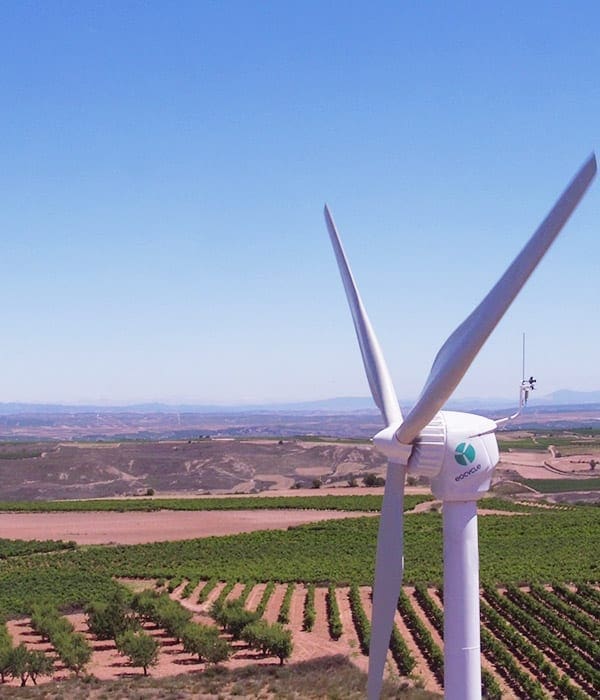
S-Series (25 kW) Eocycle S-Series direct drive small wind turbine for commercial farms

S-Series Distributed Turbine

Purpose-engineered for family agriculture, dairies, commercial greenhouses, and light industrial facilities consuming 80,000 to 250,000 kWh annually.
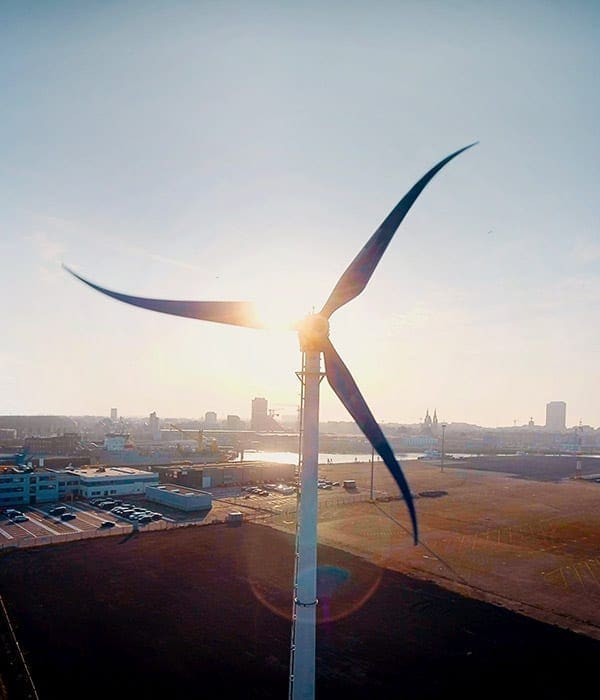
  • Rated Power25 kW
  • Generator TypeDirect-Drive PMG
  • Tower Heights24m / 30m / 36m Monopole
  • Availability> 98% Class-leading
Send an Inquiry
M-Series (90 kW) Eocycle M-Series EOX M-26 90 kW industrial small wind turbine

EOX M-26 Commercial Turbine

The global benchmark for heavy industrial facilities, commercial feedyards, municipal water treatment, and large agricultural processing plants requiring maximum MWh output.
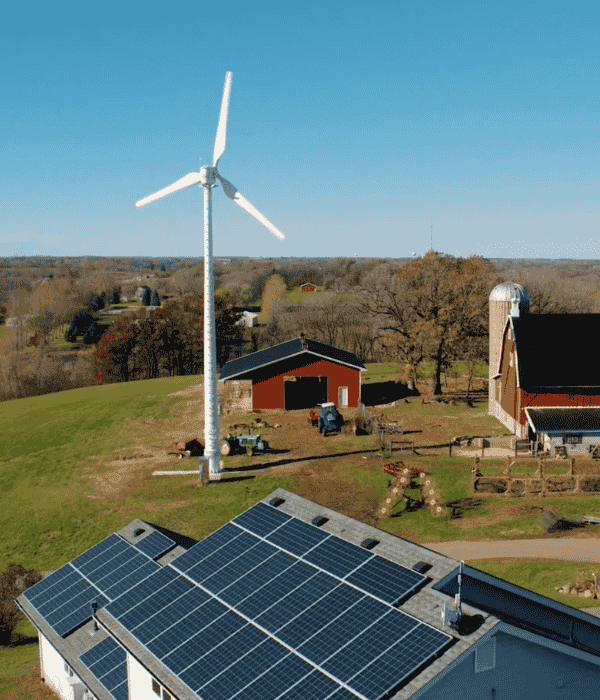
  • Rated Power90 kW
  • Rotor Diameter26 Meters
  • DrivetrainGearbox-Free Direct Drive
  • Design Lifespan30 Years
Send an Inquiry
Hybrid Microgrid EOX WS2+ integrated wind solar storage system

EOX WS²+ Hybrid Power Station

Seamlessly integrates direct-drive small wind turbines, high-efficiency solar arrays, and industrial BESS under a single AI-driven Energy Management System (EMS).

  • Energy VectorsWind + Solar + Battery
  • Control SystemEdge AI EMS Portal
  • ApplicationsMicrogrids, Mining, EV Charging
  • Diesel ReductionUp to 90% Savings
Send an Inquiry

Strategic Procurement Horizons (2026–2035)

Key Procurement & Technology Trends Shaping Small Wind Turbines

As global energy grids undergo rapid decentralization, B2B buyers must evaluate how emerging engineering standards, business models, and AI software will impact their investment decisions over the next decade.

1. Shift to Gearbox-Free Direct-Drive Architecture

Historical small wind turbine failure modes were overwhelmingly driven by high-speed mechanical gearboxes. In harsh agricultural or marine environments, dynamic gust torque stresses cause gear tooth micro-pitting, seal degradation, and catastrophic failure within 5 to 7 years.

Future-proof procurement explicitly mandates direct-drive permanent magnet generators (PMG). Direct-drive technology couples the blade hub directly to a high-pole-count permanent magnet rotor. Eliminating high-speed shafts, mechanical gearboxes, and circulating gear oil baths reduces mechanical moving parts by over 50%. This engineering paradigm shift is what enables true 30-year operational life cycles and brings turbine availability above 98%.
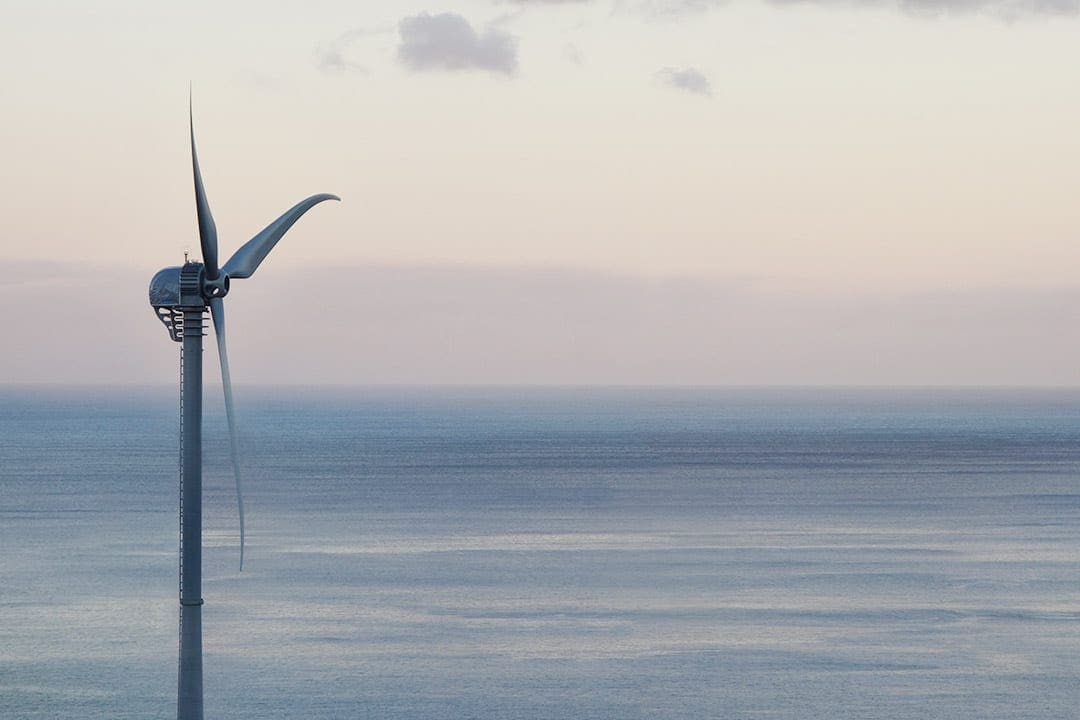
  • Zero oil change schedules or gearbox seal replacements
  • Low rotational speed (RPM) dramatically reduces noise and vibration
  • Higher generator efficiency at low and partial wind speeds
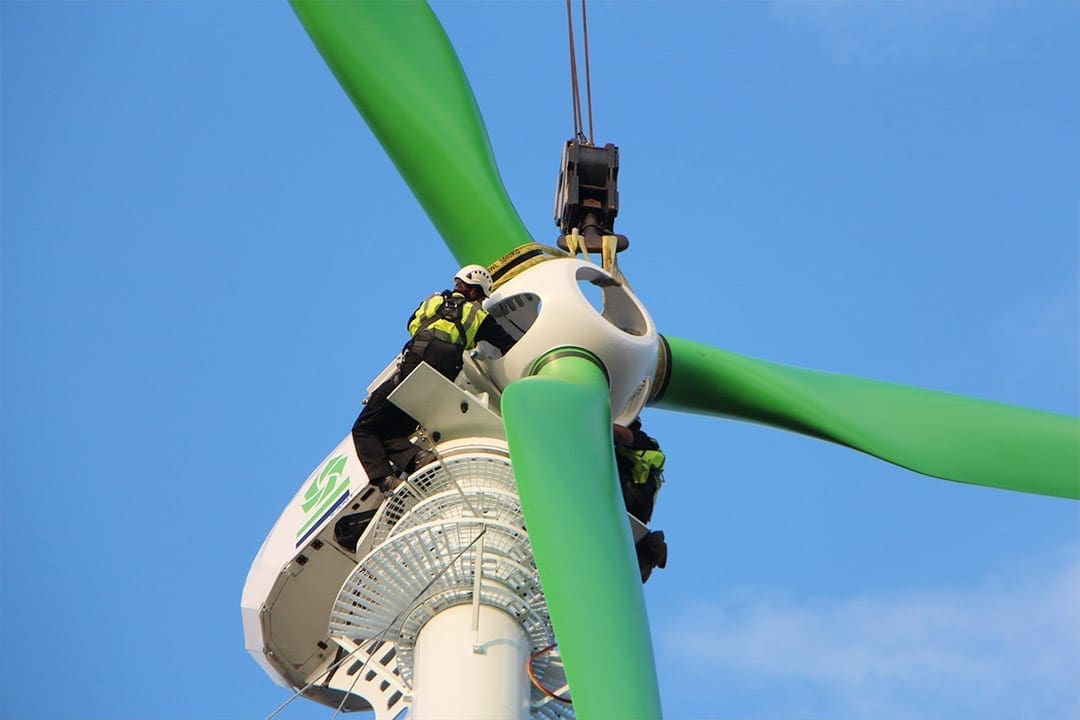
Direct drive commercial small wind turbine technology installation
Hybrid microgrid combining small wind turbines with solar and energy storage

2. Co-Located Wind-Solar-Storage (BESS) Tri-Generation

Standalone solar PV installations suffer from severe capacity factor limits, generating power for only 18% to 24% of the year. To achieve 24/7 energy independence, enterprise procurement is shifting toward integrated tri-generation microgrids: Small Wind Turbines + Solar PV + Battery Energy Storage Systems (BESS).

Because wind velocity profiles naturally peak during non-solar hours (nighttime, early morning, and winter storm fronts), wind and solar exhibit high diurnal complementation. Adding a 90 kW small wind turbine to an existing solar field reduces required battery storage capacity by 35% to 50% to achieve identical load coverage, massively lowering initial CapEx requirements.

  • Stabilizes microgrid busbars against sudden cloud transients
  • Protects battery chemistry by avoiding deep nighttime depth-of-discharge
  • Maximizes point-of-interconnection capacity without utility upgrades

3. Edge AI Energy Management & Predictive SCADA Telemetry

Modern commercial small wind turbines are no longer isolated mechanical assets; they are intelligent Internet of Energy (IoE) nodes. Procurements now require real-time SCADA telemetry integrated with cloud-based predictive analytics platforms.

Eocycle's AI-driven energy management algorithms continuously cross-reference micro-climate weather forecasts, real-time wind speed vectors, facility electrical load profiles, and dynamic grid tariff prices. The controller autonomously optimizes turbine pitch, generator torque, and battery dispatch, ensuring that power is stored or consumed behind the meter when grid tariffs are highest and exported only under optimal financial conditions.

  • Continuous vibration spectrum, temperature, and electrical health monitoring
  • Automated preventative maintenance alerts prior to component degradation
  • Full mobile telemetry and SCADA reporting for corporate ESG compliance
AI managed agricultural small wind turbine system

Tailored Application Engineering

Deployed Where Industrial Energy Demand Meets High Wind Resources

Agriculture & Feedyards

Agricultural operations suffer from energy-intensive equipment including continuous ventilation fans, feed mixing mills, grain dryers, and deep-well irrigation pumps. Installing an EOX M-26 turbine on open farmland converts wind resources directly into operational cost savings while protecting agricultural land availability.

✓ Proven in extreme dust, moisture & freezing environments

Commercial & Industrial Facilities

Manufacturing plants, logistics warehouses, cold storage facilities, and water treatment utilities face aggressive demand charges that spike electrical bills. Small wind turbines suppress peak power draws during high-tariff periods, offering a 30-year hedge against utility tariff inflation.

✓ Seamless integration into 480V / 400V industrial switchgear

Remote Microgrids & Island Utilities

Off-grid communities, mining camps, and island grids relying on expensive diesel generators face exorbitant fuel logistics and maintenance costs. Integrating Eocycle direct-drive small wind turbines reduces fuel burn by up to 80%, providing rapid ROI and unyielding resilience.

✓ Low cut-in speeds with robust storm shut-down protection

Complete Engineering Accountability

From Wind Resource Assessment to 30-Year O&M: The Eocycle Advantage

Purchasing a commercial small wind turbine requires rigorous civil, structural, electrical, and regulatory execution. Eocycle provides single-source turnkey delivery backed by over two decades of specialized engineering experience.

1. LiDAR Wind & Load Assessment

Our meteorologists analyze decades of high-resolution anemometer/LiDAR data combined with your interval utility data to model exact annual output (AEP) and financial yield.

2. Permitting & Interconnection

We manage complete civil planning, acoustic propagation modeling, FAA/aviation filings, environmental impact screening, and utility interconnection studies.

3. Foundation & Civil Engineering

Full geotechnical site evaluation, reinforced concrete pad design, anchor bolt cage installation, and underground medium/low voltage trenching.

4. Direct-Drive Erection & Handover

Certified riggers erect the monopole tower, install the direct-drive nacelle and rotor, connect power conversion electronics, and perform grid synchronization.

5. 30-Year SCADA & Global Service

24/7 continuous cloud telemetry supervision, annual preventive site health checks, and guaranteed regional spare parts availability for three decades.

Proven Performance Field Reports

What Enterprise Asset Managers Say About Eocycle Small Wind Turbines

”
Renewables are an essential component of our agricultural operations in both Colorado and Kansas. The Eocycle turbine allows us to achieve energy independence and dramatically cut operating costs, while providing a permanent physical hedge against utility rate hikes. I am extremely satisfied with the power output and operational uptime.
Erick FarmerChampion Valley Feedyard — Colorado, USA
The turbine directly powers our heavy machinery and charging stations. Because of the site's proximity to natural reserves, rigorous environmental monitoring was established. The 98%+ availability of the turbine across high-wind winter conditions has exceeded our baseline financial projections.
Filip VandeputteCSR Director, DEME Group — Belgium
After evaluating multiple distributed energy vendors, we selected the Eocycle EOX M-26 (90 kW) turbine for our microgrid project. The direct-drive system integrates effortlessly with our solar arrays and battery banks, delivering a robust utility-in-a-box for zero-carbon resilience.
Jean De CambrySenior Microgrid Project Manager, Enersol — Belgium
Operating in the North of Scotland requires equipment capable of enduring relentless coastal gales. The direct-drive engineering of the Eocycle turbine has proven bulletproof. The real-time SCADA monitoring portal provides absolute transparency into continuous daily generation.
Heather StuartWest Harris Trust Community Infrastructure — Scotland, UK

Technical & Commercial Intelligence

Frequently Asked Questions: Purchasing Commercial Small Wind Turbines

Answers to key engineering, economic, and regulatory questions submitted by B2B procurement teams and facility managers.

Commercial-grade small wind turbines range from 25 kW to 90+ kW rated capacity, feature rotor diameters between 12m and 26m, and are mounted on free-standing steel monopole towers (typically 30m to 36m hub height). Unlike micro-turbines (<5 kW) mounted on building rooftops—which suffer from extreme boundary-layer air turbulence and low wind speeds—commercial small wind turbines access smooth, laminar wind streams above tree lines and structures. They utilize direct-drive permanent magnet generators to feed grid-compliant electrical power directly into your facility's main distribution breaker.

Traditional mechanical gearboxes are the primary cause of downtime in legacy small wind turbines due to intense dynamic torque loads, thermal expansion stress, and gear oil breakdown. Direct-drive small wind turbines eliminate the gearbox entirely, connecting the aerodynamic rotor directly to a low-speed permanent magnet synchronous generator. Removing high-speed shafting and gears eliminates over 50% of moving mechanical parts, reduces annual O&M expenses by up to 60%, boosts fleet availability above 98%, and enables a reliable 30-year design lifespan.

For sites with average annual wind speeds of 5.0 m/s or higher at hub height, commercial small wind turbines deliver a full capital payback within 4 to 7 years. When factoring in available clean energy incentives—such as the US IRA Section 48 Investment Tax Credit (ITC), REAP grants, or European decarbonization subsidies—payback can occur even faster. Over a 30-year lifecycle, the Levelized Cost of Energy (LCOE) typically ranges between $0.04 and $0.07 per kWh, providing a permanent hedge against utility tariff hikes.

Solar PV and wind energy generation profiles have a strong natural anti-correlation. Solar production peaks exclusively during sunny midday hours in summer, whereas wind velocity is highest during late afternoon, night hours, autumn, and winter. Combining small wind turbines with solar PV ensures round-the-clock clean energy generation. This complementary profile dramatically reduces the required capacity (and CapEx) of expensive battery energy storage systems (BESS) while maintaining 24/7 power coverage for cold storage, livestock facilities, and manufacturing operations.

A viable site typically exhibits an Annual Average Wind Speed (AAVS) of at least 4.5 m/s to 5.0 m/s at hub height (30m+). Key meteorologic parameters evaluated by Eocycle engineers include low turbulence intensity (TI < 15%), a favorable Weibull distribution shape factor (k ≥ 2.0), and minimal wake obstruction from adjacent structures. Our engineering team conducts full CFD wind resource modeling and long-term wind dataset correlations prior to project finalization.

Eocycle small wind turbines utilize modern, certified full-power electronic converters that fully comply with international grid standards including IEEE 1547, UL 1741 SA/SB, and European EN 50549 codes. Our grid-interactive inverters offer active voltage and frequency regulation, reactive power support (VAR control), low-voltage ride-through (LVRT), and automated anti-islanding protection, streamlining interconnection agreements with local electrical utilities worldwide.

Thanks to the gearbox-free direct-drive design, routine physical maintenance is limited to a single scheduled annual site inspection. Annual service involves basic electrical checkups, torque checks on mechanical fasteners, and blade visual inspections. Furthermore, every turbine is linked to Eocycle's 24/7 cloud SCADA monitoring network, which continuously tracks electrical parameters, temperature metrics, and vibration signatures to resolve potential issues remotely before downtime occurs.
  • Established 2001 · Montréal, Canada
  • Gearbox-Free Direct Drive Technology
  • 24/7 Remote SCADA Monitoring
  • Certified Global Installer Network
  • North America · Europe · United Kingdom

Transform Your Facility's Energy Cost Profile Today

Submit your property coordinates and 12 months of utility bill data. Our senior wind energy engineers will produce a complete site feasibility study, AEP generation forecast, and financial ROI model at zero obligation.