

Predictive Demand Shaving
AI algorithms forecast consumption spikes and instantly discharge battery storage or increase wind turbine generation, capping peak demand surcharges before utility meters register them.

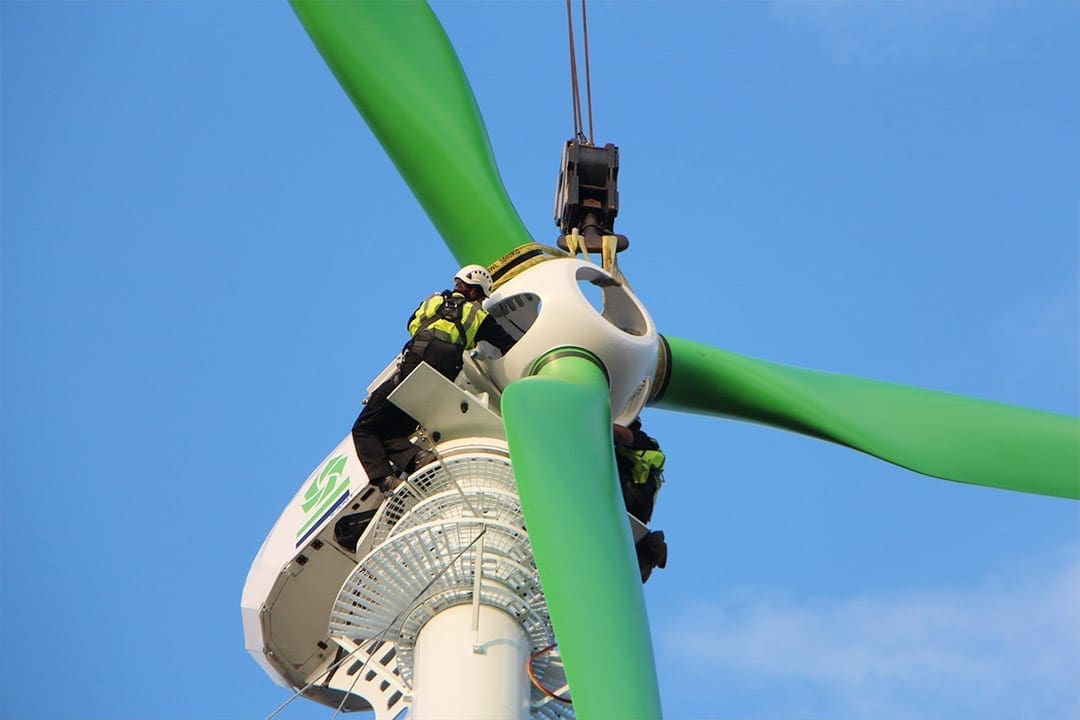
Empower your commercial facility, feedyard, or microgrid with real-time AI EMS orchestration. Synchronize direct-drive wind turbines, solar PV, and battery storage under predictive machine learning control to eliminate utility tariff shocks permanently.
The Buyer's Guide to AI EMS
Modern commercial, industrial, and agricultural operations face unprecedented energy complexity. Rising demand charges, volatile spot market tariffs, grid instability, and aggressive Scope 2 decarbonization mandates mean static power infrastructure is no longer viable. Enterprise buyers are replacing legacy rule-based control systems with AI Energy Management Systems (EMS) that actively predict, adapt, and arbitrage power in real time.
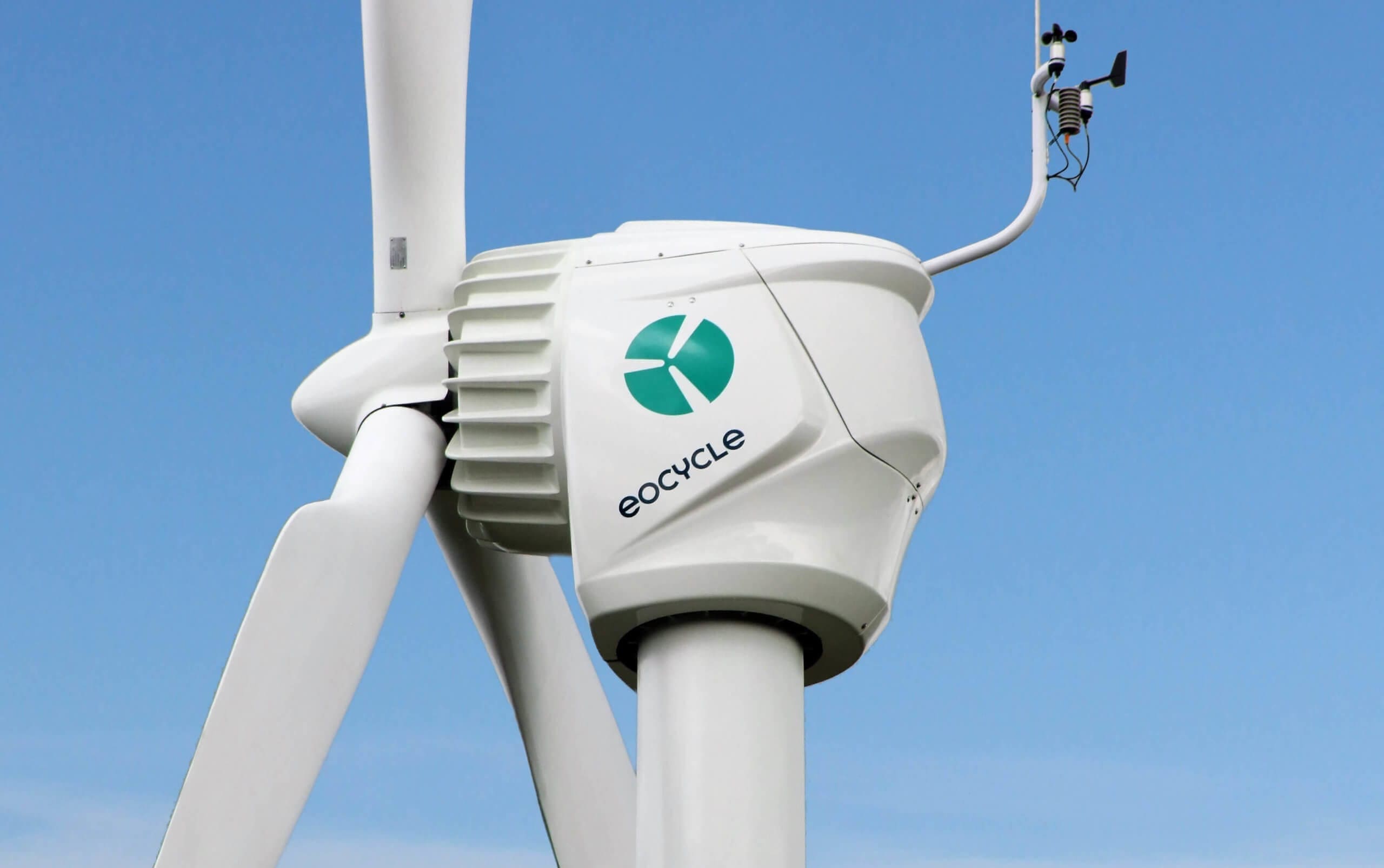
An advanced AI Energy Management System acts as the central brain of distributed energy resources (DERs). By continuously ingesting numerical weather prediction (NWP) models, facility consumption patterns, dynamic utility pricing, and battery state-of-health metrics, the software calculates the optimal power path every millisecond. When combined with ultra-reliable, gearbox-free hardware like Eocycle's direct-drive wind turbines, enterprise buyers lock in predictable kilowatt-hour costs for over 30 years.
Measurable Enterprise Gain
How dynamic machine learning transforms on-site generation from passive assets into profit-generating powerhouses.
AI algorithms forecast consumption spikes and instantly discharge battery storage or increase wind turbine generation, capping peak demand surcharges before utility meters register them.

Solves the intermittency puzzle by pairing solar PV (daytime peak) with direct-drive wind turbines (nighttime/winter peak), minimizing battery size while maximizing continuous self-consumption.

Unlike basic controllers that stress lithium cells, AI EMS models C-rates, cell thermal gradients, and state-of-charge limits to extend battery asset life by 35% or more.

High-speed local edge processors retain control during internet dropouts or severe storms, delivering millisecond-level frequency stability and zero operational downtime.
Technical Architecture Deep-Dive
Understanding the full-stack intelligence layer operating between generation hardware, battery storage, and utility grid interconnections.
Traditional energy management relies on static schedules. Modern AI EMS units deploy deep recurrent neural networks (RNNs) and transformer models that evaluate hyperlocal weather telemetry, satellite solar irradiance feeds, and atmospheric pressure gradients. By anticipating wind speeds at 30-meter to 36-meter hub heights up to 72 hours in advance, the software adjusts storage reserves long before cloud cover or ambient calms materialize.
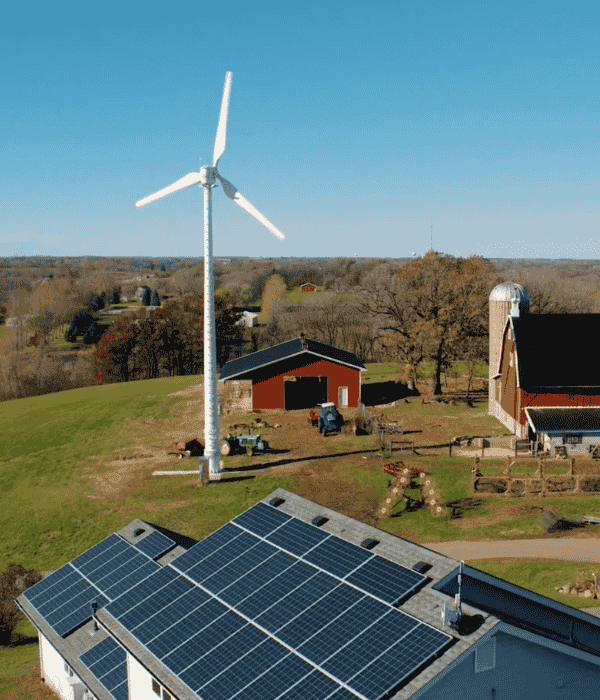
While macro optimizations take place in the cloud, microsecond power quality management requires zero-latency local execution. Eocycle's AI EMS utilizes industrial edge controllers installed right inside the switchgear enclosure. In grid-tied mode, it regulates reactive power (VAR support) and power factor correction. In off-grid islanded mode, it acts as a grid-forming inverter system, controlling voltage waveforms during abrupt heavy motor starts in industrial facilities or automated milking parlors.
Product Solutions
Combining 20+ years of Canadian direct-drive wind engineering with autonomous AI software control.
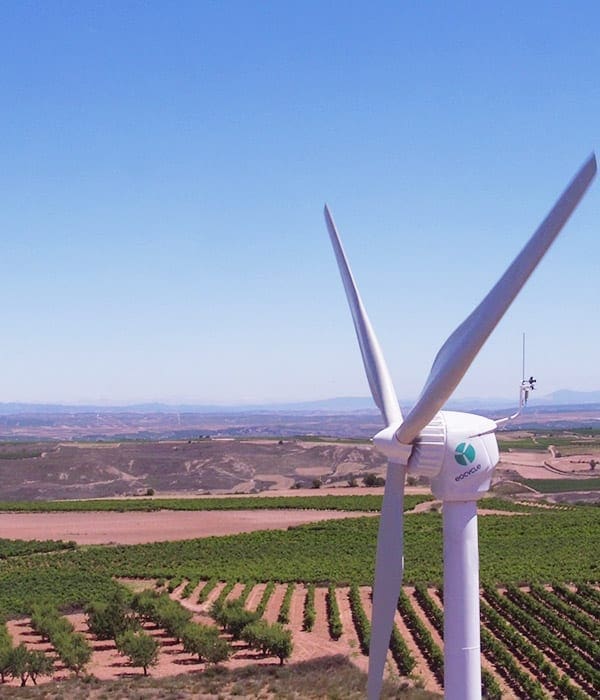
Optimized for family farms, dairies, and regional workshops needing reliable low-wind production backed by SCADA and AI telemetry.
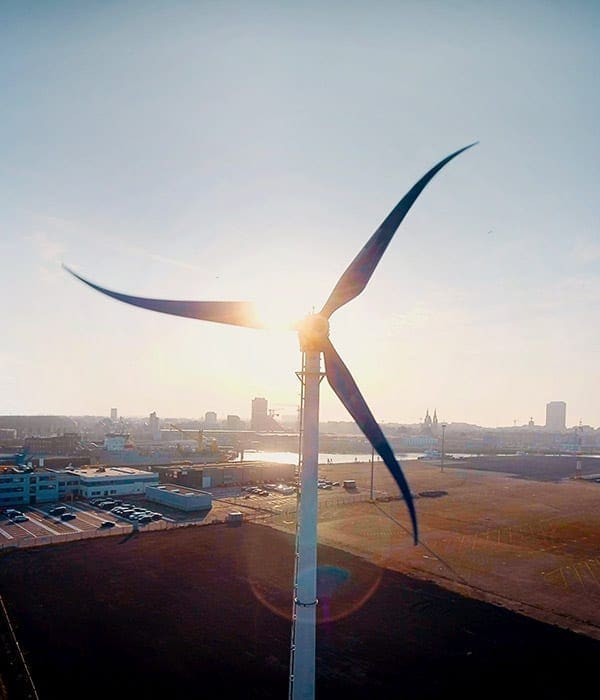
The heavy-duty workhorse for commercial plants, feedyards, and remote microgrids. Features a 26-meter rotor capturing clean high-altitude wind profiles.
The ultimate turn-key microgrid: direct-drive wind energy, high-efficiency solar PV, and battery energy storage (BESS) orchestrated by AI EMS software.
Market Outlook & Strategic Vision
How global procurement officers and ESG directors must adapt to emerging clean tech paradigms over the next decade.
Historically, commercial clean energy purchases focused strictly on nameplate capacity (kW/MW) of solar panels or wind turbines. However, buyers now recognize that unmanaged renewable generation leads to heavy curtailment and battery waste. The procurement paradigm has shifted toward software-defined energy assets, where the performance ceiling is governed by the sophistication of the AI Energy Management System. Buyers increasingly demand contracts that guarantee algorithmic optimization metrics alongside hardware warranties.
With international regulations such as the EU Corporate Sustainability Reporting Directive (CSRD) and global supply chain ESG audits gaining legal weight, static annual carbon accounting is being rendered obsolete. Modern AI Energy Management Systems provide hour-by-hour time-stamped proof of renewable origin. By matching real-time wind and battery discharge against facility interval demand, AI EMS platforms enable enterprises to present immutable, audit-ready sustainability records to corporate clients and regulators.
As main power grids become increasingly fragile due to coal plant retirements, utility operators are creating lucrative monetization channels for distributed energy asset owners. AI Energy Management Systems automatically aggregate multi-site behind-the-meter systems into Virtual Power Plants. Without human intervention, the AI EMS bids excess battery and wind capacity into frequency regulation and spinning reserve markets, transforming energy costs from an operating expense into a net revenue stream.
The electrification of industrial logistics, yard trucks, and corporate vehicle fleets introduces massive transformer stress and surge demand charges. Procurement managers are pairing AI EMS platforms directly with megawatt-scale EV fast-charging stations. The AI controller throttles charger draw dynamically based on instantaneous wind turbine output and state-of-charge in storage, avoiding million-dollar utility sub-station upgrade costs.
Turnkey Execution
Eocycle handles every engineering discipline under a single accountable EPC contract so your internal operations team never has to coordinate multiple vendors.
We analyze 12–24 months of utility 15-minute interval data alongside long-term anemometer wind data at your exact GPS coordinates.
Our simulation engines model seasonal power output, utility peak charges, tax incentives, and battery health trajectories to build an accurate business case.
Our experienced engineering team files all civil, environmental, zoning, and utility grid interconnection applications directly.
Foundation pouring, tower erection, direct-drive generator integration, inverter setup, and edge AI controller configuration.
Continuous 24/7 cloud telemetry monitoring, predictive maintenance alerts, and localized field technician support nationwide.
Enterprise Field Evidence
Procurement & Technical Deep-Dive
Clear, definitive answers to the key technical, financial, and operational questions asked by global enterprise buyers.
Corporate EEAT Credentials
Founded in Montréal, Canada in 2001, Eocycle was established to eliminate the chronic mechanical failures that plagued legacy small wind equipment. Our pioneering design replaced complex gearboxes with a high-torque direct-drive permanent magnet generator. With zero gear oil maintenance and significantly fewer moving components, Eocycle turbines are engineered to operate reliably for 30 years in extreme environments—from sub-zero Canadian prairies to coastal European salt air and dusty high-plains agricultural feedyards.
By coupling two decades of heavy industrial wind turbine manufacturing experience with modern cloud-and-edge AI Energy Management Systems, Eocycle offers enterprise buyers an unassailable combination of physical durability and digital intelligence.
Submit your site coordinates and recent interval utility bills. Our engineering team will conduct a comprehensive AI EMS simulation and feasibility analysis for your facility.