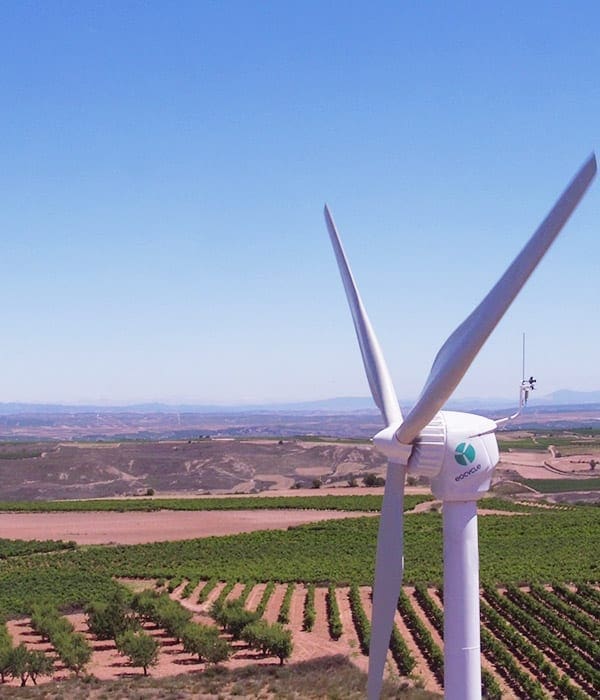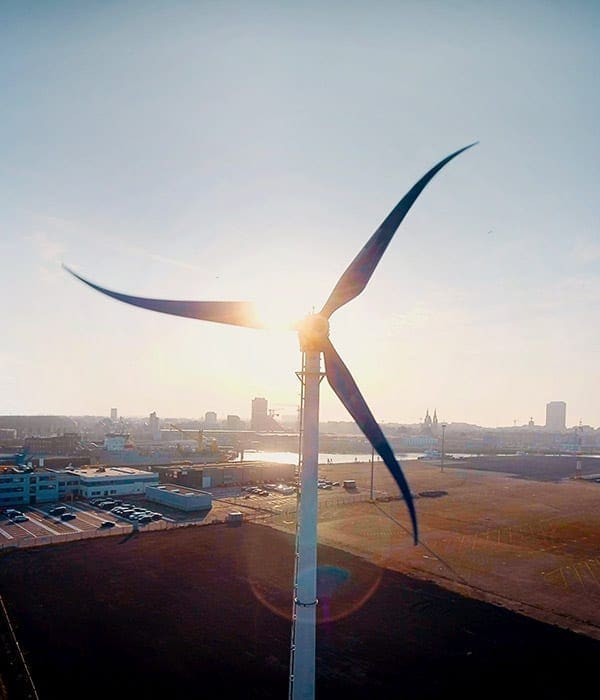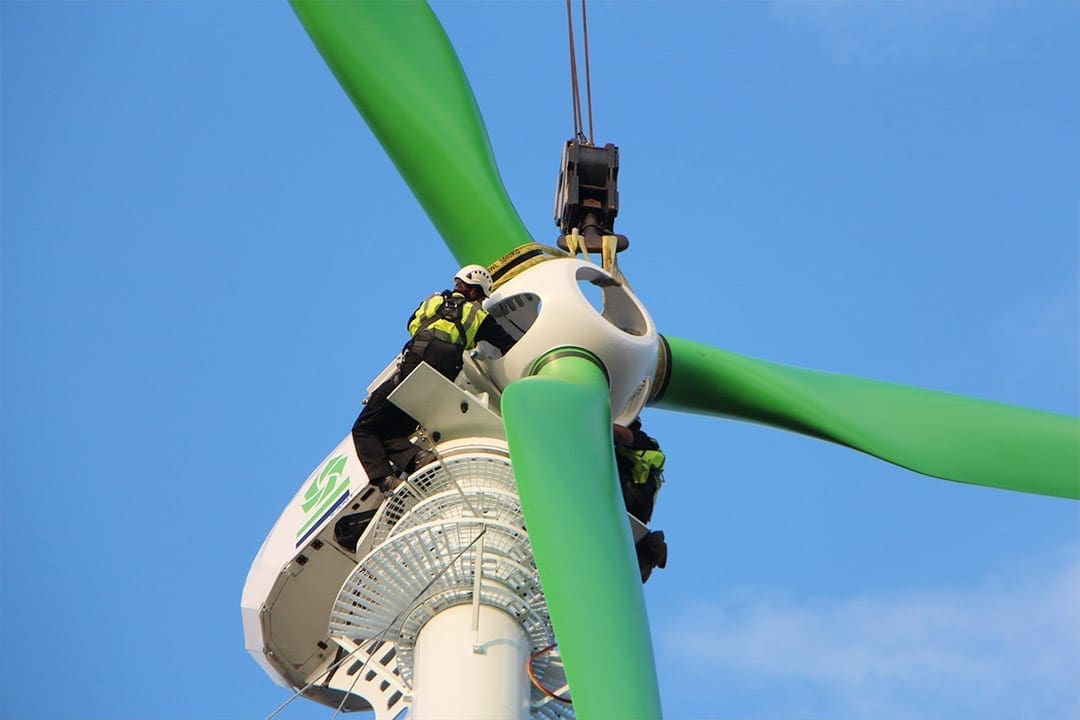


Commercial wind turbines supplying industrial facility with clean electricity
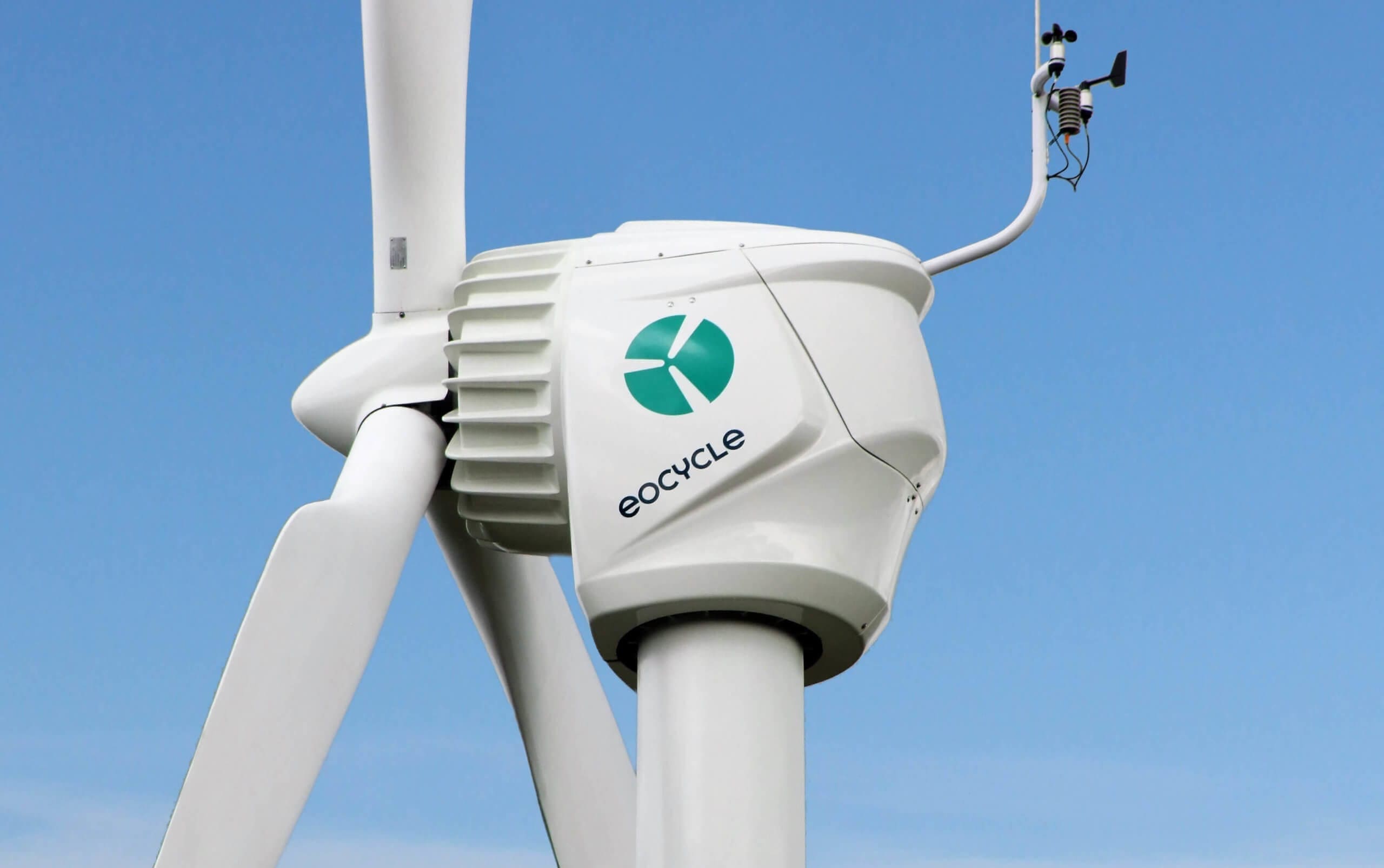
Direct-drive commercial wind turbine operating on agricultural land
Commercial Wind Turbines Engineering Guide

Commercial Wind Turbines:
Direct-Drive Power for Industrial Resilience

Maximize on-site power yield, eliminate expensive utility peak demand charges, and lock in a 30-year low LCOE with Eocycle direct-drive commercial wind turbines (25 kW to 90 kW).

2001Engineering Wind Solutions Since
30 YearsDesign Life Baseline
98%+Verified Fleet Availability
25–90 kWRated Commercial Capacity

Strategic Procurement Analysis

Why Industrial Procurement Officers are Transitioning to Commercial Wind Turbines

As global enterprise operations face historic utility tariff escalation, grid congestion penalties, and stringent Scope 2 carbon compliance audits, commercial wind turbines have emerged as the definitive behind-the-meter solution for reliable industrial power generation.

In modern industrial energy planning, relying purely on solar photovoltaic (PV) installations or long-term utility Power Purchase Agreements (PPAs) creates distinct vulnerability profiles. Industrial operations—such as cold storage warehousing, manufacturing facilities, agricultural feedyards, and water treatment utilities—operate under non-linear energy load curves that extend long into the night, early morning hours, and through winter storm cycles when solar irradiance is minimal or absent.

Commercial wind turbines solve this critical energy offset gap. By harvesting kinetic wind energy across 24-hour operational windows, behind-the-meter wind turbines deliver exceptionally high capacity factors. Unlike utility-scale solar farms that require expansive land footprints, a high-efficiency commercial wind turbine occupies a physical foundation footprint of less than 25 square meters. This leaves the surrounding commercial yard, cropland, or industrial facility entirely operational while producing grid-compliant electricity directly at the point of consumption.

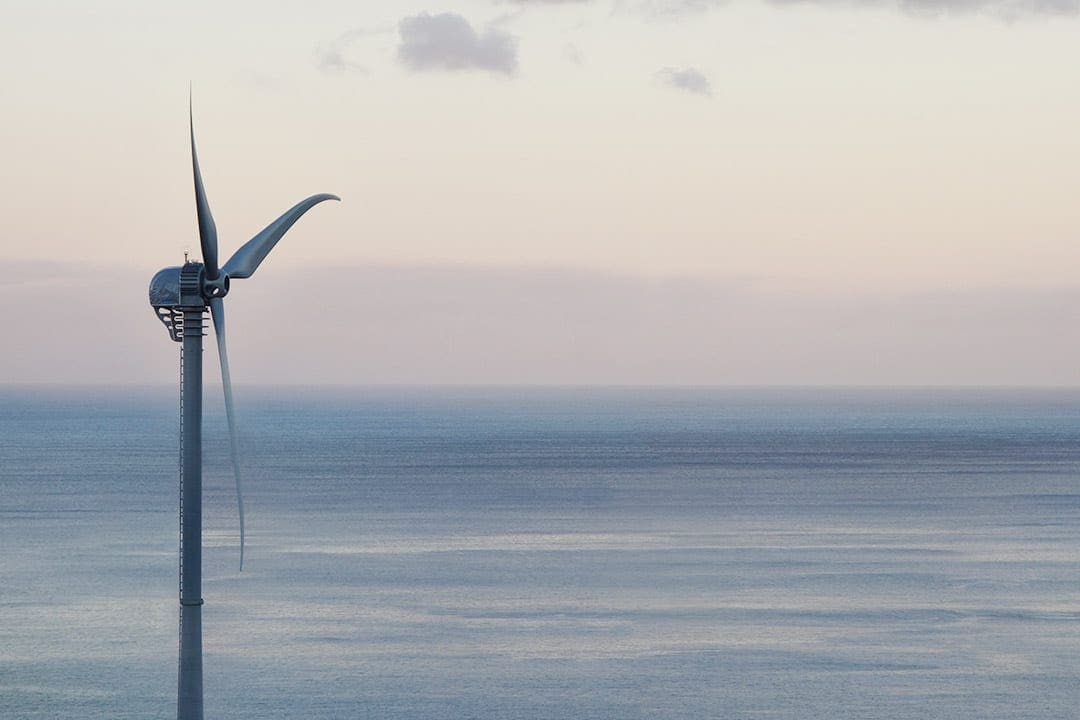
Commercial wind turbine site installation showing minimal ground footprint

Enterprise Engineering & EEAT Authority

Eliminating the Weakest Link: The Direct-Drive Permanent Magnet Generator

Engineered in Montréal, Canada since 2001, Eocycle commercial wind turbines were fundamentally designed to overcome the historical failure points of Legacy small-to-midscale wind turbines.

Financial payback icon

No Gearbox Mechanical Risk

Traditional wind turbines utilize multi-stage gearboxes running at thousands of RPMs. Gearbox friction, gear oil thermal breakdown, and high-frequency vibration cause over 70% of wind turbine downtime. Eocycle eliminates the gearbox completely.


Business efficiency icon

Direct-Drive PMG Reliability

Our low-speed Direct-Drive Permanent Magnet Generator (PMG) connects the rotor directly to the electrical generator. With zero gear oil maintenance and fewer moving mechanical parts, operational efficiency reaches maximum levels.

Clean energy icon

30-Year Design Benchmark

Built using high-grade structural steel towers, passive mechanical safety systems, and marine-grade protective coatings, Eocycle commercial wind turbines are engineered for three decades of continuous commercial service.

Reliability icon

98%+ Fleet Availability

Backed by real-time cloud SCADA remote diagnostics, operating units across North America, Europe, and the UK consistently log enterprise fleet availability exceeding 98%, even in harsh sub-zero temperatures and high-salinity air.

Product Catalog & Technical Specifications

Commercial Wind Turbines Product Lineup

Tailored generation platforms engineered for commercial, industrial, agricultural, and microgrid installations.

S-Series Eocycle S-Series commercial wind turbine

S-Series Commercial Wind Turbine

Optimized for light commercial facilities, independent dairies, remote workshops, and agricultural enterprises consuming 50,000 to 180,000 kWh annually.

  • Target ApplicationFarms & Light Commercial
  • ArchitectureDirect-Drive PMG
  • Tower Heights24m / 30m Free-Standing
  • Maintenance CycleAnnual Inspection
Get Catalog
M-Series Eocycle M-Series EOX M-26 commercial wind turbine 90 kW

M-Series — EOX M-26 (90 kW)

The global flagship commercial wind turbine for heavy industrial plants, feedyards, cold storage logistics, and grid-tied distributed sites seeking massive baseline electricity replacement.

  • Rated Capacity90 kW Power Output
  • Rotor Diameter26 Meters (Swept Area 531 m²)
  • Hub Heights30m / 36m Monopole
  • Grid InterfaceFull Converter Inverter
Get Catalog
Hybrid Microgrid EOX WS2 Integrated Commercial Wind Solar Storage System

EOX WS²+ Wind-Solar-Storage

A turnkey commercial hybrid asset combining direct-drive wind power, high-efficiency solar PV arrays, and industrial battery energy storage systems (BESS) under unified AI control.

  • IntegrationWind + Solar + BESS
  • OptimizationAI Predictive SCADA
  • Use CaseIslanded Microgrids & EV Hubs
  • ResilienceBlack-Start & Grid-Forming
Get Catalog

Strategic Industry Analysis

Future Procurement & Technology Trends in Commercial Wind Turbines

How advancing aerodynamics, power electronics, AI telemetry, and global regulatory mandates are re-shaping commercial renewable energy investments over the next decade.

1. Transition from Passive Utility Tariffs to Active Behind-the-Meter Asset Ownership

Global commercial power markets are entering an era of severe volumetric pricing volatility and aggressive peak demand surcharges. Industrial enterprise procurement leads are moving rapidly away from passive retail power purchasing towards direct capitalization of behind-the-meter wind assets.

By generating electricity on-site with commercial wind turbines, enterprise buyers lock in a fixed Levelized Cost of Energy (LCOE) for 30 years. This insulates operating budgets from carbon taxation, transmission expansion fees, and regional utility rate spikes while delivering verifiable Scope 2 carbon footprint reductions required by corporate sustainability standards.

  • Complete protection against escalating utility peak demand rates
  • Auditable behind-the-meter green energy generation
  • High asset valuation residual over a 30-year operational lifecycle
Commercial wind turbine operating at an industrial commercial complex
Microgrid commercial wind turbine and battery system

2. AI-Driven SCADA Telemetry & Predictive Maintenance Convergence

The integration of machine learning and edge computing is revolutionizing commercial wind turbine operation. Modern SCADA (Supervisory Control and Data Acquisition) portals no longer merely log raw generator outputs; they execute real-time predictive analytics on bearing vibrations, yaw alignment friction, thermal gradients, and wind vector turbulence.

Through real-time telemetry, remote diagnostic teams identify micro-anomalies months before mechanical degradation occurs. This predictive maintenance model shifts operational management from reactive service visits to planned annual inspections, drastically extending turbine lifespan while sustaining fleet availability above 98% in extreme arctic or coastal conditions.

  • Continuous cloud-based vibration and thermal monitoring
  • Automated yaw control optimization based on predictive wind modelling
  • Zero unscheduled downtime through preventive edge-computing alerts

3. The Rapid Growth of Integrated Wind-Solar-Storage (BESS) Microgrids

As commercial fleet electrification, heavy machinery automation, and high-density industrial EV charging stations strain local distribution grids, utility connection capacity limits are becoming major operational bottlenecks. The solution is hybrid microgrid engineering.

Commercial wind turbines supply crucial nighttime power output that perfectly complements daytime solar generation profiles. When paired with industrial Lithium Iron Phosphate (LFP) battery systems, hybrid microgrids allow facilities to peak-shave heavy motor start-up surges, avoid utility interconnect capacity upgrade delays, and remain 100% operational during regional grid blackouts.

  • 24/7 continuous clean energy output balancing solar diurnal drops
  • Grid-forming inverter capabilities for seamless islanded operation
  • Significantly reduced Battery Energy Storage System (BESS) degradation
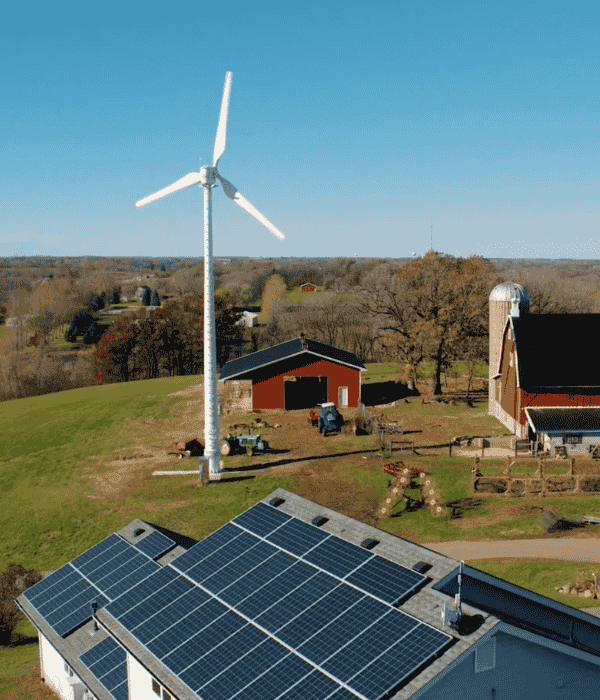
Agricultural hybrid commercial wind turbine installation

Turnkey Execution Model

Our 5-Stage Project Delivery Engine

Eocycle assumes total turnkey responsibility for your commercial wind project—eliminating contractor friction and ensuring rapid commissioning.

1. Wind & Load Feasibility

We deploy high-resolution LiDAR wind assessment data combined with your facility’s 15-minute utility interval load files to calculate actual ROI and net energy offset.

2. Engineering & Business Modeling

Complete structural foundation design, electrical interconnect modeling, financial incentive capture (e.g., ITC, REAP, local tax grants), and precise LCOE projections.

3. Permitting & Utility Interconnection

Our experienced regulatory team executes all municipal zoning permits, acoustic emissions studies, environmental screenings, and utility interconnect agreements.

4. Civil Works, Erection & Handover

Certified turnkey execution: foundation poured, monopole erection, electrical tie-in, full converter grid-compliance testing, and facility manager training.

5. 30-Year Lifecycle O&M Support

Active remote SCADA telemetry supervision, scheduled preventive maintenance inspections, and fast regional spare-parts delivery guaranteed for asset lifetime.

Proven Field Experience

What Commercial & Industrial Operators Experience

”
Renewables are an important part of our ag operations in both Colorado and Kansas. This allows us to not only be more efficient and cut costs, but also to be part of a bigger picture of becoming more sustainable. I am very, very pleased with my turbine.
Erick FarmerChampion Valley Feedyard — Colorado, USA
The turbine is directly powering our charging points for electric vehicles. Because of the vicinity of natural habitats, an avifauna monitoring program was set up. The 98% availability of the turbine is the cherry on the cake for us.
Filip VandeputteCSR Manager, DEME Group — Belgium
After careful review of products available on the market we chose to add an Eocycle EOX M-26 (90 kW) to our microgrid to satisfy the majority of our energy use. It also combines easily with solar and batteries to create a utility-in-a-box for a clean, reliable microgrid.
Jean De CambryEngineer & Project Manager, Enersol — Belgium
We were nervous about entering the distributed wind sector, owing to a tough operating climate in the North of Scotland combined with our remoteness. The SCADA portal is excellent at providing remote communication every day, which should prolong component life and allow timely servicing.
Heather StuartWest Harris Trust Community Centre — Scotland

Engineering & Procurement FAQ

Commercial Wind Turbines: Frequently Asked Questions

In-depth technical, financial, and operational answers for commercial decision-makers.

While commercial solar PV arrays offer reliable daytime power, they demand extensive horizontal footprint area and produce zero output during nighttime hours, high cloud cover, or heavy snowfall. Commercial wind turbines generate significantly higher total annual kilowatt-hours per square meter of ground foundation. Additionally, wind resource curves often peak during night hours and winter season months when industrial facility heating and ventilation loads peak. Combining commercial wind turbines with solar PV creates an ideal 24/7 power offset profile.

Traditional wind turbines rely on complex mechanical gearboxes to step up low blade RPMs to high generator speeds. Gearboxes represent the single most common failure point in small-to-midscale wind turbines, requiring regular gear oil replacement, seal rebuilds, and costly mechanical overhauls. Eocycle's Direct-Drive Permanent Magnet Generator (PMG) connects the rotor directly to the generator, eliminating the gearbox entirely. This results in dramatically reduced mechanical wear, quiet operation, higher low-wind conversion efficiency, and lower overall operational expenses over a 30-year design life.

As an initial screening standard, commercial facilities located in areas with an average annual wind speed of 4.5 m/s to 5.0 m/s (approx. 10–11 mph) at hub height offer excellent payback profiles. Because wind energy density scales cubically with wind velocity ($P \propto v^3$), installing turbines on tall towers (30m to 36m hub height) elevates the rotor above surface roughness, tree canopy turbulence, and building wakes. Eocycle conducts custom site wind assessments using long-term global meteorological reanalysis data and LiDAR modeling before project commitment.

Industrial utility bills consist of volumetric energy consumption fees ($/kWh) and peak demand charges ($/kW). Peak demand charges are calculated based on a facility's highest 15-minute power surge during a billing cycle. Behind-the-meter commercial wind turbines generate clean electricity directly into the facility grid, shaving down peak grid demand spikes. When integrated into an EOX WS²+ system with battery storage, the smart energy management controller automatically dispatches stored wind power during high demand windows, lowering monthly power bills substantially.

Permitting regulations vary by municipality, but typical requirements include property line setback distances (usually calculated as 1.1x to 1.5x total tip height), sound boundary limits, and environmental impact assessments. Eocycle direct-drive turbines are engineered for ultra-low acoustic emissions due to optimized blade aerodynamics and low rotational generator speeds. Eocycle's internal regulatory department manages all necessary acoustic propagation modeling, shadow flicker studies, zoning filings, and utility interconnect filings on behalf of the customer.

Thanks to the gearbox-free direct-drive design, routine maintenance is limited to a single scheduled annual physical inspection. During this maintenance check, service technicians inspect mechanical fastener torque values, test safety braking systems, inspect blade surfaces, and audit electrical connections. In parallel, Eocycle's automated 24/7 cloud SCADA monitoring platform continuously monitors sensor metrics to ensure maximum uptime without requiring dedicated on-site personnel.

Standard grid-tied commercial wind turbines are equipped with automatic anti-islanding safety protection that disconnects the turbine during grid failure to protect utility line workers. However, when configured as part of an EOX WS²+ microgrid system equipped with grid-forming inverters and battery energy storage (BESS), the commercial wind turbine seamlessly shifts into islanded mode. This provides continuous uninterrupted emergency back-up power to critical commercial infrastructure.
  • Founded 2001 · Montréal, Canada
  • Gearbox-Free Direct Drive
  • Continuous SCADA Cloud Supervision
  • Certified Global Installer Network
  • Deployments Across NA, EU & UK

Accelerate Your Commercial Energy Sovereignty

Partner with Eocycle's engineering team to analyze your facility's wind resource profile, review interval load data, and obtain a custom commercial wind turbine feasibility assessment.