

70%–90% Fuel Offset
Displace thousands of liters of imported diesel fuel annually. In remote locations where delivered fuel costs exceed $1.50–$3.00 per liter, wind energy achieves full ROI within 2.5 to 4 years.
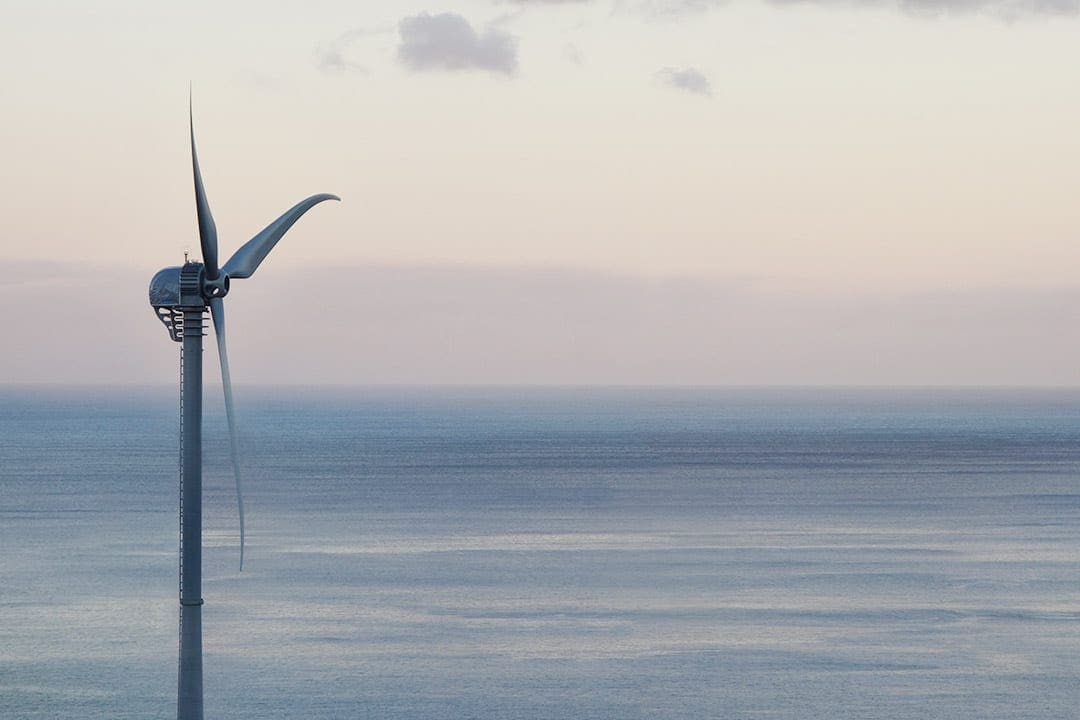
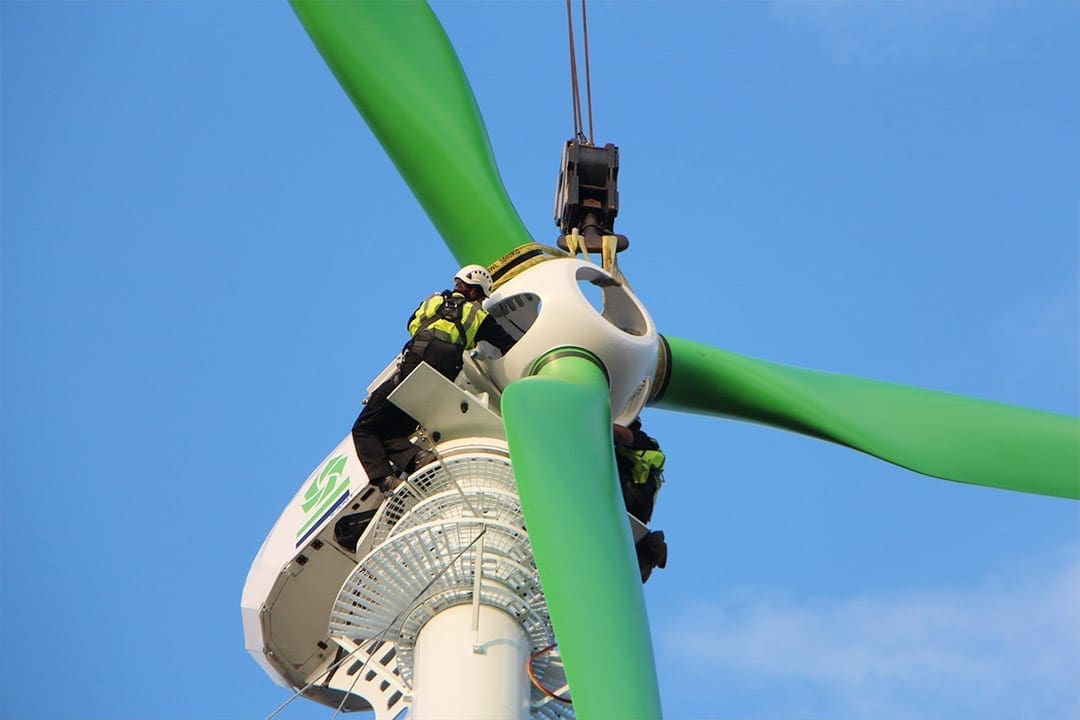
Commercial-grade 25 kW to 90 kW direct-drive wind turbines and hybrid wind-solar-storage platforms engineered to replace expensive diesel power in extreme, isolated, and harsh environments.
The Engineering Benchmark for Remote Energy
Deploying energy infrastructure in off-grid mines, isolated agricultural operations, remote island networks, and arctic communities presents an uncompromising operational reality: high logistics costs, extreme ambient temperatures, and unforgiving failure costs. Traditional small-to-medium wind turbines rely on high-speed mechanical gearboxes that represent over 65% of lifetime maintenance incidents, requiring frequent oil changes, seal replacements, and heavy crane interventions.
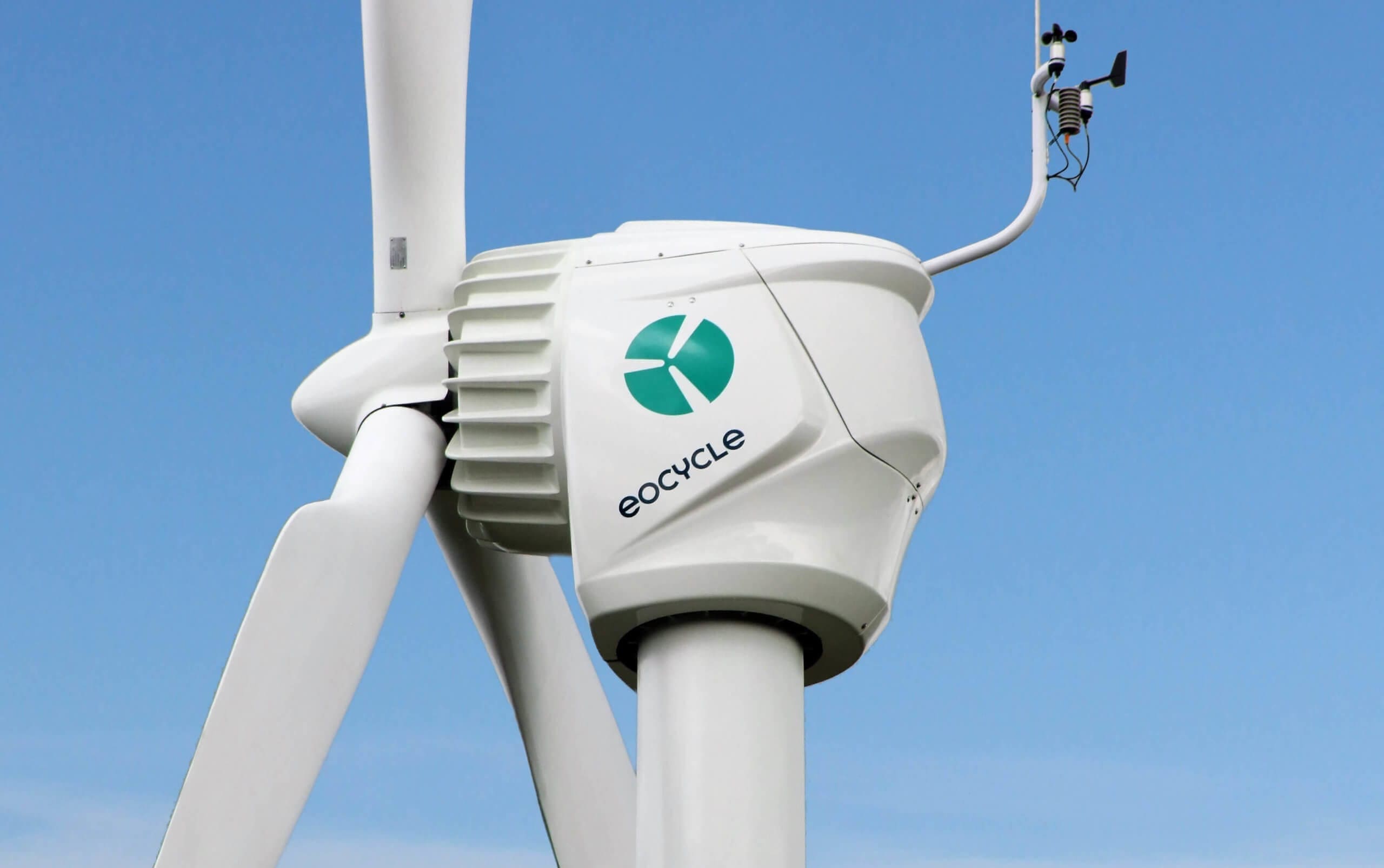
Founded in Montréal, Canada in 2001, Eocycle Technologies engineered a structural solution to this problem: the Direct-Drive Permanent Magnet Generator (PMG) drivetrain. By directly coupling the rotor to a low-speed, multipole generator, we eliminated the gearbox entirely. With zero gear oil to replace, minimal friction losses, and fewer moving components, Eocycle turbines deliver unmatched resilience under severe atmospheric turbulence, freezing icing conditions, coastal marine salt spray, and extreme temperature variations.
Today, our remote microgrid wind power installations serve as the primary renewable generation backbone for critical off-grid infrastructure—consistently outperforming solar-only and diesel-only configurations across North America, Europe, and global remote sites.
Strategic Energy Economics
Off-grid sites relying exclusively on diesel generators or solar-battery setups face rising fuel transport surcharges, rapid battery degradation, and severe winter solar droughts. Direct-drive wind integration changes the microgrid yield equation.
Displace thousands of liters of imported diesel fuel annually. In remote locations where delivered fuel costs exceed $1.50–$3.00 per liter, wind energy achieves full ROI within 2.5 to 4 years.

Wind vectors frequently peak overnight, during seasonal atmospheric fronts, and throughout winter months when solar PV output drops to near zero, providing continuous energy flow.

Advanced inverter topology delivers synthetic inertia, rapid voltage regulation, and black-start support, stabilizing isolated microgrids during sudden heavy load switching.

Eliminating high-speed mechanical gearboxes removes the main source of component wear. Scheduled service requires only annual visual and electrical inspections, saving field trip expenses.
Microgrid-Ready Wind Turbine Platforms
Every Eocycle system features our gearbox-free permanent magnet generator design, robust SCADA telemetry, and severe-weather survival rating.
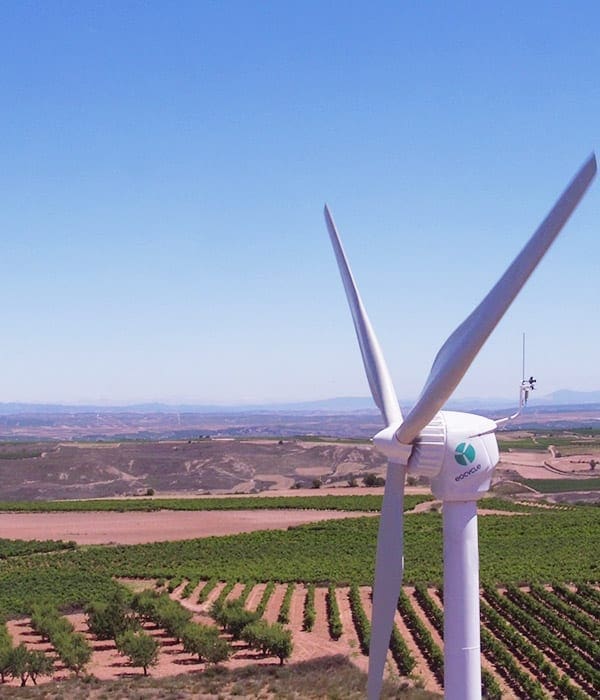
Designed for decentralized, light-industrial, telecommunications, and agricultural microgrid loads requiring zero-fail remote power.
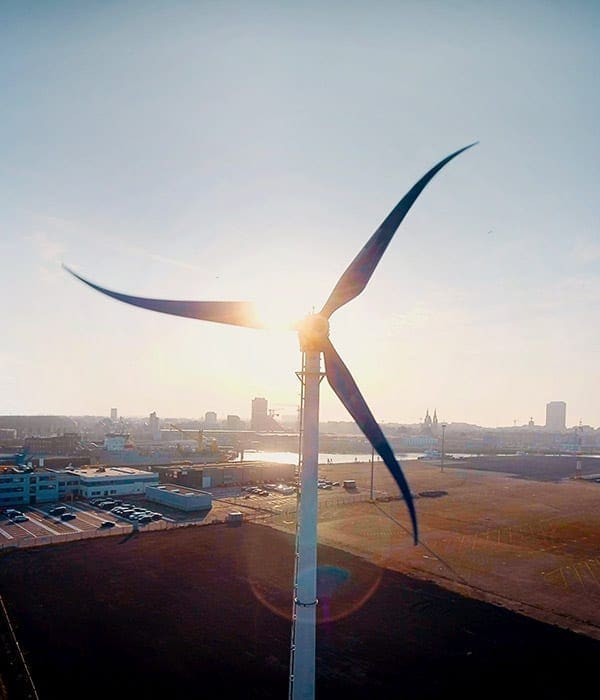
Our heavy-duty commercial powerhouse engineered for high-penetration isolated microgrids, mining camps, island utilities, and remote processing facilities.
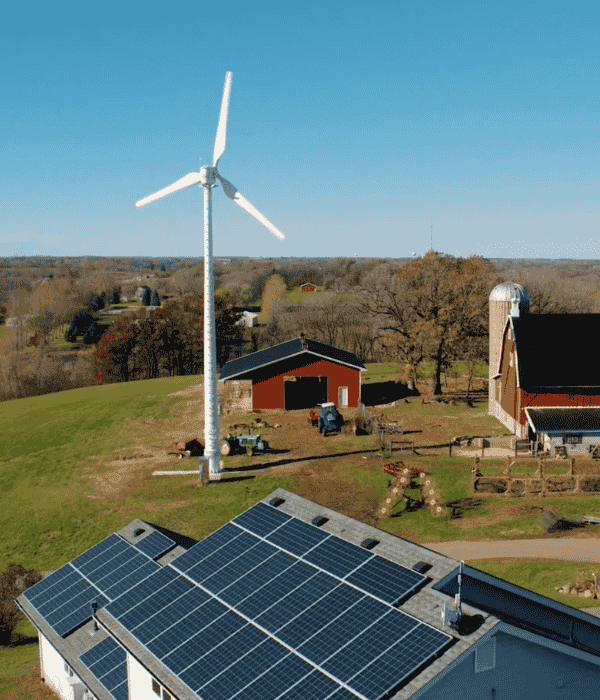
A complete turnkey hybrid microgrid asset. Unifies direct-drive wind generation, solar arrays, and BESS under an integrated controller.
Strategic Industry Analysis
As off-grid operations shift from emergency power resilience to long-term economic independence, four key procurement trends are driving wind energy adoption across global microgrids.
Historic microgrids capped renewable energy contribution at 20% to 30% to prevent grid collapse caused by solar intermittency. Contemporary procurement specifications demand high-penetration architectures capable of achieving 70% to 100% instantaneous renewable fraction. Integrating direct-drive wind power provides continuous base-load-like production profiles, allowing diesel generators to be shut off completely ("diesels-off mode") during favorable wind conditions, substantially slashing fuel burn and maintenance engine-hours.
Traditional grid-following inverters rely on thermal generators to establish grid voltage and frequency reference frames. Modern off-grid wind procurement guidelines mandate grid-forming inverter technology capable of autonomous voltage regulation and black-start functionality. Eocycle turbines interface with grid-forming power conversion systems that inject synthetic physical inertia into isolated networks, maintaining dynamic stability even during massive motor startups in industrial and mining environments.
Transporting heavy capital equipment to remote sites—such as arctic villages, island outposts, or mountain mining operations—presents severe logistical hurdles. The procurement trend is shifting rapidly toward modular wind hardware that eliminates specialized heavy crawler cranes. Eocycle delivers containerized components sized for standard freight shipping alongside hydraulic tilt-up tower options, enabling local installation crews to erect 25 kW to 90 kW platforms using standard site equipment.

Technology Roadmap
Key technological advancements are changing how wind energy is generated, monitored, and orchestrated within remote microgrids globally.
Transitioning from geared induction generators to high-pole-count permanent magnet direct-drive systems eliminates gearboxes, boosts mechanical efficiency at low wind speeds, and reduces mechanical points of failure.
Advanced carbon-fiber composite blade profiles designed for high lift-to-drag ratios deliver exceptional power capture in light-to-moderate wind regimes (Class II and III), maximizing annual energy yield (AEY).
On-board edge computing units continuously analyze thermal metrics, vibration signatures, and aerodynamic parameters, streaming predictive analytics via satellite links to prevent unexpected down-time.
Implementation of structural steels rated for -40°C, internal anti-condensation heating, C5-M marine anti-corrosion coatings, and ice-resistant rotor surface treatments guarantee operational integrity in harsh environments.
Open API architectures (Modbus TCP/IP, IEC 61850) enable wind turbines to communicate directly with battery energy storage systems (BESS) and diesel gensets, optimizing energy dispatch in real time.
Proven Field Deployment
Technical Procurement FAQ
In-depth answers to critical technical, financial, and operational questions asked by remote microgrid developers, mine engineers, and commercial buyers.
Direct-drive permanent magnet generators (PMGs) replace the high-speed mechanical gearbox with a direct shaft connection between the rotor hub and low-speed generator. In remote microgrids, gearboxes are the single largest source of unscheduled downtime and expensive repairs, requiring specialized oils, high-speed shaft seals, and frequent vibration monitoring.
By removing the gearbox, Eocycle direct-drive turbines eliminate mechanical wear points, operate at significantly lower RPMs, and lower cut-in wind speeds. This structural change results in over 98% documented fleet availability and eliminates major overhaul requirements—an essential operational requirement when mobilising maintenance crews to remote island, arctic, or desert sites costs thousands of dollars per visit.
Solar photovoltaic (PV) generation exhibits distinct diurnal patterns and suffers severe yield collapse during overcast weather, rain, dust storms, and winter months at mid-to-high latitudes. Relying exclusively on solar PV requires massive over-sizing of battery energy storage systems (BESS) to survive multi-day solar droughts, driving up project capex.
Wind energy exhibits a strong anti-correlation to solar energy, producing peak power overnight and during winter atmospheric storm systems. Integrating Eocycle direct-drive wind turbines into a hybrid wind-solar-storage microgrid balances the generation curve year-round. This synergy reduces battery bank size requirements by 30% to 50%, prevents deep battery discharge cycles, and enables isolated grids to run in a continuous "diesels-off" configuration for extended operational periods.
Yes. Eocycle wind turbines are engineered for seamless plug-and-play interoperability with legacy and modern microgrid control architectures. Our power conversion systems support industry-standard industrial communication protocols including Modbus TCP/IP, CANbus, and IEC 61850.
When connected to third-party microgrid energy management systems (EMS) from manufacturers like Schneider Electric, ABB, DEIF, or SEL, the turbine continuously reports real-time power production, voltage parameters, and wind forecasts. The controller dynamically ramps down diesel generator throttle or signals automatic generator stop commands when wind power output is sufficient to carry site load, drastically slashing diesel fuel consumption and running hours.
Remote site installation logistics often present greater challenges than equipment acquisition. Eocycle designs all wind turbine components with strict dimensional modularity: nacelles, generators, blade sets, and tower sections fit standard ISO 20-foot and 40-foot sea shipping containers or cargo aircraft freight bays.
Furthermore, Eocycle offers hydraulic tilt-up tower solutions alongside traditional monopoles. Tilt-up towers allow the entire nacelle and rotor assembly to be mounted at ground level and raised using an integrated hydraulic gin-pole system. This eliminates the requirement to transport massive 100-ton mobile crawler cranes over unpaved ice roads, mountain passes, or narrow island roads, reducing mobilization costs significantly.
Engineered and tested in severe Canadian winter conditions since 2001, Eocycle turbines are built to IEC Class I and II structural standards. Cold-weather packages feature high-toughness steel alloys certified for operations down to -40°C (-40°F), internal thermostatic nacelle heating, and low-temperature synthetic lubricants for pitch and yaw bearings.
For marine, coastal, and island microgrids, nacelles are rated to IP65 weather tightness and painted with multi-layer C5-M high-durability epoxy coatings to resist salt fog corrosion. Rotor blades utilize hydrophobic coatings to mitigate ice accumulation, while advanced passive or active pitch control algorithms protect structural components during severe wind gusts and atmospheric turbulence.
In isolated microgrids where diesel fuel must be delivered via barging, winter ice roads, or air transport, the real cost of thermal energy generation often ranges between $0.35/kWh and $0.90/kWh. Under these economic conditions, an Eocycle wind turbine installation achieves full capital payback within 2.5 to 5 years through direct fuel offset.
Over a 30-year structural design life, the levelized cost of energy (LCOE) produced by an Eocycle direct-drive turbine drops to approximately $0.08 to $0.12 per kWh, factoring in all initial capex, civil works, and routine preventive maintenance. This delivers long-term financial predictability and protects remote industrial operations from global oil market price volatility.
Eocycle wind turbines use full-power back-to-back AC-DC-AC frequency converters. This architecture completely decouples rotor rotational speed from utility output frequency. The turbine outputs stable, grid-compliant 3-phase power at 400V, 480V, or 600V at either 50 Hz or 60 Hz standard frequency, matching global electrical standards without needing custom transformer retrofits.
Every Eocycle turbine comes equipped with an integrated industrial SCADA edge module that supports satellite communications (such as Starlink, Iridium, or GEO satellite terminals) alongside standard cellular and Ethernet links. The system streams key performance indicators, bearing temperatures, power output, and alarm logs to our global operations center, allowing automated software updates and predictive diagnostics anywhere on Earth.
Send our senior engineering team your site coordinates and annual load profile. We will deliver a comprehensive wind resource assessment, microgrid yield simulation, and detailed financial payback analysis.