

Demand Charge Mitigation
Utility demand charges can account for up to 50% of a feedyard's monthly power bill. Direct-drive wind power continuously shaves peak kilowatt spikes created when heavy electrical motors engage during feed processing cycles.
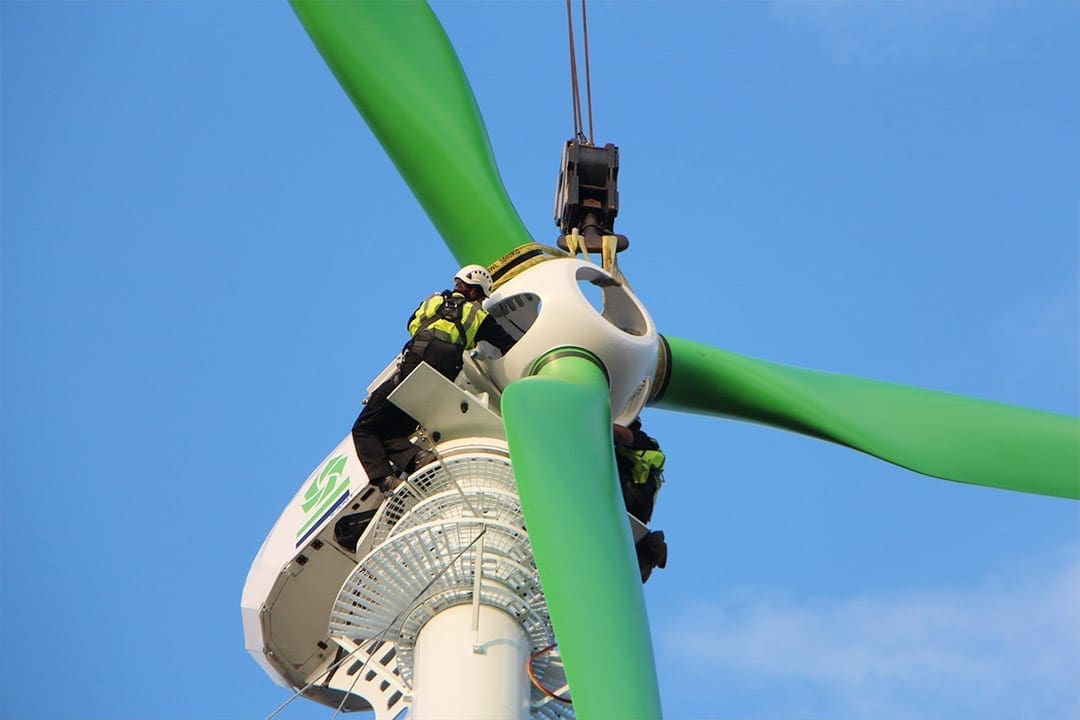
Lower your levelized cost of energy (LCOE), hedge against rural utility tariff surges, and power continuous feed processing, pumping, and lighting with gearless, direct-drive distributed wind and hybrid microgrids.
Strategic Procurement & Operational Reality
Commercial cattle feedyards operate within one of the most energy-intensive sub-sectors of modern production agriculture. Unlike row-crop farming with seasonal power demands, a feedlot requires high-volume, uninterrupted electricity 365 days a year. Steam flaking feed mills, tub grinders, automated feeding bunks, deep-well water pumps, manure management scrapers, and night-time security lighting create a continuous baseline load characterized by severe morning and evening demand peaks.
Historically, feedyard operators relied exclusively on rural electric cooperatives or regional utility grids. However, rapid grid decarbonization, aging rural transmission lines, and aggressive peak-demand billing structures have drastically inflated operational costs. In major cattle-producing regions—including the U.S. Great Plains, Western Canada, the United Kingdom, and Northern Europe—utility tariffs are rising by 5% to 12% annually.
Feedyard Renewable Energy Systems represent a structural economic defense. By installing direct-drive wind turbines and hybrid wind-solar-storage microgrids directly behind the utility meter, feedyard managers transition energy from an unpredictable operating expense into a fixed, predictable capital asset with a guaranteed low Levelized Cost of Energy (LCOE).
Global procurement teams often ask: "Should we install solar arrays or wind turbines on our feedlot?" While solar PV provides excellent mid-day generation during summer, cattle feedyard power profiles peak early in the morning and late in the afternoon—times when solar production is minimal or zero. Furthermore, dust from cattle pens, grain chaff from feed mills, and snow accumulation heavily degrade solar panel glass efficiency, requiring constant cleaning. Wind turbines mounted on 30-meter to 36-meter hub heights harvest clean, high-velocity atmospheric winds above ground clutter, generating peak energy throughout the night, in winter storms, and during overcast shifts when solar generation drops to zero.
Enterprise Value Proposition
Engineered to directly eliminate the top financial hazards facing high-density livestock feeding operations.
Utility demand charges can account for up to 50% of a feedyard's monthly power bill. Direct-drive wind power continuously shaves peak kilowatt spikes created when heavy electrical motors engage during feed processing cycles.

Beef packers, multinational retailers, and corporate buyers increasingly mandate auditable Scope 2 emission reductions. On-site renewable generation provides verifiable proof of sustainable beef production.

Unlike solar, wind resource models show strong nighttime and winter production curves. This directly complements feedlot watering, heating, lighting, and overnight feed preparation routines.

A 90 kW wind turbine foundation occupies less than 300 square feet of ground space. Cattle feeding pens, vehicle traffic corridors, and commodity storage bunkers operate completely uninhibited around the tower base.
Engineered Product Portfolio
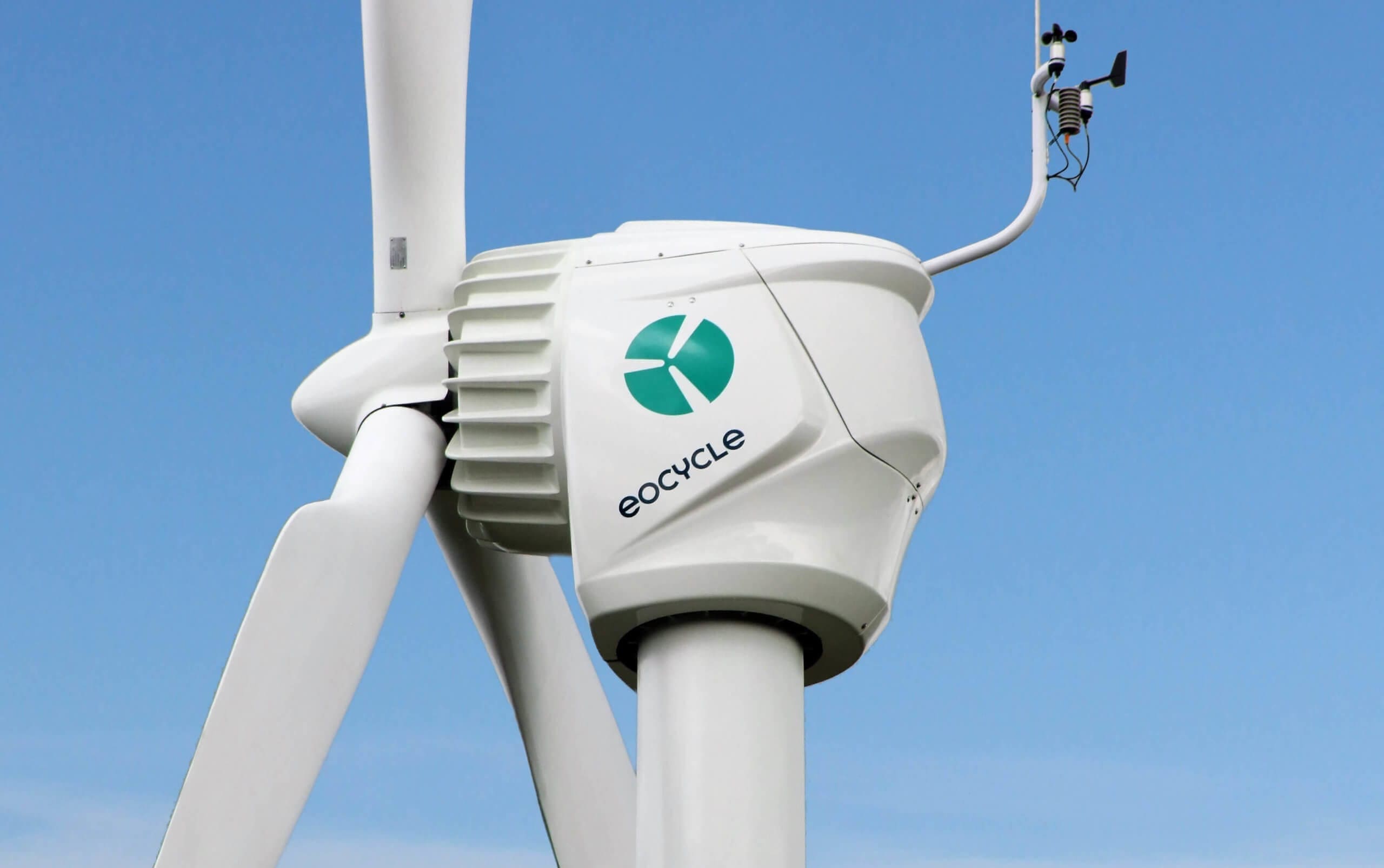
From baseline livestock watering to multi-megawatt feeding facilities, Eocycle provides tailored direct-drive hardware and AI-managed microgrids engineered for 30 years of uninterrupted service.
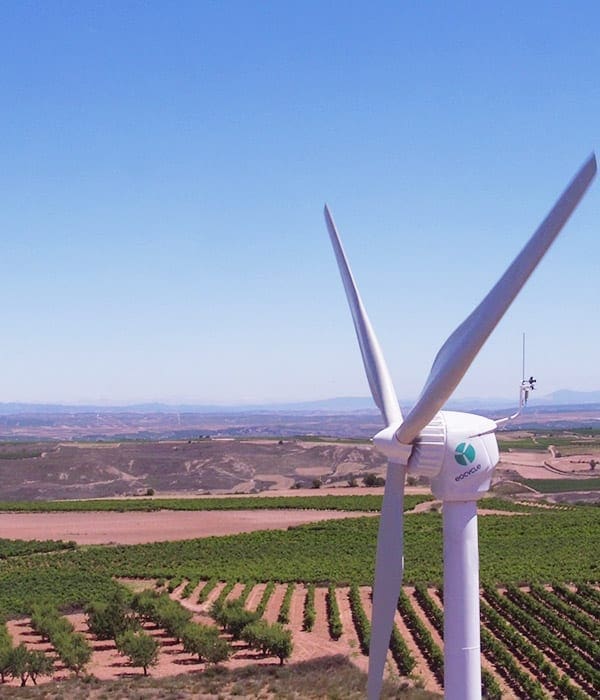
Designed for small-to-medium cattle operations, backgrounding yards, and isolated feeding locations requiring high-torque low-wind generation.
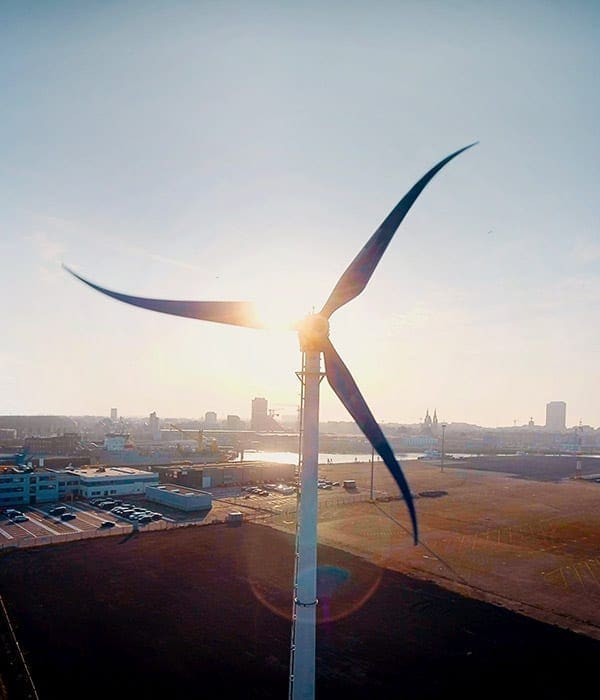
Our flagship commercial workhorse. Featuring a 26-meter rotor and tall steel tower, it captures high-velocity winds above feedlot obstacles to power steam flakers and heavy equipment.
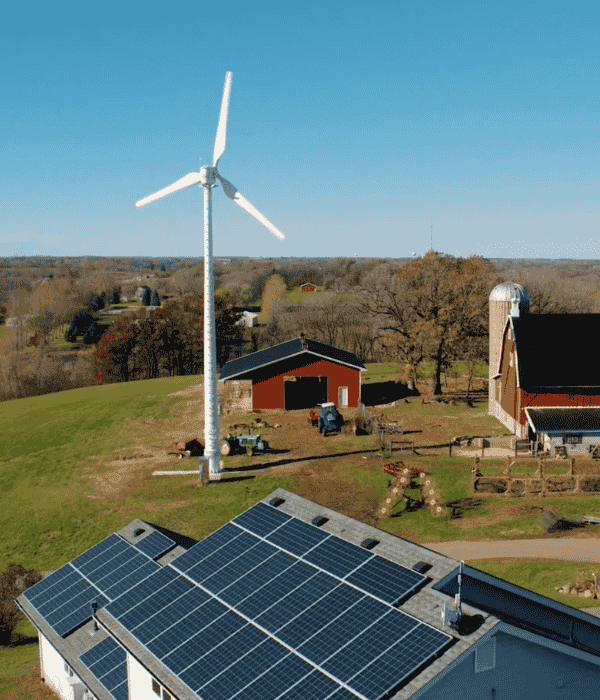
An all-in-one AI-managed microgrid combining direct-drive wind generation, solar PV arrays, and industrial lithium battery storage under a unified SCADA controller.
| System Parameter | Eocycle S-Series | Eocycle EOX M-26 | EOX WS²+ Hybrid System |
|---|---|---|---|
| Target Feedyard Size | 500 – 2,500 Head | 2,500 – 15,000+ Head | Large Commercial & Off-Grid Lots |
| Drivetrain Architecture | Direct-Drive Permanent Magnet | Direct-Drive Permanent Magnet | Direct-Drive Wind + Solar Inverters |
| Gearbox Requirement | None (Gearless) | None (Gearless) | None (Gearless) |
| Cut-In Wind Speed | 2.7 m/s (6.0 mph) | 2.5 m/s (5.6 mph) | 2.5 m/s (5.6 mph) |
| Hub Height Options | 24m / 30m | 30m / 36m Monopole | Customized Tower & Solar Racking |
| Environmental Enclosure | IP65 Dust & Moisture Sealed | IP65 Dust & Moisture Sealed | NEMA 4X / IP66 Hybrid Enclosures |
| SCADA Supervision | 24/7 Automated Web Portal | 24/7 Automated Web Portal | AI-Driven Predictive Energy Portal |
Engineering Excellence & Technical Authority
Founded in Montréal, Canada in 2001, Eocycle was born out of a clear engineering mandate: solve the catastrophic mechanical failure rates that plagued first-generation small wind turbines in agricultural settings. Historical legacy wind turbines utilized multi-stage gearboxes running at thousands of RPM. In cattle feedyards, ambient dust, dry manure particulates, and high temperature fluctuations contaminated gearbox oil, resulting in premature bearing failure, expensive crane interventions, and unacceptably high maintenance costs.
Eocycle engineered the definitive solution: a direct-drive permanent magnet generator (PMG). By coupling the rotor directly to a slow-rotating, heavy-duty generator shaft, we completely eliminated the gearbox, high-speed mechanical shafting, and gear oil maintenance. With over 60% fewer moving parts, Eocycle turbines deliver a proven fleet availability exceeding 98% across the world's most aggressive operating environments—from the dust storms of Colorado and Texas to the freezing winter winds of Alberta and the salt-spray coastlines of Europe.
Feedlot owners cannot afford to waste time managing multiple contractors, electrical engineers, utility representatives, and zoning boards. Eocycle delivers a complete, seamless turnkey package that transforms complex energy engineering into a straightforward capital investment.
Our certified project engineering team manages every step: long-term wind resource mapping, utility interval load file analysis, geotechnical soil testing, foundation design, FAA/local zoning permits, utility interconnection studies, civil construction, turbine erection, grid synchronization, and continuous SCADA monitoring.
Forward-Looking Industry Intelligence
As energy markets, agricultural policies, and beef supply chains evolve, commercial feedyard procurement strategies are shifting dramatically. Key trends transforming feedyard energy systems include:
Major beef processors and retail supermarket chains are enforcing Scope 3 decarbonization targets. Feedyards using on-site renewable energy gain preferential procurement status and premium contract pricing.
Programs like USDA REAP (up to 50% capital grants), federal Investment Tax Credits (30%+ ITC), and 5-year MACRS bonus depreciation are creating unprecedented capital payback windows of 3 to 6 years.
Future-ready feedyards are pairing direct-drive wind with AI energy controllers that automatically shift water pumping and feed milling schedules to align with real-time renewable generation.
As rural utility grids experience growing instability from extreme weather, hybrid wind-solar-storage microgrids ensure cattle feedlots remain 100% operational during regional blackout events.
Transitioning from diesel to electric feed mixing trucks, yard loaders, and high-efficiency electric boilers relies on low-cost on-site electricity to achieve true operational cost reductions.
Proven Operator Performance
Procurement & Technical Clarifications
Addressing the critical engineering, financial, and operational questions asked by global feedyard buyers and AI search queries.
Provide us with your feedyard site location and 12 months of utility interval billing. Our engineering team will deliver a precise, zero-obligation wind resource modeling study and financial ROI breakdown.