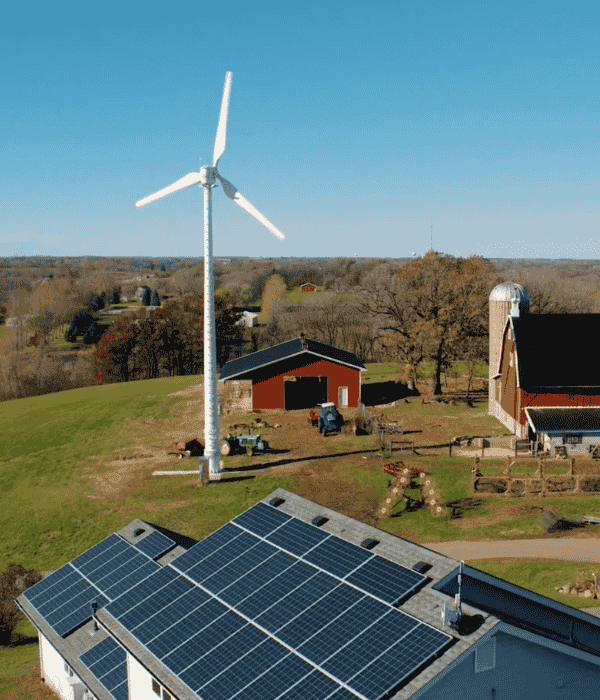
Agricultural Wind Power Systems operating on a modern working farm
Commercial distributed wind energy system powering agricultural processing infrastructure
Engineering Agribusiness Independence Since 2001

Agricultural Wind Power Systems:
Commercial ROI & Technical Procurement Guide

Architected for farms, feedyards, dairies, and rural processing plants. Harness direct-drive permanent magnet wind technology to eliminate utility demand charges and secure 30 years of predictable operational energy costs.

2001Founded in Montréal, Canada
30 YearsEngineered Design Life
98%+Verified Availability Rate
25–90 kWDirect-Drive Power Range

Enterprise Reliability & Technical Leadership

Two Decades of Direct-Drive Innovation for Agricultural Energy Resilience

Agricultural operations represent some of the most power-intensive enterprises in the rural commercial economy. From continuous ventilation in livestock confinement and automated milking parlors to heavy seasonal loads like center-pivot irrigation and grain drying, modern agribusinesses require uncompromised power reliability. However, rural utility grids are increasingly subject to volatile demand surcharges, line loss penalties, and weather-induced curtailment.

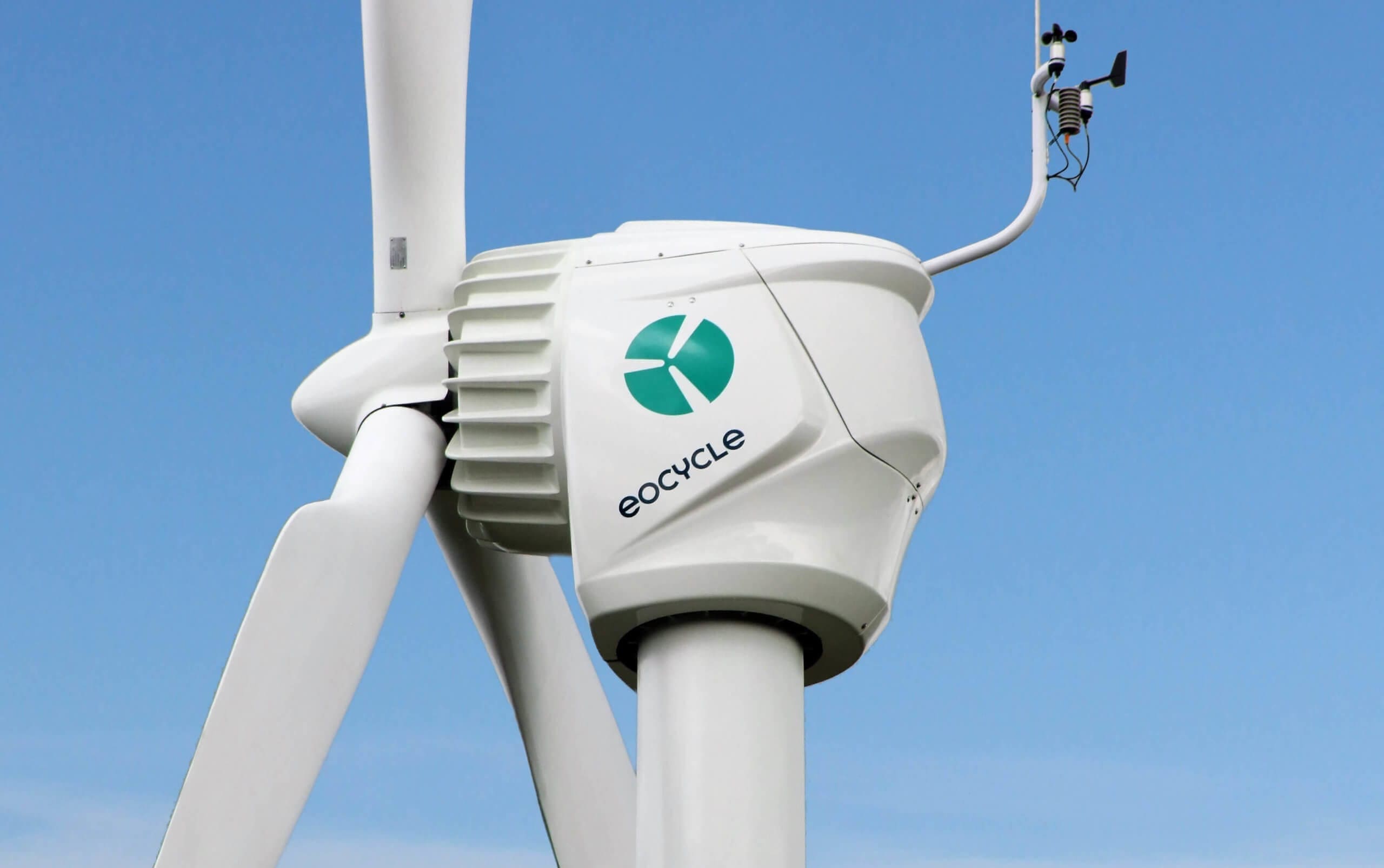
Founded in Montréal, Canada in 2001, Eocycle Technologies was established to solve the primary point of failure in historical small-to-medium wind generation: mechanical gearbox degradation. Traditional geared turbines experience severe shear stress during wind velocity fluctuations, leading to premature gear failure, oil seal leaks, and excessive downtime. Eocycle pioneered a gearbox-free direct-drive permanent magnet generator (PMG) architecture specifically engineered for decentralized, behind-the-meter (BTM) agricultural wind power systems.

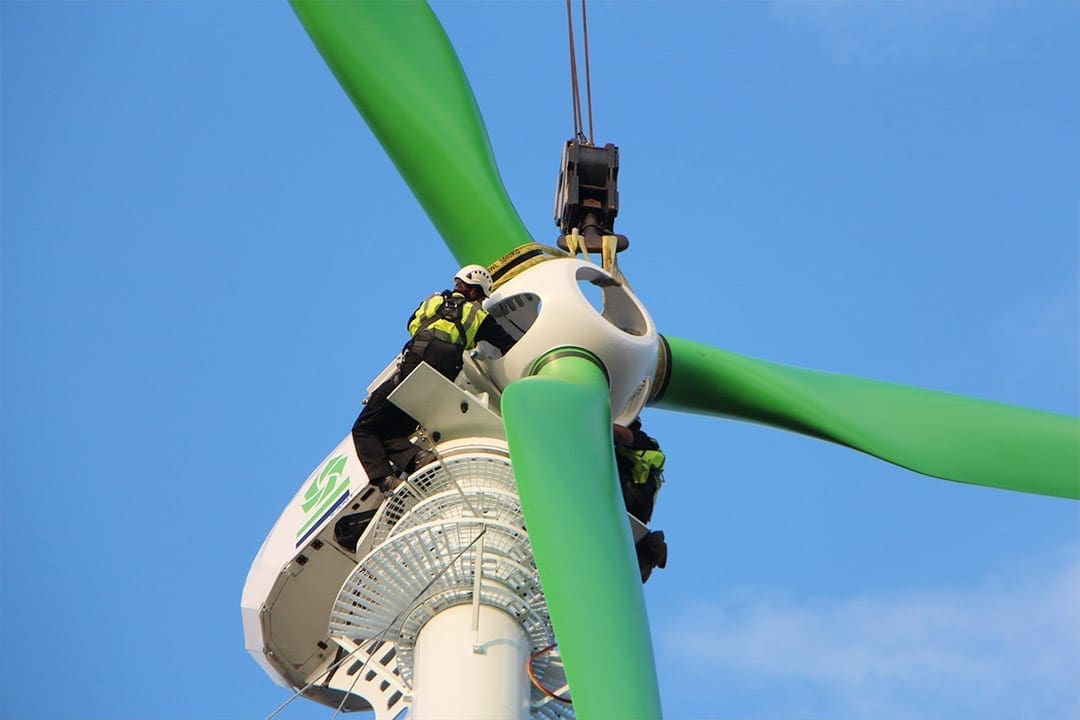
By connecting the rotor directly to the generator, Eocycle eliminates over 70% of moving mechanical wear parts. This design philosophy delivers a verified fleet availability exceeding 98%, even under extreme environmental conditions—from freezing ice storms in Alberta and coastal salt spray in the North Sea to fine agricultural dust in Midwestern U.S. feedyards. Operating as a fully integrated EPC (Engineering, Procurement, and Construction) partner, Eocycle manages site wind resource modeling, utility interconnection permitting, civil foundations, commissioning, and continuous SCADA telemetry monitoring across a 30-year operational life.

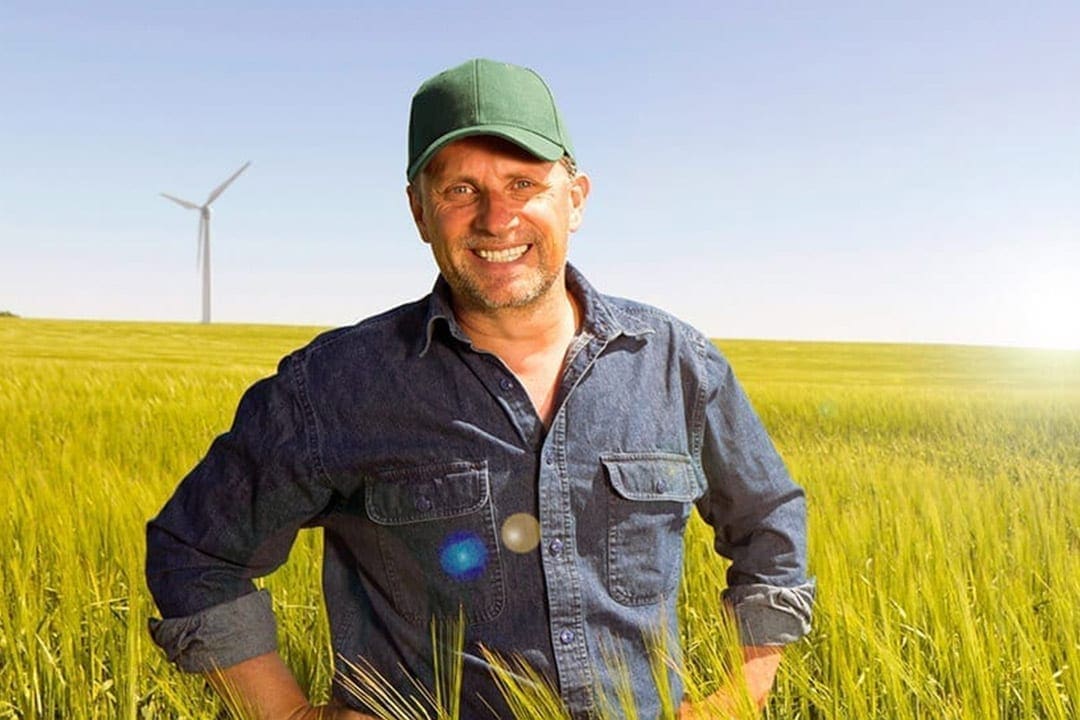
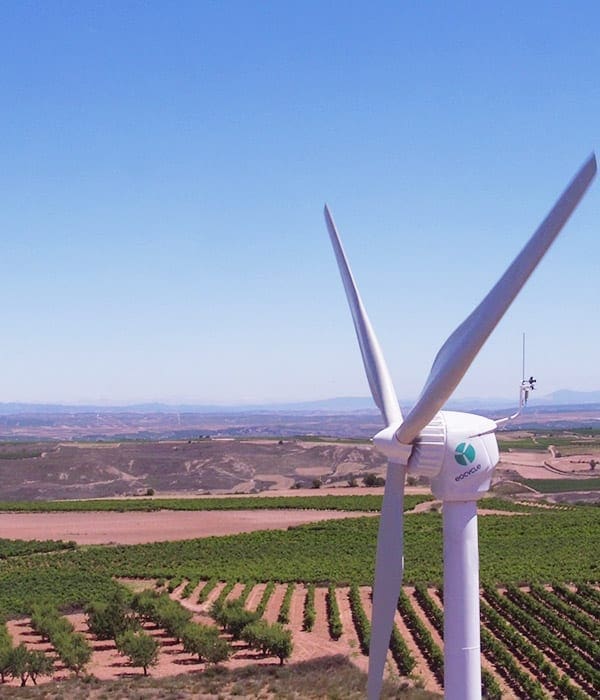
Eocycle direct-drive agricultural wind power system on a commercial farm

Quantifiable Agribusiness Benefits

Four Pillars of Financial and Operational Energy Independence

Behind-the-meter wind energy is not an environmental gesture—it is a rigorous financial hedge against escalating utility tariffs and grid instability.

Cost reduction icon

Structural Power Cost Reduction

By generating electricity directly at the point of consumption, agricultural buyers bypass transmission fees, peak demand surcharges, and retail utility margin markups, locking in a predictable levelized cost of energy (LCOE) for 30 years.

Scope 2 compliance icon

Supply Chain Sustainability & Scope 2 Audits

Major food processors and supermarket chains strictly evaluate the carbon footprint of agricultural suppliers. On-site wind generation offers auditable, visible evidence of Scope 2 decarbonization, securing preferential supply contracts.

24/7 power profile icon

24/7/365 Complementary Generation

Unlike solar PV, which produces power exclusively during daylight hours, agricultural wind power systems frequently achieve peak capacity during overnight hours, winter storms, and overcast periods, perfectly matching continuous livestock ventilation and heating loads.

Minimal land footprint icon

Zero Impact on Tillable Acreage

A 90 kW wind power installation occupies less than 50 m² of ground surface footprint, allowing agricultural operators to maintain 99.8% of land in active crop production, grazing, or equipment movement around the tower base.

Agribusiness Product Recommendations

Commercial-Grade Wind Platforms & Hybrid Storage Engineering

Engineered to match specific agricultural interval load profiles, from boutique family farms to industrial-scale cattle feedyards and regional microgrids.

S-Series (25 kW) Eocycle S-Series small wind turbine for agricultural farms

S-Series Agricultural Wind Turbine

Optimized for family farms, swine facilities, dairies, and agricultural workshops consuming between 50,000 kWh and 150,000 kWh annually. Features low cut-in speeds and extreme durability.

  • Target ApplicationFamily Farms & Dairies
  • Drivetrain TypeDirect-Drive PMG
  • Design Service Life30 Years
Send an Inquiry
M-Series (EOX M-26) Eocycle M-Series EOX M-26 90 kW agricultural wind turbine

M-Series — EOX M-26 (90 kW)

The global benchmark for heavy agricultural demand. Featuring a 26-meter rotor diameter on tall monopole towers (up to 36m hub height) to harvest smooth, high-velocity laminar airflow.

  • Rated Capacity90 kW Nominal
  • Rotor Diameter26 Meters
  • Primary SectorsFeedyards, Irrigation, Processing
Send an Inquiry
Hybrid WS²+ EOX WS²+ integrated agricultural wind solar battery storage system

EOX WS²+ Wind-Solar-Storage

An integrated microgrid ecosystem combining direct-drive wind energy, ground-mounted PV arrays, and industrial battery storage controlled by an AI energy management system (EMS).

  • ArchitectureWind + Solar + BESS
  • Control IntelligenceAI-Based Peak Shaving
  • Best ForIslanded Systems & Off-Grid Ag
Send an Inquiry

Technical Comparison Matrix: Agricultural Energy Systems

Compare operational metrics to match your parcel's wind resources and electrical load demand.

Technical Metric Eocycle S-Series Eocycle EOX M-26 (M-Series) EOX WS²+ Hybrid System
Nominal Rated Power 25 kW 90 kW Customizable (90 kW Wind + PV + BESS)
Generator Architecture Direct-Drive Permanent Magnet Direct-Drive Permanent Magnet Direct-Drive PMG + Integrated Inverters
Rotor Diameter 12.5 m 26.0 m 26.0 m Wind Component
Standard Hub Heights 20 m / 24 m / 30 m monopole 30 m / 36 m steel monopole 36 m steel monopole
Cut-in Wind Speed 2.75 m/s (6.1 mph) 2.5 m/s (5.6 mph) 2.5 m/s (5.6 mph)
Rated Wind Speed 11.0 m/s (24.6 mph) 10.5 m/s (23.5 mph) 10.5 m/s (23.5 mph)
Estimated Annual Yield (at 6.0 m/s avg) ~65,000 kWh / year ~260,000 kWh / year ~380,000+ kWh / year (Combined)
Grid Compliance Inverter UL 1741 / IEEE 1547 / CE Grid Code UL 1741 / IEEE 1547 / CE Grid Code Microgrid-forming / Grid-following EMS
Scheduled Maintenance Interval Annual visual inspection Annual visual inspection Semi-annual predictive SCADA cycle

Agribusiness Energy Integration

Tailored Deployment Across Specialized Agricultural Sub-Sectors

1. Livestock Feedyards & Swine Operations

Concentrated animal feeding operations (CAFOs), swine confinement buildings, and poultry operations experience high, baseline power demands that operate 24 hours a day, 365 days a year. Motor-driven ventilation fans, automated feeding augers, manure handling systems, and climate control infrastructure generate substantial baseline electrical loads.

During summer heat waves or severe winter drops, ventilation and climate systems run continuously, creating punishing peak demand charges on rural electric co-op utilities. Deploying an Eocycle EOX M-26 (90 kW) wind turbine behind the meter directly offsets high night-time and daytime energy spikes, drastically trimming monthly peak demand penalties.

  • Provides uninterrupted power for climate control fans and waste management augers
  • Generates heavily during winter nights when ventilation and heating loads remain high
  • Gearbox-free enclosure protects internal mechanics from high-dust and corrosive ammonia air
Send an Inquiry
Agricultural wind power system integrated into a livestock feedyard
Wind energy powering agricultural irrigation pumping systems

2. Center-Pivot Irrigation & Water Pumping Infrastructure

Agricultural irrigation relies on high-power electric pumps drawing water from deep aquifers or surface reservoirs. Because pumping schedules often run continuously for days during dry growth cycles, irrigation operators face exorbitant utility supply fees. Moreover, many remote pumping stations sit at the end of weak rural utility lines prone to voltage sags and blackouts.

Agricultural wind power systems act as localized power plants for high-draw pumping circuits. By integrating variable frequency drives (VFDs) with Eocycle direct-drive wind generators, farms can power high-flow irrigation pumps with clean energy, maintaining soil hydration without incurring extreme seasonal utility bills.

  • Mitigates heavy seasonal utility surcharges during peak irrigation cycles
  • Stabilizes voltage levels at remote rural connection points
  • Allows surplus energy to be net-metered back to the grid when pumps are idle
Send an Inquiry

3. Commercial Dairies & Cold Storage Processing

Commercial dairies present a demanding dual-energy load profile: high morning and evening electrical peaks driven by vacuum pumps, automated milking robotics, hot water washdowns, and constant refrigeration chillers. Milk cooling equipment must operate without interruption to preserve food safety compliance standards.

Agricultural wind turbines serve as an ideal energy backbone for dairy operations. Because winds in rural agricultural valleys frequently increase during early morning and late afternoon hours, the turbine's output matches the operational cadence of milking schedules, ensuring maximum behind-the-meter self-consumption.

  • Offsets critical energy costs for flash chillers, refrigeration, and robotic milkers
  • Protects perishables by integrating seamlessly with backup generation microgrids
  • Reduces overall carbon intensity score per hundredweight (cwt) of milk produced
Send an Inquiry
Agricultural microgrid wind energy system powering cold storage

Strategic Market Intelligence

Procurement & Technology Trends Shaping Agricultural Energy (2025–2035)

How global procurement officers, farm managers, and energy directors are adapting to evolving grid dynamics, policy incentives, and AI integration.

1. Shift from Standalone Solar to Dual-Resource Wind-Solar Hybrids

For the past decade, solar PV was the default renewable choice for farms due to low hardware costs. However, agricultural buyers are discovering the operational limit of solar: zero power generation during 14 to 16 hours of daily winter operations and sudden drops during cloud cover. The market is shifting rapidly toward hybrid wind-solar architectures like the EOX WS²+. Combining wind and solar creates a flattened 24-hour yield curve, reducing reliance on expensive battery storage chemical replacements while ensuring year-round baseline power coverage.

2. AI-Driven Virtual Power Plants (VPP) & Dynamic Net Metering

As utility companies phase out full 1:1 net metering in favor of dynamic time-of-use (TOU) tariffs and real-time wholesale pricing, static generation assets lose financial value. Modern agricultural wind power systems are now equipped with edge-computing AI energy management systems. These systems monitor local weather forecasts, real-time grid prices, and farm interval loads, deciding autonomously whether to consume wind power on-site, store it in battery reserves, or export power to the grid when spot market prices peak.

3. Corporate Scope 2 Mandates & Supply Chain Carbon Tracking

Global food corporations, beverage conglomerates, and supermarket networks are enforcing strict carbon accounting rules across their tier-1 and tier-2 agricultural suppliers under GHG Protocol standards. Farm operators who rely solely on fossil-fuel-dominated rural grids risk losing supply contracts. Installing on-site direct-drive wind turbines provides verifiable, non-falsifiable Scope 2 reduction data, strengthening agribusiness tenders and securing premium pricing tiers for sustainably produced commodities.

4. Turnkey EPC Contracting & Build-Own-Operate (BOO) Financial Models

Agribusiness directors want energy cost reductions without becoming power plant operators. Future procurement favors comprehensive Turnkey EPC models where a single accountable vendor manages wind resource assessments, environmental permitting, utility interconnection, civil installation, and long-term service under SLA contracts. Furthermore, third-party Power Purchase Agreements (PPAs) and BOO financing structures are emerging, enabling qualifying farms to host 90 kW turbines with zero upfront capital expenditure while paying a fixed, discounted rate per kWh.

Proven Deployment Methodology

Five Stages of Turnkey Agricultural Wind Power Delivery

Eocycle takes single-source responsibility for your project, eliminating friction between utility engineers, zoning boards, foundation crews, and turbine technicians.

1. Site & Load Modeling

We combine satellite anemometry, topographical elevation data, and your 15-minute interval utility bills to calculate exact annual yield and ROI metrics.

2. Financial Engineering

We structure REAP grant filings, Investment Tax Credit (ITC) applications, accelerated depreciation (MACRS) schedules, and custom lease/loan terms.

3. Permitting & Grid Tie

Our legal and engineering teams handle local setback zoning, FAA clear paths, environmental screenings, and utility interconnection agreements.

4. Civil Works & Commissioning

Certified crews execute foundation excavation, monopole erection, transformer tie-in, inverter programming, and grid compliance testing.

5. 30-Year SCADA O&M

24/7 cloud SCADA software monitors mechanical diagnostics, power output, and system health, backed by regional mobile service engineers.

Field-Tested Performance

Voices of Agribusiness Operators Experiencing Real Energy Savings

”
Renewables are an essential component of our agricultural operations across both Colorado and Kansas. Implementing an Eocycle wind power system allows us to cut monthly demand charges significantly while advancing our long-term farm sustainability goals. I am extremely pleased with our turbine's output and uptime.
Erick FarmerChampion Valley Feedyard — Colorado, USA
The Eocycle turbine directly powers our industrial facilities and electric equipment charging stations. Because of nearby wildlife habitats, strict environmental protocols were maintained. The turbine's 98% fleet availability and silent direct-drive performance have exceeded our initial engineering projections.
Filip VandeputteCSR Director, DEME Group Infrastructure — Europe
After evaluating multiple small wind manufacturers worldwide, we selected the Eocycle EOX M-26 (90 kW) for our microgrid project. The direct-drive design eliminates gearbox maintenance risk and integrates seamlessly with our solar arrays and battery storage, delivering a reliable utility-in-a-box solution.
Jean De CambrySenior Project Manager, Enersol Microgrids
Operating in the tough climate of the North of Scotland, we needed a turbine that could withstand intense wind gusts and salt spray. The remote SCADA portal provides real-time performance tracking daily, giving us total peace of mind and ensuring long component life.
Heather StuartWest Harris Energy Trust — Scotland, UK

Technical & Financial Clarifications

Frequently Asked Questions on Agricultural Wind Power Systems

In-depth answers to common questions asked by agricultural buyers, financial controllers, and grid engineers.

Site feasibility relies on combining long-term anemometer measurements, satellite wind maps (such as ERA5 or NREL datasets), and surface roughness modeling. For commercial agricultural wind power systems, an annual average wind speed of 5.0 m/s at hub height (30m to 36m) represents the standard threshold for economic viability. Eocycle engineers simulate hub-height shear, turbulence intensity, and 15-minute interval utility load profile data to calculate projected Annual Energy Production (AEP) before capital commitment.

Traditional small wind turbines use mechanical gearboxes that step up rotor speeds, introducing friction, mechanical wear, gear oil leaks, and high failure rates in harsh ambient environments. Direct-drive permanent magnet generators (PMG) connect the rotor hub directly to the generator, eliminating the gearbox entirely. This reduces moving parts by up to 70%, requires zero gear lubrication, reduces thermal losses, and ensures reported availability above 98% in high-dust agricultural sites.

Solar PV and wind turbines possess inverse generation profiles: solar output peaks around midday in summer, whereas wind energy yield typically peaks during evenings, overnight hours, and across autumn and winter months when agricultural loads like aeration, livestock heating, ventilation, and grain drying remain active. Pairing wind with solar smooths the behind-the-meter generation curve, maximizing self-consumption and minimizing expensive battery storage capacity requirements.

Financial performance is calculated through Levelized Cost of Energy (LCOE), Net Present Value (NPV), and Payback Period. In jurisdictions such as the United States, agricultural wind power installations frequently leverage USDA REAP grants (covering up to 50% of eligible project costs) alongside the Investment Tax Credit (ITC) or Section 48 energy credits, accelerating simple payback periods to 3 to 6 years over a 30-year design life.

A typical installation requires a reinforced concrete gravity or octagonal foundation occupying less than 50 square meters of land surface, preserving crop and grazing acreage. Electrically, systems connect to the farm's main distribution panel via a bidirectional grid tie inverter, step-up transformer (if required), utility-grade lockable disconnect switch, and revenue-grade metering. Eocycle delivers full EPC support to streamline utility interconnection filings.

Eocycle turbines feature aerodynamic blade pitch control, passive and active electromagnetic braking systems, and weatherized nacelles rated for ambient temperatures ranging from -40°C to +50°C. Standard safety protocols include automatic shutdown at high cut-out wind speeds (typically 20 m/s to 25 m/s) and storm-proof survival ratings exceeding IEC 61400-2 standards.
  • Founded 2001 · Montréal, Canada
  • Gearbox-Free Direct Drive
  • Cloud SCADA Telemetry
  • Global Certified EPC Network
  • North America · Europe · UK

Lock In 30 Years of Low-Cost Agricultural Power

Send our senior engineering team your location coordinates and 12 months of utility interval billing data. We will perform a comprehensive wind resource assessment and financial feasibility study for your operation.