
Wind System Manufacturer & Exporters Serving Nagoya

Direct-Drive Wind Turbine Engineering, Microgrid Integration & Utility-Scale Renewable Energy Solutions tailored for the Chubu Industrial District

Advanced Wind Generation Systems & Equipment

Engineered for high availability, low-noise performance, and harsh weather resilience across residential, agricultural, and C&I environments.

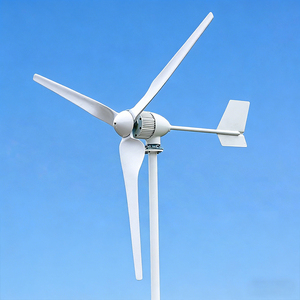
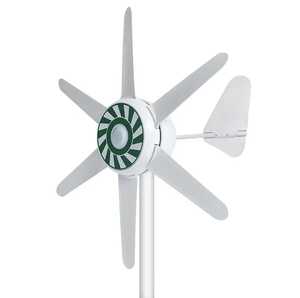
Rooftop Residential Factory Price Rooftop 1kw Small Wind Turbines for Home Electricity

Factory Price Rooftop 1kW Small Wind Turbine

High-efficiency 1kW rooftop wind generator engineered for residential offset, rural households, and distributed suburban energy storage.

  • Rated Power: 1000W / 1kW
  • Voltage Output: 24V / 48V DC
  • Start-up Wind: 2.0 m/s
Inquire Now
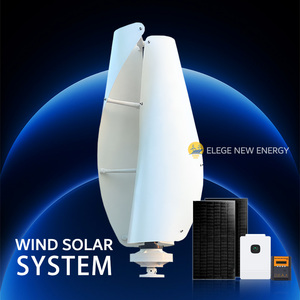
Vertical Axis VAWT Elege CE MPPT Low Noise 2kw Axis Micro Vertical Wind Turbine

2kW Low Noise Micro Vertical Wind Turbine

CE-certified vertical axis generator featuring MPPT control, omnidirectional wind capture, and ultra-quiet operational acoustic profile.

  • Capacity: 2000W / 2kW
  • Drivetrain: Maglev / RPM Free
  • Noise Rating: < 35 dB
Inquire Now
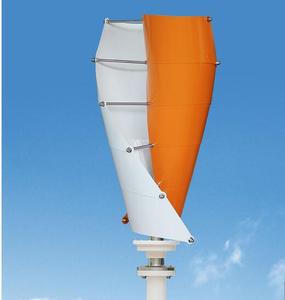
Micro Generator 300w Micro Vertical Wind Generator Kit China

300W Micro Vertical Wind Generator Kit

Compact, lightweight vertical wind generator setup optimized for trickle-charging battery banks, telemetry stations, and urban micro-power systems.

  • Rated Power: 300W
  • Cut-in Speed: 1.8 m/s
  • Blade Material: Aluminum Alloy
Inquire Now
Industrial IoT Wind Generator Long Lifespan Outdoor Micro Wind Generator 80mw 90mw 100mw

Outdoor Ultra-Micro Wind Turbine (80-100mW)

Rugged, long-lifespan micro energy harvester engineered for autonomous outdoor sensor nodes, remote agricultural IoT, and off-grid monitoring.

  • Power Output: 80mW - 100mW
  • Protection Class: IP67 Weatherproof
  • Design Life: 15+ Years
Inquire Now
Streetlight & Security Horizontal Axis Micro Wind Generator 400W 12V For Solar Street Light

400W Horizontal Axis Micro Wind Generator

Versatile 12V/24V horizontal turbine optimized for hybrid solar street lighting, perimeter surveillance systems, and off-grid telecom backup.

  • Rated Capacity: 400W
  • Rotor Diameter: 1.2 meters
  • Application: Solar-Wind Hybrid
Inquire Now
Integrated Controller 90W Mini Wind Turbine With Controller Built-in

90W Mini Wind Turbine (Built-In Controller)

All-in-one mini turbine featuring an integrated DC charge controller. Compact form factor for rapid deployment on marine vessels and light utility poles.

  • Rated Power: 90W
  • Output: 12V / 24V DC
  • Control Type: Internal Rectifier
Inquire Now
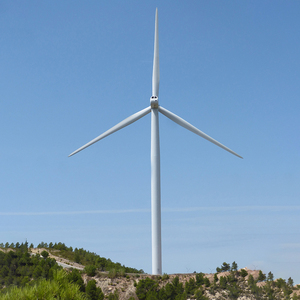
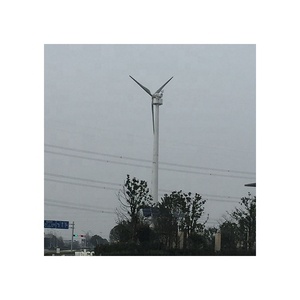
High Efficiency C&I High Efficiency Three Blades 5kw ALLRUN AR6.0-5KW Micro Wind Turbine Generator

5kW High Efficiency 3-Blade Wind Turbine

Commercial-grade 5,000W wind turbine platform designed for small industrial workshops, agricultural facilities, and local microgrid hubs.

  • Rated Output: 5000W / 5kW
  • Rotor Diameter: 6.0 meters
  • Efficiency: > 42% aerodynamic
Inquire Now
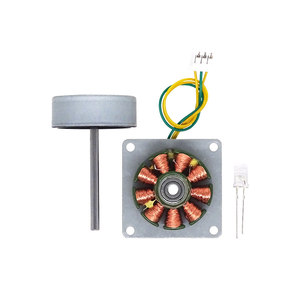
OEM Motor Module Other Three-phase Micro Wind Generator 3V to 24V Low-Power Low-Voltage Motor

Three-Phase Micro Generator Engine (3V - 24V)

Precision-engineered 3-phase permanent magnet generator unit built for custom educational, experimental, and specialized OEM low-voltage applications.

  • Voltage Range: 3V to 24V AC/DC
  • Generator: 3-Phase Brushless
  • Customization: OEM Shafts Available
Inquire Now
23+
Years Wind Engineering
30 Yrs
Turbine Design Life
98.4%
Fleet Availability
Zero
Gearbox Oil Maintenance

Engineering Resilient Wind Energy Systems for Greater Nagoya & The Chubu Industrial Corridor

As the industrial heartland of Japan, the Greater Nagoya region (encompassing Aichi, Gifu, and Mie Prefectures) generates a significant portion of Japan's manufacturing output. From automotive assembly complexes and Tier-1 component manufacturing plants around Toyota City to chemical processing zones along Ise Bay, commercial electricity tariffs under Chubu Electric Power remain a major variable cost factor. Concurrently, Japan’s national policy mandate for Green Transformation (GX) and corporate Scope 2 supply chain auditing require industrial leaders to shift toward verifiable, localized renewable energy assets.

Deploying distributed wind turbines and wind-solar hybrid microgrids provides a strategic hedge against regional grid volatility. Unlike utility-scale offshore developments that require years of maritime permitting, behind-the-meter (BTM) small-to-medium wind generation systems (ranging from micro-harvesting setups up to 90kW industrial units) allow enterprise operators, logistics hubs, and agricultural properties across the Nobi Plain to generate clean electricity exactly where it is consumed.

Direct-Drive Permanent Magnet Generator (PMG) Technology vs. Traditional Gearbox Designs

Mechanical failure in traditional small wind turbines overwhelmingly stems from high-speed mechanical gearboxes. Sandwiched between turbulent ground-layer winds and high rotational torque, gearbox bearings experience rapid thermal degradation and oil deterioration, requiring frequent maintenance interventions.

Our direct-drive small and medium wind turbine architectures eliminate the gearbox entirely. By coupling the aerodynamic rotor hub directly to a multipole Permanent Magnet Synchronous Generator (PMSG), mechanical complexity is reduced by over 60%. This yields three decisive engineering advantages for operators in Nagoya:

  • Superior Low Cut-in Velocity: Eliminating gearbox friction enables rotation at wind speeds as low as 1.8 m/s to 2.0 m/s.
  • Unmatched Fleet Availability: Field reports across demanding maritime and alpine operational environments demonstrate operational uptime exceeding 98.4%.
  • Acoustic Compliance: Direct coupling drastically reduces high-frequency mechanical vibration, allowing installation adjacent to commercial facilities and agricultural workshops without exceeding Japanese municipal ambient noise thresholds.

Localized Application Scenarios Across Aichi Prefecture & Chubu Region

Wind resource profile modeling in Greater Nagoya demands a nuanced understanding of regional topography and coastal meteorology. The Nobi Plain experiences distinct seasonal wind phenomena—most notably the strong winter wind known locally as the Ibuki Oroshi (down-slope winds originating from the Ibuki Mountain range), alongside thermal coastal breeze circulation from Ise Bay throughout summer afternoons.

Automotive Supply Chain Facilities

Industrial parks around Toyota, Kariya, and Komaki utilize high 2-shift and 3-shift operational patterns. Ground-mounted or perimeter-installed 5kW to 90kW direct-drive turbines complement solar PV arrays, delivering non-intermittent power during winter months when solar yield declines by 40%.

Port & Logistics Hubs around Ise Bay

Coastal cold-storage plants, container yards, and warehousing facilities at the Port of Nagoya experience clean, sustained maritime wind speeds averaging 5.5 m/s to 6.8 m/s at 30m hub height, maximizing capacity factor and shortening payback horizons.

Agricultural Microgrids in Nobi Plain

Greenhouses, poultry operations, and dairy farms in rural Aichi and Gifu Prefectures deploy wind-solar-storage (WS²+) systems to guarantee uninterrupted power for automated ventilation, climate control, and refrigeration during emergency typhoon grid outages.

Performance Comparison Matrix: Small Wind Turbines vs. Conventional DERs

When engineering an on-site Distributed Energy Resource (DER) portfolio, commercial procurement managers must evaluate energy density per square meter of land, temporal dispatch profiles, and lifetime operational expenses (OPEX).

Evaluation Parameter Direct-Drive Wind System (e.g., Eocycle M-Series / 5kW-90kW) Rooftop Solar PV Array Diesel Generator Set (Emergency)
Primary Energy Window 24 Hours (Day/Night, Strong Winter Peak) Daylight Only (Summer Peak, 0% Night) On-Demand (Fuel Restricted)
Land Footprint Yield Highest (Single tower foundation pad) Moderate to High (Requires large roof surface) Low (Requires fuel storage yard)
Design Service Life 30 Years (Class I Aerodynamic Rating) 20–25 Years (Module degradation ~0.5%/yr) 10–15 Years (Engine overhaul dependent)
Scope 2 Emission Offset 100% Carbon Neutral 100% Carbon Neutral High Carbon & Particulate Emissions
Scheduled Maintenance Annual Visual & Electrical Inspection Semi-annual Washing & Inverter Check Frequent Oil, Filter & Fuel Testing

Typhoon Survivability & Class I Structural Design Specifications

A critical consideration for equipment imported into Japan is structural resilience against extreme weather events. The Japanese archipelago regularly experiences intense Pacific typhoons during late summer and autumn. Standard European or North American turbines engineered solely for smooth inland wind profiles often fail under peak gust turbulence.

Our engineered wind system product line complies with IEC 61400-2 safety standards. Key structural enhancements for Nagoya and regional installations include:

  • Automated Fail-Safe Pitch & Electromagnetic Braking: Dual redundant braking mechanisms automatically feather blades or engage electronic dynamic braking when ambient wind speeds exceed 25 m/s.
  • Extreme Wind Speed Class Rating: Structural integrity engineered to withstand survival wind gusts up to 60 m/s to 70 m/s, matching Japan’s rigorous Building Standards Law (Kenzai-ho) wind load requirements.
  • Corrosion-Resistant Marine Coatings: All steel towers, nacelles, and exterior fasteners receive multi-layer hot-dip galvanization and C5-M grade anti-corrosive polyurethane coating systems to resist saline moisture off Ise Bay.

Frequently Asked Questions by Commercial & Industrial Buyers in Nagoya

Engineering clarity on wind resources, permitting protocols, and hybrid microgrid integrations.

What average wind speed is required at hub height for a small wind project to be economically viable in Aichi Prefecture?
As a general engineering rule, sites possessing an annual average wind speed of roughly 4.8 m/s to 5.2 m/s at hub height (typically 30m to 36m above ground level) yield an attractive levelized cost of energy (LCOE). Because ground turbulence from trees, warehouses, and topography attenuates wind closer to the surface, utilizing tall tubular towers allows our direct-drive turbines to capture clean, high-velocity air strata, generating high energy yields across the Nobi Plain.
How do wind generation profiles complement industrial solar PV installations in the Chubu region?
Solar PV generation in Japan peaks sharply between 11:00 AM and 2:00 PM during late spring and summer. Conversely, wind energy resources in Greater Nagoya exhibit strong diurnal nighttime coastal breezes and intense winter output during the seasonal Ibuki Oroshi monsoon period. Combining wind and solar into an integrated microgrid flattens the generation curve, minimizing reliance on battery discharge and reducing expensive demand charges imposed by local utility tariffs.
What structural permits and environmental approvals are required to install a wind turbine in Greater Nagoya?
Turbine installations in Japan must comply with local municipal zoning laws, the Building Standards Act (verifying structural foundation calculation against earthquake and typhoon loads), and Japanese Electrical Safety Authority regulations. For grid-connected systems, interconnection application studies are submitted directly to Chubu Electric Power Grid Co. Our engineering export team provides comprehensive technical documentation, structural CAD drawings, and SCADA control schematics to assist local EPC partners through the filing process.
What ongoing O&M (Operations & Maintenance) is required for a direct-drive small wind turbine?
Because direct-drive permanent magnet generators eliminate high-friction gearboxes, there is no gear oil to replace or mechanical transmission to overhaul. Scheduled maintenance is streamlined to an annual physical inspection of bolt torque, blade surface integrity, lightning protection circuits, and electrical connection tightness. Advanced telemetry continuously monitors operational metrics via an integrated SCADA portal for automated anomaly detection.
Can these wind systems be paired with battery storage and EV charging infrastructure at commercial facilities?
Yes. Our EOX WS²+ (Wind-Solar-Storage) solution coordinates multi-source clean power generation via an intelligent Energy Management System (EMS). In industrial facilities operating corporate EV delivery fleets or employee charging stations, the system dynamically balances battery charging with wind output, preventing grid peak demand spikes and guaranteeing emergency power backup during grid outages.

Why Global Enterprises Trust Our Manufacturing Expertise

With over two decades of dedicated wind turbine R&D and field-tested manufacturing excellence, our enterprise specializes in producing robust direct-drive wind systems engineered for global deployment. We operate state-of-the-art manufacturing facilities equipped with automated stator winding machinery, precision balancing rigs, and full-load testing bays.

ISO 9001 Quality Management

Every generator rotor, blade set, and inverter undergoes rigorous non-destructive testing (NDT), vibration analysis, and insulation resistance checking prior to export packaging.

Custom OEM & System Integration

From micro 300W sensors up to 90kW industrial platforms, our engineering team customizes voltage profiles (12V DC up to 400V AC 3-Phase) to integrate seamlessly with Japanese grid frequencies (60Hz Chubu region).

End-to-End Export Logistics

Established freight protocols delivering containerized shipments directly to the Port of Nagoya, complete with full customs clearance support, installation manuals, and remote engineering backup.

Ready to Optimize Your Energy Costs in Greater Nagoya?

Request a complimentary site wind resource assessment and yield financial analysis. Our certified wind engineers will evaluate your location coordinates and interval power load to design the optimal wind energy matrix.

Inquire Now