Commercial-grade, direct-drive, and vertical-axis micro turbines engineered for high reliability, ultra-low cut-in speeds, and tropical environmental resistance across the Klang Valley.







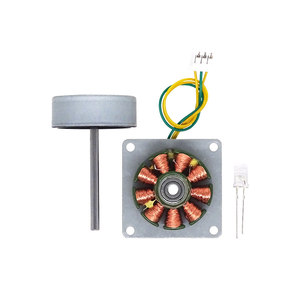
An in-depth analysis of atmospheric dynamics in the Klang Valley, monsoon thermal channels, and the aerodynamic innovations required for localized renewable energy generation.
Kuala Lumpur and the surrounding Selangor region present unique meteorological patterns characterized by the Southwest Monsoon (May to September) and Northeast Monsoon (November to March). While annual average surface wind speeds are moderate (~2.5 m/s to 4.2 m/s), elevated structures, canopy boundaries, and coastal corridors near Port Klang exhibit pronounced thermal lift and localized velocity boosts up to 6.5 m/s at hub heights above 30 meters.
Standard wind turbines require 3.5 m/s or higher cut-in speeds, rendering them inefficient in tropical low-wind regions. Our specialized direct-drive micro and commercial turbines utilize custom NACA airfoils, optimized blade chord distributions, and low-cogging permanent magnet alternators. This engineering configuration lowers the initial generation threshold to 1.5 - 2.0 m/s, unlocking localized yield across urban and rural sites.
Within densely populated industrial areas like Petaling Jaya and Shah Alam, thermal drag creates high turbulence intensity (>18%). Our Vertical Axis Wind Turbines (VAWT) capture omnidirectional wind flows without requiring active yaw mechanism steering. This decreases structural fatigue, eliminates mechanical lag, and provides silent operation (<35 dB) suitable for high-density rooftop environments.
Mechanical failure in traditional wind turbines stems primarily from gearbox lubrication degradation, oil seal leaks under high ambient heat, and gear-tooth pitting. Our gearless architecture removes single-point failure vectors completely.
| Engineering Parameter | Eocycle Direct-Drive PMG Platform | Conventional Geared Small Wind Turbines | Impact on Malaysian Operations |
|---|---|---|---|
| Drivetrain Topology | Direct-Drive Permanent Magnet Generator | Multi-Stage Planetary or Helical Gearbox | Zero gearbox oil maintenance or replacement costs. |
| Operational Life Expectancy | 30-Year Design Life (IEC 61400-2 Certified) | 10 - 15 Years (Requires mid-life overhaul) | Doubles long-term return on capital investment (ROIC). |
| Fleet Availability Metric | > 98.4% Verified Up-time | 82.0% - 88.0% Average | Maximized generation throughout monsoon wind surges. |
| Tropicalization & Seals | IP67 Enclosed, C5-M Anti-Corrosion Coating | Standard IP54 Enclosure (Vulnerable to humidity) | Resists ambient high humidity (85%+ RH) and salt air. |
| Scheduled Maintenance | Annual Visual & Electrical Check | Semi-Annual Gear Oil & Bearing Replacement | 90% reduction in lifetime operational expenditures (O&M). |
From micro-generation units to commercial-scale wind-solar-storage platforms, our factory exports complete energy ecosystems tailored for industrial end-users, microgrids, and agricultural enterprises.
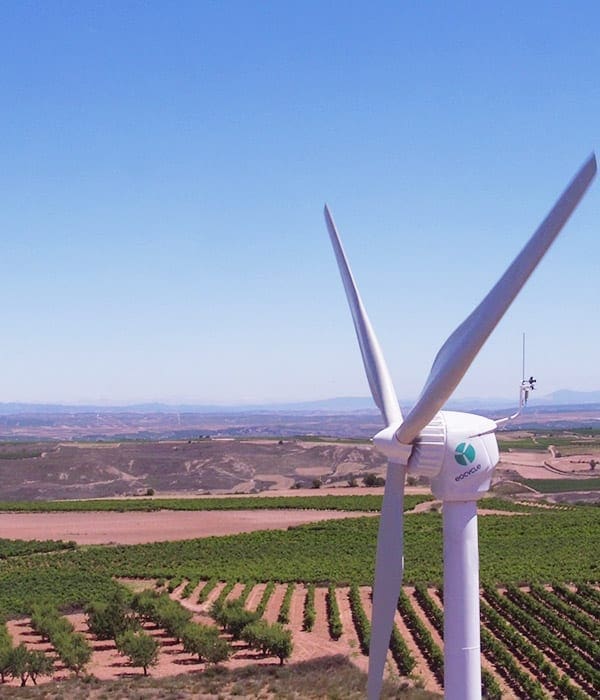
The S-Series is engineered specifically for light commercial operations, telecommunications towers, small farms, and decentralized infrastructure requiring continuous, grid-quality power. Operating with zero gearbox friction, these units utilize direct-drive neodymium permanent magnet generators to deliver reliable power under fluctuating wind conditions.
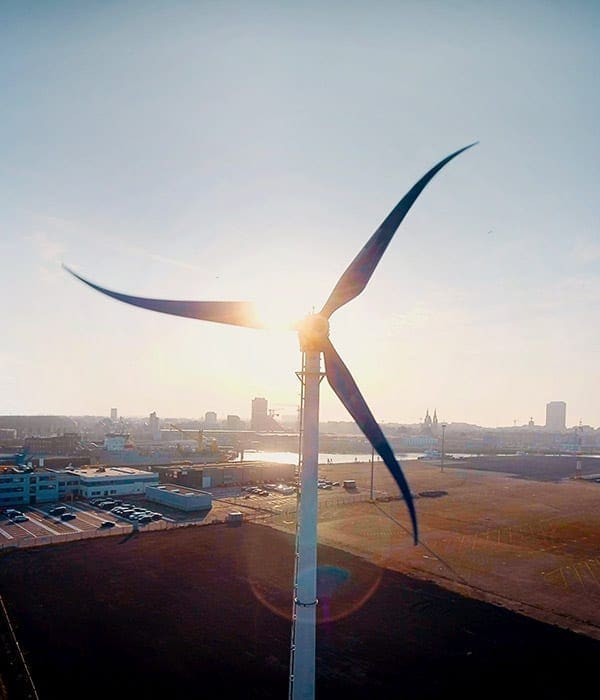
Our flagship commercial and industrial workhorse, the EOX M-26, features a massive 26-meter rotor elevated on towers up to 36 meters high. By elevating the swept area above ground clutter and surface boundary layers, the EOX M-26 accesses faster, smoother air currents across coastal hubs like Port Klang and elevated industrial zones in Selangor.
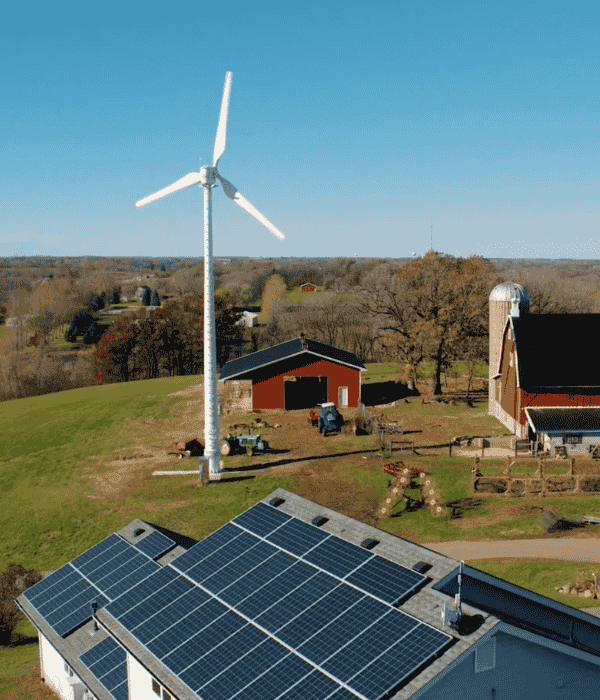
Solar energy in West Malaysia drops to zero during nighttime and suffers severe capacity losses during heavy afternoon cloud cover and tropical downpours. The EOX WS²+ system pairs small/medium wind power directly with Solar PV arrays and LiFePO4 Battery Energy Storage Systems (BESS) under a single AI-managed controller.
Custom engineering configurations tailored to the precise energy demands of commercial real estate, logistics corridors, agricultural operations, and remote microgrids in Malaysia.
Logistics facilities, cold storage warehouses, and manufacturing plants with high baseline thermal loads utilize behind-the-meter wind energy to slash peak electricity demand charges. Wind turbines occupy minimal ground area compared to ground-mount solar arrays, preserving vital yard space for trucking and storage operations.
In high-density commercial centers such as Bangsar South, KL Sentral, and Cyberjaya, rooftop vertical-axis wind turbines (VAWT) capture micro-drafts and funneled atmospheric wind around skyscraper parapets, delivering visible green building credentials and lowering Scope 2 carbon footprints under GBI (Green Building Index) standards.
Continuous electricity is required for aeration pumps, automated feeding systems, and climate controls in poultry and aquaculture farms. Distributed wind systems provide reliable, autonomous power during local grid outages, eliminating diesel fuel risks and generator operational noise.
Off-grid operations in Langkawi, Pulau Tioman, and East Malaysia rely heavily on expensive diesel generators. Integrating Eocycle direct-drive wind turbines into island microgrids cuts fuel consumption by up to 75%, providing clean, continuous power without heavy fuel transport logistics.
Navigating grid interconnection, energy licensing, and self-consumption (SELCO) compliance for distributed energy installations in Malaysia.
In accordance with Malaysian Electricity Supply Act 1990, distributed wind generation assets designed for self-consumption (SELCO) must comply with technical safety and power quality criteria enforced by Suruhanjaya Tenaga (Energy Commission). Eocycle wind turbines feature fully certified grid-tie inverters that meet international IEC 61400 standards, featuring anti-islanding protection, active harmonic filter controls, and voltage ride-through capabilities required for legal interconnection.
While solar energy dominates initial renewable discussions under NEM 3.0, incorporating micro-wind assets under SELCO (Self-Consumption) permits industrial facilities in Greater Kuala Lumpur to consume clean power internally without exporting excess to the grid. This avoids export tariff caps and maximizes financial offsets against high domestic and commercial TNB tariff bands (Tariff E1, E2, and C1/C2).
We eliminate operational complexity by managing engineering assessment, international export logistics, civil engineering, and commissioning under a single accountable contract.
LiDAR wind mapping, parcel wind profile modeling, and interval utility load analysis.
LCOE calculation, ROI payback projections, tax incentive evaluation (GITA/GITE in Malaysia).
Precision assembly, factory acceptance testing (FAT), C5-M anti-corrosion coating application.
Direct shipping to Port Klang, foundation pouring, tower erection, electrical interconnection.
SCADA telemetry tracking, routine annual preventative inspections, localized spare parts support.
Clear, engineering-backed answers regarding site feasibility, maintenance, environmental resistance, and economic payback.
Contact our engineering export team today for a free site wind assessment, custom load profile simulation, and factory-direct equipment quotation tailored to your Klang Valley facility.
