From decentralized micro-dynamos for telecom relay towers in Afar to 5kW industrial wind dynamos for agricultural cold storage across the Great Rift Valley, our equipment is certified for rugged East African environmental conditions.
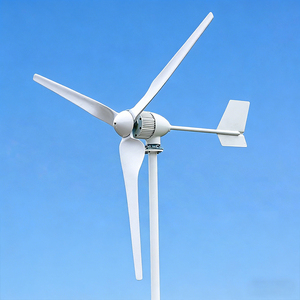
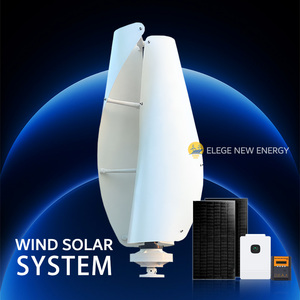
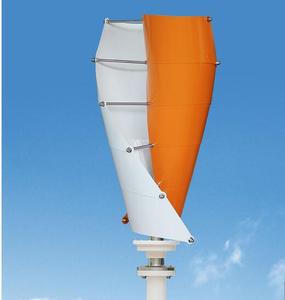
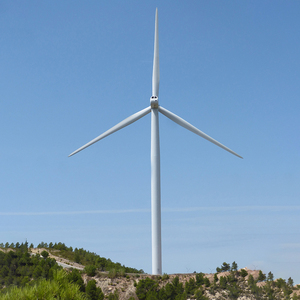
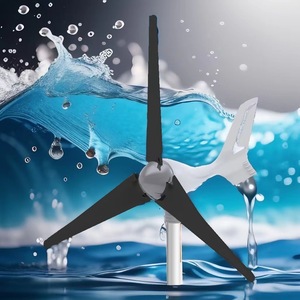
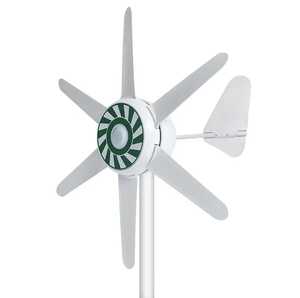
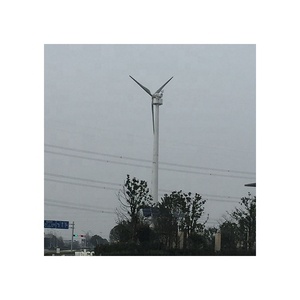
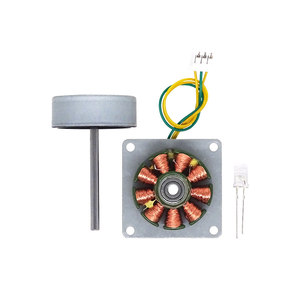
Ethiopia possesses vast, unexploited wind potential driven by the complex topography of the Great Rift Valley, the high-altitude central plateaus of Amhara and Oromia, and the expansive plains of the Somali and Afar regions. However, deploying high-efficiency wind dynamos in East Africa requires engineering adaptations that conventional wind turbine manufacturers overlook.
At elevated altitudes, such as Addis Ababa (2,350m above sea level) or the Highlands of Tigray (above 3,000m), air density ($\rho$) drops from the sea-level standard of 1.225 kg/m³ to approximately 0.95–1.00 kg/m³. Because kinetic power in wind is directly proportional to air density ($P = \frac{1}{2} \rho A v^3$), standard off-the-shelf wind turbines experience power output derating unless rotor swept areas and generator torque curves are specifically re-engineered.
Empirical wind vector mapping highlights four main commercial deployment zones across Ethiopia:
| Region / Zone | Avg Speed (50m) | Wind Power Density | Best Dynamo Fit |
|---|---|---|---|
| Rift Valley (Adama/Ziway) | 6.5 – 8.2 m/s | 350 – 550 W/m² | 5kW – 90kW Horizontal |
| Somali Region (Jijiga) | 7.0 – 8.8 m/s | 400 – 650 W/m² | 2kW – 5kW Direct Drive |
| Afar Lowlands | 6.0 – 7.5 m/s | 300 – 480 W/m² | Vertical Axis / Micro 400W |
| Central Highlands | 5.0 – 6.5 m/s | 220 – 380 W/m² | High-Swept 1kW–2kW PMSG |
*Source: Integrated wind mapping synthesized from National Meteorological Agency data and satellite boundary layer observations.
National grid infrastructure managed by Ethiopian Electric Power (EEP) continues to expand, yet industrial parks, rural agricultural processors, and remote commercial outposts experience grid instability and frequent load shedding. Here is how localized wind dynamos deliver uninterrupted energy independence.
Horticultural exporters around Lake Ziway, Bishoftu, and Koka demand continuous refrigeration for cold-chain preservation before air-freighting flowers and produce from Bole International Airport. Dual 5kW wind dynamos combined with rooftop solar supply steady night-time power during the Bega dry season when wind currents peak precisely as solar radiation ends.
Cellular towers located across remote corridors in the Afar, Somali, and Somali-Oromia borderlands spend thousands of USD monthly on diesel trucking logistics. Our 400W and 2kW micro wind dynamos integrated with solar PV microgrids reduce diesel generator runtime by up to 85%, eliminating fuel theft and maintenance downtime.
Commercial textile, light manufacturing, and assembly plants located inside Ethiopia’s state-of-the-art Industrial Parks face operational disruption during voltage drops. Dedicated direct-drive wind generators operating behind-the-meter stabilize facility power factor ratings and offset expensive peak-hour utility tariffs.
Aligning clean power procurement with Ethiopia's national development frameworks unlocks financial incentives, duty exemptions, and long-term energy security.
The Ethiopian Ministry of Water and Energy (MoWE) has established an ambitious target under NEP 2.0: reaching 100% electrification by 2030, with 35% achieved through off-grid mini-grids and standalone renewable technologies. Distributed small wind generators (1kW to 90kW) represent the most cost-effective solution for deep rural areas where high-voltage transmission extension across mountainous terrain is financially unviable.
Ethiopia experiences distinct seasonal shifts: the Kiremt rainy season (June to September) brings heavy cloud cover that drops solar PV output by up to 60%. Conversely, wind velocity across the Ethiopian highlands and eastern lowlands surges during monsoon boundary movements. Integrating wind dynamos with solar arrays creates a balanced 365-day energy generation curve.
Building on over two decades of direct-drive wind engineering heritage, our turbines eliminate mechanical points of failure to guarantee reliable operation in remote international environments.
Traditional wind turbines utilize planetary gearboxes that require frequent oil changes and suffer from high mechanical wear. Our Direct-Drive Permanent Magnet Generators (PMSG) rotate at low speeds directly coupled to the rotor, eliminating 70% of moving parts for zero-gearbox maintenance.
Engineered with electro-galvanized hot-dip steel towers, anodized aluminum alloy blades, and NEMA 4X / IP67 sealed generator housings. Built to resist abrasive airborne dust particles from the Afar desert and UV radiation on highland slopes.
Every commercial wind dynamo export features real-time SCADA telemetry. Operational metrics, wind speed logs, power quality data, and predictive maintenance alarms stream continuously to cloud portals, enabling remote diagnostics anywhere in Ethiopia.
Exporting industrial machinery to landlocked Ethiopia requires precise logistical coordination. As an experienced exporter serving East Africa, we handle end-to-end export packaging compliant with sea-freight standards through the Port of Djibouti.
Our engineering team performs custom computer simulations based on 20-year NASA solar/wind data and local elevation coordinates.
Practical answers to technical, tax, legal, and operational questions commonly raised by procurement managers and engineers in Ethiopia.
Contact our senior energy engineering team today for a comprehensive wind resource evaluation, technical datasheet requests, or direct FOB/CIF Djibouti quotation tailored to your project requirements.
