DIRECT-DRIVE WIND TECHNOLOGY FOR IRAQ

Vertical Turbine Factories & Exporters for Iraq

Engineering Heavy-Duty Micro & Vertical Wind Generators Tailored for Desert Climates, Off-Grid Feedyards, and Industrial Resilience

30 Yrs
Design Engineering Life
98%+
Fleet Operational Availability
55°C
Ambient Thermal Endurance
0.3m/s
Low Cut-In Wind Threshold
EXPORT-READY TURBINE CATALOG

Featured Micro & Vertical Wind Generators for Iraqi Procurement

Factory-direct wind power solutions engineered for extreme heat, heavy dust loads, and turbulent ambient wind profiles across Basra, Baghdad, Erbil, and Al-Anbar.

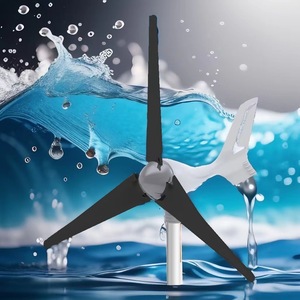
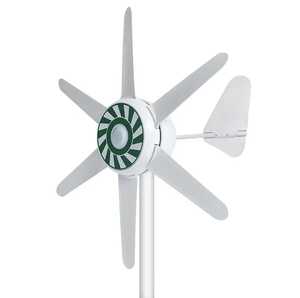
1KW / Residential Factory Price Rooftop 1kw Small Wind Turbines for Home Electricity

Factory Price Rooftop 1kw Small Wind Turbines for Home Electricity

Compact aerofoil design suited for urban rooftops and farm outbuildings in Iraq. Low-noise blade design minimizes acoustic vibration while handling gusty thermal winds.

  • Rated Power: 1.0 kW @ 11 m/s
  • Output Voltage: 48V DC / 220V AC
  • Generator: 3-Phase PMG
Inquire Now
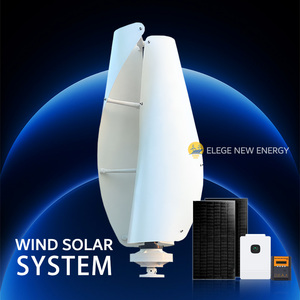
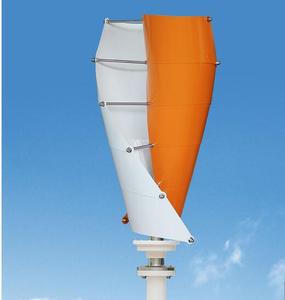
2KW / Vertical Axis Elege CE MPPT Low Noise Axis Micro Vertical Wind Turbine

Elege CE MPPT Low Noise 12V 24V 48V 2kw Vertical Axis Micro Turbine

Omnidirectional vertical blade geometry that captures wind from any angle without yawing mechanisms. Integrated MPPT charging maximizes low-speed energy yield.

  • Rated Power: 2.0 kW
  • System Voltage: 12V / 24V / 48V
  • Feature: MPPT Low-RPM Tech
Inquire Now
300W / Micro Kit 300w Micro Vertical Wind Generator Kit China

300w Micro Vertical Wind Generator Kit China Factory Direct

Ultra-lightweight vertical wind generator kit engineered for remote telemetry, environmental monitoring stations, and low-voltage off-grid battery trickle charging.

  • Rated Capacity: 300 Watts
  • Cut-in Wind: 1.8 m/s
  • Application: Telecom / Off-Grid
Inquire Now
Heavy-Duty / Micro Wind Generator Long Lifespan Outdoor Micro Wind Generator

Long Lifespan Outdoor Micro Wind Generator 80mw 90mw 100mw

Industrial micro-turbine system built with IP67 sealed housings to prevent fine particulate sand ingress during heavy Iraqi dust storms (Shamal winds).

  • Capacity Range: 80mW - 100mW
  • Ingress Rating: IP67 Enclosure
  • Lifespan: Extended Outdoor
Inquire Now
400W / Solar Hybrid Horizontal Axis Micro Wind Generator 400W 12V For Solar Street Light

Horizontal Axis Micro Wind Generator 400W 12V for Hybrid Street Lights

Designed specifically for municipal highway lighting, perimeter security, and surveillance cameras where nocturnal winds balance daytime solar energy yield.

  • Rated Power: 400W @ 12V DC
  • Target Use: Solar-Wind Hybrid
  • Blades: High-Strength Nylon
Inquire Now
90W / Built-In Controller 90W Mini Wind Turbine With Controller Built-in

90W Mini Wind Turbine With Built-in Controller DC Output 12V/24V

Plug-and-play architectural micro-turbine with integrated charge management. Simplifies field deployment for remote agricultural sensors and valve control.

  • Power Output: 90W DC
  • Control System: Internal Rectifier
  • Voltage Options: 12V / 24V Auto-sense
Inquire Now
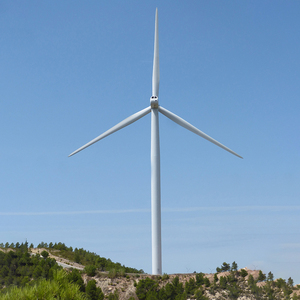
5KW / Commercial Grade High Efficiency Three Blades 5kw Micro Wind Turbine Generator

High Efficiency Three Blades 5kw Commercial Micro Wind Generator

Commercial grade generator for diesel displacement in Iraqi workshop facilities, cold storage warehouses, and agricultural irrigation pumps along the Euphrates.

  • Capacity: 5.0 kW Continuous
  • Blade Rotor: 3-Blade Aero-foil
  • Grid Connection: Off-Grid / On-Grid
Inquire Now
3V-24V / Low Voltage Three-phase Micro Wind Generator Low-Power Equipment

Three-Phase Micro Wind Generator 3V to 24V Low-Power Motor System

Specialized multi-voltage motor generator engineered for custom industrial electronics, education, and auxiliary battery maintainers in tough field conditions.

  • Voltage Range: 3V to 24V AC/DC
  • Drivetrain: Brushless Direct Drive
  • Efficiency: High RPM Response
Inquire Now
ENGINEERING EXCELLENCE & E-E-A-T STANDARDS

Why Direct-Drive Technology Dominates Iraq’s Industrial Sector

Small and vertical wind turbines exported to the Middle East encounter environmental stressors drastically different from European or North American deployments. Below is an engineering breakdown of our direct-drive permanent magnet generator (PMG) architecture.

Gearbox-Free Direct-Drive Architecture

Traditional wind turbines rely on mechanical step-up gearboxes to turn slow rotor speed into high generator RPM. In Iraq's arid landscape, ambient temperatures exceeding 50°C cause gear oil viscosity breakdown and rapid seal degradation due to airborne silica dust.

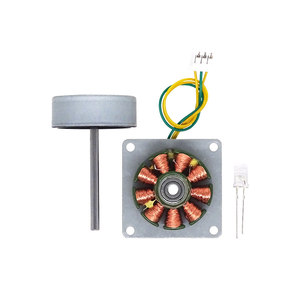
Our export vertical and micro wind turbines utilize an advanced Direct-Drive Permanent Magnet Generator (PMG). By eliminating the gearbox entirely, we remove gear wear, mechanical friction losses, oil replacements, and 70% of potential failure points.

Thermal Resilience & Class-H Insulation

High ambient heat combined with solar radiation can quickly elevate internal generator stator temperatures past 120°C. Standard off-the-shelf wind turbines trip thermal breakers or melt copper winding insulation under these conditions.

We build our export turbines with Class-H synthetic enamel winding insulation rated up to 180°C. Stator housing structures are cast from heavy-duty heat-dissipating aluminum alloys featuring external thermal cooling fins engineered for maximum convective dissipation.

Dust, Silica & Humidity Sealing (IP67)

The southern and central regions of Iraq, including Basra and Nasiriyah, experience severe desert sandstorms (Shamal) that carry microscopic abrasive silica dust. This dust penetrates standard bearing races and compromises mechanical seals.

All micro and vertical turbine units offered feature dual-lip labyrinth fluorocarbon seals paired with double-shielded, factory-lubricated SKF/NSK bearings. Electrical termination boxes are completely potted with epoxy resin, delivering full IP67 ingress protection against dust and water intrusion.

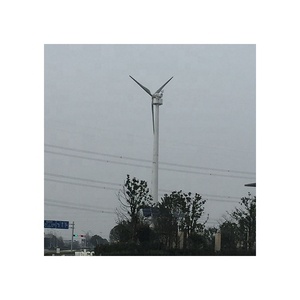
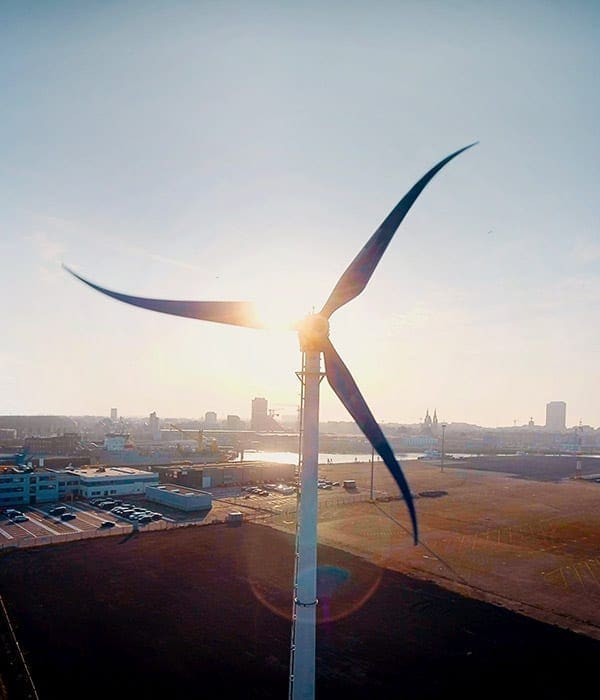
Direct-drive small wind turbine installed for industrial site power

Engineered for 30-Year Service Life & High Availability

Our direct-drive design philosophy yields a reported 98%+ fleet availability rating across thousands of global installations. When supplying energy assets to remote Iraqi regions where skilled field mechanics and spare parts logistics are limited, durability is not an option—it is a baseline necessity.

  • Low Cut-In Speeds: Vertical axis blades begin rotation at wind speeds as low as 1.5 m/s, yielding higher cumulative annual energy production (AEP).
  • Omnidirectional Capture: Vertical Axis Wind Turbines (VAWT) do not require a yaw motor or tail vane to orient into the wind, making them ideal for turbulent urban airflow and canyon winds between buildings.
  • Remote SCADA Supervision: Integrated telemetry sends real-time performance indicators, operating temperatures, and vibration diagnostics to off-site asset managers via cellular or satellite connections.
Request Engineering Technical Datasheets
FIELD-PROVEN DEPLOYMENT MODELS

Localized Application Scenarios in the Iraqi Market

How Iraqi industrial operators, agricultural enterprises, and EPC contractors deploy vertical and micro wind turbines to overcome grid volatility and severe fuel costs.

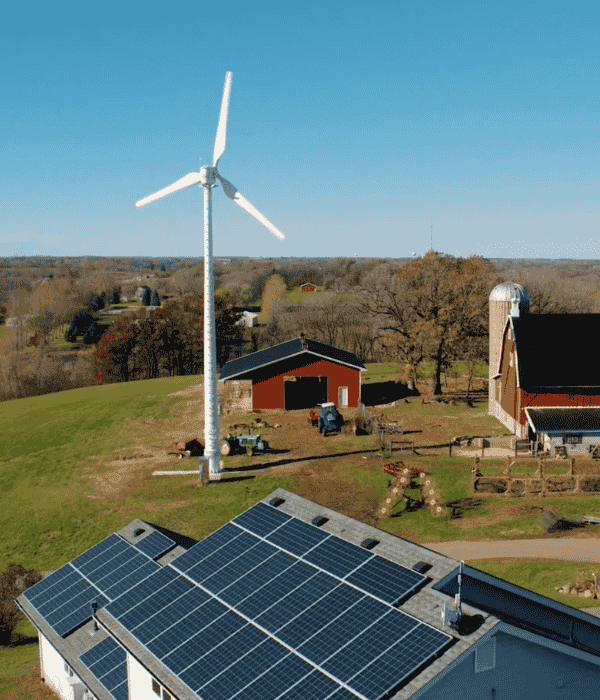
Agricultural irrigation powered by small wind energy in Iraq

1. Agricultural Irrigation along Euphrates & Tigris Basins

Farming regions across the Al-Anbar, Babil, and Wasit governorates face major electricity rationing, often receiving only 6 to 10 hours of central grid power daily. Running heavy agricultural water pumps continuously on diesel generators leads to soaring operational costs due to rising fuel prices and maintenance overhauls.

The Wind Solution: Deploying 2kW to 5kW vertical wind turbines paired with solar PV arrays creates a continuous hybrid pumping system. Wind generation typically peaks in late afternoon and continues throughout the night when solar output drops to zero, ensuring uninterrupted irrigation for wheat, palm, and vegetable farms without consuming expensive fuel.

Key Impact for Farmers

Reduces diesel generator run time by up to 65%, shielding agricultural operations from regional fuel shortages and grid blackouts during critical irrigation cycles.

Commercial and industrial facility power generation in Iraq

2. Commercial & Industrial Facility Backup in Baghdad & Erbil

Commercial complexes, logistics hubs, cold storage warehouses, and light industrial factories in major economic centers like Baghdad, Erbil, and Sulaymaniyah experience frequent power sags, voltage spikes, and sudden blackout events that disrupt production lines and damage sensitive electronics.

The Wind Solution: Rooftop and ground-mounted vertical turbines serve as localized Behind-the-Meter (BTM) energy resources. When connected with grid-interactive battery storage, the system buffers incoming power quality, trims expensive peak demand charges, and provides emergency back-up power for critical security, refrigeration, and computing infrastructure.

Key Impact for Commercial Owners

Provides stabilized power quality, prevents spoilage in cold storage facilities, and demonstrates verifiable carbon reduction for international supply-chain audits.

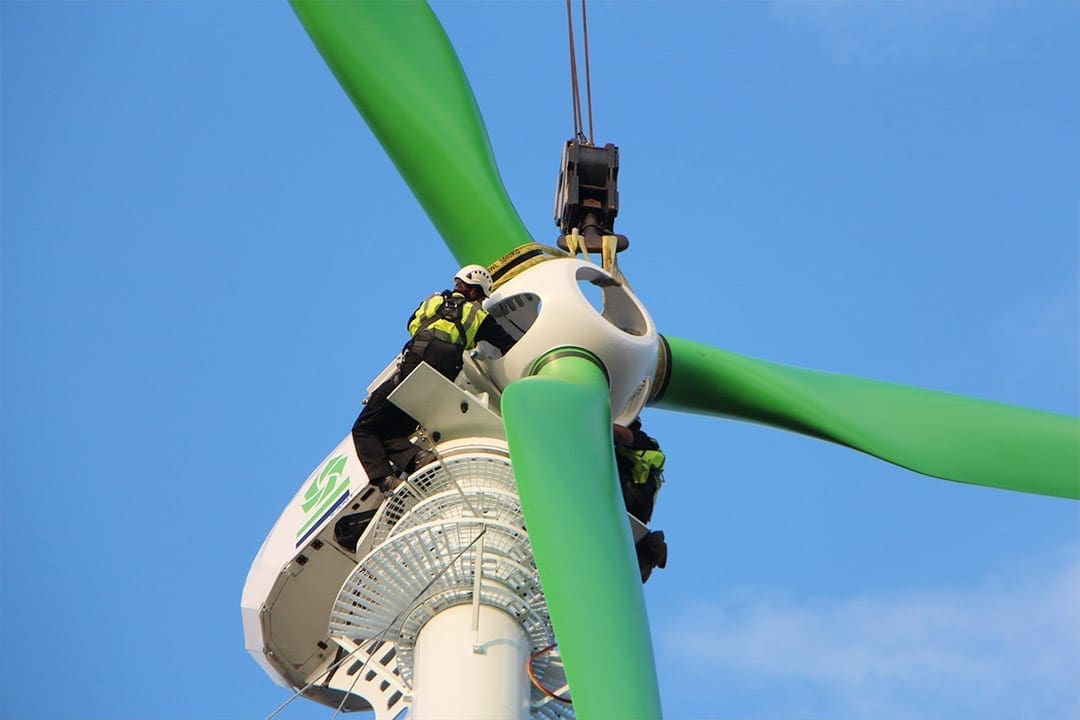
Heavy duty commercial wind turbine for oilfield power in Basra

3. Remote Oilfield Facilities & Pipeline Telemetry in Basra

Oil and gas extraction fields in Rumaila, West Qurna, and Zubair require remote electrical power for cathodic protection, valve control actuation, security surveillance towers, and pipeline SCADA sensors spread across hundreds of kilometers of open desert.

The Wind Solution: Sealed 300W to 5kW micro vertical wind turbines provide rugged, standalone 12V/24V/48V DC power. Their low maintenance requirements and resistance to sand abrasion make them ideal for unstaffed desert outposts where routine maintenance visits are costly and hazardous.

Key Impact for Oilfield EPCs

Eliminates long power cable extension costs and guarantees 24/7 power supply for critical safety monitoring along remote pipeline right-of-ways.

Integrated wind solar hybrid microgrid system

4. Telecom Base Stations & Remote Microgrids

Mobile network operators in Iraq manage thousands of cellular base transceiver stations (BTS) in rural areas. Relying purely on diesel generators results in high logistics expense, fuel theft, and frequent network outages.

The Wind Solution: The integration of vertical axis wind generators into existing solar BTS sites creates a highly efficient hybrid microgrid (EOX WS²+ system architecture). Vertical turbines fit easily inside existing telecom compound footprints without creating shadow interference on surrounding solar panels.

Key Impact for Telecom Operators

Extends battery bank lifetime, minimizes generator run-hours, and ensures 99.99% uptime for vital voice and data coverage.

EQUIPMENT SELECTION MATRIX

Technical Specification Breakdown for Exporters & Iraqi Buyers

Compare our main vertical and micro turbine categories to select the optimal model for your local project environment.

Turbine Model Series Rated Power Range Drivetrain Type Cut-in Wind Speed Operating Temp Range Optimal Iraqi Application
Micro Low-Voltage DC Series 80mW - 400W Brushless Direct-Drive PMG 1.5 - 2.0 m/s -20°C to +60°C Telecom BTS, Street Lighting, Sensors
Residential Rooftop VAWT 1.0 kW - 2.0 kW Direct-Drive PMG (No Gearbox) 1.8 - 2.5 m/s -15°C to +55°C Home Backup, Small Workshops, Clinics
Commercial Heavy-Duty VAWT 5.0 kW - 25.0 kW Direct-Drive High-Torque PMG 2.2 - 3.0 m/s -10°C to +55°C Feedyards, Cold Storage, Farms
Industrial M-Series Platform 90.0 kW (EOX M-26) Direct-Drive Stator Architecture 3.0 m/s -10°C to +52°C Factories, Industrial Parks, Oilfields
EOX WS²+ Hybrid System Custom Wind + Solar + BESS AI Managed Integrated PMG Variable -10°C to +55°C Islanded Microgrids, Resort Complexes
IRAQ RENEWABLE ENERGY OUTLOOK

Iraq’s Distributed Energy Transition & Local Market Dynamics

The Iraqi electricity sector is undergoing a structural shift. The Ministry of Electricity (MoE) has outlined aggressive plans to expand renewable energy generation capacity to address a national power deficit that currently exceeds 10,000 MW during peak summer months. While large-scale utility solar farms are being commissioned in southern provinces, the immediate answer for private commercial, industrial, and agricultural enterprises lies in Distributed Energy Resources (DER) deployed on-site.

1. The Shift Away from Expensive Diesel Genset Dependence

Historically, Iraqi commercial businesses and agricultural owners relied on neighborhood diesel generators (known locally as Amperat) to fill the grid coverage gap. However, the levelized cost of electricity (LCOE) from diesel generation has climbed dramatically due to fuel price volatility, logistics surcharges, and high maintenance overhead. Modern small and vertical wind turbines offer a predictable levelized cost of energy locked in for 25 to 30 years, giving owners operational budget stability.

2. Complementary Wind and Solar Resource Profiles

While Iraq possesses excellent solar irradiance, solar PV generation drops to zero during nighttime hours and experiences reduced efficiency during severe dust storms when solar panel surfaces become coated with sand fine particles. Wind resources across southern provinces (Basra, Dhi Qar) and high-altitude northern terrain (Kurdistan Region) exhibit strong afternoon and evening wind velocity patterns. Combining vertical axis wind turbines with solar arrays smooths out the daily generation curve, preventing battery bank deep-discharge cycles.

3. Navigating Import & Regulatory Requirements for Iraq

When importing wind turbines into Iraq through major entry ports such as Umm Qasr Port or land border crossings from Turkey and Jordan, engineering equipment must comply with Iraqi Central Organization for Standardization and Quality Control (COSQC) guidelines. Equipment exported by our manufacturing partners comes complete with CE, ISO9001, and international electro-technical certifications (IEC 61400-2 for small wind turbines), ensuring smooth customs clearance and utility compliance.

FREQUENTLY ASKED QUESTIONS

Procurement & Engineering FAQ for Buyers in Iraq

Detailed technical answers to common questions raised by Iraqi EPC contractors, project developers, and factory owners.

Q1: How much wind speed is required for a vertical wind turbine to operate effectively in Iraq?

For small and vertical wind turbines to make financial sense, sites should feature an annual average wind speed of approximately 4.5 m/s to 5.0 m/s at the proposed hub height. Vertical Axis Wind Turbines (VAWT) are specifically engineered with lower cut-in speeds (starting as low as 1.5 - 2.0 m/s) compared to traditional horizontal wind turbines. Our engineering team conducts detailed satellite wind resource assessments and load profile analysis prior to equipment shipment to verify project ROI.

Q2: How do vertical axis wind turbines handle heavy sandstorms (Shamal winds) in southern Iraq?

Dust and airborne sand particles are major operational hazards in regions like Basra, Nasiriyah, and Al-Anbar. Our export turbines incorporate three critical protective features: (1) IP67 sealed bearing assemblies with dual fluorocarbon lip seals that exclude fine silica dust; (2) Specialized anti-abrasion polyurethane blade coatings that resist sand erosion; and (3) Gearbox-free direct-drive design, ensuring no internal mechanical components are exposed to ambient air contamination.

Q3: Why choose a Vertical Axis Wind Turbine (VAWT) over a Horizontal Axis Wind Turbine (HAWT) for urban or industrial sites?

VAWTs offer distinct physical advantages in commercial and urban applications:
• Omnidirectional Operation: They capture wind blowing from any direction without needing yaw motors or tail blades to re-orient.
• Turbulence Tolerance: Buildings and industrial structures create turbulent, swirling wind flows. VAWTs operate efficiently in turbulent air where horizontal turbines constantly hunting for wind orientation suffer wear and power drops.
• Easier Ground Maintenance: Heavy generator components can be placed closer to the base, simplifying maintenance and lowering installation tower costs.

Q4: Can these wind turbines be integrated into existing solar panel & battery storage systems?

Yes. Our micro and vertical wind turbine packages are fully compatible with existing off-grid solar inverters, MPPT charge controllers, and battery energy storage systems (BESS)—including Lead-Acid, Gel, and Lithium Iron Phosphate (LiFePO4) chemistries. We supply dual-input solar-wind hybrid controllers that synchronize wind power generation directly into your common DC busbar system.

Q5: What standard routine maintenance is required after installation?

Because our turbines utilize gearbox-free direct-drive technology, maintenance is minimal. Scheduled maintenance typically involves an annual visual inspection of structural bolts, blade surface cleanliness, and electrical wiring connections. There are no oil changes, no belt replacements, and no gearbox rebuilds required across the 25 to 30-year design life of the unit.

Q6: What is the lead time for shipping wind turbine equipment from factory to Iraqi ports?

Standard production lead time for micro and small vertical wind turbines is 15 to 25 days depending on total order volume. Ocean freight transport to Umm Qasr Port typically takes 20 to 30 days. Express air freight is available for light micro-generator units and emergency replacement parts to Erbil or Baghdad International Airports.

Partner with Leading Vertical Turbine Manufacturers & Exporters

Are you an EPC contractor, agricultural farm owner, or industrial facility manager in Iraq looking to secure uninterrupted power and lower energy costs? Contact our engineering export team today for site assessment, technical datasheets, and factory-direct pricing.