Engineered for high aerodynamic yield, structural endurance in severe weather, and seamless integration with Pakistan's DISCO grids and off-grid hybrid power systems.

Compact horizontal wind turbine designed for residential rooftops, agricultural homesteads, and small commercial telecom backup in Pakistan.

Ultra-quiet micro generator built with MPPT smart tracking controller for remote farmhouses and rural battery charging stations.

High-reliability light-duty generator optimized for micro-loads, hybrid street lighting, and remote monitoring infrastructure.

Precision-engineered ultra-low power motor kit for educational demonstration units, sensor arrays, and micro electronic equipment.

Industrial-grade 400W horizontal wind turbine engineered for solar street lighting, perimeter security surveillance, and telecom towers.

Plug-and-play mini turbine equipped with internal rectifying circuit for direct DC battery connection and emergency power generation.

Heavy-duty commercial horizontal axis turbine for agricultural tubewells, dairy facilities, cold storage, and decentralized microgrids.

Precision low-rpm brushless permanent magnet motor for customized off-grid DIY projects, research labs, and low-voltage applications.
How direct-drive wind technologies provide grid independence, operational stability, and levelized cost reduction for commercial and agricultural enterprises across Pakistan.
Pakistan’s commercial, industrial, and agricultural sectors are currently facing an unprecedented energy trilemma defined by rapid tariff escalations, grid voltage instability, and persistent load shedding. Electric Distribution Companies (DISCOs) including LESCO, K-Electric, FESCO, and IESCO have significantly revised base tariffs upward, driven by fuel cost adjustments (FCA) and capacity charges. For commercial facility managers, agricultural tubewell operators, and industrial plant directors, reliance on the central power grid presents a major threat to operational margins.
While distributed solar photovoltaics (PV) have experienced rapid adoption across Punjab and Sindh, solar energy suffers from an unavoidable physical limitation: generation ceases at dusk and drops sharply during monsoon cloud cover and winter fog (smog) seasons. This temporal mismatch creates a critical energy deficit, precisely when agricultural irrigation pumps, cold storage compressors, and industrial night shifts demand continuous, grid-quality power.
"Horizontal Axis Wind Turbines (HAWT) equipped with Direct-Drive Permanent Magnet Generators deliver the highest continuous capacity factor among distributed energy resources in Pakistan, generating clean power through night shifts, winter weather, and atmospheric haze."
Horizontal Axis Wind Turbines (HAWT) represent the optimal aerodynamic solution for capturing Pakistan’s kinetic wind resources. Unlike vertical axis designs, horizontal axis turbines align their rotor blades directly into the aerodynamic vector, utilizing advanced pitch-controlled NACA airfoil blades to achieve Betz-limit efficiency (up to 45–48% kinetic conversion efficiency). When coupled with 30- to 36-meter guyed or free-standing monopole towers, horizontal turbines elevate the rotor hub above ground-level turbulence, boundary layer drag, and localized obstructions such as agricultural silos, trees, and industrial sheds.
Tailored wind engineering solutions addressing regional wind corridors, climate variations, and grid constraints across all provinces.

The Gharo-Jhimpir wind corridor in Sindh exhibits annual average wind speeds ranging from 6.8 to 8.5 m/s at hub height, making it one of South Asia’s premier wind resource zones. Industrial facilities, textile mills, auto parts manufacturers, and chemical plants in Karachi, Nooriabad, and Thatta leverage commercial-scale horizontal wind turbines (25 kW to 90 kW+) behind the meter.

Agricultural operations across Punjab require intensive energy for groundwater tubewell pumping, citrus washing, rice milling, and dairy chillers. Rural feeders in districts such as Vehari, Rahim Yar Khan, and Bahawalpur experience severe load shedding reaching 8 to 12 hours daily. Small horizontal wind turbines (1 kW, 5 kW, 25 kW) combined with solar PV create uninterrupted wind-solar hybrid microgrids.
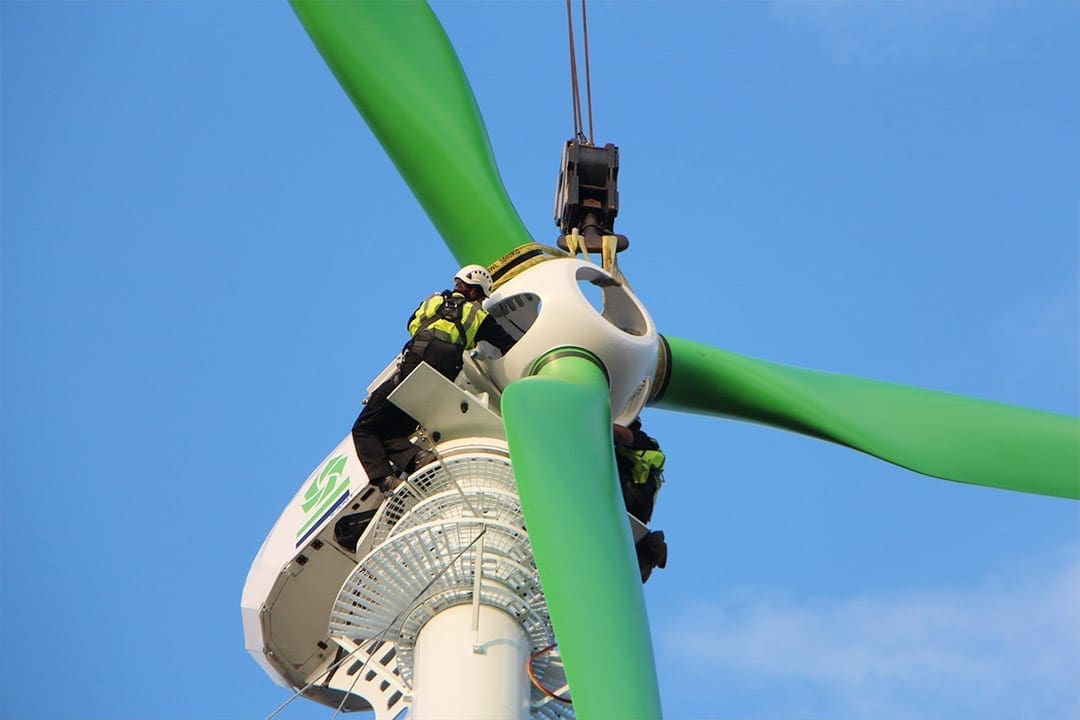
In off-grid regions including Gwadar, Turbat, Swat, and Chitral, grid expansion is either geographically impractical or economically prohibitive. Compact 400W to 5kW horizontal turbines provide baseline power for border security posts, telecom relay towers, mining camps, and isolated rural communities.
Strategic drivers transforming commercial procurement from grid reliance to self-owned distributed energy generation.

Under the National Electric Power Regulatory Authority (NEPRA) Distributed Generation and Net Metering Regulations, commercial and agricultural consumers can export surplus wind energy back to local DISCOs. Dual-source wind-solar systems maximize net-metering credits during off-peak night hours.

With domestic diesel prices fluctuating unpredictably and utility grid tariffs rising annually by double digits, on-site horizontal wind generation locks in a fixed levelized cost of electricity (LCOE) for 30 years, delivering project payback within 3 to 5 years.
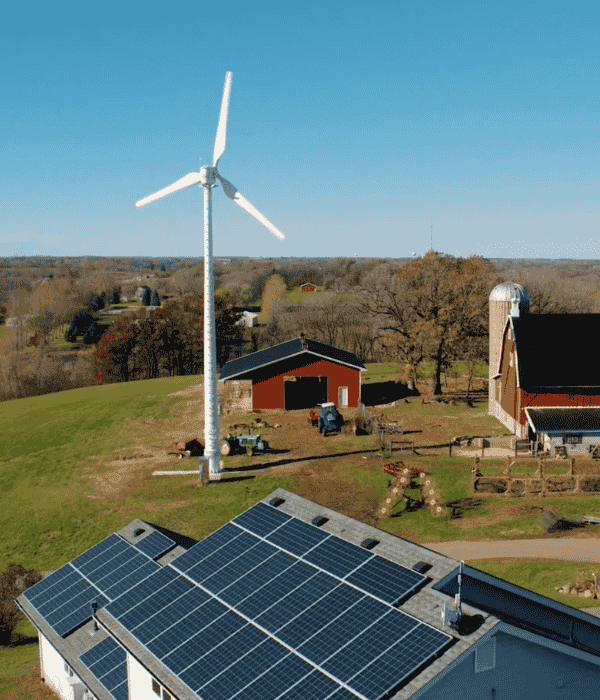
Commercial operators in Pakistan are shifting from standalone solar to hybrid EOX WS²+ (Wind-Solar-Storage) architectures. Solar covers daytime peak loads, while horizontal wind turbines handle evening shifts, maintaining battery state-of-charge without running expensive backup diesel generators.
Refining small-wind reliability through gearbox-free drivetrain architecture, advanced metallurgy, and remote telemetry.
The single greatest cause of mechanical failure in small wind turbines operating in extreme environments—such as the dusty plains of Punjab or the high-salinity air of coastal Sindh—is gearbox breakdown. Mechanical gearboxes require frequent lubrication changes, suffer high friction losses, and fail under sudden wind gust loads. Our horizontal wind turbine design removes the gearbox completely.

By connecting the low-speed rotor directly to a multi-pole synchronous Permanent Magnet Generator utilizing high-grade Neodymium-Iron-Boron (NdFeB) magnets, energy conversion efficiency is maximized while removing high-wear mechanical components. Zero gear oil maintenance required.

Every industrial unit comes equipped with real-time SCADA remote monitoring. Plant managers in Karachi or Lahore can track real-time power curves, rotor RPM, yaw positioning, wind speed, and fault diagnostics directly via web portal or mobile application.
Purchasing a wind turbine for deployment in Pakistan requires rigorous site engineering, civil foundation design, and electrical protection coordination. Leading exporters provide end-to-end turnkey support, covering every stage of installation:
Comparative performance metrics across key horizontal wind turbine capacity classes for B2B procurement assessment.
| Turbine Model Series | Rated Power | Rotor Diameter | Cut-in Wind Speed | Rated Wind Speed | Drivetrain Architecture | Primary Application in Pakistan |
|---|---|---|---|---|---|---|
| Micro-Series (HA-400W) | 0.4 kW | 1.4 m | 2.0 m/s | 12.0 m/s | Direct-Drive PMG | Telecom Towers, Street Lights, Security Systems |
| Agri-Series (HA-1KW) | 1.0 kW | 2.8 m | 2.2 m/s | 11.5 m/s | Direct-Drive PMG | Farm Homesteads, Small Tubewells, Domestic Backup |
| Farm-Series (HA-5KW) | 5.0 kW | 6.0 m | 2.5 m/s | 11.0 m/s | Direct-Drive PMG (Auto Yaw) | Commercial Dairies, Poultry Cooling, Tubewell Hybrid |
| S-Series Commercial | 25.0 kW | 12.5 m | 2.8 m/s | 10.5 m/s | Direct-Drive Synchronous | Textile Facilities, Cold Storage, Agricultural Microgrids |
| M-Series Industrial (EOX M-26) | 90.0 kW | 26.0 m | 3.0 m/s | 10.0 m/s | Direct-Drive PMG (Active Pitch) | Heavy Industrial Plants, Grid-Tied Net Metering, IPP Microgrids |
Clear, authoritative answers to common commercial, technical, and regulatory questions from Pakistani procurement managers.
Partner with top-rated horizontal turbine manufacturers and exporters. Contact our application engineering team today for a comprehensive wind resource evaluation, system sizing proposal, and factory-direct pricing quote.
