







Strategic Renewable Transition: Deploying Chinese Distributed Wind Power in Hungary
As Central European energy dynamics undergo profound structural shifts, Hungary stands out as a critical hub for decentralized energy transition. Driven by strict EU Scope 2 decarbonization mandates, volatile wholesale electricity exchange prices on the HUPX (Hungarian Power Exchange), and grid stability bottlenecks during solar generation peaks, industrial and agricultural operators across Hungary are rapidly adopting behind-the-meter small wind turbines and hybrid wind-solar-storage (DER) architectures. Chinese wind power manufacturers—recognized globally for tier-one permanent magnet generator technology and cost-effective turnkey export capability—are bridging the supply-demand gap for high-reliability, low-maintenance wind hardware tailored to the Pannonian Basin’s unique meteorological regime.
Gearless Direct-Drive Architecture
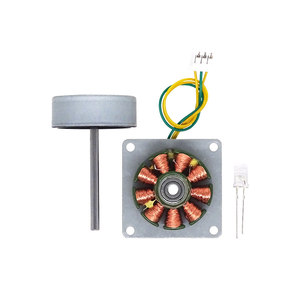
By eliminating mechanical gearboxes entirely, our Direct-Drive Permanent Magnet Generators (PMG) eliminate gear-oil leaks, reduce friction losses, and cut mechanical failure rates by over 65% in demanding sub-zero Pannonian winter conditions.
Low Cut-In Velocity Optimization
Tailored specifically for moderate inland wind zones like the Great Alföld plain, specialized low-RPM rotor profiles initiate power generation at wind speeds as low as 1.5 m/s to 2.5 m/s, maximizing low-altitude annual yield.
IoT Remote SCADA Telemetry
Integrated cloud-based SCADA telemetry streams real-time performance analytics, predictive vibration monitoring, and automated grid isolation protocols compliant with European EN 50549-1 standards directly to facility operators.
Market Analysis & Development Trends in Hungary (2024–2030)
Hungary’s geography, defined by the Danube and Tisza river valleys surrounded by the Carpathian mountains, creates unique micro-climatic wind behaviors. Historical wind resource mapping reveals that regions such as Győr-Moson-Sopron, the Great Hungarian Plain (Nagyalföld), and elevated zones in the Bakony and Mátra regions experience consistent average hub-height wind velocities ranging from 4.8 m/s to 6.8 m/s. These metrics render small and medium distributed wind power exceptionally viable.
Several macro-economic and technical drivers are accelerating Hungarian commercial interest in Chinese wind energy equipment:
- Complementary Wind-Solar Yield Profiles: Solar photovoltaic (PV) generation in Central Europe drops by over 75% during the winter period (November to February). Conversely, Hungary's atmospheric pressure systems generate significantly higher average wind speeds during these exact cold months. Combining micro/small wind turbines with rooftop PV balances seasonal power curves, stabilizing energy costs year-round.
- Grid Capacity Limits & Net-Metering Constraints: MAVIR (Hungarian Transmission System Operator) has implemented strict grid connection quotas for utility-scale solar farms due to grid congestion. Small-scale behind-the-meter (BTM) wind installations operating under zero-export or smart battery buffering configurations bypass lengthy utility grid queue approvals, enabling rapid commercial deployment.
- Industrial Energy Security: High-energy-density enterprises in industrial regions such as Debrecen, Kecskemét, and Székesfehérvár are actively seeking off-grid resilience against unexpected grid dips and rising carbon taxation through certified Chinese hybrid power equipment.
Comparative Technical Analysis: Seasonal Energy Generation Profile in Central Europe
| Energy Source | Summer Yield Share | Winter Yield Share | Night-time Availability | Land Footprint Efficiency | Average LCOE (€/kWh) |
|---|---|---|---|---|---|
| Rooftop Solar PV | 78% | 22% | 0% (Sunlight Dependent) | Medium (Requires Extensive Roof) | €0.06 - €0.09 |
| Direct-Drive Wind (Horizontal) | 42% | 58% | 100% (Wind Velocity Dependent) | High (Compact Tower Base) | €0.05 - €0.08 |
| Vertical Axis Wind (VAWT) | 45% | 55% | 100% (Turbulent Wind Tolerant) | Ultra-High (Urban/Rooftop Mount) | €0.07 - €0.11 |
| Hybrid Wind-Solar-Storage | 50% (Balanced) | 50% (Balanced) | 100% (Buffered via Battery) | Optimized System Synergy | €0.04 - €0.07 (Combined) |
Localized Application Scenarios across Hungary
Understanding local operational parameters is essential for high-ROI renewable engineering. Chinese manufactured micro-to-medium wind power systems excel across diverse Hungarian commercial applications:
1. Agricultural Operations in the Great Alföld (Nagyalföld)
Agricultural estates, grain silos, and livestock farms across counties like Bács-Kiskun, Békés, and Jász-Nagykun-Szolnok face high energy costs for continuous grain drying, irrigation pumping, and ventilation. Mid-range horizontal-axis wind turbines (such as 5kW to 90kW class units) mounted on 24m to 36m lattice or monopoles capture clean, unhindered wind currents above agricultural treelines, powering heavy agricultural loads directly without consuming arable soil.
2. Commercial Logistics & Manufacturing (M1/M3 Highway Corridors)
Automotive supply chain plants, cold-storage warehouses, and fulfillment centers surrounding Budapest, Győr, and Miskolc utilize high rooftop and yard surface areas. Rooftop-mounted 1kW-2kW horizontal turbines and vertical-axis low-noise turbines act as continuous decentralized trickling generators for emergency lighting, security surveillance, automated sorting equipment, and EV charging points.
3. Microgrid Resilience for Viticulture & Eco-Tourism (Tokaj & Lake Balaton)
In environmentally sensitive sectors—such as the Tokaj wine region or Lake Balaton resort zones—low acoustic signature is imperative. Low-noise vertical-axis wind turbines (VAWT) and micro-wind generators integrated with smart MPPT controllers and battery banks supply discreet, off-grid reliable energy for remote irrigation valves, vineyard telemetry sensors, and hospitality facilities without spoiling scenic landscapes.
Corporate Technical Edge: Why Global Buyers Partner with Our Engineering
Built upon over two decades of specialized turbomachinery R&D, our manufacturing facilities integrate state-of-the-art electromagnetic design, automated CNC rotor machining, and rigorous environmental stress testing. Key technical differentiators include:
- Aerospace-Grade Rotor Design: Blades constructed from vacuum-infused glass-fiber reinforced polymer (GFRP) undergo multi-axis static and fatigue testing up to 10 million flex cycles, guaranteeing structural integrity under gust speeds exceeding 59.5 m/s (Class I typhoon standards).
- Advanced MPPT & Electromagnetic Braking: Every system features dual-redundant safety mechanisms—smart digital Maximum Power Point Tracking (MPPT) for peak efficiency alongside automatic electromagnetic braking and pitch-control overspeed protection during severe European winter storms.
- End-to-End Turnkey Delivery: From initial CFD wind resource modeling and terrain analysis to customs clearance, European logistics via Koper/Hamburg ports, local civil foundation guides, and remote commissioning support, we deliver single-source accountability.
Procurement & Technical FAQ for Hungarian Buyers
Accelerate Your Clean Energy Transition Today
Decarbonizing industrial utility costs while safeguarding business continuity against power grid fluctuations requires proven, high-performance hardware. Partner with China's leading wind power exporter to engineer custom distributed wind systems, hybrid wind-solar-storage microgrids, or micro-generator units tailored specifically for your operational requirements in Hungary and across Central Europe.
Ready to Receive Detailed Technical Specifications & Wholesale Pricing?
Contact our engineering team today for a free site wind resource assessment, financial ROI estimate, and comprehensive product catalog customized for European grid deployment.