Direct from OEM Manufacturer: Certified structural steel towers, Guyed masts, Bionic poles, and specialized maintenance systems tailored for West Africa's climate.
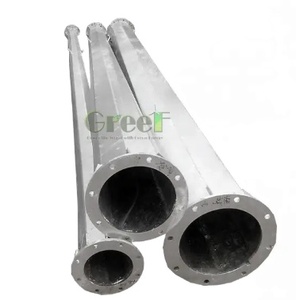
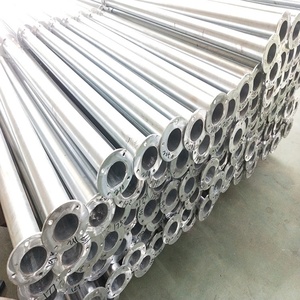
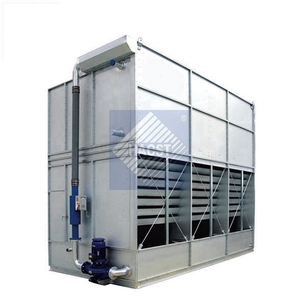
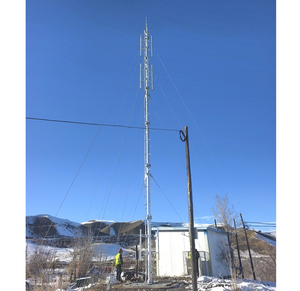
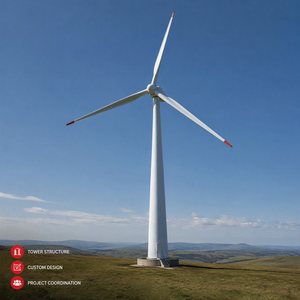
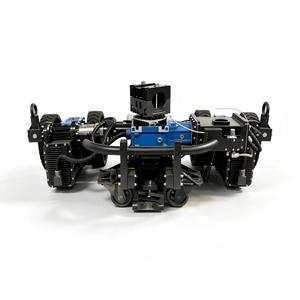
As Ghana accelerates its target under the National Renewable Energy Master Plan (REMP) to expand clean power penetration, energy developers, mining operations, commercial industries, and EPC contractors are seeking high-reliability distributed energy solutions. While solar PV has dominated initial conversations, the integration of **distributed wind power structures** and **wind-solar hybrid microgrids** provides essential baseload balancing during nighttime hours, Harmattan overcast periods, and winter monsoon weather patterns.
Procuring wind turbine towers and heavy structural steel from top-tier Chinese OEM manufacturers offers Ghanaian developers an optimal levelized cost of energy (LCOE) combined with certified structural integrity. However, matching heavy steel infrastructure to West Africa’s harsh microclimates—ranging from high-salinity coastal marine belts along Accra, Cape Coast, and Takoradi to sand-laden inland Harmattan winds—requires specialized manufacturing specs, ISO 1461 hot-dip galvanization standards, and precision civil engineering.
Key market drivers transforming the demand for structural steel turbine towers and off-grid hybrid power assets across West Africa.
Under the Ministry of Energy's REMP framework, Ghana aims to increase utility-scale and off-grid renewable capacity substantially. Wind energy along coastal corridors like Winneba, Lekpongunor, and Anloga is leading utility inquiries for multi-megawatt tubular towers.
Commercial & Industrial (C&I) players facing escalating Electricity Company of Ghana (ECG) and Northern Electricity Distribution Company (NEDCo) tariffs are adopting behind-the-meter (BTM) direct-drive wind energy systems to guarantee 24/7 power security for manufacturing facilities.
Heavy gold mining sectors in Ashanti, Western, and Ahafo regions require immense process cooling and power reliability. Combining closed-loop steam turbine cooling towers with localized heavy wind turbine support structures offsets reliance on expensive thermal diesel gensets.
Standardized manufacturing specs engineered for West African wind dynamics (IEC Class I, II, III wind speeds) and corrosion mitigation.
| Structural Parameter | Monopole Steel Tower | Guyed Lattice Tower | Hydraulic Self-Raising Tower | Bionic Telecom Tower |
|---|---|---|---|---|
| Steel Grade Standard | Q355B / Q355D / S355JR | Q235B / Q355B Angle Steel | Q355B High-Yield Steel | Q235B Structural Steel |
| Applicable Hub Height | 20m to 120m (Flange Connected) | 18m to 60m | 10m to 36m | 15m to 45m |
| Anti-Corrosion Surface Treatment | Hot-Dip Galvanized + C5-M Marine Paint | ISO 1461 Hot-Dip Galvanization | HDG Coating (85µm - 120µm) | Bionic Bark Polyurethane Coating over HDG |
| Extreme Wind Speed Rating | Up to 60 m/s (Category 4 Hurricane) | Up to 50 m/s | Up to 45 m/s | Up to 55 m/s |
| Foundation Type Compatibility | Octagonal Concrete / Anchor Bolt Cage | Helical Screw Piles / Ground Plate | Pre-cast Concrete Pad / Screw Anchor | Reinforced Concrete Monopole Base |
| Design Life Expectancy | 30 Years Fatigue Certified | 25-30 Years | 25 Years | 30 Years |
Engineered steel turbine towers deployed across diverse geographical, industrial, and climatic zones in West Africa.
Ghana’s coastal regions—specifically around Ada, Ningo-Prampram, Cape Three Points, and Sekondi-Takoradi—boast mean annual wind speeds exceeding 6.0–7.0 m/s at 50m hub heights. Large-scale **heavy-duty galvanized tubular wind turbine towers** (500kW to 2.5MW class) deployed here require specialized C5-M marine-grade multi-layer epoxy coatings over hot-dip galvanization to resist severe airborne sea salt mist and atmospheric salinity.
Industrial operations situated in Tema Export Processing Zone or along the Accra-Tema motorway experience frequent power quality fluctuations. Integrating **free-standing 90kW to 300kW steel monopoles** allows factories to generate zero-emission energy on site. Occupying a compact foot-print pad, monopole towers leave valuable yard and storage logistics space completely unencumbered.
In northern agrarian territories (Tamale, Wa, Bolgatanga), solar irradiation drops during heavy dust Harmattan cycles. Deploying **hybrid wind-solar-storage systems** featuring 5kW-10kW **hydraulic self-raising towers** or screw-pile guyed masts allows continuous agricultural pumping, grain drying, and cold chain storage operations without needing heavy cranes for remote maintenance.
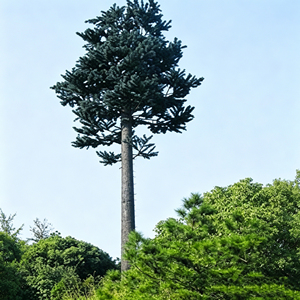
Expanding 4G/5G mobile connectivity across eco-tourism belts (Volta Region, Lake Volta perimeter, Kakum national park zones) requires unobtrusive design. **Bionic tree camouflage monopoles** integrate micro-wind turbine heads alongside cellular transceivers, blending into local foliage while delivering self-contained power to remote towers.
Selecting the right turbine tower supplier involves understanding the operational realities of West Africa. Conventional wind turbines utilize complex gearboxes that require frequent gear-oil changes and fine air filtration to prevent sand-grit abrasion during Harmattan seasons. Our supplied turbine systems prioritize **direct-drive permanent magnet generators (PMG)** paired with high-precision steel tubular towers.
Seamless freight management from major Chinese steel fabrication hubs directly to Tema Port and Takoradi Harbor.
Towers up to 30m are fabricated in flanged sectional segments (typically 6m to 11.8m lengths) to fit standard 40ft High Cube (40HC) or Flat Rack (FR) shipping containers, avoiding costly breakbulk rates.
Direct liner services from Shanghai, Ningbo, and Qingdao reach Tema Port or Takoradi Port within 30-38 transit days. Steel components are seaworthy packed with anti-scratch wraps and desiccant buffers.
Our export documentation complies fully with the Ghana Standards Authority (GSA) and ICUMS (Integrated Customs Management System). Clean energy capital equipment may qualify for import duty exemptions under Ghanaian RE tax relief schemes.
Answers to critical technical, logistics, and operational queries encountered during project evaluation.
All structural steel towers supplied by our Chinese factory network undergo intense surface preparation (Sa 2.5 sandblasting) followed by hot-dip galvanizing per ISO 1461 standards. For coastal installations within 5km of the Atlantic shoreline, we apply an additional C5-M marine epoxy polyurethane topcoat, providing up to 30 years of protection against salt spray and high ambient humidity.
As a screening rule, sites with an annual average wind speed of 4.5 m/s to 5.0 m/s at hub height (typically 30m to 36m) yield excellent return on investment. Coastal regions along the Gulf of Guinea and elevated inland ridges (such as the Mampong Escarpment) routinely register mean speeds between 5.5 m/s and 7.2 m/s.
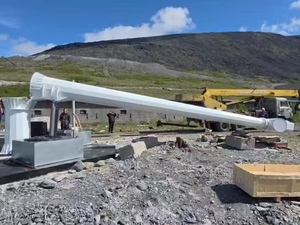
Yes. For rural microgrids, agricultural installations, or sites with limited road access, we supply Hydraulic Self-Raising Towers (suitable for 5kW to 10kW turbines) or modular Guyed Towers. These designs utilize integrated hydraulic cylinders or manual winches, eliminating the need for expensive mobile cranes during installation and maintenance.
We provide full structural civil foundation drawings tailored to site-specific geotechnical reports. For soft coastal soils along the Volta delta or marshy terrain, we supply custom Helical Screw Piles that screw directly into the earth without requiring massive concrete pours. For standard sites, anchor bolt cage assemblies are embedded into octagonal concrete pads.
Our manufacturing facilities comply strictly with ISO 9001 quality management, ISO 14001 environmental standards, and EN 1090 / AWS D1.1 structural welding qualifications. Every tower section comes with Mill Test Certificates (MTC), Non-Destructive Ultrasonic Weld Testing (UT) reports, and Zinc Coating Thickness Inspection Certificates.
Chinese tower factories offer massive economies of scale, dedicated automated submerged-arc welding, deep zinc galvanizing baths capable of accommodating up to 14m continuous steel sections, and certified fatigue testing. This guarantees structural tolerances, superior anti-corrosion quality, and lower total procurement costs even after factoring ocean freight to Tema Port.
Partnering with China’s premier wind turbine tower manufacturers gives Ghanaian developers access to world-class industrial infrastructure. Backed by over two decades of international engineering experience, our modern manufacturing facilities encompass state-of-the-art plate rolling machines, automated submerged arc welding (SAW) lines, CNC flange drilling equipment, and internal galvanizing operations.
100% NDT (Non-Destructive Testing) weld inspection including Magnetic Particle (MT) and Ultrasonic Testing (UT) to ensure zero internal structural defects.
In-house structural engineering teams utilizing ANSYS stress modeling and FAST aerodynamic simulation software to customize towers to Ghanaian wind regimes.
From initial wind speed assessment and foundation anchor design to shipping container loading, customs clearance assistance, and installation supervision.
