Navigating the renewable energy matrix of Northern California requires advanced engineering precision, structural durability, and uncompromising regulatory compliance. As San Francisco accelerates toward net-zero microgrid mandates and faces persistent utility rate escalations alongside Public Safety Power Shutoffs (PSPS), on-site wind generation has transitioned from an auxiliary eco-initiative to an indispensable financial and operational hedge.
This comprehensive industry white paper details premium small-scale wind turbine technology engineered by top-tier manufacturers in China and optimized specifically for deployment across San Francisco, the Peninsula, Marin County, and the broader Bay Area. Utilizing gearless Direct-Drive Permanent Magnet Generators (PMG), aerospace-grade aerodynamic profiling, and low-acoustic emissions, these systems provide localized energy sovereignty for urban agricultural perimeters, municipal infrastructure, commercial campuses, and marine applications.
High-performance wind generator systems engineered for high efficiency, coastal anti-corrosion, low maintenance, and seamless battery hybrid integration.

Compact horizontal-axis residential wind generator featuring lightweight aluminum housing, electromagnetic auto-furling protection, and low sound footprint ideal for Bay Area rooftops.

Omnidirectional vertical-axis turbine capturing turbulent city winds from any direction. Built with high-efficiency MPPT tracking and silent acoustic damping for urban SF zones.

Ultra-compact micro VAWT kit tailored for off-grid coastal telemetry, environmental monitoring stations, and urban micro-power systems near SF Bay.

Solid-state, high-reliability micro wind sensor power module designed for continuous trickle charging of remote smart grid nodes and environmental sensor arrays.

Robust 400-watt horizontal turbine designed for hybrid solar-wind municipal street lighting, remote surveillance cameras, and parking lot security power backups.

All-in-one plug-and-play micro turbine with internal DC charge controller. Plug-compatible with 12V/24V battery systems for marine docks and residential emergency kits.

Industrial-grade 5,000-watt turbine equipped with pitch-control dynamics and neodymium permanent magnet direct drive. Engineered for commercial facilities and agricultural microgrids.
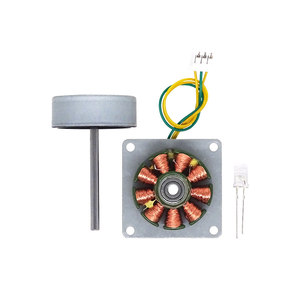
Precision-engineered 3-phase AC low-voltage brushless alternator module (3V-24V). Ideal for OEM green energy hardware, educational pilot projects, and specialized sensor units.
San Francisco’s unique topography—characterized by coastal marine boundaries, thermal wind tunnels created by the Golden Gate gap, and elevated ridgelines—demands specialized distributed wind engineering. Traditional wind turbines engineered for flat inland topographies fail under Northern California’s turbulent, highly direction-variable microclimates.
In dense San Francisco neighborhoods such as the Sunset District, Richmond, and Pacific Heights, rooftop space is high-value real estate. Installing vertical-axis (VAWT) wind turbines (e.g., 2kW low-noise systems) allows building managers to harness strong, turbulent ocean breezes off the Pacific Coast without triggering municipal acoustic violation thresholds.
Agricultural facilities require massive energy for cold-storage refrigeration, irrigation pumping, and aeration—often peaking during winter nights when solar photovoltaic production drops to zero. 5kW pitch-controlled horizontal turbines provide complimentary nocturnal power generation, dramatically flattening agricultural utility bills under PG&E’s complex Time-of-Use (TOU) rate schedules.
Salt fog and brackish air along the San Francisco Bay present severe corrosion threats to electrical equipment. Specialized marine-coated micro wind generators (equipped with dual ceramic bearings, stainless fasteners, and IP67 sealed housings) deliver uninterrupted off-grid power to dock monitoring nodes, navigational telemetry, and marina lighting.
During Northern California wildfire seasons, utility Public Safety Power Shutoffs (PSPS) cut power to thousands of commercial enterprises. Integrating small wind systems into hybrid Wind-Solar-Storage (WS²+) architectures ensures uninterrupted operation for critical IT infrastructure, logistics hubs, and cold storage facilities when grid connectivity collapses.
Deploying distributed wind in San Francisco requires navigating a distinct landscape of municipal building codes, California Environmental Quality Act (CEQA) mandates, and aggressive regional sustainability goals.
San Francisco has committed to achieving 100% renewable electricity by 2030 and net-zero greenhouse gas emissions by 2040. As commercial real estate developers face strict carbon caps, adding on-site wind generation earns valuable points under California’s Title 24 Energy Code and LEED Zero Energy certifications, directly increasing commercial asset valuation.
Under the US Inflation Reduction Act, qualifying small wind turbine installations qualify for a base 30% Investment Tax Credit (ITC). Additional bonus credits up to 10% are accessible if equipment meets domestic content add-ons or is installed in designated energy communities. This drastically reduces payback periods for San Francisco commercial entities importing tier-1 small wind technology.
Municipal setback rules in San Francisco strictly govern noise pollution (typically requiring decibel levels under 45 dBA at property lines). Modern Chinese manufacturing centers have prioritized gearbox-free direct-drive permanent magnet generators. Eliminating mechanical gearboxes eliminates high-frequency mechanical whining, ensuring full compliance with SF Department of Building Inspection (DBI) acoustic standards.
| Technology Feature | Legacy Geared Wind Turbines | Modern Direct-Drive PMG Systems | San Francisco Municipal Advantage |
|---|---|---|---|
| Mechanical Complexity | High (Multi-stage Gearbox + Oil) | Gearless Direct Rotor Coupling | Zero risk of gear oil spills or leak hazards |
| Acoustic Signature | High Pitch Friction Noise (58-65 dBA) | Silent Fluid Dynamics (< 42 dBA) | Full compliance with SF noise ordinances |
| Low Wind Startup | Requires High Cut-in (> 3.5 m/s) | Ultra-Low Cut-in (1.8 - 2.2 m/s) | Captures low-velocity coastal fog winds |
| Maintenance Cycle | Annual Oil Swap & Gear Inspection | 3-Year Visual & Remote SCADA Only | Dramatically reduced Bay Area labor costs |
| Target Lifespan | 10 to 15 Years | 30 Years Engineered | Maximizes long-term ROI against PG&E rates |
Sourcing small wind systems from premier Chinese OEMs provides San Francisco business owners and EPC contractors with an unequaled balance of cost optimization and advanced metallurgical craftsmanship. Over two decades of manufacturing evolution have established rigorous design and quality control methodologies:
Yes, distributed wind installations are permitted under California state law and local municipal codes, subject to height limits, property line setbacks, and noise ordinances. Roof-mounted vertical-axis turbines (VAWT) are frequently approved under streamlined urban green-building permits when accompanied by acoustic test reports.
Systems can be configured for either grid-tied net-metering (NEM 3.0 / Rule 21 interconnection) or as isolated off-grid microgrids paired with lithium battery storage (BESS). Grid-tied systems utilize UL 1741 compliant grid-interactive inverters to ensure automatic safety shutdown during grid power loss.
Direct-drive systems remove the mechanical gearbox—the single highest point of failure in historical wind turbines. By coupling the rotor hub directly to the generator magnet rotor, friction losses, acoustic noise, and maintenance requirements are minimized, unlocking a 30-year design life.
A site with an average annual wind speed of 4.5 m/s to 5.0 m/s (approx. 10–11 mph) at hub height generally yields an attractive Levelized Cost of Energy (LCOE). Given San Francisco's coastal position and thermal gradient, coastal and ridgeline sites consistently exceed this benchmark.
Leading suppliers collaborate with California-certified engineering partners and distributors to deliver turnkey services: preliminary wind resource modeling, foundation engineering, customs clearing, construction, and long-term regional spare parts availability.
Wind and solar profiles are highly complementary. In Northern California, solar generation drops significantly during winter months and overnight hours—precisely when regional winds and winter storms peak. A hybrid Wind-Solar-Storage (WS²+) arrangement ensures a flat, predictable 24/7 power output.
Connect directly with our senior wind application engineers for custom site modeling, wind-solar hybrid assessment, and technical OEM specification requests.
