Precision-engineered micro, vertical, and horizontal axis wind turbines optimized for coastal resilience, low cut-in speeds, and harsh marine environments across South Korea.
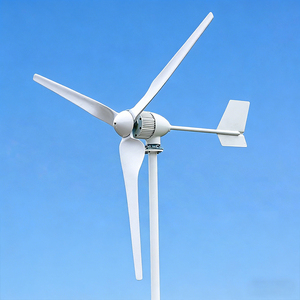
Compact horizontal-axis 1kW wind turbine engineered for residential coastal roofs, seaside cabins, and marine station power generation.
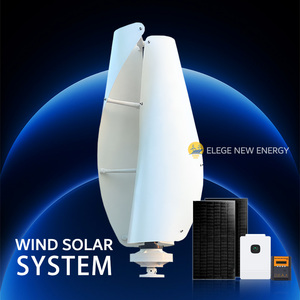
Ultra-quiet vertical axis (VAWT) system with smart MPPT controller. Designed for omnidirectional coastal winds and island off-grid storage.
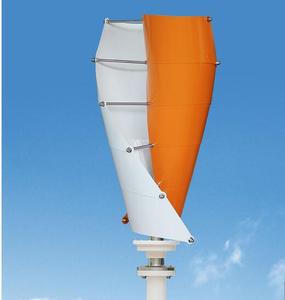
Lightweight micro-vertical wind turbine kit optimized for offshore oceanographic buoys, fish farming telemetry, and marine monitoring stations.
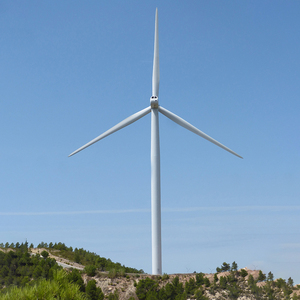
High-reliability low-wattage micro turbine built for continuous zero-maintenance operation on offshore marine platforms and maritime IoT sensors.
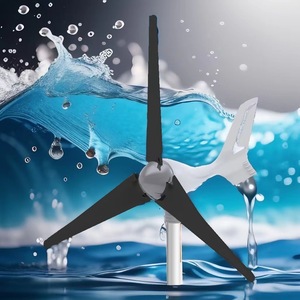
Rugged 400W HAWT system customized for marine port street lights, harbor security surveillance, and hybrid wind-solar backup installations.
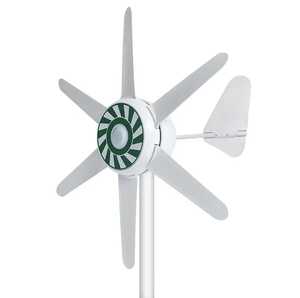
Compact plug-and-play mini turbine featuring an integrated charging controller. Ideal for marine vessels, yachts, and coastal battery trickle-charging.
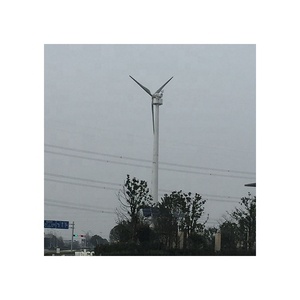
Heavy-duty 5kW direct-drive turbine built for coastal industrial complexes, offshore aquacultural centers, and island microgrids in South Korea.
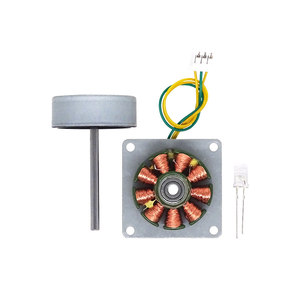
Precision low-power permanent magnet alternator core designed for custom marine auxiliary equipment, marine educational units, and energy harvesting.
South Korea’s commitment to achieving carbon neutrality by 2050 and its ambitious targets under the Ninth Basic Plan for Long-Term Electricity Supply and Demand have positioned marine and offshore wind power as foundational pillars of the nation’s renewable energy portfolio. With over 12,000 kilometers of coastline and expansive exclusive economic zones (EEZ), the Korean peninsula offers exceptional offshore wind resources. However, scaling distributed maritime generation presents unique engineering and financial hurdles, including severe seasonal typhoons, aggressive salt-spray corrosion, stringent KEPCO grid-code compliance, and high Levelized Cost of Energy (LCOE) associated with traditional European turbinery.
In this evolving landscape, leading Chinese marine wind suppliers and exporters have established a decisive market footprint in South Korea. By combining advanced Direct-Drive Permanent Magnet Synchronous Generator (PMSG) architectures, marine-grade metallurgical anti-corrosion treatments, and highly competitive capital expenditures (CAPEX), Chinese original equipment manufacturers (OEMs) offer South Korean EPC contractors, fish farm operators, and island microgrid developers an unbeatable balance of technical reliability and commercial feasibility.
As South Korea expands its offshore energy clusters near Jeju Island, Shinan (targeting 8.2 GW offshore capacity), and the southeastern industrial belt surrounding Busan and Ulsan, the demand for localized small-to-medium marine wind power systems (ranging from 100W micro-turbines for offshore IoT to 90kW+ distributed commercial turbines) has experienced exponential growth. Sourcing directly from top-tier Chinese manufacturers allows Korean buyers to bypass supply chain bottlenecks while securing equipment tailored specifically to East Asian sea conditions.
Standard land-based wind turbines rapidly degrade in maritime coastal environments. Our export-grade turbines incorporate specialized marine engineering to ensure 30-year operational lifespans.
By eliminating high-wear mechanical gearboxes, our Direct-Drive Permanent Magnet Synchronous Generators eliminate gear oil leaks, dramatically lower mechanical friction, and achieve over 98.4% fleet availability even under aggressive continuous wave vibrations.
Exposed to severe marine salt spray in regions like the Korea Strait and Yellow Sea, our turbines feature multi-layer marine-grade coatings (epoxy zinc-rich primers and polyurethane topcoats), SUS316 stainless hardware, and anodized aluminum enclosures compliant with C5-M / CX marine durability ratings.
To withstand extreme Pacific typhoons (such as Super Typhoon Hinnamnor), our turbines employ dual electromagnetic braking, passive aerodynamic pitch control, and reinforced carbon-fiber composite blades capable of surviving instantaneous wind gusts up to 60 m/s (134 mph).
Engineered with high-torque, low-RPM aerodynamic foil profiles, our micro and small marine turbines start producing clean electricity at wind speeds as low as 1.8 to 2.5 m/s, maximizing annual energy yield (AEY) during calm summer sea conditions.
Integrated IoT smart controllers stream real-time operational parameters, vibration analytics, and battery state-of-charge (SOC) data to mobile and desktop dashboards, allowing remote diagnostics for unmanned offshore platforms and remote Korean islands.
Designed for seamless synergy with photovoltaic arrays and lithium iron phosphate (LFP) energy storage systems, creating reliable EOX WS²+ hybrid microgrids that deliver continuous 24/7 power for coastal industrial applications.
Understanding the precise localized deployment context is essential for selecting the correct marine wind generator configuration. In South Korea, geographic and economic factors dictate four dominant procurement scenarios for imported Chinese marine wind turbines:
In major aquaculture hubs such as Wando, Tongyeong, and Shinan County, commercial fish farms operate off-grid aeration pumps, automated feed dispensers, water quality sensors, and living quarters. Replacing expensive, noisy diesel generators with 1kW to 5kW marine wind turbines paired with solar-battery storage drastically lowers operational expenses while protecting delicate marine ecosystems from fuel spills.
South Korea encompasses over 3,300 offshore islands (including Ulleungdo, Baengnyeongdo, and the Dadohaehaesang archipelago). Distributed small wind turbines (2kW vertical axis to 90kW direct-drive platforms) serve as the back-bone for islanded microgrids, capturing strong night-time winter sea breezes when solar irradiance drops to zero.
Major maritime industrial nodes around Busan Port, Incheon Port, and Gwangyang Port face intense pressure to reduce Scope 1 and Scope 2 emissions under global RE100 standards. Coastal lighting, container yard monitoring towers, and port security facilities utilize horizontal-axis 400W to 1kW wind generators to generate on-site clean electricity directly behind the meter.
Unmanned offshore oceanographic buoys, maritime weather radar stations, military coastal watch posts, and offshore oil/gas platforms demand continuous low-wattage DC power (80W to 300W). Micro vertical-axis wind turbines (VAWT) provide omnidirectional wind harvesting with zero noise and minimal maintenance requirements.
Comparing Horizontal Axis (HAWT) and Vertical Axis (VAWT) Marine Wind Turbines for Korean Offshore Applications.
| Technical Parameter | Horizontal Axis (HAWT) Micro/Small | Vertical Axis (VAWT) Micro/Small | Direct-Drive Industrial (EOX M-Series) |
|---|---|---|---|
| Typical Power Capacity | 400W – 5kW | 80W – 2kW | 25kW – 90kW |
| Cut-in Wind Speed | 2.2 m/s – 2.5 m/s | 1.8 m/s – 2.0 m/s | 2.7 m/s |
| Typhoon Resistance | Up to 50 m/s (Auto Yaw/Brake) | Up to 60 m/s (Low Profile) | Up to 65 m/s (Active Pitch/Yaw) |
| Acoustic Signature | Moderate (< 45 dB) | Ultra-Silent (< 35 dB) | Low-Frequency Optimized |
| Corrosion Protection | ISO 12944 C4 / C5-M | Anodized AL + SUS316 | ISO 12944 CX Marine Heavy Duty |
| Primary Korean Application | Port Lighting, Coastal Rooftops | Aquaculture Buoys, IoT, Resorts | Island Microgrids, Commercial Parks |
Korean EPC firms, maritime equipment distributors, and government agency contractors are increasingly turning to specialized Chinese wind suppliers due to three primary market vectors:
Global supply chain audits conducted by conglomerates like Samsung Electronics, SK Hynix, and Hyundai Motor Group require tier-1 suppliers across Korea to transition to 100% renewable energy. Installing distributed marine wind turbines along coastal manufacturing plants offers higher capacity factors than solar PV alone, particularly during long Korean winter months when solar generation declines by over 60%.
Korean energy infrastructure relies on specific grid configurations and off-grid battery standards (e.g., 24V/48V DC for small buoys, 380V/440V 3-phase AC for commercial maritime sites). Top Chinese wind exporters differentiate themselves by delivering fully customized OEM/ODM electrical control cabinets equipped with integrated KS-compliant protection relays, remote SCADA communications, and specialized MPPT solar-wind hybrid algorithms.
European marine wind turbines carry premium price tags and extended lead times exceeding 12 to 18 months. In contrast, Chinese wind turbine manufacturers operating out of major maritime industrial hubs (such as Shandong, Jiangsu, and Zhejiang) provide short transit times across the Yellow Sea to Korean ports (Busan, Incheon, Pyeongtaek) within 3 to 7 days, significantly accelerating project turnaround times.
With over two decades of dedicated research, manufacturing, and global export experience, our engineering platform stands as a premier supplier of marine-grade distributed wind energy systems to the Korean market.
Every turbine undergoes 100% full-load factory testing, aerodynamic balance alignment, and high-pressure salt-spray chamber validation prior to packing. Certified under CE, ISO 9001, ISO 14001, and IEC 61400 standards.
From initial wind resource assessment and CFD micrositing analysis to foundation structural design and post-sale spare parts logistics, our bilingual technical team supports Korean engineering partners at every project milestone.
Addressing common technical, regulatory, and logistics queries regarding imported marine wind turbines in South Korea.
As a general engineering rule, sites with an annual average wind speed of 4.5 m/s or higher at hub height yield attractive economic returns. However, our micro-turbines feature cut-in speeds as low as 1.8 m/s to 2.5 m/s, making them highly effective for auxiliary power generation even in moderate coastal breezes across the Korean peninsula.
Our export marine turbines utilize multi-stage safety protection systems: passive aerodynamic blade stall/pitching, electromagnetic automatic braking via smart MPPT controllers, and mechanical tail-vane furling or directional yaw braking. The structural towers and nacelles are calculated under IEC Class I standards to survive peak gust velocities up to 60 m/s.
Turbines exported to Korea generally require CE conformity, ISO quality management certification, and compliance with IEC 61400-2 (for small wind turbines). For grid-tied installations connected to KEPCO's electrical network, inverter units must meet local grid-code standards, islanding protection, and power quality requirements.
Direct-drive permanent magnet generators (PMSG) eliminate mechanical gearboxes—the single primary cause of downtime in marine environments. Gearbox oil replacement, seal degradation, and mechanical gear failure are entirely avoided, reducing maintenance visits to an annual visual check and delivering fleet availability exceeding 98%.
All structural steel components undergo hot-dip galvanizing followed by multi-coat marine C5-M / CX epoxy polyurethane painting. Internal electrical windings are vacuum-pressure impregnated (VPI) with salt-resistant varnish, while all external fasteners utilize SUS316 stainless steel to prevent galvanic corrosion.
Standard micro and small wind turbine orders are typically manufactured within 15 to 25 days. Maritime shipping from Qingdao, Shanghai, or Ningbo to major Korean ports (Busan, Incheon) takes approximately 3 to 7 days, allowing for fast delivery and seamless supply chain integration.
