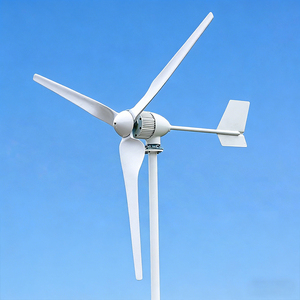
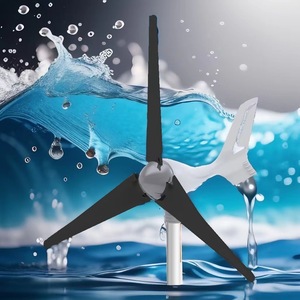
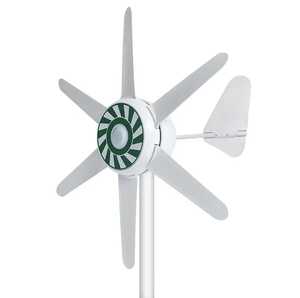
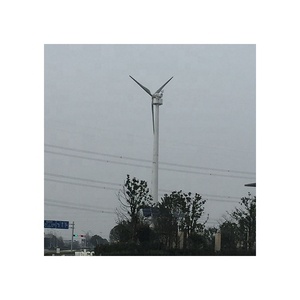
Factory Price Rooftop 1kw Small Wind Turbines for Home Electricity
- Rated Power: 1.0 kW @ 11 m/s
- Rotor Type: Horizontal Axis (HAWT)
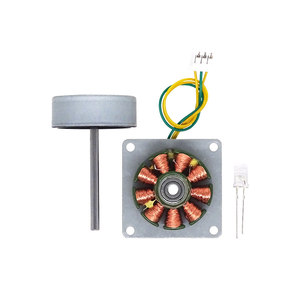
- Generator: 3-Phase Direct-Drive PMG
- Grid Fit: Single-Phase 230V AS/NZS
A comprehensive technical analysis on deployed grid-tied and hybrid small wind energy conversion systems across Aotearoa New Zealand.
New Zealand possesses one of the world's most robust wind energy resources, driven by its geographic positioning across the "Roaring Forties." However, converting this volatile kinetic resource into dependable, grid-compliant electrical power requires specialized electromechanical engineering. Traditional gear-driven small wind turbines frequently suffer catastrophic mechanical degradation due to severe turbulence, sudden directional shifts, and airborne salt spray inherent to Kiwi coastal regions.
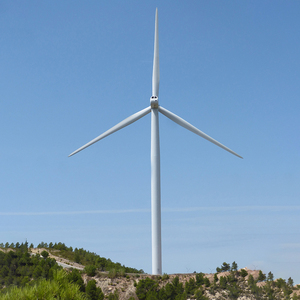
As a leading export-oriented OEM/ODM manufacturer specializing in direct-drive permanent magnet generator (PMG) technology, our company supplies grid-connected small wind energy systems ranging from 80W micro-generation nodes to 90kW industrial platforms engineered specifically to overcome these challenges. By eliminating the mechanical gearbox, our systems drastically minimize moving parts, delivering unmatched reliability under extreme IEC Class I wind conditions while maintaining ultra-low maintenance requirements for remote agricultural, commercial, and microgrid installations.
Explore our export-grade wind generators engineered for residential, agricultural, and industrial grid-connection in New Zealand.
Analyzing high-value use cases for distributed wind systems adapted to New Zealand's regional economic sectors.
Dairy sheds in the South Island operate under rigorous electrical load schedules, with morning and evening milking operations creating sharp energy demand peaks. Integrating 5kW to 90kW grid-connected small wind turbines allows farmers to directly offset expensive lines charges and retail electricity rates.
Vineyards require constant power for irrigation pumps, temperature control, and frost protection equipment. Wind turbines operate seamlessly alongside existing solar PV arrays, leveraging existing grid connection points to build robust wind-solar-storage microgrids.
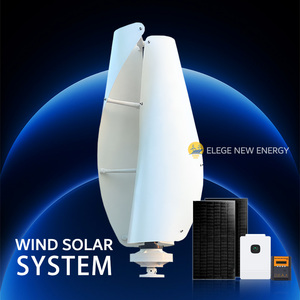
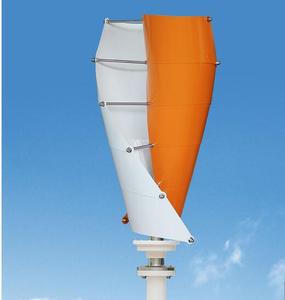
Extremely isolated sheep farming stations and eco-tourism lodges face astronomical grid-extension costs. Small vertical axis (VAWT) and direct-drive horizontal axis wind systems deliver dependable remote electricity in coastal environments prone to severe gale gusts.
Understanding the technological shift toward hybrid DERs and strict network interconnection rules.
Connecting small wind turbines to local electricity networks in New Zealand (managed by lines companies such as Vector, Powerco, Orion, and Unison) requires total adherence to strict power quality standards. The primary technical bottleneck for imported wind equipment is ensuring that grid tie inverters comply with AS/NZS 4777.2:2020 grid connection requirements, which govern active power response to over-frequency, power factor control, and anti-islanding safety protocols.
Our export small wind energy systems come pre-configured or bundled with certified AS/NZS 4777.2 compliant inverter systems. This ensures seamless approval processes during the local lines company application phase, reducing regulatory friction for Kiwi installers, EPC contractors, and end-user buyers.
| Technical Parameter | Standard Chinese Specification | New Zealand Export Adaptation (AS/NZS) |
|---|---|---|
| Grid Frequency Compliance | 50Hz (Standard) | 50Hz ± 3Hz with dynamic fast-frequency response |
| Anti-Islanding Protection | Passive Voltage/Frequency Sensing | Active Frequency Drift (AFD) according to AS/NZS 4777.2 |
| Corrosion Resistance Grade | ISO C3 Commercial Standard | ISO C5-M Heavy Marine Hot-Dip Galvanized & Epoxy Coating |
| Storm Braking Mechanism | Electromagnetic Friction Brake | Dual Redundant: Yaw Furling + Auto-Pitch / Dump Load |
Combining competitive Chinese industrial manufacturing scale with tier-one international quality control standards.
Our direct-drive permanent magnet generators (PMG) feature high-grade NdFeB (Neodymium Iron Boron) rare-earth magnets. By operating at low rotational speeds matching the wind rotor directly, we eliminate mechanical gearboxes, drastically reducing mechanical friction, noise emission, and oil maintenance overheads.
Every turbine design undergoes rigorous wind tunnel testing and structural stress modeling. Our production facility operates under ISO 9001, ISO 14001, and ISO 45001 management systems, with turbine product series carrying full CE mark, IEC 61400 safety compliance, and RoHS certification for global market acceptance.
We provide unified hybrid energy solutions (EOX WS²+ system compatible), integrating wind turbine output, photovoltaic strings, and lithium-iron-phosphate (LFP) battery storage under a single intelligent energy management system (EMS) for peak-shaving and off-grid autonomy.
Essential answers for Kiwi property owners, agricultural managers, energy consultants, and electrical contractors.
As a practical engineering benchmark, sites with an average annual wind speed of 5.0 m/s (approx. 18 km/h) or higher at hub height offer strong financial viability. In many regions of New Zealand—such as Wellington, Manawatu, Coastal Canterbury, Southland, and elevated ridge-lines—average wind speeds regularly exceed 6.5 m/s. Because our direct-drive turbines feature low cut-in wind speeds (1.5 m/s - 2.5 m/s) and use elevated free-standing towers (18m to 36m), they capture cleaner, higher-velocity air above ground boundary layers and farm structures.
While solar PV performs excellently during clear summer days, its power output drops significantly during New Zealand's winter months—which coincides exactly with peak agricultural heating, lighting, and milking electricity loads. Wind generation delivers higher energy yield per square meter of occupied land and generates continuously throughout the night, winter storms, and overcast conditions. Combining wind and solar into a hybrid array creates a complementary year-round generation profile, significantly reducing required battery storage capacity.
Resource consent requirements depend on your local District Council rules (e.g., Christchurch City Council, Southland District Council, Selwyn District Council). Many rural zones permit small wind turbines as a permitted activity, provided the total height does not exceed specific limits (often 20m - 25m in rural zones) and setback distances from property boundaries and noise limits (typically 40 dBA at the boundary) are respected. Micro-turbines and low-noise vertical axis designs (VAWT) often simplify consent pathways in residential or commercial edge zones.
Because our turbines utilize direct-drive permanent magnet generators without a mechanical gearbox, there is no gear oil to replace and minimal mechanical friction components to inspect. Scheduled O&M typically involves an annual visual inspection of rotor blades, guy-wire tension check (for guyed towers), electrical terminal torque checks, and bearing lubrication. Remote SCADA telemetry allows real-time monitoring of turbine performance, rotation speed, voltage, and system alerts via smartphone or web dashboard.
We export directly from major Chinese ports (Ningbo/Shanghai/Qingdao) to all key New Zealand container ports, including Port of Auckland, Lyttelton (Christchurch), Port Chalmers (Dunedin), and CentrePort (Wellington). Turbines, blades, controllers, and tower sections are packed in heavy-duty export plywood crates engineered for ocean freight. We provide comprehensive installation manuals, electrical schematics, remote engineering assistance, and full spare-part support for certified local electrical installers.
Contact our engineering export team today for a free site assessment, wind energy yield estimation, and wholesale export pricing customized for your New Zealand project.
Send an Inquiry