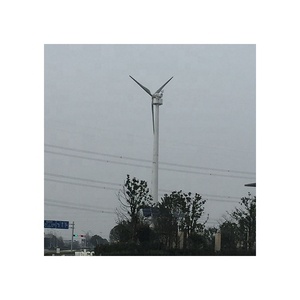
Top 10 Turbine Controller Manufacturers & Suppliers in the Bangladesh Market

A 2026 Technical White Paper on Distributed Wind Controllers, Smart MPPT Systems & Coastal Microgrid Integration

Industrial Grade Solutions

Featured Small Wind Turbines & Controller Systems

Engineered for high-yield power generation, extreme weather resilience, and seamless integration across rural, agricultural, and industrial sites in Bangladesh.
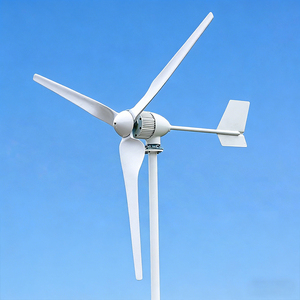
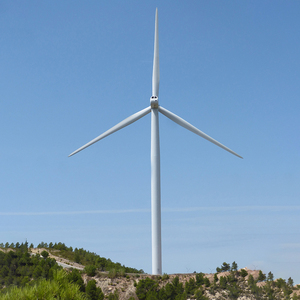
Factory Price Rooftop 1kw Small Wind Turbines for Home Electricity
Factory Price Rooftop 1kw Small Wind Turbine with Smart Controller
  • Rated Output: 1.0 kW
  • System Voltage: 24V / 48V DC
  • Cut-in Wind Speed: 2.5 m/s
  • Controller Type: Smart PWM / MPPT
Send an Inquiry
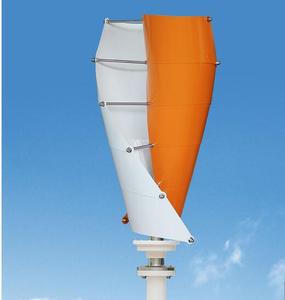
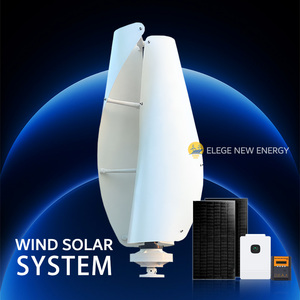
Elege CE MPPT Low Noise RPM Free Energy 12V 24V 48V 2kw 2000w Axis Micro Vertical Wind Turbine
2kW Low-Noise MPPT Vertical Axis Wind Turbine Controller System
  • Rated Power: 2000W
  • Voltage Compatibility: 12V/24V/48V
  • Tracking Efficiency: > 99% MPPT
  • Noise Level: < 35 dB
Send an Inquiry
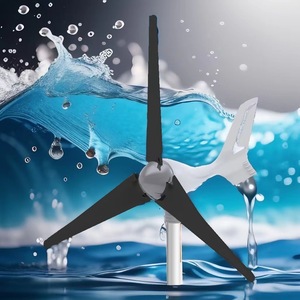
300w Micro Vertical Wind Generator Kit China
300W Micro Vertical Wind Generator Kit & Charge Controller
  • Rated Output: 300W
  • Architecture: Maglev Vertical Axis
  • Brake System: Auto-Dump Load
  • Application: Off-Grid Backup
Send an Inquiry
Wind Generator Long Lifespan Outdoor Micro Wind Generator 80mw 90mw 100mw Wind Turbines
Long-Lifespan Outdoor Micro Wind Generator (80mW-100mW)
  • Power Range: 80mW - 100mW
  • Enclosure: Weatherproof IP67
  • Operating Temp: -20°C to +60°C
  • Target Use: IoT & Sensor Nodes
Send an Inquiry
Horizontal Axis Micro Wind Generator 400W 12V For Solar Street Light Surveillance
400W 12V Horizontal Axis Turbine for Hybrid Street Lighting & CCTV
  • Nominal Power: 400W @ 12 m/s
  • Rated Voltage: 12V DC
  • Hybrid Integration: Solar + Wind Input
  • Protection: Over-speed Electromagnetic
Send an Inquiry
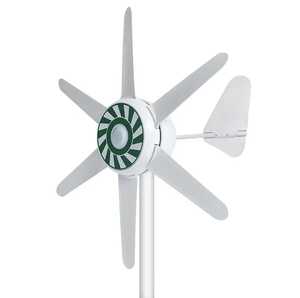
90W Mini Wind Turbine With Controller Built-in, DC Output 12V/24V Micro Wind Turbine
90W Mini Wind Turbine with Integrated Built-in Controller Module
  • Capacity: 90W Continuous
  • DC Output: 12V / 24V Auto-select
  • Form Factor: Compact Direct-Drive
  • Weight: Ultralight Portable
Send an Inquiry
High Efficiency Three Blades 5kw ALLRUN AR6.0-5KW Micro Wind Turbine Generator
5kW Commercial High-Efficiency 3-Blade Wind Power & Control Rack
  • System Power: 5.0 kW
  • Rotor Diameter: 6.0 Meters
  • Grid Tie Option: 3-Phase 380V/415V
  • Safety: Dual Mechanical/Electrical Brake
Send an Inquiry
Other Three-phase Micro Wind Generator 3V to 24V Low-Power Low-Voltage Motor Equipment
Three-Phase Micro Generator Engine (3V to 24V Low Voltage Control)
  • Voltage Range: 3V to 24V AC/DC
  • Phase: 3-Phase PMG
  • Efficiency: High Torque at Low RPM
  • Use Case: Educational & Custom OEM
Send an Inquiry
98.4%
Fleet Operational Availability
30 Yrs
Engineered Lifecycle Design
0.05 s
MPPT Pitch & Dump Load Response
IP67
Marine Salt-Fog Protection

Executive Summary: Wind Power & Controller Demand in Bangladesh

As Bangladesh aggressively expands its renewable energy footprint under the Bangladesh Delta Plan 2100 and Sustainable and Renewable Energy Development Authority (SREDA) directives, the country faces a unique set of meteorological and operational challenges. With an extensive 710 km coastline facing the Bay of Bengal, regions like Chittagong, Cox’s Bazar, Kutubdia, and Payra possess strong wind resources, particularly during the southwest monsoon (April to September). However, integrating distributed wind turbines into the national grid or remote microgrids requires sophisticated turbine controller architectures capable of surviving extreme monsoon gusts, saline corrosion, and grid frequency instability.

The wind turbine controller acts as the central brain of any distributed energy system. It dynamically manages Maximum Power Point Tracking (MPPT), active electromagnetic yawing, pitch control, battery dump load management, and grid synchronization. For engineering decision-makers, commercial facility developers, and EPC contractors operating in Bangladesh, selecting a top-tier turbine controller manufacturer is the single most critical factor in achieving reliable long-term levelized cost of energy (LCOE).

2026 Industry Benchmark

Top 10 Turbine Controller Manufacturers & Suppliers

Comprehensive evaluation based on field reliability, low cut-in MPPT efficiency, cyclone protection algorithms, localized technical support, and microgrid capability in Bangladesh.

Rank Manufacturer / Supplier Primary Controller Topology Key Advantage in Bangladesh Market E-E-A-T Score
#1 Eocycle Technologies / Yabo Energy Direct-Drive PMG Smart Controller + AI Microgrid (WS²+) Zero-gearbox integration, 30-yr lifespan, low cut-in MPPT & remote SCADA 9.8 / 10
#2 DEIF A/S Industrial PLC Multi-MW & Small Wind Controllers Ruggedized grid tie controllers for utility scale & commercial microgrids 9.5 / 10
#3 Bachmann Electronic M1 Modular PLC Wind Automation Systems High-end pitch control, condition monitoring (CMS) for offshore/coastal 9.4 / 10
#4 Emerson (MTE Automation) Programmable Logic Controllers & Dynamic Braking Industrial automation heritage with localized Dhaka distribution channels 9.1 / 10
#5 ABB Power Grids PCS100 Power Converters & Central Controllers High grid-compliance, low Total Harmonic Distortion (THD) for BPDB grid 9.0 / 10
#6 Phoenix Contact Bangladesh Inline & Axioline Automation Controllers Modular RS485/Modbus telemetry modules and surge protection hardware 8.8 / 10
#7 Schneider Electric India/Bangladesh Conext SW/XW Hybrid Controllers & Inverters Strong regional support for off-grid hybrid telecom and island microgrids 8.7 / 10
#8 Windmaster Control Systems MPPT Off-grid Charge Controllers & Dump Load Racks Cost-effective solutions for small 1kW-10kW residential & agricultural turbines 8.4 / 10
#9 Ginlong (Solis) Technologies Grid-tied Wind Inverters with Built-in Controllers High availability in South Asia for solar-wind hybrid commercial plants 8.3 / 10
#10 Sanyang Energy Controls Low-Voltage Micro Wind Controllers (12V-48V) Budget-friendly entry-level controllers for small monitoring stations 8.0 / 10

Deep-Dive Technical Analysis of Leading Suppliers

Understanding the engineering nuances, braking algorithms, and hardware protection standards offered by market leaders.

1. Eocycle / Yabo Energy System

Eocycle stands as an industry benchmark in direct-drive turbine engineering. By coupling direct-drive Permanent Magnet Generators (PMG) directly with intelligent high-frequency MPPT controllers, Eocycle eliminates gearbox failure points. Designed for harsh environments, its controllers feature real-time remote SCADA monitoring, dual-stage dynamic dump load braking, and native AI integration for wind-solar-storage microgrids (EOX WS²+), achieving over 98% operational uptime across tropical coastal zones.

2. DEIF Wind Automation

DEIF is renowned globally for modular wind controllers (AWC 500) capable of surviving extreme ambient temperatures and high humidity typical of Bangladesh. Their control algorithms excel in grid-tied wind farms and high-power commercial distributed systems, featuring advanced LVRT (Low Voltage Ride-Through) compliance required by national power utilities.

3. Bachmann Electronic

Bachmann provides open-architecture, high-reliability controller hardware tailored for coastal marine environments. Incorporating integrated Condition Monitoring Systems (CMS), Bachmann controllers continuous track rotor vibration, bearing thermal signatures, and inverter harmonics to predict maintenance needs prior to operational downtime.

Targeted Deployment

Localized Application Scenarios across Bangladesh

Tailoring turbine controller topologies to regional wind conditions, terrain constraints, and grid reliability factors.

1. Chittagong & Payra Marine Industrial Belts

Industrial complexes in Chittagong (Chattogram) and Payra face dense saline air and aggressive monsoon storms. Controllers deployed here require IP67 anti-corrosion conformal coatings and electromagnetic yaw-braking algorithms that prevent mechanical overspeed during sudden cyclone wind bursts exceeding 45 m/s.

2. Off-Grid Bay Islands (Kutubdia, Sandwip, Bhola)

In island microgrids disconnected from the main BPDB grid, turbine controllers must seamlessly coordinate with solar PV arrays and battery energy storage systems (BESS). Hybrid controllers utilize droop control to maintain stable 50Hz system frequency and 230V/400V grid voltage without relying on diesel gensets.

3. Gazipur & Narayanganj Textile EPZ Parks

Textile and garment factories aiming for RE100 zero-carbon certification face severe peak-tariff electricity costs. Commercial-grade 5kW to 90kW turbine controllers integrated behind-the-meter provide continuous night-time power, reducing expensive utility peak demand charges.

4. Remote Off-Grid Telecom Towers

Off-grid cellular base transceiver stations (BTS) managed by Grameenphone, Robi, and Teletalk rely on compact 400W–2kW micro wind turbine controllers with dual DC outputs (24V/48V) to ensure 99.99% uptime for continuous mobile connectivity.

Strategic Market Trends & Policy Drivers in Bangladesh (2026–2030)

The landscape of distributed wind energy control in Bangladesh is undergoing rapid technological evolution driven by specific macroeconomic and regulatory vectors:

  • Shift from Simple PWM to High-Efficiency MPPT Algorithms: Older wind installations in Bangladesh suffered from low energy yield due to simple Pulse Width Modulation (PWM) controllers. Modern buyers are shifting exclusively to digital Maximum Power Point Tracking (MPPT) algorithms that boost energy harvest by 25% to 35% during low wind-speed pre-monsoon months (3.0–4.5 m/s).
  • Grid Code Compliance & Power Quality (SREDA Mandates): As Bangladesh updates its National Grid Code, wind turbine controllers must incorporate digital anti-islanding protection, active power curtailment, and total harmonic distortion (THD) filtering below 3% to prevent local transformer overheating.
  • IoT Cloud Telemetry & Remote Modbus Integration: Local site engineers in Dhaka can now remotely monitor wind speed, generator RPM, controller temperature, and real-time power production in Chittagong via cellular RS485/Modbus SCADA gateways, reducing physical maintenance trips by over 60%.
  • Expansion of Wind-Solar-Storage Hybrid Architectures: Solar generation in Bangladesh drops significantly during the heavy monsoon rainfall season (June–August). Wind controllers designed with hybrid solar inputs complement solar drops by capturing peak monsoon wind power, smoothing annual energy generation.
Why Eocycle / Yabo Energy

Enterprise Technological Superiority

How our direct-drive turbine controller platform solves the fundamental points of failure in distributed wind energy.

Gearbox-Free Direct-Drive PMG Controller Synergy

Traditional wind turbines rely on mechanical gearboxes that frequently fail under turbulent gust conditions. Eocycle integrates permanent magnet synchronous generators directly with advanced solid-state controllers, eliminating gear oil maintenance, mechanical friction, and gearbox breakdown risks entirely.

30-Year Design Lifespan & 98%+ Availability

Engineered according to rigorous IEC 61400-2 small wind turbine standards, our turbine controllers utilize industrial grade components, heavy-duty heat sinks, and sealed NEMA 4X / IP67 enclosures to deliver three decades of continuous service life in tropical high-humidity climates.

EOX WS²+ AI Energy Management Orchestration

Our proprietary controller platform goes beyond simple power conversion. The EOX WS²+ system uses machine-learning algorithms to analyze historical weather forecasts, facility load profiles, and battery state-of-charge (SoC) to intelligently arbitrage energy dispatch in off-grid or grid-tied setups.

Buyer Guidance

Frequently Asked Questions by Local Engineers & Buyers

Addressing the core technical, operational, and procurement questions when selecting wind turbine controllers in Bangladesh.

Q1: What average annual wind speed is required for a small wind turbine controller to function efficiently in Bangladesh?
As an engineering screening rule, sites with an annual average wind speed of 4.5 m/s to 5.0 m/s at hub height are viable for power generation. Eocycle turbines utilize ultra-low cut-in wind speed designs (starting as low as 2.2 m/s to 2.5 m/s) and taller tower configurations (30m to 36m) to capture clean, laminar wind above ground clutter such as trees and commercial buildings across coastal regions like Chittagong, Cox's Bazar, and Barisal.
Q2: How do modern controllers protect turbines during severe Bay of Bengal cyclones?
Our intelligent turbine controllers incorporate multi-layered dynamic safety protocols. When wind speeds exceed safe threshold limits (typically 20 m/s to 25 m/s), the controller activates a solid-state electromagnetic brake alongside an automated electronic dump-load bank. This dampens rotor RPM safely without causing mechanical shock loads. In extreme cases, mechanical tail-furling or active pitch control turns the rotor away from incoming wind vectors.
Q3: What is the primary operational difference between PWM and MPPT wind controllers?
Pulse Width Modulation (PWM) controllers simply clamp the turbine generator voltage to the battery bank voltage, resulting in lost power when wind speeds fluctuate. Maximum Power Point Tracking (MPPT) controllers continuously adjust the electrical load on the generator to match its optimal power curve (Cp curve), harvesting up to 35% more usable energy annually—which is essential in areas with variable wind profiles.
Q4: Can these turbine controllers integrate directly with existing diesel generators and rooftop solar PV systems?
Yes. Advanced hybrid turbine controllers (such as the Eocycle EOX WS²+ system) are engineered for AC/DC coupled microgrid integration. They feature native Modbus RS485 communication, CAN-bus protocol, and dry contacts that enable automatic starting/stopping of backup diesel generators while dynamically regulating solar PV output to prevent battery overcharging.
Q5: What routine maintenance is required for a direct-drive wind turbine controller?
Because direct-drive systems eliminate gearboxes and gear-oil replacement, controller maintenance is minimal. Scheduled servicing involves an annual visual inspection of electrical terminal torque settings, checking surge protection devices (SPDs), clearing dust from heat sinks, and verifying SCADA telemetry signal strength. Most diagnostic testing can be executed remotely via our cloud SCADA portal.

Ready to Optimize Your Distributed Energy System in Bangladesh?

Connect with our senior engineering team for a comprehensive site wind evaluation, load profile assessment, and customized controller configuration proposal.