Smart Energy Manufacturers & Suppliers for United States

Next-Generation Distributed Wind Power, Direct-Drive Engineering & Microgrid Energy Storage Solutions

30 Yrs
Design Service Life
98%+
Fleet Availability
0%
Gearbox Maintenance
UL 6142
Grid Interconnect Standard
Commercial & Distributed Solutions

Featured Smart Energy Systems & Micro Turbines for the US Market

Engineered specifically for US climate extremes, off-grid resilience, agricultural independence, and commercial behind-the-meter energy cost reduction.

Agri & Residential 1kW Commercial Rooftop & Small Farm Wind Turbine

Factory Price Rooftop 1kW Small Wind Turbine

Compact low-cut-in rooftop wind generator designed for residential, farm building, and small workshop off-grid power supplementation.

  • Rated Power:1.0 kW @ 11 m/s
  • Voltage Output:24V / 48V DC
  • Generator Type:Direct-Drive PMG
Send an Inquiry
Vertical Axis 2kW Low Noise Vertical Axis Wind Turbine

Low Noise 2kW MPPT Vertical Axis Wind Turbine

Omni-directional vertical axis design operating smoothly under turbulent wind conditions. Ideal for suburban, commercial rooftops and quiet microgrids.

  • Rated Power:2.0 kW (2000W)
  • Control System:Smart MPPT Bus
  • Noise Rating:< 38 dB(A)
Send an Inquiry
Micro Generator 300W Micro Vertical Wind Generator Kit

300W Micro Vertical Wind Generator Kit

Ultra-lightweight vertical wind turbine kit optimized for battery trickling, remote telemetry units, and off-grid environmental monitoring stations.

  • Rated Output:300W Max
  • Start Wind Speed:1.8 m/s
  • Certification:CE / ISO9001
Send an Inquiry
Ultra-Low Power Outdoor Micro Energy Harvester Turbine

Outdoor Micro Energy Harvester (80mW-100mW)

Long-lifespan micro turbine for continuous wireless sensor node powering, IoT smart farming field nodes, and industrial telemetry pipelines.

  • Power Output:80mW - 100mW
  • Application:Wireless IoT Sensors
  • Lifespan:15+ Years
Send an Inquiry
Solar-Wind Hybrid 400W Horizontal Axis Micro Wind Generator

400W 12V Horizontal Axis Generator

Engineered for solar street lighting, perimeter security surveillance, remote oil/gas valve stations, and off-grid communication towers.

  • Rated Power:400W 12V/24V
  • Blades:3 Carbon Composite
  • Best For:CCTV & Lighting Backup
Send an Inquiry
Integrated Controller 90W Mini Wind Turbine with Internal Controller

90W Mini Turbine with Built-in Controller

Plug-and-play micro wind turbine featuring an internal rectifier controller, providing direct DC output for battery charging and remote power packs.

  • Power Class:90W DC 12V/24V
  • Feature:Internal Rectifier
  • Weight:Ultra Portable
Send an Inquiry
Commercial Grade 5kW High Efficiency Wind Turbine Generator

5kW High-Efficiency 3-Blade Wind Generator

Utility-interactive 5kW direct-drive turbine delivering stable electricity production for dairy farms, commercial facilities, and localized grid tie-ins.
  • Rated Power:5.0 kW Continuous
  • Rotor Diameter:6.0 Meters
  • Service Life:25-30 Years
Send an Inquiry
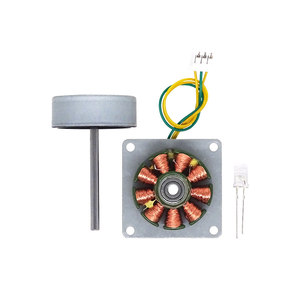
Low Voltage Motor Three-Phase Low Voltage Micro Wind Motor

Three-Phase Micro Generator (3V to 24V)

Low-RPM three-phase permanent magnet AC generator component for custom energy harvesting equipment, educational kits, and OEM micro wind systems.

  • Voltage Range:3V - 24V AC
  • Topology:3-Phase PMG Brushless
  • Efficiency:> 92%
Send an Inquiry
US Industry Whitepaper

The Strategic Transformation of US Distributed Clean Energy

How North American commercial operations, farms, and microgrids are leveraging behind-the-meter wind and battery storage to combat tariff volatility.

Federal Policy Tailwinds: IRA Tax Credits & USDA REAP Grants

The passage of the US Inflation Reduction Act (IRA) created an unprecedented financial framework for on-site clean energy generation. Under Section 48 Investment Tax Credit (ITC), qualified small wind power deployments (from 1kW micro-systems up to 90kW commercial platforms) receive a baseline 30% federal tax credit, with potential bonus stackers reaching 40% to 50% for projects utilizing domestic content or located in designated energy communities.

Furthermore, agricultural enterprises and rural small businesses across states like Iowa, Texas, California, Kansas, and Minnesota can combine ITC tax benefits with the USDA REAP (Rural Energy for America Program) grant, covering up to 50% of total turnkey project costs. This dual financial mechanism reduces capital payback horizons from 10+ years down to 3–5 years.

“Behind-the-meter wind generation yields up to 3.5x more kilowatt-hours per square foot of land footprint than ground-mounted solar, capturing high-velocity nocturnal wind regimes when utility demand charges peak.”

  • Grid Interconnection Compliance: Full engineering alignment with IEEE 1547 and UL 1741 SB standards for seamless utility interconnection.
  • Hedge Against Time-of-Use (TOU) Rates: Offsets extreme afternoon and evening utility energy rates without curtailment.
  • Resilience Against PSPS Events: Protects critical loads during California Public Safety Power Shutoffs and Texas ERCOT freeze events.
Localized Deployments

Targeted US Application Scenarios

Optimized behind-the-meter installations customized for regional load profiles and meteorological conditions.

Commercial Feedyards & Dairies

Continuous power for refrigeration tanks, automated milking parlors, and grain drying equipment across Midwest and Great Plains operations. Direct-drive wind generation yields consistent night output, complementing daytime agricultural workflows while utilizing uncultivated buffer land.

Commercial & Industrial Facilities

Cold storage facilities, logistics hubs, and manufacturing plants with high base loads utilize small-to-mid wind platforms (25kW–90kW) to flatten utility demand spikes. Reduces Scope 2 operational carbon emissions for corporate ESG reporting and supply chain compliance.

Islanded & Hybrid Microgrids

Integrating wind energy with PV arrays and lithium battery storage (BESS) managed by AI dispatch software. Cuts diesel generator fuel consumption by up to 80% in remote mining sites, tribal utility districts, and off-grid EV charging stations.

Technical Superiority

Engineering Benchmark: Direct-Drive vs. Legacy Gearbox Turbines

Eliminating the main point of mechanical failure in small wind generation to guarantee 30 years of zero-gear-oil operating reliability.

Historically, traditional small wind turbines failed to achieve projected ROI due to high-speed gearbox failures, mechanical brake wear, and frequent oil seal leaks caused by extreme temperature fluctuations. Eocycle's direct-drive technology replaces multi-stage mechanical gearboxes with low-speed, high-torque Permanent Magnet Generators (PMG).

Engineering Architecture Traditional Gearbox Wind Turbines Eocycle Direct-Drive PMG Systems
Drivetrain Mechanics Complex gearbox with 100+ moving wear parts Single shaft directly coupled to PMG generator rotor
Routine Lubrication Annual gear oil flushing & hazardous waste disposal Zero gear oil required; lifetime sealed bearings
Low-Wind Cut-In Yield High mechanical friction resistance delays rotation Ultra-low cogging torque captures 2.5–3.0 m/s light breezes
Grid Quality & Harmonics Variable AC output requiring heavy external filtering Full-power inverter topology; THD < 2.5% compliant with US utilities
Calculated Fleet Availability Typically 82% – 88% due to mechanical downtime Consistently exceeds 98.4% across demanding US field sites
Procurement Guidance

Frequently Asked Questions for US Buyers

Everything procurement managers, farm owners, and microgrid engineers need to know before deploying distributed wind systems.

What average annual wind speed is required for a commercial turbine installation to be economically viable in the US?

As a general rule, sites with an average annual wind speed of 5.0 m/s (approx. 11 mph) or higher at hub height (30m to 36m tower level) yield strong project economics. Because wind power density scales cubically with wind speed ($P \propto v^3$), moving from a 10m roof height to a 30m tower elevates kinetic energy capture significantly. Our engineering team conducts LiDAR assessment and uses 10-year NREL (National Renewable Energy Laboratory) meteorological dataset modeling against your 15-minute interval utility load profile before project commitment.

How do small wind power systems complement existing commercial rooftop solar installations under NEM 3.0?

Under updated utility policies such as California's NEM 3.0 (Net Energy Metering), wholesale export compensation has dropped by nearly 75%, making on-site energy self-consumption critical. Solar produces heavily between 10 AM and 4 PM, whereas wind profiles in North America typically peak during late afternoon, evening, and winter months. Combining wind with solar fills the nighttime power gap, reducing battery bank sizing requirements by up to 40% while maximizing self-consumption behind the utility meter.

What UL certifications and grid interconnection standards do your systems meet?

Our turbines and integrated microgrid converters are certified to rigorous US safety and utility grid standards, including UL 6142 (Small Wind Turbine Safety), UL 1741 SB (Inverters and Interconnection System Equipment), and IEEE 1547 compliance. This ensures rapid permitting approval with local investor-owned utilities (IOUs), rural electric cooperatives (Co-ops), and municipal power authorities.

What ongoing operational maintenance is required for a 30-year turbine asset?

Because our direct-drive permanent magnet generator eliminates gearboxes, mechanical clutches, and high-speed oil seals, routine maintenance consists of a visual mechanical check, bolt torque verification, and electrical safety testing performed once per year. Integrated 24/7 cloud SCADA telemetry continuously transmits operating vibration, temperature, and electrical power metrics to diagnose anomalies automatically before operational downtime occurs.

Who oversees local zoning, environmental clearance, and physical construction?

Eocycle and its certified US regional partner network manage complete turnkey delivery: site wind resource analysis, FAA airspace clearance, county setback zoning permits, civil foundation engineering, utility interconnection agreements, crane installation, grid commissioning, and long-term O&M service agreements under a single accountable engineering contract.
Turnkey Energy Transformation

Evaluate Your Site’s Clean Energy Potential

Contact our North American engineering office today with your site address and 12 months of utility interval billing data. Our specialists will provide a complete wind resource modeling analysis, financial ROI breakdown, and USDA REAP grant feasibility study.
