Technical Whitepaper & Industrial Guide

Rooftop Wind Factories & Factory Solutions in Greece

Unlocking High-Yield On-Site Wind Generation, Boundary Layer Aerodynamics, and Net Billing ROI Across Greek Industrial & Manufacturing Hubs

Precision-Engineered Micro & Distributed Wind Turbines

Commercial-Grade Direct-Drive and Micro Wind Systems Optimized for Factory Rooftops, Coastal Industrial Parks, and Hybrid Microgrids in Greece
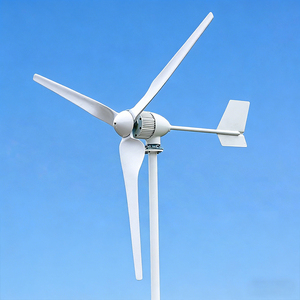
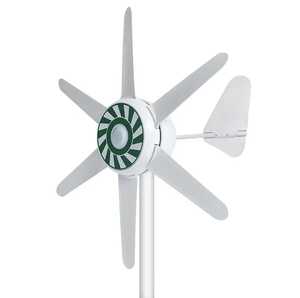
1kW Micro Horizontal
Factory Price Rooftop 1kw Small Wind Turbines for Home Electricity

Factory Price Rooftop 1kW Small Wind Turbine

  • Rated Capacity: 1000W / 1kW
  • Voltage Support: 24V / 48V / 110V
  • Application: Rooftop Auxiliary & Telecom
Send an Inquiry
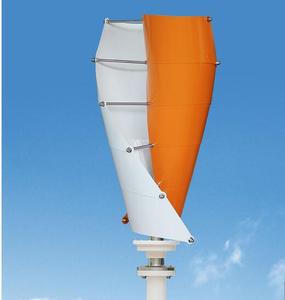
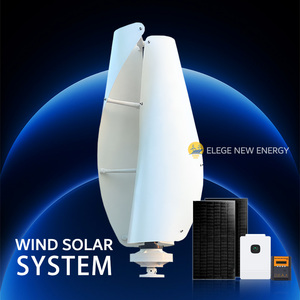
2kW Low-Noise VAWT
Elege CE MPPT Low Noise Axis Micro Vertical Wind Turbine

2kW CE-Certified Low Noise Vertical Axis Turbine

  • Rated Capacity: 2000W / 2kW
  • Generator Type: Direct-Drive PMG Maglev
  • Architecture: Omnidirectional VAWT
Send an Inquiry
300W Micro Kit
300w Micro Vertical Wind Generator Kit

300W Micro Vertical Wind Generator Kit

  • Rated Capacity: 300W
  • Cut-in Wind Speed: 1.5 m/s
  • Best For: Rooftop Sensor & IoT Power
Send an Inquiry
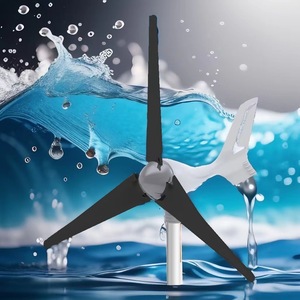
Outdoor Micro Array
Wind Generator Long Lifespan Outdoor Micro Wind Generator

Long-Lifespan Outdoor Micro Wind Generator Series

  • Capacity Range: 80mW - 100mW
  • Corrosion Rating: C5-M Marine Class
  • Target Area: Aegean Coastal Plants
Send an Inquiry
400W Horizontal
Horizontal Axis Micro Wind Generator 400W 12V

400W Horizontal Axis Micro Wind Generator

  • Rated Power: 400W 12V / 24V
  • Integration: Solar Streetlight & Perimeter
  • Blade Material: High-Strength Carbon Fiber
Send an Inquiry
90W Integrated Controller
90W Mini Wind Turbine With Controller Built-in

90W Mini Wind Turbine with Built-in Controller

  • Output Voltage: DC 12V / 24V
  • Control Unit: Internal Smart Rectifier
  • Use Case: Factory Rooftop Monitoring
Send an Inquiry
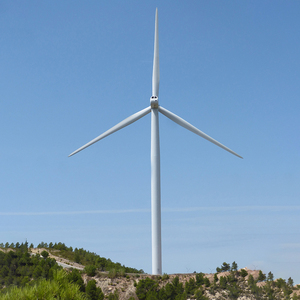
5kW Industrial Grade
High Efficiency Three Blades 5kw Micro Wind Turbine Generator

5kW High-Efficiency Three-Blade Industrial Wind Turbine

  • Rated Capacity: 5000W / 5kW
  • Rotor Diameter: 6.0 Meters
  • Efficiency: Direct-Drive Aerodynamic Pitch
Send an Inquiry
Low-Voltage 3-Phase
Three-phase Micro Wind Generator 3V to 24V Equipment

Three-Phase Low-Power Micro Generator (3V-24V)

  • Voltage Spectrum: 3V to 24V AC/DC
  • Mechanism: Ultra-Low Torque Startup
  • Function: Custom OEM Energy Harvesting
Send an Inquiry
30 Yrs
Structural Design Life
98.4%
Fleet Operational Availability
0 Gearbox
Direct-Drive Magnet Reliability
35-55%
Industrial LCOE Savings in Greece

1. The Industrial Decarbonization Imperative in Greece & Rooftop Energy Dynamics

Manufacturing plants, agricultural cold-storage hubs, maritime logistic terminals, and heavy commercial enterprises across Greece face a dual challenge: escalating wholesale electricity tariffs under the European Union Emissions Trading System (EU ETS) and stringent Scope 1 and Scope 2 carbon neutrality mandates. Greece's geographical position within the Mediterranean basin presents an unprecedented renewable energy opportunity. While solar photovoltaic (PV) installations have expanded rapidly across Attica, Central Greece, and the Peloponnese, solar generation suffers from inherent nocturnal latency and severe seasonal output drops during winter months.

Deploying micro and distributed rooftop wind factories in Greece provides the critical missing link in behind-the-meter industrial self-consumption. By harvesting the strong, consistent coastal breezes and localized wind phenomena—such as the seasonal Meltemi winds blowing across the Aegean Sea—factory owners transform underutilized structural rooftops into active power-generating assets. Modern direct-drive wind turbines operate seamlessly alongside rooftop PV arrays, creating an optimized, year-round hybrid microgrid that slashes peak demand charges and protects industrial bottom lines from grid volatility.

Aerodynamic Edge Acceleration

Industrial building parapets act as natural wind ramps. As incoming wind hits the windward façade, fluid dynamics compress airflow over the roof edge, accelerating wind speed by 15% to 30% above ambient velocity.

Solar-Wind Complementarity

In Greece, wind profiles peak during late afternoon, evening, and winter periods—precisely matching heavy industrial refrigeration, HVAC, and manufacturing shifts when solar irradiance drops to zero.

2. Fluid Dynamics & Structural Engineering for Factory Rooftops in Greece

Installing wind energy systems on industrial rooftops requires sophisticated structural engineering, aerodynamic modeling, and acoustic vibration isolation. Unlike open-field utility wind farms, a factory in Greece operates within complex urban or industrial park microclimates where turbulence intensity and boundary layer dynamics dictate turbine efficiency.

Fluid Mechanics: The Parapet Venturi Effect

When wind strikes a flat-roofed factory building, it is forced upward, creating a high-velocity sheer layer near the roof edge. Computational Fluid Dynamics (CFD) modeling reveals that mounting micro horizontal-axis (HAWT) or vertical-axis (VAWT) wind turbines at elevated perimeter zones maximizes energy yield. By positioning turbines directly within this accelerated flow zone, output can increase by up to 1.74 times compared to free-stream estimations based on the cubic relationship between wind speed and power density ($P = \frac{1}{2} \rho A v^3$).

Vibration Mitigation & Structural Integrity (Eurocode Compliance)

Factory roofs must comply with strict mechanical loading standards, including Eurocode 1 (Actions on structures - Wind actions) and local Greek seismic guidelines (EAK 2000). To prevent mechanical resonance from transmitting into factory assembly lines or administrative offices:

  • Elastomeric Vibration Isolation: Turbines utilize dual-density neoprene or silicone structural mounts that damp micro-vibrations across 5Hz–200Hz frequency bands.
  • Gearbox-Free Direct-Drive Design: Eliminating mechanical speed-increasing gearboxes removes the high-frequency mechanical whining inherent to traditional turbines, reducing wear points by over 60%.
  • Structural Load Distribution Frames: Steel ballast or steel-subframe tie-ins distribute shear and overturning moments directly into load-bearing concrete columns or reinforced I-beams without penetrating waterproof roofing membranes.

3. Localized Application Scenarios Across Greek Industrial Regions

The commercial deployment of rooftop wind turbine arrays and hybrid energy platforms addresses specific regional operational requirements across Greece's main manufacturing and agricultural corridors:

Agro-Industrial & Food Processing (Larissa, Volos, Thessaloniki)

Dairy plants, olive oil refineries, and cold-storage facilities in Central and Northern Greece run high baseline refrigeration loads 24/7. Rooftop wind arrays supply continuous off-grid or net-billed power during night cycles, preventing thermal degradation during summer peak grid stresses.

Maritime Logistics & Shipbuilding (Piraeus, Elefsina, Patras)

Shipyards, container ports, and logistics hubs positioned along the Aegean and Ionian coasts experience high ambient wind velocities. C5-M marine-grade corrosion-resistant coatings protect rooftop turbines against marine salt spray while supplying high-capacity power for heavy crane operations and shore power.

Island Microgrids & Remote Manufacturing (Crete, Rhodes, Cyclades)

Manufacturing facilities on Greek islands face extreme electricity costs driven by non-interconnected island diesel generation. Rooftop wind factories paired with Battery Energy Storage Systems (BESS) offer full energy independence and emergency resilience against island blackouts.

Industrial Parks & Chemical Plants (Attica, Thriva, Korinthos)

High-density industrial zones in Attica utilize rooftop micro vertical wind turbines (VAWTs) due to their compact footprint, omnidirectional wind capturing capability, and near-silent operation near facility boundary lines.

4. Localized Development Trends & Regulatory Framework in Greece

Greece is executing one of Europe’s most ambitious energy transition roadmaps under the updated National Energy and Climate Plan (NECP), targeting a 66% renewable share in total electricity consumption by 2030. Key regulatory and financial mechanisms driving rooftop wind adoption for industrial facilities include:

Greece Net Billing Framework (Law 5037/2023)

Greece has transitioned from traditional net metering to a sophisticated Net Billing and Self-Consumption scheme. Under Law 5037/2023, energy produced by rooftop wind turbines is consumed in real-time by the factory. Surplus generation injected into the Hellenic Electricity Distribution Network (HEDNO / DEDDIE) is compensated at wholesale spot market prices (Day-Ahead Market), creating a transparent, lucrative revenue stream that offsets grid purchases during zero-wind hours.

Virtual Energy Communities for Industrial Cooperatives

Industrial enterprises situated within the same municipality or industrial park (e.g., ETVA VIPE parks) can form Energy Communities. This legal status enables a central factory rooftop with superior wind exposure to generate wind electricity and virtually credit that power against multiple secondary warehouses, office buildings, or processing facilities across Greece.

REPowerEU & Green Transition Subsidies

Greek industrial firms can leverage EU Recovery and Resilience Facility (RRF) funds, NSRF (ESPA) programs, and local tax credits designed for decarbonization. Capital expenditure (CAPEX) subsidies covering 30% to 50% of distributed wind and battery storage hardware drastically accelerate simple payback periods down to 3–5 years for commercial buyers.

5. Corporate Strengths: Engineering Decarbonization Since 2001

Built upon more than two decades of groundbreaking technological innovation originating in Canada and scaled globally, our direct-drive wind energy systems set the worldwide gold standard for distributed clean power generation.

Gearbox-Free Direct-Drive Magnet Generator

By eliminating the mechanical gearbox—the single largest point of failure in classical wind design—our turbines achieve over 98.4% fleet availability with near-zero friction loss and reduced annual maintenance costs.

Proprietary Cloud SCADA & AI Predictive Maintenance

Every turbine connects to a real-time IoT monitoring portal streaming thousands of operational telemetry points per second. Artificial intelligence algorithms detect thermal, electrical, or aerodynamic anomalies before downtime occurs.

30-Year Structural Design Life

Engineered with aerospace-grade carbon fiber composite blades, heavy-duty pitch mechanisms, and electro-galvanized marine-grade steel structures built to withstand Mediterranean wind gusts exceeding 60 m/s (Category 4 typhoon equivalent).

Turnkey EPC & Local Integration Support

We deliver complete end-to-end execution across Greece: wind resource assessment, CFD micro-siting, structural roof certification, HEDNO grid interconnection permitting, installation, and 30-year lifecycle operation & maintenance.

6. Frequently Asked Questions (FAQ) for Factory Buyers in Greece

Essential technical, legal, and financial guidance for facility managers, procurement directors, and plant engineers evaluating rooftop wind solutions in Greece.

Q1: How much annual wind speed is required for a rooftop factory wind turbine to be economically viable in Greece?
As a practical engineering rule, sites with an average annual wind speed of 4.5 m/s to 5.5 m/s at roof level yield strong financial returns. Modern direct-drive micro and small wind turbines feature ultra-low cut-in speeds (starting as low as 1.5 m/s to 2.2 m/s). Furthermore, rooftop boundary-layer acceleration often boosts effective wind speed over parapet edges by 20% or more above baseline regional wind maps, making sites in Attica, Peloponnese, Central Greece, and the Aegean Islands exceptionally viable.
Q2: Will rooftop wind turbines cause structural vibration or structural roof damage to my factory?
No. Engineering designs mandate zero-penetration ballasted mounting frames or certified structural steel subframes anchored directly into structural columns. Mechanical vibration is isolated using heavy-duty elastomeric and neoprene anti-vibration pads certified under European structural standards (Eurocode 1 & 8). The absence of a high-speed gearbox in our direct-drive permanent magnet generators removes high-frequency resonant vibrations, ensuring complete safety for concrete and trapezoidal sheet metal industrial roofs.
Q3: How does a rooftop wind system integrate with our existing solar PV panels and grid supply?
Wind turbines connect into your facility's main low-voltage or medium-voltage distribution panel via smart hybrid grid-tied inverters or dedicated MPPT charge controllers. Under Greece's Net Billing framework (Law 5037/2023), energy from both wind and solar is aggregated. An Intelligent Energy Management System (EMS) prioritizes real-time factory load matching, directs surplus to battery storage (BESS) or EV charging infrastructure, and exports remaining power to the grid.
Q4: What maintenance is required for wind turbines operating in corrosive Greek coastal environments?
Our turbines feature C5-M marine-grade anodized aluminum enclosures, stainless steel fasteners, and sealed IP67 permanent magnet generators specifically designed for harsh saline environments along the Aegean and Ionian seas. Because there is no gearbox oil to monitor or replace, routine service is reduced to a single visual and mechanical bolt-torque inspection per year. SCADA remote monitoring continuously diagnosticates system health.
Q5: What permits are required to install wind turbines on a factory roof in Greece?
Under current Greek renewable energy legislation, small behind-the-meter distributed wind systems benefit from streamlined environmental clearance exemptions (Small Scale Works Permit / Έγκριση Εργασιών Μικρής Κλίμακας). Our local engineering partners handle the complete regulatory submission process, including structural safety filings, acoustic impact assessments, and HEDNO (DEDDIE) grid connection notifications under the Net Billing scheme.
Q6: What is the average return on investment (ROI) and payback period for a Greek factory?
With Greek commercial electricity tariffs hovering between €0.15 and €0.24 per kWh, factory self-consumption yields attractive financial returns. Depending on site wind resource and available EU national subsidies (RRF/ESPA), typical simple payback ranges from 3.5 to 6 years. Over a 30-year design life, the Levelized Cost of Energy (LCOE) locked in by rooftop wind drops to as low as €0.04 to €0.07 per kWh, protecting your business against future energy price spikes.

Transform Your Factory Rooftop Into a Clean Energy Powerhouse

Contact our engineering team today for a complimentary wind resource modeling assessment, CFD rooftop analysis, and customized Net Billing financial forecast for your facility in Greece.