Engineered for UK climate specifications, low cut-in wind speeds, and urban-to-rural resilience across Greater London and the Thames Gateway corridor.

Compact horizontal-axis rooftop micro-turbine designed for low-cut-in residential generation and urban backup systems across Greater London.
Get a Quote
Ultra-quiet vertical axis generator equipped with MPPT tracking, ideal for high-density London urban planning constraints and noise compliance standards.
Get a Quote
Lightweight omnidirectional vertical blade kit tailored for small-scale off-grid monitoring, agricultural sensors, and auxiliary battery trickle charging.
Get a Quote
Precision low-voltage micro generator crafted for long-term continuous IoT telemetry deployment, smart grid nodes, and environmental monitors.
Get a Quote
Ruggedized 400W system optimized for CCTV surveillance backup, peri-urban streetlight integration, and dual wind-solar municipal infrastructure.
Get a Quote
Plug-and-play 12V/24V DC micro turbine with intelligent internal charge management for simplified installation in decentralized applications.
Get a Quote
Heavy-duty 5kW direct-drive turbine built for commercial farms, logistics yards, and peri-urban industrial sites seeking significant grid offset.
Get a Quote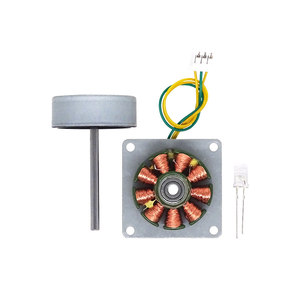
Specialized low-voltage permanent magnet AC motor equipment for custom educational setups, micro-hydro, and specialized energy harvesting arrays.
Get a QuoteAs the United Kingdom accelerates toward its net-zero greenhouse gas commitments under the Climate Change Act and the Mayor of London's regional Net Zero 2030 target, the energy dynamics of Greater London are undergoing a fundamental structural transition. Commercial enterprises, agricultural landholders in the Green Belt, and logistics hub operators face unprecedented challenges: rising network distribution charges (DUoS/TNUoS), increasingly constrained DNO (UK Power Networks) sub-station capacities, and volatile wholesale electricity pricing.
While solar photovoltaics (PV) have achieved widespread adoption across UK rooftops, solar energy yield exhibits severe seasonal asymmetry, dropping by up to 80% during the British winter when heating loads, refrigeration demands, and lighting requirements reach peak intensity. Distributed wind energy—specifically direct-drive permanent magnet wind turbine technology—presents the critical structural solution required to deliver true year-round, 24/7 clean power generation directly behind the meter.
Information Gain Key Metric: In the UK climate zone (51.5° N latitude), pairing behind-the-meter small wind turbines with existing solar arrays improves annual microgrid power availability from ~18% (solar alone) to over 64% without increasing battery storage capacity.
A primary historical barrier to small wind turbine adoption in peri-urban environments like Greater London (where mean annual wind speeds at 10m height range between 4.5 m/s and 5.8 m/s) has been aerodynamic stall and high mechanical cut-in thresholds. Traditional small wind turbines relied on industrial gearboxes to step up low rotor RPM to standard generator frequencies. However, gearboxes introduce substantial mechanical friction, requiring wind speeds above 3.5 m/s just to overcome initial inertia.
Our direct-drive permanent magnet generator (PMG) architecture completely eliminates the mechanical step-up gearbox. By coupling high-coercivity Neodymium-Iron-Boron (NdFeB) permanent magnet rotors directly to the turbine hub, cut-in wind speeds are reduced to as low as 1.8 m/s–2.0 m/s. This allows the turbine to begin harvesting power in light UK breeze conditions that leave gear-driven turbines idle.
Removes high-wear mechanical gearboxes, eliminating oil replacement schedules, reducing thermal stress, and lowering mechanical failure modes to achieve a 30-year design life.
Aerodynamically engineered blade pitch profiles and vertical-axis low-RPM acoustics ensure full compliance with UK BS 4142 noise standards for urban planning approval.
Advanced Maximum Power Point Tracking (MPPT) power electronics deliver seamless AC grid coupling compliant with G99 and G100 UK distribution network connection standards.
Decentralized wind energy deployment in Greater London demands a nuanced understanding of local land-use dynamics, planning frameworks (including Permitted Development Rights and the London Plan Policy SI 2), and energy demand profiles. Below are key deployment models currently operating across the London region:
Agricultural enterprises supplying London's food distribution networks—such as commercial glasshouses, cold-storage facilities, and livestock farms across the Kent, Essex, and Hertfordshire green belts—operate under continuous electrical loads. Automated ventilation, milk cooling, and water pumping require reliable power throughout autumn and winter.
By erecting mid-scale direct-drive wind turbines (such as 5kW to 90kW Class platforms) on tall guyed or monopoles (30m–36m hub heights), agricultural operators elevate the rotor above local ground boundary layers and tree-line turbulence. The minimal ground footprint (occupying less than 25m² of civil foundation space) leaves 99% of agricultural acreage intact for cultivation or grazing.
Logistics parks along the M25, A13, and Thames Estuary (Barking, Dagenham, Rainham, and Tilbury) feature expansive warehouse footprints with energy loads driven by 24/7 materials handling equipment, automated sorting belts, and fleet electrification (EV truck charging). Roof space is frequently constrained by HVAC infrastructure or light structural loading limits.
Deploying hybrid wind-solar systems (such as the EOX WS²+ system) alongside perimeter security fences or dedicated ground nodes provides clean, high-density energy generation. Wind energy directly offsets expensive peak-time DUoS charges during winter evening shifts when solar output is non-existent.
Within dense urban zones—such as Southwark, Tower Hamlets, and Newham—vertical-axis micro-wind turbines (VAWTs) offer unique advantages. Unlike horizontal-axis machines that require uniform laminar airflow, omnidirectional vertical axis designs efficiently capture turbulent, swirling wind vectors caused by high-rise building canyons. Paired with integrated MPPT charge controllers, these units supplement municipal street lighting networks, CCTV security grids, and public EV charging hubs.
Engineering clean energy solutions for demanding urban and commercial clients requires absolute technical rigour, field-proven track records, and end-to-end operational accountability. Built upon more than two decades of dedicated direct-drive wind turbine manufacturing, our platform stands out across four vital dimensions:
Founded in 2001, our engineering team pioneered gearbox-free direct-drive permanent magnet wind generators specifically to eliminate the leading cause of small wind turbine downtime globally.
Every structural weld, blade composite matrix, and generator bearing assembly is rated for a 30-year operational life cycle under harsh marine and turbulent inland conditions.
Integrated cloud-based SCADA telemetry streams real-time operational parameters, vibration signatures, and thermal states 24/7, enabling predictive maintenance before downtime occurs.
Turnkey Delivery Guarantee: From initial anemometer wind resource assessment and UK G99 grid interconnection applications to civil engineering, crane erection, and 30-year maintenance contracts, we handle every step under one accountable structure.
Navigating the UK renewable energy market requires strict alignment with national and regional policy directives. Buyers in Greater London benefit from several supportive regulatory trends:
Practical engineering and planning guidance for behind-the-meter wind projects in the UK.
Submit your site location and 12-month electrical interval data. Our renewable energy engineers will provide an accurate yield forecast, ROI calculation, and site feasibility study.
Get a Quote