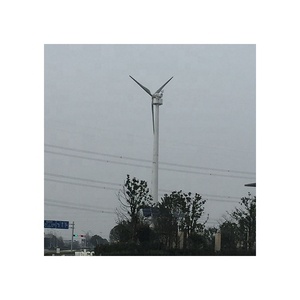
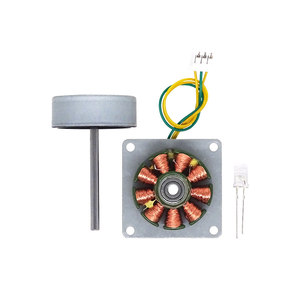
Renewable Energy Manufacturer & Exporters in Sydney

Direct-Drive Micro Wind Turbines, Utility-Grade Permanent Magnet Generators & Hybrid Wind-Solar Microgrids Engineered for Australian & International Energy Markets

Precision Export Catalog

Small Wind Turbines & Micro-Generator Export Systems

Direct from our manufacturing hubs to Sydney distributors, agricultural operations, and remote microgrid installations. Engineered to international standards with CE & ISO certifications.
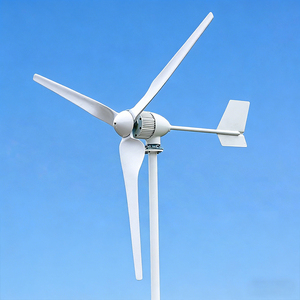
Rooftop 1kw Small Wind Turbine for Home Electricity

Factory Price Rooftop 1kw Small Wind Turbines for Home Electricity

Capacity: 1000W (1kW) Application: Residential & Light Rural Load Design: Low Cut-in Horizontal Axis
Get a Quote
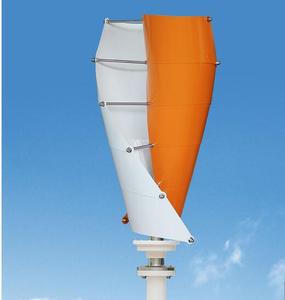
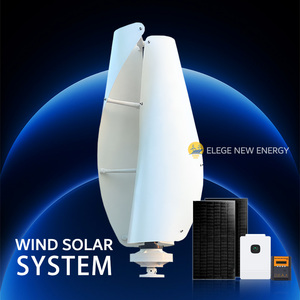
2kw Vertical Axis Micro Wind Turbine

Elege CE MPPT Low Noise 12V 24V 48V 2kw Axis Micro Vertical Wind Turbine

Capacity: 2000W (2kW) Architecture: Vertical Axis (VAWT) MPPT Feature: Low Noise Omnidirectional Blade
Get a Quote
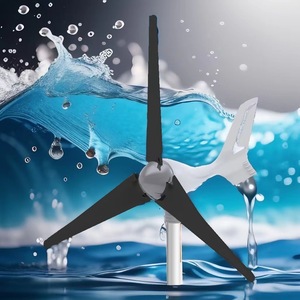
300w Micro Vertical Wind Generator Kit

300w Micro Vertical Wind Generator Kit Industrial Series

Capacity: 300W Micro Unit Output: 12V / 24V DC Systems Use Case: Off-Grid Sensors & Marine
Get a Quote
Outdoor Micro Wind Generator Turbines

Long Lifespan Outdoor Micro Wind Generator 80mw 90mw 100mw Series

Capacity Range: 80mW - 100mW Ultra-Micro Housing: Corrosion Weatherproof IP67 Application: IoT Telemetry & Remote Nodes
Get a Quote
Horizontal Axis Micro Wind Generator 400W

Horizontal Axis Micro Wind Generator 400W 12V For Solar Street Lights

Capacity: 400W Nominal System Integration: Hybrid Solar Lighting Drivetrain: Direct-Drive Maglev PMG
Get a Quote
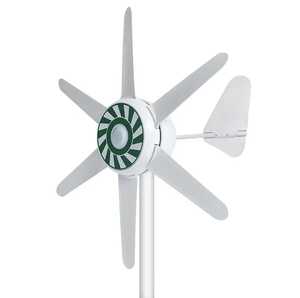
90W Mini Wind Turbine With Built-in Controller

90W Mini Wind Turbine With Controller Built-in DC 12V/24V Output

Capacity: 90W Compact Electronics: Integrated Smart Regulator Deployment: Rapid CCTV & Security Power
Get a Quote
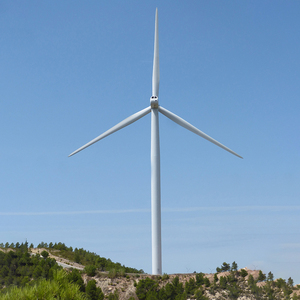
High Efficiency Three Blades 5kw Micro Wind Turbine

High Efficiency Three Blades 5kw AR6.0-5KW Commercial Wind Turbine

Capacity: 5000W (5kW) Heavy Industrial Blade Diameter: 6.0 Meters Aerofoil Target: Agriculture, Feedyards & DER
Get a Quote
Three-phase Micro Wind Generator Equipment

Three-Phase Micro Wind Generator 3V to 24V Low-RPM Motor Core

Voltage Output: 3V - 24V AC Three-Phase Stator Type: Coreless Low Cogging Torque Application: OEM Manufacturers & R&D
Get a Quote
20+
Years Manufacturing Excellence
30 Yrs
Turbine Engineering Design Life
98%+
Reported Fleet Availability
0
Gearboxes Needed (Direct Drive)
Industry Whitepaper Analysis

The Distributed Wind Imperative for Sydney & Greater New South Wales

The electricity landscape in Greater Sydney and regional New South Wales (NSW) is undergoing a structural shift. As wholesale electricity spot markets experienced unprecedented volatility—driven by aging thermal power asset retirements and network transmission bottlenecks—commercial facilities, agricultural enterprises, and microgrids are forced to re-evaluate their behind-the-meter energy strategies.

While rooftop solar photovoltaics (PV) have achieved high saturation across the Sydney basin, solar energy inherently suffers from seasonal yield curtailment, diurnal downtime, and peak mismatch during evening operational shifts. Distributed wind turbines—ranging from micro 300W sensors up to 90kW industrial direct-drive platforms—provide the critical anti-correlated load balance necessary to stabilize energy expenditure 24 hours a day, 365 days a year.

Engineering Direct-Drive Reliability

Traditional small wind turbines historically failed due to mechanical complexity—specifically high-rpm gearboxes subject to mechanical shear, thermal expansion, and frequent lubricant breakdown. Our manufacturing architecture eliminates the mechanical gearbox entirely through Permanent Magnet Direct-Drive Synchronous Generators. By coupling the aerofoil rotor direct to the low-speed generator stator, mechanical friction points are reduced by up to 70%, yielding an availability rate exceeding 98%.

Why Engineers & Buyers Choose Our Technology

State-of-the-Art Wind Turbine Architecture

Gearbox-Free Direct-Drive

Eliminates high-speed mechanical gearboxes. Heavy-duty Neodymium Iron Boron (NdFeB) permanent magnets directly convert rotor rotation into high-efficiency electricity, minimizing wear and requiring zero scheduled oil replacements.

Low Cut-In Wind Velocity

Custom aerofoil blade profiles designed with advanced computational fluid dynamics (CFD) allow generation to initiate at wind speeds as low as 1.8 m/s, reaching full rated torque well below standard market thresholds.

Coastal & Harsh Marine Protection

Manufactured with marine-grade hot-dip galvanized steel, stainless hardware, and C5-M rated anti-corrosion polyurethane coatings. Engineered specifically to withstand Sydney coastal salt-spray and regional gust storms.

Smart SCADA Telemetry

Integrated IoT gateway controllers broadcast real-time telemetry, pitch control metrics, bearing thermals, and line voltages directly to cloud SCADA dashboards for predictive remote maintenance and instant system health alerts.

Turnkey Export Engineering

As global manufacturers and exporters supplying Sydney and regional Australia, we provide end-to-end engineering support—including structural tower foundation design, electrical single-line diagrams (SLDs), and containerized freight logistics.

AI Hybrid Integration (WS²+)

Seamless pairing with solar PV and Lithium Iron Phosphate (LiFePO4) battery energy storage systems (BESS). Automated microgrid energy management algorithms dynamically dispatch power to maximize grid arbitrage and off-grid autonomy.

Localized Deployment

Application Scenarios Across Greater Sydney & NSW

Different topographies across New South Wales present distinct microclimates. Our wind turbines are custom-configured for specific regional applications.

1. Regional Agricultural & Pastoral Operations

In agricultural zones such as Western Sydney peri-urban farms, the Hunter Valley, Central West, and Riverina regions, energy intensity is tied to continuous loads—pumping irrigation, refrigeration, dairy milking sheds, and livestock ventilation.

  • Minimal Footprint: Single slim-line tubular or lattice towers leave 99% of surrounding pasture fully productive for grazing and cropping.
  • Night Yield Synergy: Pastoral locations experience strong nocturnal thermal winds when solar PV output drops to zero, ensuring uninterrupted pump operation.
  • Feedyard Resilience: Robust mechanical yaw systems hold steady performance during intense dust storms and high summer temperature spikes.

2. Western Sydney Commercial & Logistics Hubs

Logistics centers in Aerotropolis, Eastern Creek, and Blacktown face stringent Scope 2 emissions reporting and high peak demand tariffs imposed by electricity distributors (DNSPs).

  • Rooftop Space Constraints: Where facility roof areas are heavily dominated by HVAC ducting or skylights, ground-mounted 5kW to 90kW turbines yield far higher kWh density per square meter of footprint.
  • Demand Charge Shaving: Offsets extreme afternoon utility peak charges when facility operations run multiple logistics shifts simultaneously.
  • Auditable ESG Compliance: Highly visible green energy infrastructure that reinforces corporate sustainability mandates for international clients.

3. Coastal Marine & Offshore Island Microgrids

Sydney Harbour maritime facilities, coastal navigation stations, and off-grid South Coast properties operate in aggressive coastal environments requiring heavy-duty corrosion shielding.

  • C5-M Heavy Anti-Corrosion Coating: Specialized paint regimes resist salt crystallization and humidity corrosion over multi-decade deployments.
  • High Gale Survival Speed: Aerodynamic electromagnetic braking and automatic mechanical tail-furling protect components against severe southerly buster gales.
  • Island Resilience: Replaces costly diesel fuel delivery logistics with dependable, clean coastal breeze power.

4. Telecommunications & Remote Infrastructure Nodes

Cellular towers, environmental monitoring arrays, and remote security installations along mountain ranges requires 100% power uptime without constant battery degradation.

  • Compact Micro Generators: 90W to 400W horizontal and vertical turbines provide continuous low-voltage trickling for 12V/24V telemetry racks.
  • Built-in MPPT Regulators: Directly interfacing with telemetry battery banks to eliminate thermal overload risks during storm conditions.
  • Maintenance-Free Operations: Sealed bearings prevent airborne dust contamination in remote outback sites.
Technical Specification Comparison

Distributed Wind System Performance Matrix

Direct comparison of turbine architecture tiers tailored for local Sydney import, wholesale distribution, and enterprise procurement.

Specification Parameter Micro Power (80mW - 400W) Small Commercial (1kW - 5kW) Industrial Microgrid (25kW - 90kW)
Generator Drivetrain Direct-Drive Coreless / PMG Direct-Drive Permanent Magnet Direct-Drive Low-RPM Synchronous
Target Annual Yield (Avg 6 m/s) 150 kWh - 1.2 MWh 3.5 MWh - 18 MWh 85 MWh - 280 MWh
Rated Wind Speed 10.0 m/s - 12.0 m/s 11.0 m/s - 12.5 m/s 11.5 m/s - 13.0 m/s
Cut-In Speed 1.5 m/s - 2.0 m/s 2.2 m/s - 2.5 m/s 2.5 m/s - 2.8 m/s
Design Survival Wind Speed 50 m/s (180 km/h) 55 m/s (198 km/h) 60 m/s (216 km/h)
Grid Compliance Standards CE, RoHS, IP65/67 IEC 61400-2, AS/NZS 4777.2 IEC 61400-1/2, AEMO Grid Code
Design Life Horizon 15 Years 25 Years 30 Years
Market Dynamics & Compliance

Sydney & Australian Renewable Market Trends

Grid Interconnection & Standard Compliance

In Australia, connecting distributed wind generators to the local electricity distribution network (such as Endeavour Energy, Ausgrid, or Essential Energy in NSW) requires strict adherence to AS/NZS 4777.2 grid connection standards and Clean Energy Council (CEC) guidelines.

Our advanced grid-tied invertor systems include anti-islanding protection, automatic voltage ramp controllers, and reactive power compensation (power factor correction) to ensure rapid approvals from network service providers across Sydney.

Solar + Wind Hybrid Synergy

A key trend across New South Wales energy planning is the rapid shift toward multi-resource hybrid generation. During winter months in Sydney, solar radiation drops by up to 60%, while regional wind speeds increase significantly due to prevailing cold fronts.

By combining wind turbines with existing solar arrays under an integrated BESS management system, commercial operators achieve flatline 24/7 energy output curves, drastically reducing the total battery capacity required for off-grid or zero-export resilience.

Buyer Knowledge Center

Frequently Asked Questions by Sydney & Australian Buyers

Essential technical, financial, and logistical clarity for project developers, engineers, and commercial procurement teams.

What wind speed profile is required in Sydney for a small wind turbine to be commercially viable?
As a practical screening metric, sites with an annual average wind speed of approximately 4.8 to 5.5 m/s or higher at hub height offer favorable levelized costs of energy (LCOE). Because ground-level obstacles like trees, industrial sheds, and terrain cause turbulence, installing turbines on tall towers (30m to 36m for industrial units or 6m to 12m for micro units) lifts the rotor into smoother, high-velocity airflow. Prior to installation, our engineering team utilizes long-term wind map telemetry combined with your facility’s 15-minute interval electricity data to provide a precise financial return model.
How do small wind turbines compare against rooftop solar PV for Sydney commercial sites?
Wind power delivers a significantly higher energy yield per square meter of ground space occupied compared to solar PV. Crucially, wind energy generates continuously through the night, during winter storm fronts, and under heavy overcast skies when solar yield drops off. A small turbine foundation occupies a very small physical footprint, leaving surrounding land available for parking, storage, or agriculture. Solar and wind are complementary technologies rather than competitors; combining both under our AI-driven EOX WS²+ system provides the most robust multi-resource energy security available.
What ongoing mechanical maintenance is required for a direct-drive wind turbine?
Because our permanent magnet generators operate on a direct-drive architecture, there is no mechanical gearbox and zero gear oil to change. Routine scheduled service is typically restricted to an annual visual inspection, torque checks on tower hardware, and electrical impedance testing. In addition, our automated remote SCADA portal continuously monitors operating temperatures, vibration frequency, line voltages, and rotational speed to detect anomalies long before they cause system downtime, maintaining a fleet availability record above 98%.
What structural permits and grid approvals are required in New South Wales (NSW)?
Permitting requirements vary based on turbine hub height and local council zoning (Development Application - DA process vs Complying Development Code - CDC in NSW). Small micro-turbines under specific height limits often fall under exempt development frameworks for agricultural properties. For larger commercial installations, our engineering export support includes providing certified structural calculations, acoustic noise emissions data (IEC 61400-11 compliant), shadow flicker assessments, and single-line electrical diagrams aligned with AS/NZS 4777.2 and local DNSP network connection rules.
How are turbines packaged and shipped for export to Sydney and regional ports?
All turbine units, generator heads, blade sets, and control cabinets are export-packaged in heavy-duty, moisture-sealed, ocean-worthy wooden crates or standard ISO shipping containers. Micro and small units (300W to 5kW) are engineered for rapid modular assembly with standardized mounting flanges. Larger industrial turbines (25kW to 90kW) ship in flat-pack container configurations accompanied by comprehensive foundation anchor cages, bolt sets, and step-by-step installation manuals for local certified rigging crews.
What is the expected engineering lifespan of your wind generator platforms?
Our wind turbines are engineered for a 30-year operational design life under IEC wind class specifications. By utilizing high-grade permanent magnets, marine-grade anti-corrosion surface treatments, and robust overspeed aerodynamic braking systems, owners can lock in low levelized electricity production costs over three decades, providing complete insulation against rising retail utility tariffs.

Partner with a World-Class Renewable Energy Manufacturer

Whether you are an energy distributor in Sydney, a regional agricultural enterprise, or an industrial microgrid developer, our engineering team is ready to deliver tailored direct-drive wind systems to match your operational load.

Get a Quote