

1. The Strategic Renewable Energy Transformation in Saudi Arabia
The Kingdom of Saudi Arabia (KSA) is undergoing an unprecedented energy transition under the visionary mandate of Saudi Vision 2030 and the National Renewable Energy Program (NREP). With an official goal of displacing liquid fuels and powering 50% of the national electricity grid with clean energy sources by 2030, localized distributed generation assets have evolved from an environmental initiative into a core commercial strategic imperative.
As a leading global renewable energy factory and supplier, our engineering mission is tailored to address the unique energy trilemma of the Middle East: delivering scalable grid parity, maintaining extreme climate durability, and optimizing levelized cost of energy (LCOE). While large-scale solar utility farms dominate headlines, commercial facilities, agricultural estates, feedyards, and remote industrial microgrids across regions like Riyadh, Al-Jouf, Qassim, Jubail, and Yanbu face operational hurdles that solar PV panels alone cannot fully solve.
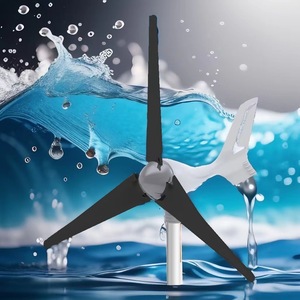
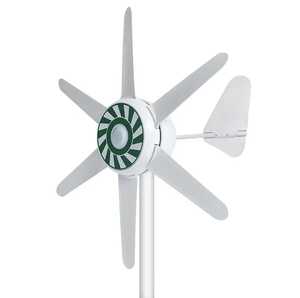
Distributed wind turbines—ranging from micro-generation units (80mW to 5kW) to heavy-duty industrial scale units (such as the 90kW EOX M-26 platform)—provide key operational advantages. Wind resources in coastal zones (along the Red Sea and Arabian Gulf) and high-elevation inland plateaus peak during late afternoon, evening, and winter months, directly complementing solar generation profiles.
2. Engineering Resilient Drivetrains for Desert Climates
Operating renewable machinery in the harsh climate of Saudi Arabia demands structural resilience against severe thermal stress, fine dust ingress (airborne silica particulate matter), and seasonal sandstorms (haboobs). Standard gearbox-driven wind turbines frequently suffer catastrophic premature mechanical failure in desert environments due to sand contamination in gearbox oil seals and elevated thermal breakdown of lubricants.
Gearbox-Free Direct Drive
By eliminating high-speed gearboxes and mechanical oil systems, our Direct-Drive Permanent Magnet Generators (PMG) remove 70% of moving wear components, mitigating sand-dust grinding risks.
IP67 Sand & Dust Sealing
Fully encapsulated generator housings with pressurized double-lip radial shaft seals prevent micro-silica particulate ingress, ensuring maintenance-free internal magnetic rotor performance.
Class H Passive Cooling
Industrial-grade electromagnetic windings rated for operational ambient temperatures exceeding +55°C without requiring parasitic liquid cooling radiators or external pumps.
Originally pioneered by our Canadian engineering team in 2001 and refined over two decades across harsh global deployments, our direct-drive permanent magnet architecture ensures that rotating assets yield a 98%+ fleet availability rate with an operational service life exceeding 30 years.
3. Information Gain Matrix: Standalone Solar PV vs. Wind-Solar Hybrid Systems in KSA
For corporate procurement managers and engineering contractors evaluating localized power plants in Saudi Arabia, understanding the operational contrast between single-source solar and hybrid power platforms is vital. Below is an empirical comparison based on field performance data across desert environments:
| Evaluation Metric | Standalone Rooftop/Ground Solar PV | Wind-Solar-Storage Hybrid System (EOX WS²+) |
|---|---|---|
| Diurnal Power Profile | 6–8 hours daytime only; zero night generation | Continuous 24-hour cycle; wind peaks during afternoon/night |
| High-Temperature Degradation | Up to -0.4% output per °C above 25°C ambient | Wind PMG holds steady electrical output regardless of ambient heat |
| Dust Accumulation Impact | Up to 40% loss if unwashed during sandstorms | Aerodynamic wind blades naturally shed sand during rotation |
| Land Footprint Efficiency | Requires ~8,000–10,000 m² per MW | Occupies <200 m² foundation footprint per turbine hub |
| Battery Storage Sizing Needs | High (requires massive capacity to power full night cycle) | Optimized (wind reduces required battery bank capacity by 35-50%) |
4. Localized Application Scenarios Across Key Saudi Arabian Sectors
Desert Farming & Center-Pivot Pumping
Agricultural clusters in Al-Jouf, Qassim, and Wadi Al-Dawasir rely heavily on continuous groundwater pumping for crops and livestock cooling. Integrating 5kW micro-turbines alongside our 90kW workhorse turbines drives water pumps throughout the night, reducing agricultural reliance on expensive, logistics-heavy diesel generators.
Behind-the-Meter Commercial Energy
Factories operating within MODON industrial cities (Jubail, Dammam, Yanbu) face rising peak-demand electrical tariffs. Behind-the-meter wind and hybrid power plants directly lower maximum demand charges, allowing manufacturing plants to lower Scope 2 emissions for export compliance.
NEOM & Red Sea Remote Development
Mega-projects and eco-tourism resorts along the Red Sea coastline require zero-emission power that respects surrounding habitats. Microgrid wind energy platforms deliver reliable off-grid power, eliminating diesel noise and fuel transportation hazards.
5. Advanced Energy Platforms: S-Series, M-Series, and WS²+ Hybrid Architecture
As a full-spectrum factory and direct equipment manufacturer, our technical supply capability covers both small micro-generation modules and commercial-grade distributed power turbines:
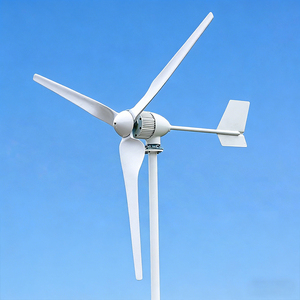
- S-Series Micro & Small Wind Turbines (1kW to 5kW): Sized for small farmhouses, residential villas, communications towers, and remote monitoring. Features ultra-low cut-in speeds (starting at 2.0 m/s), low noise aerodynamics, and integrated MPPT controllers.
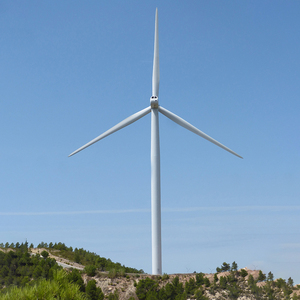
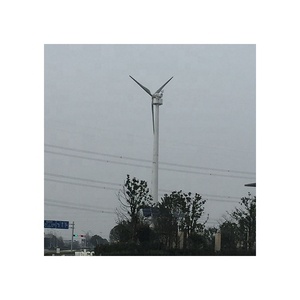
- M-Series Commercial Turbines (EOX M-26, 90 kW): Engineered specifically for heavy agricultural, industrial, and commercial behind-the-meter applications. Utilizing a 26-meter rotor diameter mounted on steel monopole towers (30m to 36m hub height), the M-26 reaches clean, laminar wind speeds above ground boundary turbulence.
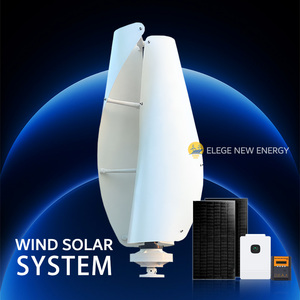
- EOX WS²+ Wind-Solar-Storage System: A fully integrated turnkey power solution unifying wind energy turbines, solar arrays, and high-density battery storage through an AI-driven Energy Management System (EMS). The system algorithms dynamically balance local loads, battery state-of-charge, and grid interaction in real time.
6. Frequently Asked Questions (FAQ) - Saudi Arabia Procurement Guide
Q: What wind speeds are required in Saudi Arabia for wind turbines to be viable?
A: Sites with an annual average wind speed of 4.5 m/s to 5.0 m/s at hub height yield solid economic returns. Many inland plateaus and coastal regions in KSA average 6.0 m/s to 7.5 m/s, offering excellent conditions for distributed wind generation.
Q: How do your wind turbines handle severe sandstorms (Haboobs)?
A: Our turbines feature IP67-rated sealed generator enclosures, abrasive-resistant blade coatings, and gearbox-free direct-drive mechanical layouts. There are no exposed oil reservoirs or delicate gears susceptible to silica contamination.
Q: Can wind turbines be installed together with existing commercial solar systems?
A: Yes. Our EOX WS²+ EMS controller seamlessly integrates with existing commercial solar installations, managing combined AC/DC bus connections and optimizing battery storage charging cycles without requiring a total system overhaul.
Q: What lifecycle maintenance is required for a direct-drive turbine?
A: Because there is no gearbox oil to filter or change, routine maintenance is limited to an annual mechanical torque inspection, electrical check, and visual blade review. Integrated remote SCADA monitoring continuously tracks systemic health 24/7.
Q: What is the expected equipment lifetime under desert operating conditions?
A: All structural elements, generators, and towers are engineered for a 30-year design life. Heavy structural galvanization and UV-stabilized composite blades protect against ambient desert degradation over decades of continuous operation.
Q: Do you offer complete project delivery and engineering support in KSA?
A: Yes. Together with certified local partners, we deliver complete turnkey services across Saudi Arabia: wind resource assessment, site load profiling, structural foundation civil works, installation, grid compliance testing, and long-term service level agreements (SLAs).
7. Turnkey Execution: From Resource Modeling to 30-Year O&M
Procuring renewable equipment for commercial or industrial projects requires a trusted partner capable of supporting every stage of the project lifecycle. Our 5-stage project deployment methodology guarantees that every system installed across Saudi Arabia delivers on calculated performance projections:
- Resource Assessment & Load Matching: High-precision meteorological data modeling combined with 15-minute interval utility load logging to right-size turbine capacity.
- Permitting & Electrical Interconnection Study: Coordination of grid compliance studies, environmental clearances, and structural setback verification.
- Civil & Structural Engineering: Heavy-duty reinforced concrete foundation design tailored for desert soil load-bearing profiles and wind thrust loads.
- Precision Installation & Handover: Tower erection, rotor balancing, electrical integration, and system commissioning managed by certified engineers.
- 30-Year Remote Supervision & Maintenance: SCADA cloud monitoring streams real-time voltage, frequency, rotor RPM, and thermal analytics to maintain optimal operational performance.