Factory Price Rooftop 1kw Small Wind Turbines for Home Electricity
Compact aerodynamically optimized 1kW rooftop wind turbine engineered for residential and commercial sub-metering in urban Osaka settings.
Get CatalogEngineered for high efficiency, ultra-low operating noise, and extreme typhoon resistance (JIS C 1400-2 Compliant).

Compact aerodynamically optimized 1kW rooftop wind turbine engineered for residential and commercial sub-metering in urban Osaka settings.
Get Catalog

Omni-directional VAWT configuration designed for omnidirectional urban wind gusts with whisper-quiet low RPM direct-drive output (12V/24V/48V).
Get Catalog
Ultra-lightweight maglev-assisted 300W micro turbine kit ideal for remote telemetry, IoT sensing stations, and auxiliary marine backup power.
Get Catalog
Precision-engineered low-power micro turbines tailored for long-term uninterrupted outdoor power supply in severe weather environments.
Get Catalog
Commercial grade 400W horizontal wind generator built for solar streetlights, surveillance towers, and emergency battery trickle charging.
Get Catalog
Compact 90W DC output mini turbine featuring a built-in smart controller for direct battery connection without external electrical cabinets.
Get Catalog
Heavy-duty 5kW direct-drive turbine system optimized for small factories, agricultural facilities, and commercial peak-shaving applications.
Get Catalog
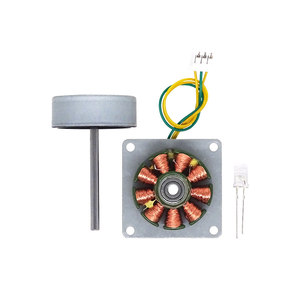
Ultra-low startup torque direct-drive generator module designed for customized power solutions, educational testing, and OEM equipment integrators.
Get CatalogA Comprehensive Technical Whitepaper on Distributed Wind Generation, Grid Integration, and Business Continuity Planning (BCP) in the Kansai Region.
As one of Asia's primary commercial and industrial epicenters, Osaka Prefecture hosts intensive industrial clusters across the Sakai-Senboku Coastal Area, Yodogawa Industrial Zone, and Higashiosaka Precision Manufacturing District. However, commercial enterprises in the Kansai region face dual economic and operational pressures: fluctuating grid tariffs managed under Kansai Electric Power Company (KEPCO) fuel cost adjustment clauses, and stringently enforced Scope 2 greenhouse gas (GHG) reporting guidelines under Japan's Act on Promotion of Global Warming Countermeasures.
Furthermore, following recent severe meteorological events in Osaka Bay—such as Typhoon Jebi—enterprise facility operators increasingly treat energy infrastructure not merely as a utility cost, but as a critical element of Business Continuity Planning (BCP). On-site distributed wind generation combined with solar photovoltaics and battery storage systems (BESS) offers a self-healing, behind-the-meter (BTM) microgrid topology capable of maintaining industrial uptime during major utility grid outages.
Founded in Montréal, Canada in 2001, our engineering philosophy centers on resolving the primary vulnerability of historical wind equipment: mechanical gearbox failure.
Traditional wind turbines utilize planetary gearboxes to convert slow rotor rotation into high-speed generator input. These gearboxes contain hundreds of wear-prone components, require periodic gear oil flushing, and suffer catastrophic mechanical breakdown under turbulent wind shearing typical of urban coastal environments like Osaka Bay.
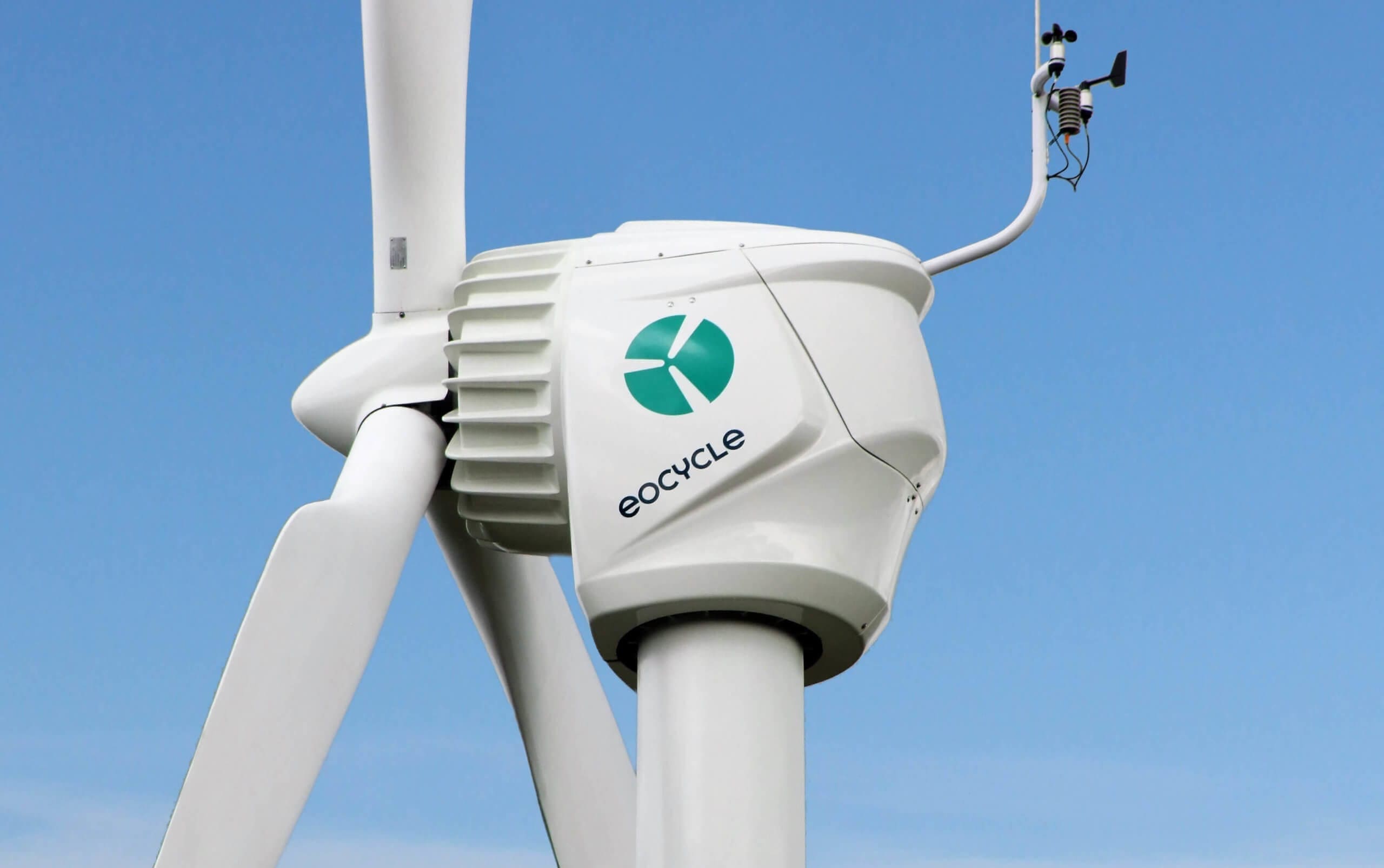
Our direct-drive solution connects the turbine rotor directly to a low-speed Permanent Magnet Synchronous Generator (PMSG) utilizing high-coercivity Neodymium-Iron-Boron (NdFeB) magnets. By removing the gearbox completely, we achieve unprecedented reliability:
Deploying distributed renewable infrastructure matched to local urban topography and load profiles.
Port facilities, cold-storage warehouses, and logistics centers in Yumeshima and Sakishima experience constant coastal wind velocities averaging 5.5 to 6.8 m/s. Direct-drive micro turbines provide stable nocturnal energy output, compensating for solar idle hours and driving cold-storage compressors around the clock.
Factory rooftops in high-density manufacturing corridors utilize low-vibration vertical axis (VAWT) and horizontal micro wind turbines connected behind-the-meter. Peak-shaving during midday commercial rates reduces demand charges applied by KEPCO utilities.
Greenhouse agricultural operations and irrigation pumping stations leverage wind-solar hybrid units (EOX WS²+) to preserve ground acreage. Tower foundations occupy under 2 square meters while delivering power required for thermal climate control systems.
For mission-critical industrial plants serving the Osaka Expo legacy corridor, wind power alone is only part of the equation. Our flagship EOX WS²+ System merges direct-drive wind energy, high-efficiency bifacial solar PV panels, and lithium iron phosphate (LFP) energy storage into a unified asset.
An edge-computed AI Energy Management System continuously calculates forecast meteorological models against your real-time facility electricity load. It dynamically dictates whether to consume wind power directly, buffer energy into the LFP bank, or peak-shave high-tariff utility periods, ensuring maximum economic arbitrage.
Navigating Ministry of Economy, Trade and Industry (METI) standards and Japanese structural safety requirements.
| Engineering Metric | Eocycle Direct-Drive Platform | Standard Gearbox Turbines | Osaka Regulatory Compliance |
|---|---|---|---|
| Structural Survival Wind Speed | 70 m/s (156 mph) | 45 – 50 m/s | Exceeds METI Typhoon Standard (JIS C 1400-2) |
| Acoustic Sound Pressure Level | < 42 dBA at 10m | 55 – 65 dBA | Complies with Ministry of Environment Noise Laws |
| Generator Topology | Gearless PMSG (Direct-Drive) | Multi-stage Planetary Gearbox | Low Risk Safety Inspection Exemption |
| Design Service Life | 30 Years Continuous Operation | 10 – 15 Years | Asset Depreciation under Japanese Tax Law |
| Grid Connectivity Protection | Isolated Inverter with Anti-Islanding | Standard Induction Generator | KEPCO Interconnection Code Certified |
Osaka experiences periodic severe tropical cyclones (Typhoons). Our small wind turbines feature active pitch-to-stall blade control combined with an emergency redundant electromagnetic braking mechanism. When wind speeds exceed 25 m/s, the controller automatically turns blades out of the wind vector and locks the rotor shaft, safeguarding tower integrity against extreme wind spikes up to 70 m/s.
Analyzing the financial return of self-generated wind electricity against KEPCO utility billing models.
Utility costs for commercial facilities in Osaka consist of basic capacity charges (kW) and energy consumption charges (kWh), supplemented by high fuel adjustment surcharges. Installing a behind-the-meter small wind system yields immediate levelized cost reductions:
KEPCO Commercial Grid Tariff: ~¥28 - ¥38 / kWh
Eocycle 30-Year LCOE: ~¥8.5 - ¥12.0 / kWh
Average Net Cost Reduction: 60% – 70% per kWh
Eligible for METI Energy Conservation Tax Schemes.
100% Immediate Depreciation allowances for SME green transition investments.
Typical ROI Payback Horizon: 4.5 to 6.2 Years
By locking in fixed power generation costs for 30 years, enterprise financial controllers remove vulnerability to international energy market volatility and currency exchange risks associated with imported fossil fuels.
How our factory team and certified Kansai partners execute seamless project delivery.
3D GIS micro-siting combined with your facility’s 30-minute interval smart meter files to model exact generation output.
Filing civil, structural, and electrical documentation to satisfy METI Technical Regulations and municipal zoning approval.
Direct-drive generator fabrication under ISO 9001 quality control standards with full load factory bench testing.
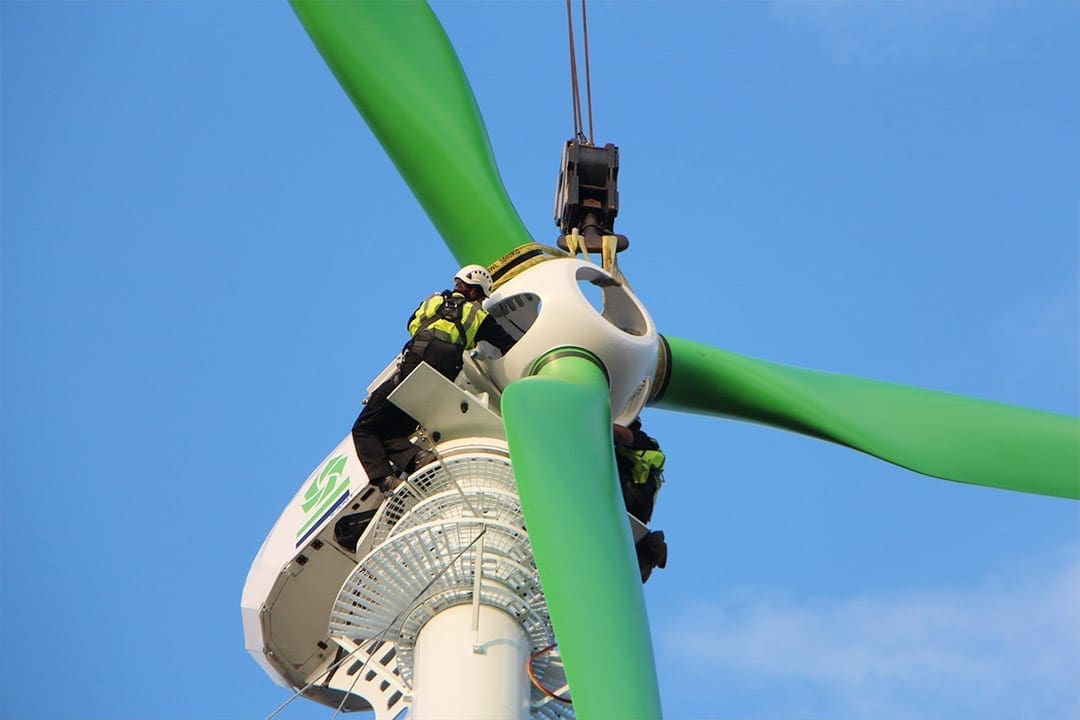
Foundation casting, rapid tower erection, inverter wiring, and KEPCO grid compliance testing by certified engineers.
24/7 telemetry tracking turbine health, automated preventative maintenance, and annual physical inspections.
Comprehensive service level agreements (SLA) maintaining over 98% operational uptime across the asset lifetime.
Technical and regulatory answers regarding small wind turbines serving Kansai industrial sites.
For industrial and commercial applications, sites with an average annual wind speed of 4.8 m/s to 5.2 m/s at hub height (typically 20m to 36m) achieve strong economic paybacks. Coastal areas in Osaka Bay (Sakai, Izumiotsu, Sennan) often exceed 5.8 m/s. Because our direct-drive turbines have a low cut-in threshold of 2.5 m/s, they begin harvesting power even during lighter inland breeze conditions.
Japan’s Environmental Noise Standards mandate sound levels below 45–50 dBA at boundary lines in commercial/industrial districts. Gearbox-driven turbines generate high-frequency mechanical whine. Our direct-drive generator eliminates gear teeth engagement entirely. Combined with aerodynamically silent blade tips, acoustic output remains under 42 dBA at 10 meters, rendering the operation imperceptible above ambient urban background noise.
Yes. Solar PV and wind generation possess complementary diurnal and seasonal profiles in Osaka. Solar peaks during sunny summer afternoons, whereas wind velocity peaks during evening hours, winter storms, and passing pressure fronts. The EOX WS²+ hybrid controller integrates both generation inputs into a single DC bus, maximizing battery storage efficiency and smoothing out total power output.
Because there is no gearbox oil to change or mechanical seals to replace, scheduled maintenance is limited to an annual structural and electrical checkup. For Osaka coastal installations, components are treated with C5-M marine-grade anti-corrosion coatings, anodized aluminum alloy housings, and sealed IP65/IP67 generator enclosures to withstand high humidity and saline sea air.
All grid-interconnected power generation assets in Kansai require grid-connection screening by KEPCO and notification to METI’s Kansai Industrial Safety and Inspection Department. Our turnkey service handles all technical filing, anti-islanding relay validation, and power quality testing (THD < 3%) to ensure compliance with Japanese grid codes.
Connect with our senior engineering team to request a localized wind resource assessment, METI feasibility study, and comprehensive financial yield report tailored to your facility’s load profile.