Deployable power generation and battery energy storage systems (BESS) designed for seamless integration with portable turbines across Indonesian islands and remote industrial sites.
Indonesia's unique geography—spanning over 17,000 islands across three time zones—presents one of the world's most complex energy distribution challenges. Traditional centralized grid extension by Perusahaan Listrik Negara (PLN) is economically unfeasible for thousands of outer islands, isolated mining sites, and agricultural settlements. For decades, remote operations in provinces like East Nusa Tenggara (NTT), Maluku, North Kalimantan, and Sulawesi have relied almost exclusively on imported High-Speed Diesel (HSD) generators. However, skyrocketing fuel logistics costs, maritime transport disruptions during monsoon seasons, and strict national decarbonization mandates have forced commercial enterprises and regional utilities to seek high-yield, resilient alternatives.
As a leading portable turbine manufacturer & exporter catering directly to the Indonesia market, our engineering core addresses the specific physical and meteorological realities of Southeast Asian island ecosystems. Unlike standard wind or solar installations that require multi-million-dollar civil works and rigid infrastructure, portable kinetic wind turbines combined with containerized Battery Energy Storage Systems (BESS) offer rapid deployment, zero-gearbox mechanical reliability, and modular scalability. By capturing the steady coastal and elevated breeze patterns prevalent throughout the Indonesian archipelago—especially during the East Monsoon from April to October—distributed direct-drive micro-turbines deliver continuous day-and-night renewable generation that perfectly complements solar photovoltaic (PV) arrays.
Why traditional mechanical systems fail in Indonesia's humid maritime climate—and how our direct-drive permanent magnet generator (PMG) architecture solves it.
Traditional small turbines rely on complex mechanical gearboxes that fail rapidly under coastal turbulence and high ambient humidity. Our turbines utilize low-speed, direct-drive Permanent Magnet Generators. With zero gear oil to change and up to 70% fewer moving parts, maintenance is reduced to simple annual visual checks, yielding over 98% operational availability.
Indonesian coastal sites endure severe salt spray, high heat, and humidity exceeding 90%. Every turbine structure, tower section, and containerized BESS housing exported by our facility is treated with ISO 12944 C5-M heavy marine-grade epoxy coatings, hot-dip galvanized fasteners, and IP65/IP66 sealed electrical enclosures to guarantee a 30-year design life.
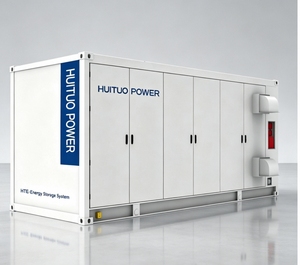
Microgrids in Indonesia cannot rely on solar alone due to heavy monsoon cloud cover and tropical rain squalls. Our integrated microgrid architecture pairs direct-drive turbines (25 kW to 90 kW+) with liquid-cooled LiFePO4 energy storage. An onboard AI Energy Management System (EMS) balances generation curves, eliminates diesel fuel burn by up to 90%, and secures grid stability.
Custom engineering configurations tailored to high-value industrial, commercial, and communal activities across the Indonesian provinces.
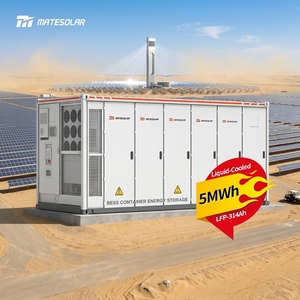
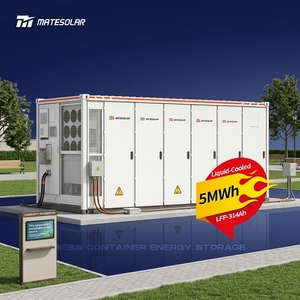
Indonesia holds the world’s largest nickel reserves, with extensive mining and processing hubs located across Morowali, Konawe, and Weda Bay. These heavy industrial facilities require continuous MW-scale baseload power. Integrating portable turbine arrays with containerized BESS (such as our 5MWh Liquid-Cooled Container) allows mine operators to lower their heavy reliance on coal and diesel power, significantly cutting Scope 1 & Scope 2 greenhouse gas emissions to meet international green nickel supply chain audits.
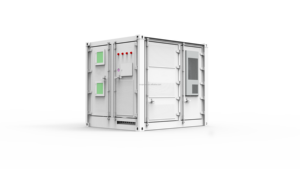
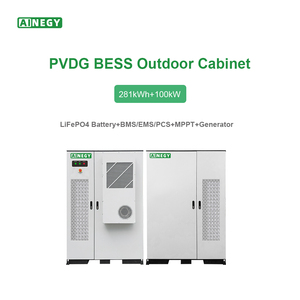
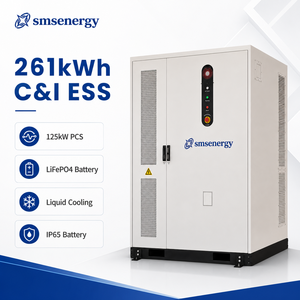
Many remote communities in Maluku, East Nusa Tenggara (NTT), and Papua reside beyond the reach of main transmission grids. Transporting diesel to these outer islands incurs exorbitant freight overheads. Portable, rapid-erect wind turbines featuring tilt-up towers can be delivered via small cargo barges (LCTs) and commissioned without heavy cranes. Paired with 281kWh–720kWh microgrid battery cabinets, these installations provide 24/7 continuous electricity for household lighting, schools, and medical refrigeration.
Palm oil plantations and agricultural processing facilities across Riau, North Sumatra, and Central Kalimantan operate round-the-clock during harvesting seasons. While biomass provides partial thermal power, auxiliary electrical loads for pumping, aeration, and housing require reliable electrical supply. Wind-solar hybrid systems installed on plantation perimeters utilize open land efficiently, supplying stable power without disturbing crop yield or land usage.
Indonesia’s world-famous eco-tourism destinations demand zero-noise, non-polluting power solutions. Loud, vibrating diesel generators destroy the pristine environment and produce fuel runoff risks in delicate marine ecosystems. Compact direct-drive turbines operating at low RPMs combined with ultra-quiet liquid-cooled battery systems offer eco-resorts a 100% clean, silent, and reliable power profile that enhances ESG credentials and guest experience.
Understanding regulatory drivers, PLN de-dieselization policies, and local content requirements (TKDN).
The Indonesian Ministry of Energy and Mineral Resources (ESDM) alongside state utility PLN have initiated a mandatory program to phase out over 5,200 diesel power generators across 2,100 remote locations. The policy mandates replacing diesel units with renewable microgrids combining wind, solar, and battery storage. Manufacturers supplying robust portable turbines and containerized ESS are positioned at the forefront of this multi-billion-dollar transition.
Tingkat Komponen Dalam Negeri (TKDN) regulations require energy sector equipment suppliers to maximize local manufacturing content. As an experienced exporter, our manufacturing model facilitates turnkey technical transfers, working alongside Indonesian EPC partners to supply core direct-drive PMG nacelles, high-voltage BMS controllers, and battery modules while integrating local structural steel towers and civil works to meet TKDN benchmarks.
Indonesia’s Net Zero Emission (NZE) target by 2060 has placed stringent pressure on industrial exporters—especially in metals, textiles, and palm oil processing. Global supply chains now audit product carbon footprints. Distributed wind turbines installed on-site deliver auditable renewable energy certificates (RECs) and verifiable Scope 2 carbon offset data, providing Indonesian exporters a decisive competitive edge in international markets.
Comprehensive technical comparison evaluated over a 25-year operational lifecycle in remote Indonesian environments.
| Evaluation Parameter | Standalone Diesel Gensets | Solar PV Only + Storage | Direct-Drive Wind + Solar + BESS (Hybrid) |
|---|---|---|---|
| Levelized Cost of Energy (LCOE) | High ($0.35 - $0.55 / kWh due to fuel transport) | Moderate ($0.18 - $0.26 / kWh) | Lowest ($0.09 - $0.14 / kWh) |
| 24/7 Baseload Reliability | High (Subject to fuel supply logistics) | Low (Zero output at night; low during monsoons) | Exceptional (Wind complements night & rainy weather) |
| Land & Spatial Footprint | Small footprint, high noise pollution | Very large ground area required (2.5x more land) | Minimal footprint (Tower foundation occupies <25m²) |
| Maintenance & Service Interval | Frequent (Every 250–500 operating hours) | Low (Panel cleaning required) | Ultra-low (Annual inspection; zero gearbox oil) |
| Environmental & Scope 2 Impact | Severe CO₂ emissions & spill risks | Zero operational carbon | 100% Clean energy; zero operating emissions |
| Expected Operational Lifespan | 5 – 8 Years (High wear under continuous duty) | 15 – 20 Years (Inverter replacement needed) | 30 Years (Heavy-duty marine structure) |
Built upon over two decades of direct-drive wind energy innovation and global microgrid deployment experience.
Founded in 2001, our engineering team pioneered the commercialization of gearless direct-drive small wind turbines. By eliminating high-failure gearboxes, our machines operate continuously in North American blizzards, North Sea coastal gales, and Southeast Asian tropical monsoons with over 98% fleet availability.
We do not just ship hardware; we deliver complete turnkey solutions. From initial wind resource modeling and site load analysis to logistics coordination via major Indonesian ports (Tanjung Priok, Surabaya, Makassar), civil works guidance, and long-term O&M support, we provide a single accountable partnership.
Every turbine and containerized battery system comes integrated with an advanced satellite/4G remote SCADA telemetry portal. Indonesian operators can monitor system health, state-of-charge (SoC), active thermal conditions, and power generation in real-time from anywhere via web browser or mobile app.
Addressing key technical, logistical, and operational queries for engineering procurement managers in Indonesia.
As a practical engineering rule, sites with an average annual wind speed of 4.5 m/s to 5.0 m/s at hub height (typically 30m to 36m) deliver excellent economic returns. Many Indonesian coastal regions, outer islands in NTT, Maluku, and elevated mining topography feature excellent wind profiles. Our direct-drive turbines feature extremely low cut-in wind speeds (starting at just 2.5 m/s), allowing them to generate power even during light atmospheric breezes.
Our equipment is engineered specifically for multimodal container shipping. All turbine components, towers, and BESS enclosures fit standard 20ft and 40ft ISO high-cube shipping containers. Upon arrival at main hub ports like Tanjung Priok (Jakarta) or Tanjung Perak (Surabaya), containers can be easily transferred onto local Landing Craft Tank (LCT) barges for direct beach landing on remote islands without specialized deep-water harbor cranes.
Yes. Our direct-drive wind turbines are engineered according to IEC 61400-2 Class I wind standards. They feature active aerodynamic pitch control and dual fail-safe mechanical braking systems. In extreme wind events exceeding 50 m/s (180 km/h), the blades automatically feather into the wind to minimize drag, protecting the structural integrity of the mast and nacelle.
Our systems use smart hybrid PCS (Power Conversion System) inverters and an AI-driven Energy Management System (EMS). The EMS treats wind turbines, solar PV, battery storage, and legacy diesel generators as a single synchronized microgrid. When wind or solar power is abundant, the EMS automatically throttles back or shuts down diesel generators, maintaining flawless voltage and frequency stability without grid flickering.
Because our direct-drive PMG generator eliminates mechanical gearboxes, routine maintenance is limited to annual visual inspections, electrical torque checks, and bearing lubrication. We maintain regional spare-part logistics hubs and partner with certified local EPC contractors across Indonesia to provide rapid on-site field engineering service and support when required.
Standard manufacturing lead time for custom portable turbines and containerized BESS units ranges between 8 to 12 weeks. Ocean freight from our manufacturing port to major Indonesian sea hubs (Jakarta/Surabaya) takes approximately 14 to 21 days. Customs clearance and onward inter-island barge transport are coordinated alongside certified local freight forwarders.
Submit your project coordinates and site load parameters today. Our application engineering team will conduct a comprehensive wind resource assessment and yield simulation for your site free of charge.
