Tested commercial-grade and micro wind power generation solutions designed for rapid integration, high uptime, and long service life in high-altitude Mexican installations.
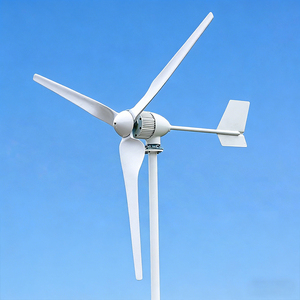
Compact 1kW horizontal turbine optimized for urban industrial roofs, peripheral facility backup, and light commercial auxiliary generation with minimal cut-in speed.
Contact Us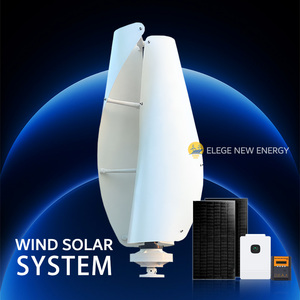
Omnidirectional vertical-axis wind turbine featuring low-noise maglev operation and smart MPPT controller for dense commercial zones in the Valley of Mexico.
Contact Us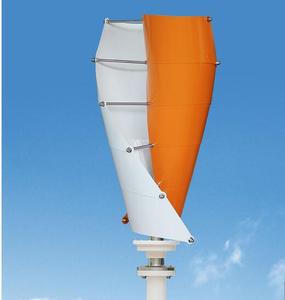
Ultra-compact vertical wind kit for remote SCADA telemetry monitoring stations, security lighting perimeters, and industrial IoT sensors.
Contact Us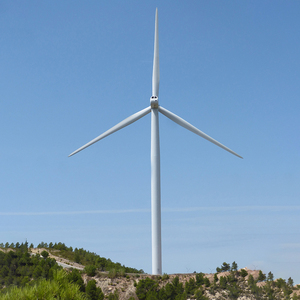
Ruggedized micro turbines engineered for harsh industrial environments, offering high-durability power for remote monitoring and signal repeaters.
Contact Us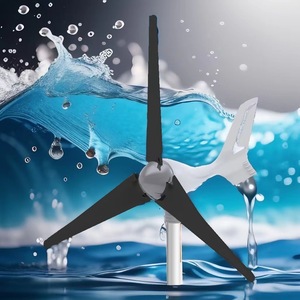
High-efficiency 400W horizontal turbine specialized for perimeter solar street lighting, industrial parking security, and auxiliary battery maintenance.
Contact Us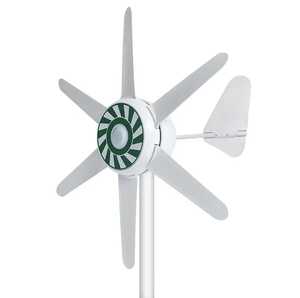
Plug-and-play micro turbine featuring an internal rectifier controller, designed for quick integration into low-voltage DC industrial distribution loops.
Contact Us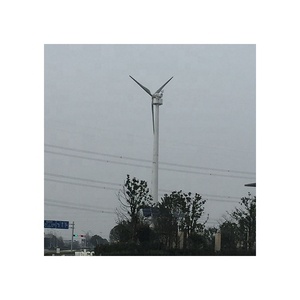
Commercial grade 5kW wind generator featuring precision aerofoil pitch blades and dynamic braking for industrial facilities and agricultural operations.
Contact Us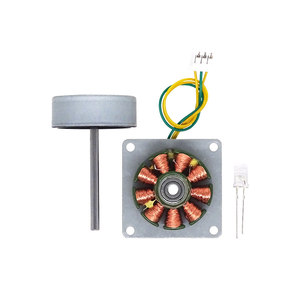
Customizable low-voltage 3-phase AC permanent magnet generator component for specialized industrial equipment, test benches, and custom energy harvesting.
Contact UsThe metropolitan region of Mexico City (CDMX) and the adjacent industrial corridors in the State of Mexico (such as Vallejo, Naucalpan, Tlalnepantla, Cuautitlán Izcalli, and the Toluca-Lerma valley) represent the economic heartbeat of North America's manufacturing and logistics network. However, industrial enterprise leaders, plant managers, and procurement officers face unprecedented challenges: rapid electrical tariff increases under CFE (Comisión Federal de Electricidad) GDMTH (Gran Demanda Media Tensión Horaria) structures, grid congestion, tight carbon reduction mandates, and strict grid code compliance under Código de Red 2.0.
As nearshoring accelerates industrial expansion across Central Mexico, localized distributed energy generation has transformed from an option into a strategic imperative. Commercial and industrial (C&I) facilities can no longer rely solely on centralized grid infrastructure. Distributed industrial wind turbine solutions—especially direct-drive wind generator systems ranging from micro-generation modules to 25 kW, 90 kW, and integrated hybrid microgrids—offer a high-yield, reliable power hedge. By generating clean electricity behind the meter (BTM) at the exact point of consumption, enterprise operators reduce peak demand charges, ensure operational resilience, and secure auditable Scope 2 decarbonization metrics.
Analyzing the unique regulatory, meteorological, and economic conditions across Mexico City and surrounding industrial zones.
The influx of foreign direct investment (FDI) in logistics hubs surrounding Mexico City (Cuautitlán, Tepotzotlán, and Pachuca corridors) has strained existing electrical substation capacities. Industrial parks frequently face interconnection delays or utility capacity caps. Distributed wind turbines provide immediate localized capacity additions without requiring major utility transformer upgrades, allowing factories to expand production lines rapidly.
Mexico City sits at an altitude of approximately 2,240 meters (7,350 feet) above sea level, where atmospheric pressure and air density ($\rho \approx 0.96 \text{ kg/m}^3$) are lower than sea-level conditions ($\rho_0 = 1.225 \text{ kg/m}^3$). Procurement teams must source wind equipment designed with optimized blade aerofoils, increased rotor sweep areas, and custom pitch controls to capture clean kinetic energy efficiently in thinner air environments.
Industrial electricity consumers in the Valley of Mexico are subjected to complex time-of-use tariffs with steep penalties for peak-hour demand (usually between 18:00 and 22:00). Unlike solar PV arrays which stop producing after sunset, industrial wind systems yield strong thermal wind energy into the evening, providing precise peak shaving during CFE's most expensive rate windows.
Mexico's Energy Regulatory Commission (CRE) enforces rigorous grid compliance rules (Código de Red 2.0), penalizing industrial facilities with low power factor or high Total Harmonic Distortion (THD). Modern industrial wind turbines utilize full-scale power converters and smart grid-tied inverters that deliver reactive power compensation and stable sine-wave power output, guaranteeing seamless regulatory compliance.
Traditional small and medium wind turbines relied heavily on multi-stage mechanical gearboxes to step up rotational speed from the rotor blades to the generator. In heavy industrial environments, gearbox failure accounts for over 65% of unscheduled maintenance downtime due to oil degradation, mechanical wear, micro-pitting, and thermal expansion stress.
Our engineered industrial wind solutions utilize a direct-drive Permanent Magnet Generator (PMG) architecture. By mounting the rotor directly onto the slow-speed generator shaft, we eliminate gearboxes entirely.
Evaluating technical specs and localized applicability in Greater Mexico City industrial operations.
| Technology Architecture | Primary Drivetrain | Mexico City Altitude Adaptation | Night/Evening Generation | O&M Maintenance Burden | Design Life |
|---|---|---|---|---|---|
| Direct-Drive PMG Wind (Our OEM Standard) | Gearbox-Free Direct Coupling | High (Enlarged Rotor & Low-Density Blade Profiling) | Continuous 24/7 Wind Yield | Ultra-Low (Annual Visual & Electrical Check) | 30 Years |
| Legacy Gearbox Wind Turbines | Multi-Stage Mechanical Gearbox | Medium (Standard Sea-Level Blade Aerofoils) | Continuous 24/7 Wind Yield | High (Gear Oil Changes, Mechanical Wear) | 10-15 Years |
| Commercial Rooftop Solar PV | Solid State Semiconductors | High (Good Solar Irradiation) | Zero (Idle at Night) | Low (Panel Cleaning & Inverter Replacement) | 20-25 Years |
| Wind-Solar-Storage Hybrid (EOX WS²+) | Direct-Drive PMG + PV + LiFePO4 | Maximized (AI Dual Resource Harvesting) | Optimized (Battery + Night Wind Base Load) | Low (Unified Smart AI SCADA Management) | 30 Years |
Tailored wind power system integrations designed for specific enterprise sector operational profiles.
Locations: Vallejo, Tlalnepantla, Cuautitlán Izcalli, Toluca Industrial Corridor.
Automotive parts suppliers, metal stamping plants, and plastics molders require continuous 3-shift power. Installing behind-the-meter 25 kW to 90 kW direct-drive wind turbines offsets high baseline motor loads, protects sensitive robotics from voltage sags, and drastically cuts CFE GDMTH peak demand charges.
Locations: Central de Abasto CDMX, Puebla-Tlaxcala Valley, Texcoco Ag Zone.
Cold storage warehouses and food processing facilities experience 24/7 refrigeration power draw. Industrial wind turbines installed on site capture overnight thermal winds, operating in perfect alignment with refrigeration compressors to prevent temperature spikes and eliminate peak grid draw.
Locations: Peripheral Water Utility Pumps, Remote Mining & Quarry Works.
For municipal water pumping projects and remote mineral extraction yards far from stable high-voltage utility lines, wind-solar-storage microgrids (EOX WS²+) act as a turnkey "utility-in-a-box," replacing costly diesel generation and securing independent clean power delivery.
Enterprise buyers should never have to coordinate disparate wind equipment vendors, local civil engineers, environmental permitting consultants, and grid interconnection experts. Our OEM manufacturing ecosystem provides complete, end-to-end turnkey EPC (Engineering, Procurement, and Construction) accountability across Mexico City and North America:
We deploy high-resolution LiDAR and anemometer data combined with long-term regional atmospheric models for the Valley of Mexico, overlaying your facility's 15-minute CFE interval meter files to guarantee transparent financial ROI modeling.
Our local engineering team handles all municipal zoning, setback approvals, environmental impact assessments (MIA), and formal CFE/CRE interconnection approvals according to Mexican electrical standards (NOM-001-SEDE).
From soil dynamic loading tests in Mexico City’s clay/volcanic ground strata to reinforced concrete foundation pouring, guyed/freestanding tower erection, and electrical busbar integration—our certified crews execute every step safely.
Every system is connected to our global IoT SCADA supervision center. We provide predictive maintenance, regional spare parts warehousing, and local technician field support throughout the asset's 30-year operational life.
Direct answers to essential technical, legal, and economic inquiries regarding industrial wind power installations.
Stop exposing your factory or business to rising CFE energy tariffs and grid vulnerability. Provide your facility location and interval energy data, and our senior wind engineers will prepare a comprehensive wind feasibility and financial ROI assessment for your site.