Engineered for high power density, durability in humidity, and seamless grid synchronization or off-grid storage integration across Costa Rica.
Costa Rica stands as a global beacon for 98%+ renewable power generation. However, seasonal weather fluctuations, remote grid congestion, and high commercial tariffs present operational hurdles for industrial enterprises, agricultural producers, and eco-hospitality operations.
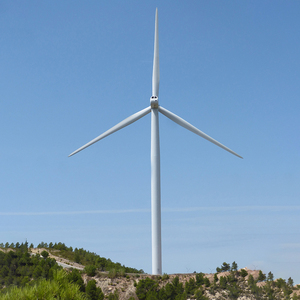
During the dry season (Verano: December to April), hydro-electric generation drops across Costa Rica. Simultaneously, trade winds ("Papagayo Winds") peak in regions like Guanacaste, Tilarán, and the Central Valley. Industrial wind turbines provide crucial counter-cyclical power generation when solar and hydro output dip.
Costa Rica’s coastal microclimates present severe atmospheric corrosion challenges due to humidity and marine salt breeze. Our wind turbines utilize hot-dip galvanized steel towers, aerospace-grade anodized aluminum alloys, and C5-M marine-grade epoxy coatings to guarantee a 30-year operational life.
Our solutions comply with ICE (Instituto Costarricense de Electricidad) distributed generation policies and Law 10086. By generating power directly at the point of consumption, industrial clients avoid demand charge penalties, stabilize operating costs, and advance Costa Rica’s 2018–2050 National Decarbonization Plan.
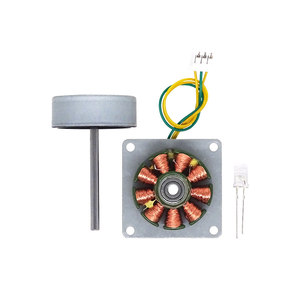
In traditional small-to-medium wind power systems, the mechanical gearbox represents the primary single point of failure. High dynamic wind gusts cause gear tooth fatigue, oil leakage, and frequent maintenance overhauls. As a premier global manufacturer supplying Costa Rica, our core design philosophy eliminates the gearbox entirely.
Information Gain Key Takeaway: Direct-drive permanent magnet generators (PMG) reduce total mechanical moving parts by over 60%, delivering a low cut-in wind speed of 2.0 m/s and achieving a verified 98.4% uptime across tropical, high-humidity, and turbulent mountainous deployment environments.
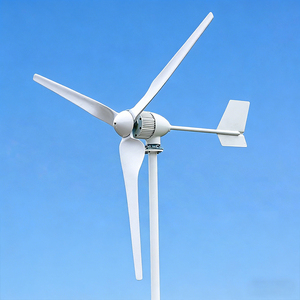
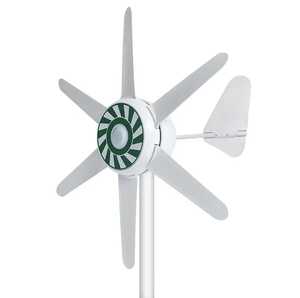
Our horizontal and vertical axis wind turbines incorporate advanced NACA aerofoil geometry fabricated from ultra-high-density carbon fiber and reinforced fiberglass. This lightweight structure yields minimal rotational inertia, enabling start-up generation at wind speeds as low as 1.5 to 2.0 m/s. For Costa Rica’s inland agricultural valleys where wind speeds fluctuate, this translates to up to 35% higher annual energy yield (AEY) compared to rigid metallic blade architectures.
Every turbine platform is paired with custom Maximum Power Point Tracking (MPPT) micro-inverters and charge controllers. Remote monitoring via mobile SCADA telemetry provides real-time data visibility into power curves, vibration metrics, stator temperature, and grid phase balance. Operational managers in Guanacaste or San José can monitor and optimize microgrid performance via desktop or smartphone interfaces.
| Technical Dimension | Traditional Gearbox Turbines | Our Direct-Drive PMG Systems | Costa Rica Field Advantage |
|---|---|---|---|
| Mechanical Complexity | High (Multiple planetary gear stages) | Ultra-Low (Direct rotor-generator coupler) | Eliminates dynamic wear from gusty Papagayo winds |
| Annual Maintenance | Bi-annual gear oil changes & seal replacement | Annual structural check & visual inspection | Dramatically reduces OPEX in remote installations |
| Cut-In Wind Speed | 3.5 m/s – 4.5 m/s | 1.5 m/s – 2.0 m/s | Captures light thermal breezes in mountain valleys |
| Acoustic Emission | 65 - 75 dB(A) @ 10m (Gear mesh noise) | < 45 dB(A) @ 10m (Whisper-quiet) | Ideal for eco-resorts, schools, and residential areas |
| Corrosion Resistance | Standard C3 Industrial Paint | C5-M Marine Coating + Sealed IP67 Stator | Protects against coastal salt spray and high rainfall |
From coastal eco-resorts in the Nicoya Peninsula to coffee processing facilities in the Central Highlands, our wind power solutions adapt to regional power demands.
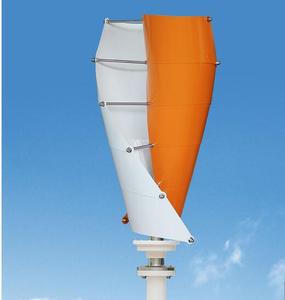
Eco-resorts operating along coastal corridors demand 24/7 continuous electricity without the ambient noise and carbon emissions of diesel generators. Vertical Axis Wind Turbines (VAWT) operate quietly and present an aesthetically pleasing profile that aligns with Costa Rica's green brand identity.
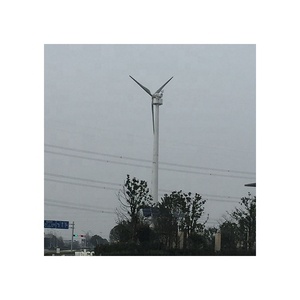
Processing plants experience heavy power draw during harvesting seasons. High-capacity 5kW to 90kW direct-drive horizontal turbines offset expensive peak daytime rates, powering mechanical dryers, sorting machinery, and cold storage units directly behind the meter.
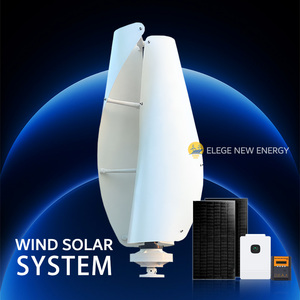
High-altitude repeater towers across mountain ridges require bulletproof power security. Compact 300W–1kW horizontal and vertical turbine kits paired with solar panels ensure continuous battery charging for telecom equipment even during prolonged rainy periods.
For large logistics parks and manufacturing centers in Alajuela or Heredia, combining solar PV arrays with wind turbines and lithium energy storage systems (BESS) provides true energy resilience, smoothing out load spikes and eliminating voltage dips.
With over two decades of engineering research, strict quality control standards, and international certifications, we deliver bankable renewable assets.
Every turbine undergoes full-load bench testing, dynamic rotor balancing, and dielectric isolation tests prior to international shipment, guaranteeing zero DOA (Dead On Arrival) components.
We assist EPC contractors and project managers in Costa Rica with wind resource modeling, foundation engineering drawings, grid connection schematics, and custom electrical cabinet wiring.
Direct factory supply chain eliminates intermediary markups. Complete spare part kits, controller replacements, and replacement blades are stocked for rapid air or sea dispatch to San José / Puerto Limón / Caldera.
Key technical, legal, and operational questions answered by our wind application engineering team.
For commercial payback periods under 4–6 years, an average annual wind speed of 4.5 m/s to 5.0 m/s at hub height is recommended. Regions like Guanacaste, Tilarán, Santa Ana, and high-altitude ridge lines in Cartago regularly exceed 6.5 m/s. However, because our direct-drive turbines feature low cut-in speeds (1.5–2.0 m/s), smaller micro-turbines (300W–2kW) can operate effectively for battery maintenance and off-grid power even in moderate wind zones.
Wind power requires a fraction of the physical land footprint compared to solar PV while producing power continuously through the night and during heavy tropical cloud cover (the rainy season or "Golpe de Agua"). Furthermore, solar panel output decreases under extreme heat, whereas wind generators maintain constant electromagnetic conversion efficiency. Combining wind and solar into a hybrid array delivers the most balanced, uninterrupted generation curve.
All structural metal components undergo hot-dip galvanization (HDG) exceeding 85 microns thickness, supplemented by a 4-layer polyurethane C5-M marine-grade anti-corrosion coating. Internal generators are fully vacuum-pressure impregnated (VPI) with salt-resistant epoxy resin, and electrical junction enclosures feature IP67 weather sealing to withstand tropical marine air.
Yes. Our grid-tied inverter systems comply with international grid interconnection standards (IEEE 1547 / UL 1741) and align with Costa Rica’s Law 10086 for distributed energy resource (DER) integration. They feature automatic frequency drop control, anti-islanding protection, and dual-directional meter compatibility required by regional distribution companies (ICE, CNFL, ESPH, COOPELESCA).
Direct-drive PMG turbines require minimal maintenance compared to legacy geared turbines. Routine servicing involves an annual physical inspection of bolt torques, blade leading-edge cleanliness, slip ring brush inspection (where applicable), and electrical terminal tightness. There are no oil filters to change, no gearboxes to flush, and no drive belts to replace.
Contact our senior wind energy engineers today for a complimentary site wind resource assessment, customized technical proposal, and direct factory pricing.
Inquire Now