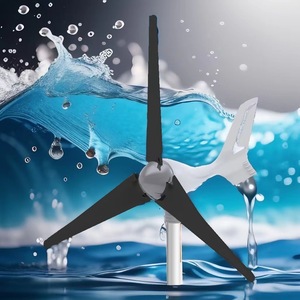
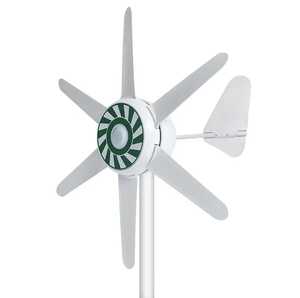
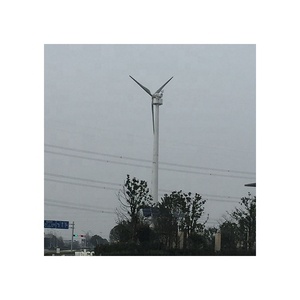

Decentralized power generation in Metro Manila and the expanding industrial hubs of the Cavite-Laguna-Batangas-Rizal-Quezon (CALABARZON) region faces a dual challenge: rising grid energy costs and severe weather vulnerabilities. Metro Manila experiences some of the highest commercial and industrial electricity tariffs in Southeast Asia, driven by reliance on imported fossil fuels, complex distribution wheeling charges, and peak demand surcharges under MERALCO utility structures. To achieve true energy independence and resilience, corporate real estate developers, industrial plant operators, and municipal infrastructure authorities are turning to advanced distributed renewable energy systems.
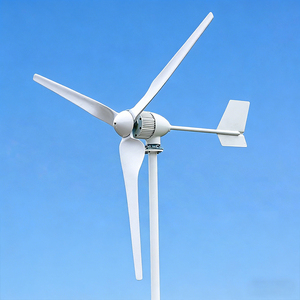
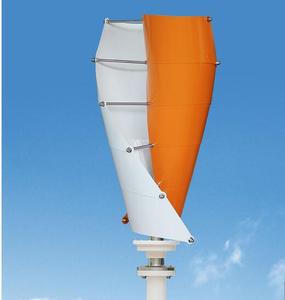
Magnetic Levitation (Maglev) vertical axis wind turbines represent a paradigm shift in urban and coastal distributed generation. Unlike conventional horizontal-axis wind turbines (HAWTs) that require complex yaw mechanisms, heavy gearboxes, and laminar, high-velocity airflow, magnetic levitation turbines utilize permanent rare-earth magnets to suspend the rotor assembly in mid-air. This eliminates mechanical contact, drastically reducing frictional drag to zero and allowing energy harvesting in low, turbulent urban wind regimes common across Metro Manila’s cityscape.
In high-density commercial zones such as Bonifacio Global City (BGC), Makati Central Business District, and the Ortigas Center, wind vectors are highly fragmented and turbulent due to building geometry. Traditional mechanical bearings suffer exponential wear when subjected to omnidirectional wind gusts. Maglev turbines utilize neodymium-iron-boron (NdFeB) magnetic levitation bearings to absorb multi-axis aerodynamic loads without physical surface friction. This technical architecture guarantees a cut-in velocity as low as 1.5 m/s (5.4 km/h), compared to 3.5 m/s for standard gear-driven turbines, boosting annual energy yield by 35% to 48% in urban microclimates.
Furthermore, the physical dynamics of vertical-axis magnetic levitation allow for silent operations (operating below 35 decibels at full torque), meeting strict environmental noise requirements imposed by Manila’s Local Government Units (LGUs) and the Department of Environment and Natural Resources (DENR). This makes maglev turbines uniquely suited for rooftop mounting on commercial buildings, industrial park facilities, telecommunications towers, and residential estate microgrids.
Integration into high-rise commercial structures and mixed-use complexes. Maglev turbines capture omnidirectional thermal updrafts and building-channeled wind streams, feeding direct current (DC) into building energy management systems (BEMS) to shave off peak power tariffs.
Manufacturing plants, semiconductor packaging units, and cold storage facilities in Laguna Technopark and First Philippine Industrial Park (FPIP) require continuous 24/7 baseline power. Maglev hybrid microgrids mitigate utility voltage sags and lower diesel generator fuel burn.
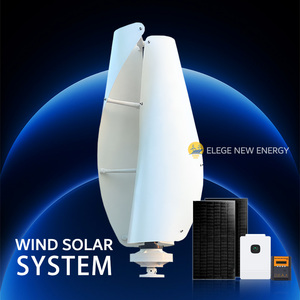
Off-grid eco-resorts and coastal marine infrastructure in nearby Batangas, Mindoro, and Palawan leverage maglev systems combined with solar PV arrays and energy storage systems (BESS). Direct magnetic drive prevents salt-mist mechanical binding in coastal air environments.
Telecom operators deployment across Luzon rely on our 90W to 1kW micro vertical wind turbine series for continuous power supply to remote base transceiver stations (BTS), edge-computing nodes, and traffic surveillance hubs along major arteries like EDSA and C-5.
Aquaculture farms in Pampanga and Bulacan utilize small maglev wind generators for constant pond aeration and automated feeding systems, ensuring operation even during frequent typhoon-induced localized power outages.
Heavy marine logistics centers around South Harbor and Manila International Container Terminal (MICT) utilize maglev vertical axis arrays along perimeter fences to capture strong sea breezes and power high-mast LED yard lighting networks.
The Philippine renewable energy sector is transitioning rapidly under legislative mandates and grid modernization efforts. Understanding the local regulatory ecosystem is critical for commercial procurement teams, EPC contractors, and plant managers evaluating renewable power investments in Manila.
1. Philippine Renewable Energy Act (RA 9513) & Net Metering Scheme: The Energy Regulatory Commission (ERC) net metering framework allows commercial and industrial customers to export excess self-generated electricity back to the MERALCO distribution grid. Maglev turbines deliver night-time generation when solar PV assets are inactive, establishing a complementary generation profile that maximizes export credits and stabilizes the facility's overall levelized cost of energy (LCOE).
2. Green Energy Option Program (GEOP): GEOP empowers corporate entities consuming 100 kW or more monthly to source 100% of their electricity from certified renewable energy developers. Installing CE-certified maglev turbines directly on-site provides visible, auditable Scope 1 and Scope 2 carbon offset metrics, aiding compliance with international corporate ESG mandates.
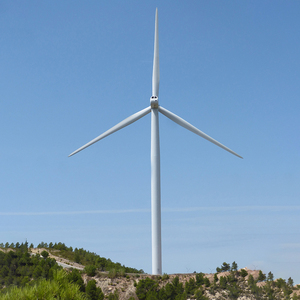
3. Typhoon Protection Architecture (PAGASA Winds): The Philippine Atmospheric, Geophysical and Astronomical Services Administration (PAGASA) tracks an average of 20 tropical cyclones entering the Philippine Area of Responsibility (PAR) annually. Conventional wind turbines often fail during high-velocity wind events due to blade destruction or mechanical braking over-speed. Our CE-certified maglev turbines incorporate auto-pitch aerodynamic blades, electromagnetic soft-braking, and a low center of gravity vertical structure designed to withstand extreme wind gusts up to 65 m/s (Super Typhoon Category equivalency).
| Performance Metric | CE Certified Maglev Turbine | Traditional Gear-Driven Turbine | Rooftop Solar PV (Only) |
|---|---|---|---|
| Cut-In Wind Speed | 1.5 m/s (Ultra-Low) | 3.5 m/s – 4.5 m/s | N/A (Sunlight Dependent) |
| Maintenance Interval | Every 3-5 Years (Inspection Only) | Annual (Gear Oil, Bearings) | Quarterly Panel Washing |
| Operating Noise | < 35 dB (Silent) | 55 - 75 dB (Mechanical Noise) | 0 dB |
| 24-Hour Generation Profile | Yes (Day, Night, Coastal Breezes) | Conditional on High Wind | Daylight Hours Only (0% Night) |
| Typhoon Resistance | 65 m/s (Omnidirectional Maglev) | 45 m/s (High Mechanical Stress) | High Wind Uplift Risk |
| Design Service Life | 30+ Years | 10–15 Years | 20–25 Years |
As an established global manufacturer of direct-drive permanent magnet generators and magnetic levitation wind turbines, our manufacturing facility operates under rigorous international quality standards. We deliver factory-direct engineering, customizing power outputs from 90W micro-turbines to 5kW commercial utility units specifically tailored for Manila's environmental conditions.
Every unit undergoes strict quality assurance under CE compliance directives and ISO9001 quality management standards, guaranteeing grid-compliant electromagnetic safety and structural reliability.
Rotors, housings, and mounting flanges are treated with marine-grade fluorocarbon coatings and hot-dip galvanization, passing 2,000-hour ASTM B117 salt spray tests for Manila Bay environments.
Our intelligent Maximum Power Point Tracking (MPPT) wind controllers continuously monitor generator torque and wind frequency, optimizing power output curves dynamically across fluctuating wind conditions.
Consult with our lead wind engineers today. Send us your location coordinates and facility energy load profiles for a complete ROI simulation, custom system diagram, and wholesale factory quotation.
Get a Quote