Engineered for high thermal endurance, sandstorm resistance, and low-wind startup optimization in the Arabian Peninsula.







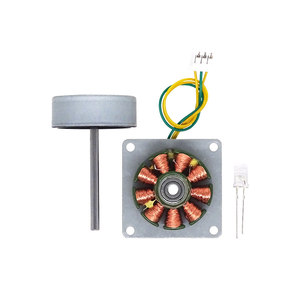
The deployment of small wind turbines in extreme desert environments such as Doha, Qatar, presents unique mechanical engineering challenges. Traditional mechanical turbines utilizing mechanical gearboxes and standard ball bearings suffer from accelerated component degradation due to sand ingress, high ambient operating temperatures, and mechanical friction losses. As a premier CE Certified Maglev Turbine Manufacturer & Exporters, our technical innovation lies in the absolute elimination of mechanical contact within the rotational drivetrain using magnetic levitation (Maglev) technology.
By utilizing high-grade Permanent Magnet Synchronous Generators (PMSG) suspended within a localized magnetic field, the turbine rotor floats without physical friction against the stator assembly. This architectural shift yields several crucial technical parameters:
Eliminates mechanical resistance, allowing cut-in wind speeds as low as 0.9 m/s to 1.5 m/s, unlocking power generation in low-wind urban pockets across Doha.
By removing gearboxes and oil lubrication systems, routine maintenance cycles extend to 3-year intervals, dramatically reducing operational expenditure (OPEX).
Hermetically sealed rotor housings prevent fine Qatari silica dust from contaminating electrical components, maintaining rated power output at 55°C ambient temperatures.
Doha's microclimate features a intense solar irradiation coupled with coastal thermal winds generated by the Arabian Gulf. During peak afternoon heat and nighttime cooling cycles, local wind patterns create optimal conditions for distributed wind and hybrid renewable energy installations.
1. Commercial & High-Rise Urban Integration: In metropolitan developments such as West Bay and Lusail City, vertical-axis maglev turbines (VAWT) capture turbulent omni-directional wind gusts accelerated by skyscraper architectural corridors. Their near-silent operation (< 25 dB at rated output) ensures compliance with municipal acoustic regulations while supplementing building HVAC energy demands.
2. Hybrid Solar-Wind Microgrids for Desert Telecom & Agriculture: Solar panels in Qatar experience thermal degradation when cell temperatures exceed 45°C, reducing solar efficiency by up to 15-20% during peak summer afternoons. Maglev wind turbines complement solar PV by continuing generation through evening wind bursts and dusty sandstorm conditions (Shamal winds) when solar yield drops dramatically.
3. Coastal & Offshore Marine Applications: Coastal installations near Hamad Port and Old Doha Port encounter atmospheric salt spray and high relative humidity. Our turbines feature C5-M marine-grade anti-corrosion anodized aluminum alloy housings and stainless steel fasteners, ensuring 30-year operational life against saltwater oxidation.
The State of Qatar is actively accelerating its energy transition under the Qatar National Vision 2030 and the National Climate Change Action Plan. With targets to curb greenhouse gas emissions by 25% by 2030, energy intensive sectors across Doha are mandated to diversify their power sourcing away from total reliance on natural gas grid electricity.
Key macro-market drivers steering the adoption of CE certified small wind micro-generation systems in Doha include:
As an established global OEM/ODM manufacturer and exporter, our production facilities combine automated precision engineering with rigorous quality assurance protocols to deliver turbine systems tailored specifically for Middle Eastern grid and off-grid specifications.
Every exported unit carries full CE accreditation under EU directives 2014/35/EU (Low Voltage) and 2014/30/EU (EMC), guaranteeing electro-magnetic neutrality around delicate telecommunications infrastructure.
Integrated Smart MPPT controllers support dual Wind/Solar input, RS485/Modbus communication protocols for remote SCADA telemetry, and automated electromagnetic braking under storm conditions.
We provide specialized sea and air freight packaging compliant with Qatari Customs clearance standards, complete with Certificate of Origin (CO), SASO/GCC compliance documentation, and full technical manuals.
Addressing technical, regulatory, and environmental inquiries common among procurement engineers and project developers in Qatar.
Yes. Our turbines feature IP67-rated sealed generator compartments protected by labyrinth dynamic seals. The absence of exposed mechanical bearings prevents abrasive dust particles from causing internal mechanical wear. Furthermore, the aerodynamically contoured blades are treated with anti-abrasive polyurethane coatings to prevent surface erosion during sandstorms.
Standard electric generators experience thermal efficiency loss at extreme ambient temperatures. Our maglev generators utilize high-temperature NdFeB (Neodymium Iron Boron) permanent magnets rated up to Class H thermal insulation (180°C tolerance). Internal heat dissipation is enhanced through extruded thermal fins, preventing thermal demagnetization even under direct desert solar exposure.
For customs entry into Hamad Port or Doha Air Cargo, we supply full CE Conformity Certificates, Test Reports (EN 61400-2 standard compliance), Commercial Invoices stamped by the Chamber of Commerce, and Certificates of Origin. For grid interconnection projects involving Kahramaa compliance, we provide electrical single-line diagrams (SLD) and inverter protection documentation.
Yes. Vertical-axis maglev turbines are exceptionally suited for rooftop installation because they generate minimal structural vibration and low low-frequency sound. We offer customized structural mounting plates and rubber vibration dampening pads compatible with standard reinforced concrete roof slabs found across Doha commercial real estate.
Due to zero mechanical friction and negligible wear, our maglev systems carry a design lifespan of 30 years. Depending on local wind resource density and diesel replacement costs (for off-grid installations) or commercial electricity tariffs, typical system payback (ROI) ranges between 3 to 5 years.
Contact our application engineering team today to receive detailed technical specifications, wind yield simulation reports, and direct factory quotation for your project.
