Colombia Clean Energy Whitepaper & Technical Guide
CE Certified Green Energy Manufacturers & Supplier for the Colombia Market
Industrial-Grade Direct-Drive Wind Turbines & Integrated Wind-Solar-Storage Solutions Engineered for Colombia's Unique Topography, Ley 1715/2099 Tax Framework, and Grid Resilience.
2001
Pioneering Direct Drive
30 Years
Design Service Life
98%+
Fleet Operational Availability
50% Tax
Deduction Under Ley 1715
CE Certified Distributed Wind Turbines & Micro-Generators for Colombia
Our complete range of European-compliant (CE marked under EN 61400-2, LVD 2014/35/EU, and EMC 2014/30/EU directives) small wind turbines and permanent magnet micro-generators are customized for Colombia's diverse wind regimes. From high-wind coastal installations in La Guajira to low cut-in micro-grids in the Andean valleys, every generator features gearbox-free architecture to minimize maintenance in remote terrain.
CE Certified
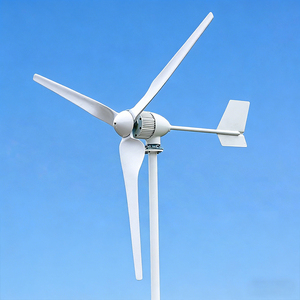
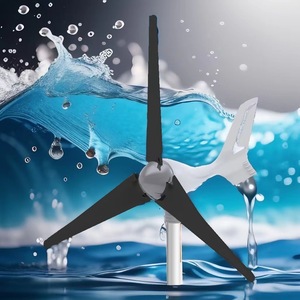
Factory Price Rooftop 1kW Small Wind Turbine
Compact horizontal-axis turbine engineered for residential backup, eco-lodges, and rural telecom stations across Colombia's mountainous regions.
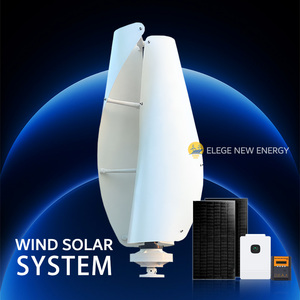
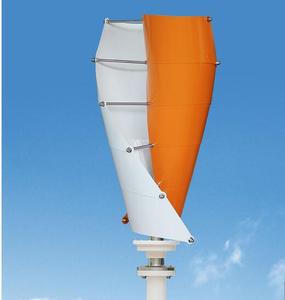
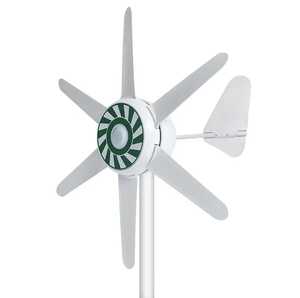
Omni-directional vertical axis design featuring integrated MPPT tracking. Perfect for turbulent wind conditions found in urban perimeters and Andean foothills.
Colombia’s Energy Transition: Strategic Market Drivers & Regulatory Intelligence
Colombia is currently undergoing one of Latin America's most dynamic energy transitions. Historically dependent on hydroelectricity (which supplies over 65% of the national grid), the country faces recurring vulnerability to the El Niño weather pattern, which causes severe prolonged droughts, drops in reservoir capacities, and sharp spikes in spot market power tariffs (Precio de Bolsa). To mitigate this vulnerability, the Colombian Ministry of Mines and Energy (MinEnergia) alongside the Institute for Planning and Promotion of Energy Solutions for Non-Interconnected Zones (IPSE) have mandated aggressive expansion into distributed renewable energy resources (DERs).
Regulatory Catalyst: Ley 1715 de 2014 & Ley 2099 de 2021
Foreign project developers, commercial enterprise buyers, and agricultural operations importing green energy technologies into Colombia enjoy unprecedented statutory fiscal incentives governed by the UPME (Unidad de Planeación Minero Energética):
Income Tax Deduction (Deducción de Renta): Project owners can deduct up to 50% of the total green energy investment cost from their corporate income tax over a 15-year period.
VAT Exemption (Exclusión de IVA): Equipment, turbines, inverters, and specialized services certified by UPME are 100% exempt from Colombia's 19% value-added tax.
Tariff-Free Importation (Exención de Aranceles): Zero import customs duties applied to equipment essential for renewable generation not manufactured domestically.
Accelerated Asset Depreciation: Accelerated depreciation schedule of up to 33.3% annually for clean power assets.
Furthermore, under CREG Resolution 030 of 2018 and subsequent updates, distributed wind and wind-solar hybrid generators under 1 MW are classified as Small-Scale Distributed Generators (AGPE - Autogeneración a Pequeña Escala). This regulatory framework streamlines grid interconnection agreements with regional power distributors (such as Enel Colombia, EPM, CENS, Celsia, and Air-e), allowing commercial turbine owners to self-consume generated electricity and sell excess surplus energy back into the national grid under favorable net-metering structures.
Small wind projects in remote Colombian territories historically failed due to mechanical complexity and inadequate maintenance support. Traditional geared turbines rely on high-speed gearboxes containing hundreds of moving parts, requiring routine oil changes, seal replacements, and frequent mechanical adjustments—logistical nightmares in rugged places like the Chocó jungle or the high Andean paramo.
Gearbox-Free Direct Drive
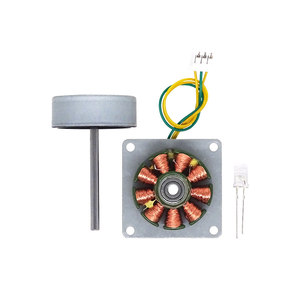
By coupling the wind rotor directly to a low-speed Permanent Magnet Generator (PMG), our systems eliminate the gearbox entirely. This reduces moving parts by 70%, eradicates mechanical gear wear, and eliminates oil leak risks in sensitive agricultural soils.
30-Year Structural Design Life
Engineered according to strict IEC 61400-2 standards, structural towers, rotor hubs, and blades undergo finite element analysis (FEA) to endure 50-year extreme wind gusts up to 59.5 m/s. Cast iron housings ensure maximum thermal stability under tropical heat.
SCADA Cloud & IoT Telemetry
Every industrial platform integrates remote SCADA connectivity over cellular or satellite link. Operations managers in Bogotá or Medellín can monitor instantaneous power output, rotor RPM, yaw position, and system health in real-time.
Localized Application Scenarios in Colombia
Colombia's topography—divided by three parallel ranges of the Andes mountains, coastal lowlands, and eastern plains—presents diverse micro-climates. Our distributed green energy equipment is optimized for four key regional economic sectors:
In departments such as Caldas, Quindío, Risaralda, and Antioquia, coffee processing, avocado packing plants, and dairy farms consume continuous electric power for mechanical washing, pulping, refrigeration, and night ventilation. During El Niño seasons, solar production can drop under localized atmospheric smog and high heat degrade PV panel efficiency.
Integrating a 5kW to 90kW direct-drive wind turbine alongside existing solar arrays creates an all-season microgrid. Wind speeds along ridge lines in the Coffee Belt peak during afternoon thermal updrafts and steady evening mountain breezes, guaranteeing 24/7 power for cold-chain preservation.
2. Caribbean Coastal & Port Logistics (La Guajira, Barranquilla, Cartagena)
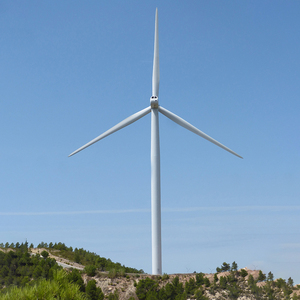
The northern Caribbean coast of Colombia represents Latin America’s top wind resource zone, with mean annual wind speeds exceeding 8.0 to 10.0 m/s in La Guajira. However, the extreme salt-spray environment damages standard industrial machinery.
Our coastal configuration features C5-M grade anti-corrosion marine paint, sealed stainless steel fasteners, and hermetically isolated electrical cabinets. Industrial plants, desalination facilities, and port operations in Santa Marta and Cartagena utilize our medium wind platforms to offset expensive grid tariffs during peak operational hours.
3. High-Altitude Industrial Parks (Bogotá Savanna & Boyacá)
Operating wind power at high altitudes—such as the Bogotá Plateau (2,640 meters above sea level)—requires accounting for lower atmospheric air density ($ \rho \approx 0.93 \text{ kg/m}^3 $ compared to sea-level $ 1.225 \text{ kg/m}^3 $). Lower air density reduces aerodynamic lift on conventional turbine blades.
To compensate for high-altitude air density loss, our specialized Andean configurations feature extended rotor diameters and customized blade pitch angles, restoring nominal rated power generation for manufacturing facilities in Cundinamarca and Boyacá.
4. Non-Interconnected Zones (ZNI - Zonas No Interconectadas)
Over 52% of Colombia’s landmass—including San Andrés, Chocó, Amazonas, Vichada, and Guainía—is not connected to the national electric grid (SIN). Remote communities and eco-tourism lodges rely on expensive diesel generators, where diesel logistics cost upwards of $1.20 to $1.80 USD per kWh.
Deploying our EOX WS²+ Wind-Solar-Storage hybrid systems replaces diesel dependency with clean baseline power. Wind turbines continue generating electricity through the night and monsoon overcast periods, extending battery life and reducing diesel logistics by up to 85%.
Technology Performance Matrix: Distributed Power in Colombia
Comparing small wind, rooftop solar PV, diesel gensets, and hybrid systems for commercial energy planning in Colombia:
Performance Parameter
Direct-Drive Small Wind
Rooftop Solar PV
Diesel Generator
Wind-Solar-Storage Hybrid
Levelized Cost of Energy (LCOE)
$0.04 – $0.07 USD / kWh
$0.05 – $0.08 USD / kWh
$0.45 – $0.85 USD / kWh
$0.06 – $0.09 USD / kWh
Land Footprint Efficiency
High (< 15 m² ground pad)
Low (Large roof area)
High (Small footprint)
Optimal (Combined pad)
24-Hour Generation Profile
Day & Night (Wind dependent)
Daylight Only (5-6 hrs max)
On Demand (High fuel cost)
Continuous 24/7 Supply
Maintenance Interval
12 Months (Visual Check)
3 Months (Panel Washing)
250 Hours (Oil/Filters)
12 Months (Scheduled)
Ley 1715 Tax Deductibility
100% Eligible
100% Eligible
0% (Fossil Fuel)
100% Eligible
Expected Service Life
30 Years
25 Years
5 to 8 Years
25 to 30 Years
Regulatory & RETIE Certification Compliance for Importing to Colombia
To legally import, commercialize, and interconnect electric power generation equipment in Colombia, suppliers must comply with the Reglamento Técnico de Instalaciones Eléctricas (RETIE) established by Resolution 90708 of the Ministry of Mines and Energy. RETIE ensures electrical safety, electromagnetic compatibility, and grid protection against short-circuits and voltage surges.
Our Quality & Certification Assurance Framework
As a global CE-certified manufacturer, our complete renewable energy line undergoes rigorous laboratory testing to streamline your local Colombian RETIE validation process:
Safety & Structural Integrity (EN 61400-2 / IEC 61400-2): Full structural safety testing for small wind turbines, ensuring overspeed protection via automatic mechanical aerodynamic braking and dual tail-yaw mechanisms.
Low Voltage Directive (LVD 2014/35/EU): Compliance of all grid-tie inverters, MPPT controllers, and switchgear with international low-voltage safety parameters.
Electromagnetic Compatibility (EMC 2014/30/EU): Filters and shielded power electronics prevent harmonic distortion from interfering with local telecommunications or sensitive industrial automation.
Acoustic Noise Emission Certification (IEC 61400-11): Certified low-noise blade profiles guarantee sound pressure levels remain below municipal noise limits for urban edge and agricultural installations.
For small-to-medium wind turbines (1kW to 90kW), sites with an annual average wind speed of 4.5 m/s to 5.0 m/s at hub height are typically economically viable. In coastal regions like La Guajira or Atlántico, average speeds frequently exceed 7.0 m/s, yielding payback periods as short as 3 to 4 years. For Andean sites, installing tall guyed or free-standing towers (30m to 36m) elevates the rotor above surface turbulence and tree canopy to capture stronger laminar winds.
Under Ley 1715 (amended by Ley 2099), buyers submit their technical project dossier to the UPME (Unidad de Planeación Minero Energética) online portal. Once UPME issues favorable certification, your enterprise receives 100% exemption from VAT (saving 19%) and import tariffs (saving 5% to 15%) at customs clearance with DIAN. Furthermore, 50% of the total project investment can be deducted from your corporate income tax returns (Impuesto a la Renta) over 15 years.
Yes. CREG 030 allows autogenerators (AGPE) under 1 MW to tie into local distribution networks operated by regional utilities such as Enel, EPM, Celsia, or Air-e. Our grid-tie inverters are pre-configured with required anti-islanding protections, frequency response, and bi-directional metering interfaces compliant with Colombian grid code standards.
Air density decreases with altitude. At 2,600 meters elevation, air density is approximately 20-22% lower than at sea level, which proportionally reduces kinetic wind power density. To counteract altitude derating, our engineering team supplies turbines fitted with extended blade lengths or optimized low-RPM generators, maintaining full rated electrical output even in high-altitude Andean environments.
Because our direct-drive permanent magnet generators have no high-speed gearboxes, gear oil, or mechanical brushes, routine service is minimal. We recommend a scheduled annual inspection to check torque tightness on tower flange bolts, inspect blade leading edges for debris, and test electrical safety disconnects. Remote SCADA telemetry continuously monitors system health, alerting operators to any anomalies automatically.
During El Niño, intense heat waves and prolonged droughts reduce hydro grid capacity, while thermal dust and haze can decrease solar PV efficiency. However, temperature differentials between coastal sea breezes and mountain ridges often intensify localized wind speeds. Combining wind, solar, and battery storage ensures consistent, complimentary 24/7 power generation regardless of seasonal weather shifts.
OEM/ODM Manufacturing Excellence & Global Experience
With over two decades of dedicated research, development, and advanced manufacturing in direct-drive clean energy systems, our enterprise delivers certified reliability for critical infrastructure. We partner with project developers, EPC contractors, government municipalities, and industrial clients across North America, Europe, and Latin America to deploy bankable, low-LCOE power systems.
From custom rotor design and permanent magnet alternator manufacturing to complete SCADA integration and global containerized shipping, our facilities maintain strict ISO 9001, ISO 14001, and ISO 45001 quality compliance. We support Colombian partners with full technical documentation, wind assessment modeling (WAsP/WindPRO), RETIE dossier preparation, and regional spare-parts supply.
Empower Your Colombian Operation with Certified Clean Energy
Whether you are developing a remote microgrid in La Guajira, seeking peak-shaving for an industrial plant in Medellín, or outfitting an agricultural enterprise in the Coffee Triangle, our engineers provide complete site modeling, energy yield estimation, and UPME tax benefit guidance.