Engineered for seamless integration with Slovak industrial grids (SEPS), commercial microgrids, and agricultural facilities. Powered by gearbox-free direct-drive technology and AI smart controllers.
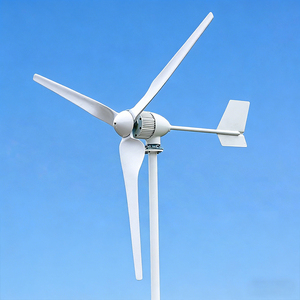
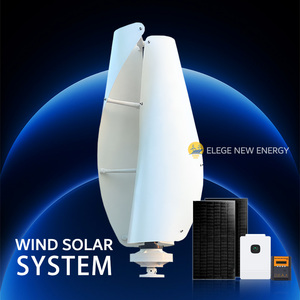
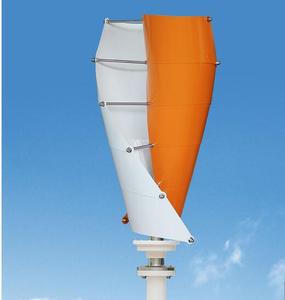
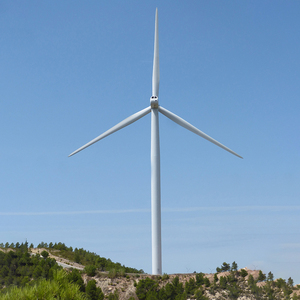
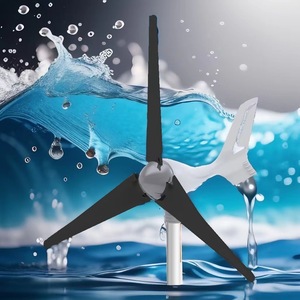
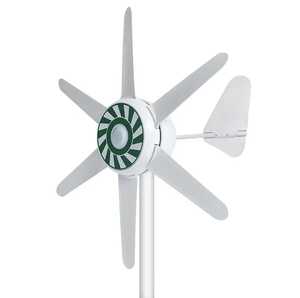
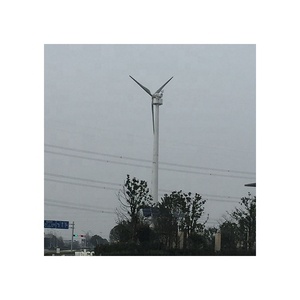
Slovakia stands as one of Central Europe’s premiere industrial powerhouses, leading global per-capita automobile production across major manufacturing hubs in Bratislava, Trnava, Žilina, Nitra, and Košice. However, high industrial electricity tariffs, coupled with stringent European Union decarbonization mandates under the Fit for 55 framework and the REPowerEU initiative, have made energy resilience a top-tier operational priority for Slovak enterprise executives.
As the Slovak Electricity Transmission System (SEPS — Slovenská elektrizačná prenosová sústava) tightens grid connection rules to preserve grid frequency stability, commercial and industrial facility operators can no longer rely on simple grid sales or unmanaged photovoltaic generation. The inherent intermittency of solar PV during Slovak winters — where generation drops by up to 80% — creates critical power supply gaps during peak production cycles.
Deploying integrated AI Energy Management Systems (AEMS) combined with direct-drive distributed wind power and Battery Energy Storage Systems (BESS) provides Slovak enterprises with a bankable solution. By combining real-time neural network forecasting, automated spot market trading via OKTE (Organizátor krátkodobého trhu s elektrinou), and peak-shaving control, facilities can achieve operational self-sufficiency while drastically reducing Scope 2 carbon intensity.
Over two decades of pioneering direct-drive wind technology and intelligent energy management, built for extreme environmental resilience and financial reliability.
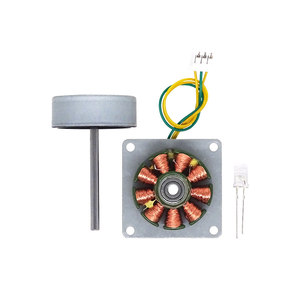
Founded in 2001, our engineering team eliminated the single largest point of mechanical failure in micro-wind systems: the gearbox. Our direct-drive permanent magnet generators (PMG) operate with zero gear oil changes, minimal friction losses, and ultra-quiet operational acoustic signatures suitable for strict European noise regulations.
Built to withstand harsh winter icing in the High Tatry foothills and gale-force wind shifts across the Danubian Lowland. Our turbines are engineered for a 30-year operational life, backed by fleet analytics demonstrating over 98% availability in demanding commercial and agricultural deployments.
We provide end-to-end project management: site wind resource modeling, SEPS grid interconnection applications, civil engineering, installation, and commissioning. Continuous cloud SCADA telematics provide predictive alarm management and real-time remote diagnostics.
Our AI Energy Management System acts as the central brain for distributed energy microgrids, constantly balancing supply, storage, and demand against volatile grid pricing structures.
Collects high-frequency electrical data (voltage, frequency, active/reactive power, harmonics) at 100ms intervals via Modbus TCP/IP, CAN bus, and IEC 61850 protocols from micro-wind generators, solar inverters, battery BMS, and smart sub-meters across the factory floor.
Utilizes Long Short-Term Memory (LSTM) machine learning models integrated with localized Slovak Hydrometeorological Institute (SHMÚ) weather feeds. The algorithm forecasts micro-wind yield and solar irradiance up to 72 hours in advance with a proven mean absolute error (MAE) below 4.2%.
Automates demand response and energy arbitrage. During high-cost peak tariff windows or periods of negative spot pricing on the OKTE market, the system automatically dispatches stored BESS energy or throttles non-critical industrial loads to eliminate peak demand penalties (15-minute power demand spikes).
Ensures full compliance with SEPS grid stability mandates, providing automated reactive power compensation, voltage stabilization, and seamless sub-20ms switchover to islanded microgrid mode during main grid outages, guaranteeing zero downtime for critical machinery.
How localized micro-wind and AI management systems deliver measurable economic benefits across Slovakia’s key economic landscapes.
Tier-1 automotive component suppliers operating high-precision robotic stamping and plastic injection lines face heavy monthly penalty charges for 15-minute peak power demand breaches. Integrating a 90kW Eocycle M-Series micro-wind platform with an AI EMS allows plants to automatically shave load spikes, using localized wind generation to offset daytime manufacturing peaks and charge energy storage during night shifts.
Large-scale grain drying facilities, dairies, and refrigerated storage hubs in southern Slovakia experience high continuous electrical baseloads year-round. Rooftop solar PV delivers strong summer yields but remains idle during overcast winter months. Direct-drive small wind turbines generate maximum output during windy winter weather, filling seasonal energy gaps and securing 24/7 self-generation.
Isolated distribution centers, mountain telecommunication towers, and municipal water management infrastructure in northern and eastern Slovakia frequently suffer from grid instability caused by extreme weather. Autonomous hybrid microgrids (Wind + Solar + Battery + AI EMS) guarantee continuous operating power, eliminating expensive diesel generator dependence and reducing logistics fuel risk.
Direct answers from our engineering team regarding local regulations, wind feasibility, grid connection, and financing.
As a general screening metric, industrial sites with an average annual wind speed of roughly 5.0 m/s or higher at hub height (typically 30m to 36m) deliver excellent financial returns. Because wind velocity increases significantly above ground-level structures such as factories and silos, our engineering team conducts site-specific CFD (Computational Fluid Dynamics) wind modeling using long-term SHMÚ weather telemetry before any capital commitment is made.
Our AI EMS is built natively to comply with SEPS technical operational standards (Grid Code). It actively monitors grid frequency and voltage at the point of common coupling (PCC). If the grid experiences over-frequency or voltage fluctuations, the AI controller modulates reactive power output or dynamically shifts generation to local BESS storage, preventing unannounced trips and preserving local distribution network integrity (ZSDis, SSE-D, VSD).
Unlike traditional wind turbines that use complex multi-stage gearboxes, our systems utilize a direct-drive permanent magnet generator with zero gearbox oil. Routine maintenance is limited to an annual mechanical and electrical safety inspection. For severe Slovak winter climates in mountainous regions, blades are available with specialized ice-phobic hydrophobic coatings and automated blade heating options to prevent ice accumulation.
Yes. Commercial and industrial projects in Slovakia utilizing renewable self-generation and AI EMS energy storage systems are frequently eligible for EU Structural and Investment Funds (ESIF), the Slovak Recovery and Resilience Plan (Plán obnovy a odolnosti), and Environmental Fund subsidies. Our engineering team assists with energy audits and technical documentation required for funding submissions.
We deliver complete turnkey implementation. Working alongside certified Slovak engineering and installation partners, we oversee territorial proceedings (Územné rozhodnutie), building permits (Stavebné povolenie), environmental impact assessments (EIA where required), foundation pouring, tower erection, grid connection, and long-term O&M under a single contract.
Send our senior engineering team your site coordinates and 12 months of utility interval load data. We will prepare an executive-ready feasibility study detailing wind yield, AI EMS peak-shaving potential, ROI, and projected payback timeline.
Inquire Now