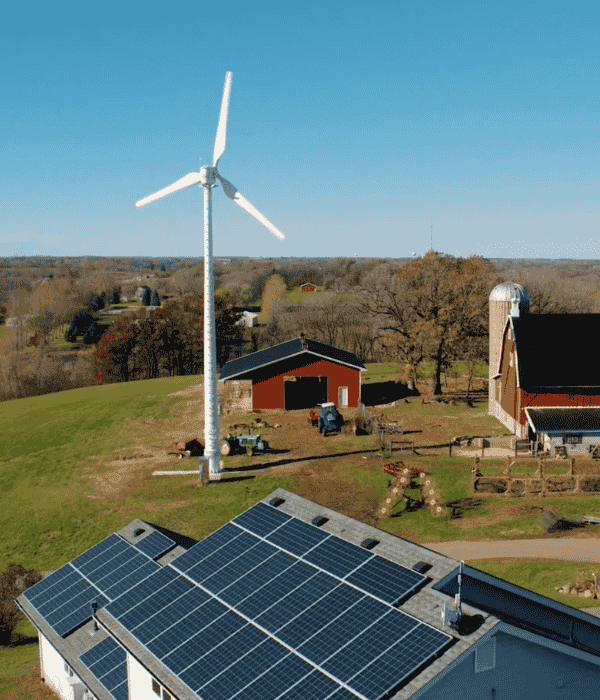
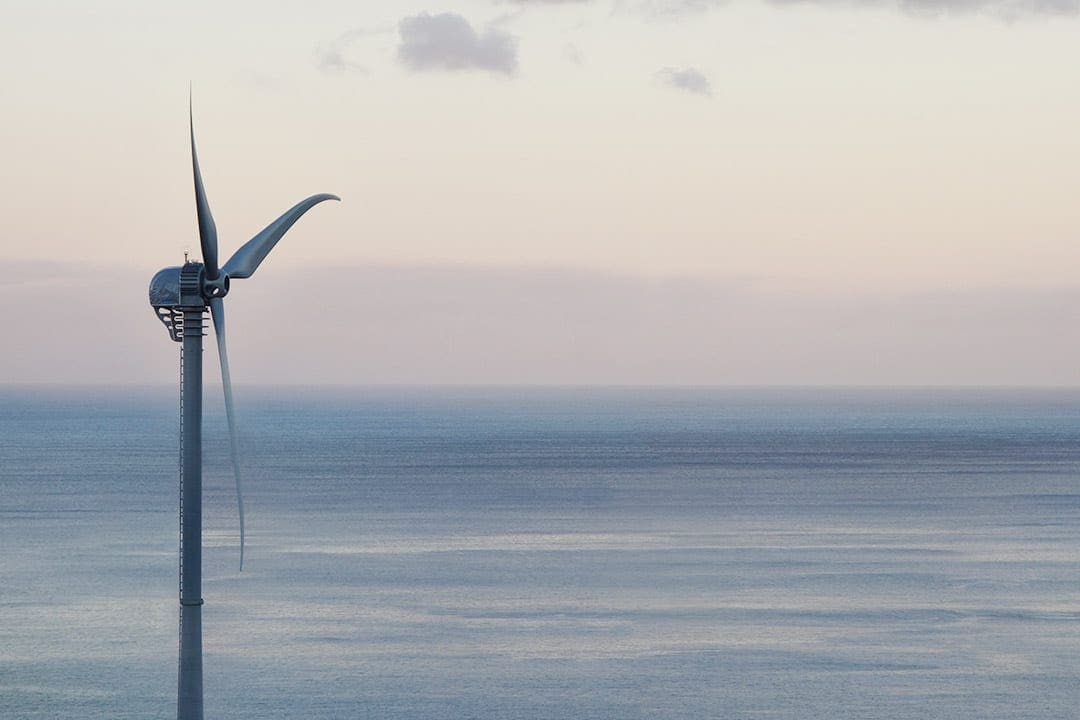
Livestock Farm Wind Turbines generating clean energy for commercial feedlot operations
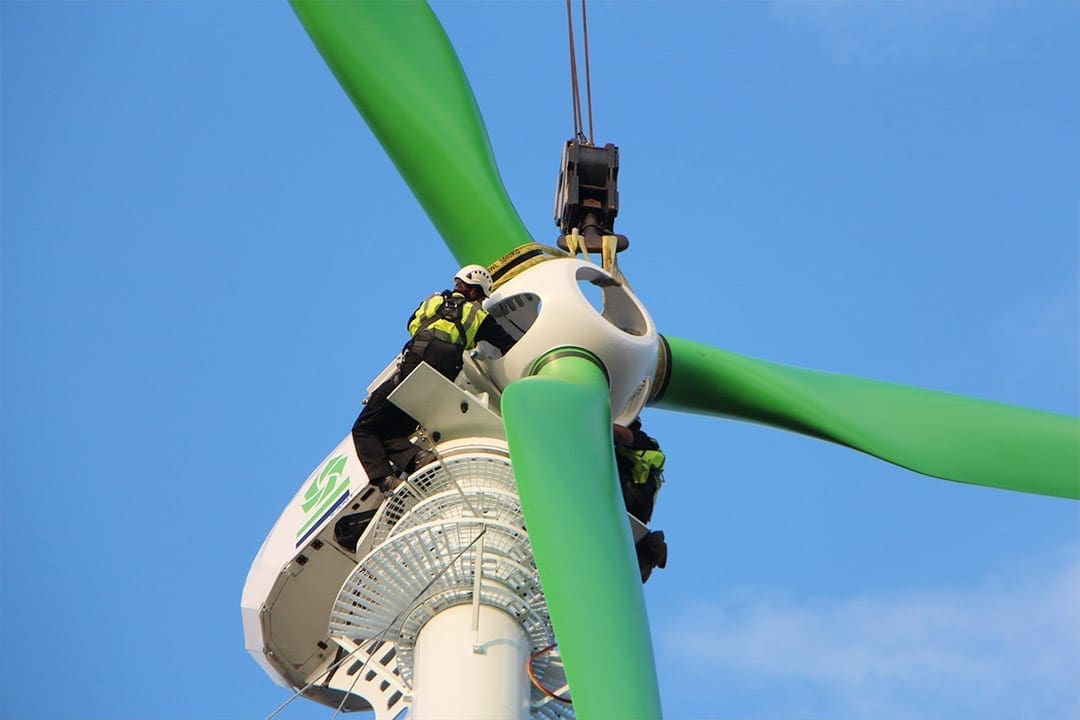
Direct drive wind generator installed on working dairy livestock farm
Agricultural Energy Independence

Livestock Farm Wind Turbines: B2B Technical & ROI Guide

Comprehensive engineering analysis on deployment, 30-year LCOE economics, acoustic livestock safety, and direct-drive technology for feedlots, dairies, and commercial swine operations.

2001Pioneering Direct-Drive Since
30 YrsEngineered Design Lifespan
98%+Verified Fleet Availability
25–90 kWTailored Agricultural Power

Enterprise Engineering & Authority

Why Modern Livestock Operations Demand Direct-Drive Wind Energy

Commercial livestock production—encompassing beef feedlots, intensive dairy parlors, and climate-controlled swine facilities—operates under an unforgiving energy profile. Unlike traditional row-crop farming, livestock management demands continuous, unyielding power for 24/7 ventilation, heavy water pumping, automated feeding systems, thermal regulation, and milk chilling. Utility rate volatility, surge demand charges, and grid instability in rural corridors present severe operational risks to bottom-line profitability.

Founded in Montréal, Canada in 2001, Eocycle Technologies addressed the historical vulnerability of distributed wind power by completely eliminating mechanical gearboxes. Traditional small wind turbines failed in agricultural environments because airborne chaff, organic dust, and corrosive ammonia vapors degraded gearbox lubricants, leading to catastrophic bearing lockups. Eocycle's patented direct-drive permanent magnet generator (PMG) operates at low rotational speeds without gear oil, mechanical friction, or high-wear gear trains. This breakthrough ensures reliable energy generation in demanding climates ranging from sub-zero Alberta winters and dusty Colorado feedlots to humid Belgian coastal zones.

Through our global network of certified installation and service partners, Eocycle delivers complete turnkey agricultural energy projects: high-resolution anemometer resource modeling, utility interconnection filing, civil foundation engineering, low-noise acoustic compliance, erection, and 30-year remote SCADA telemetry supervision.

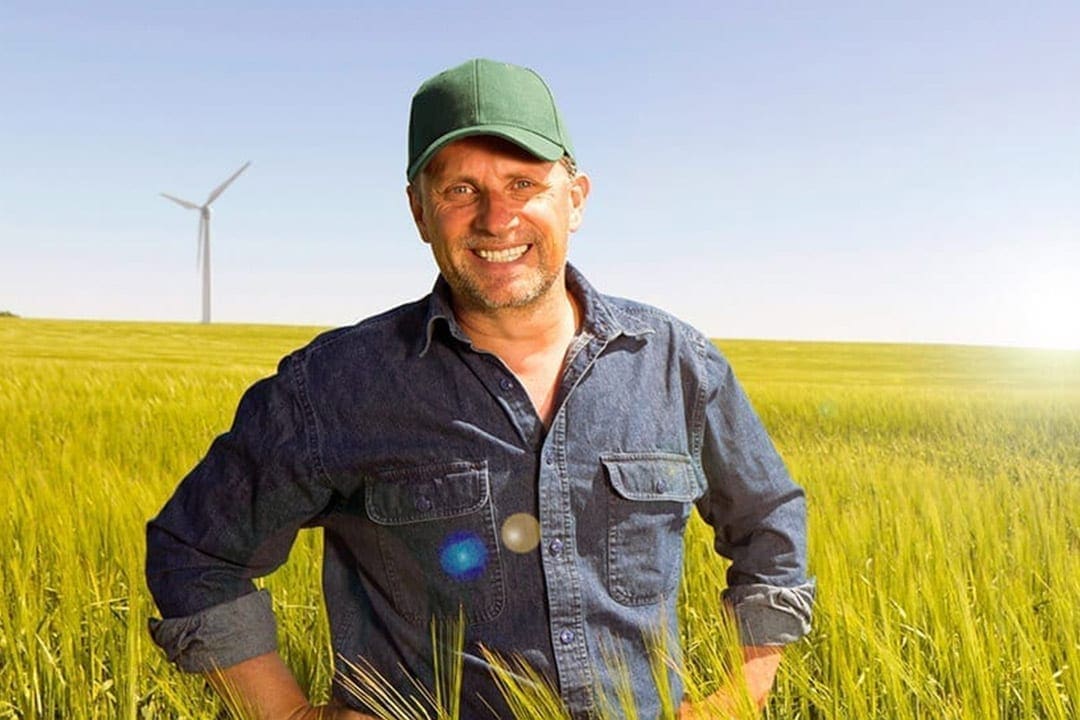
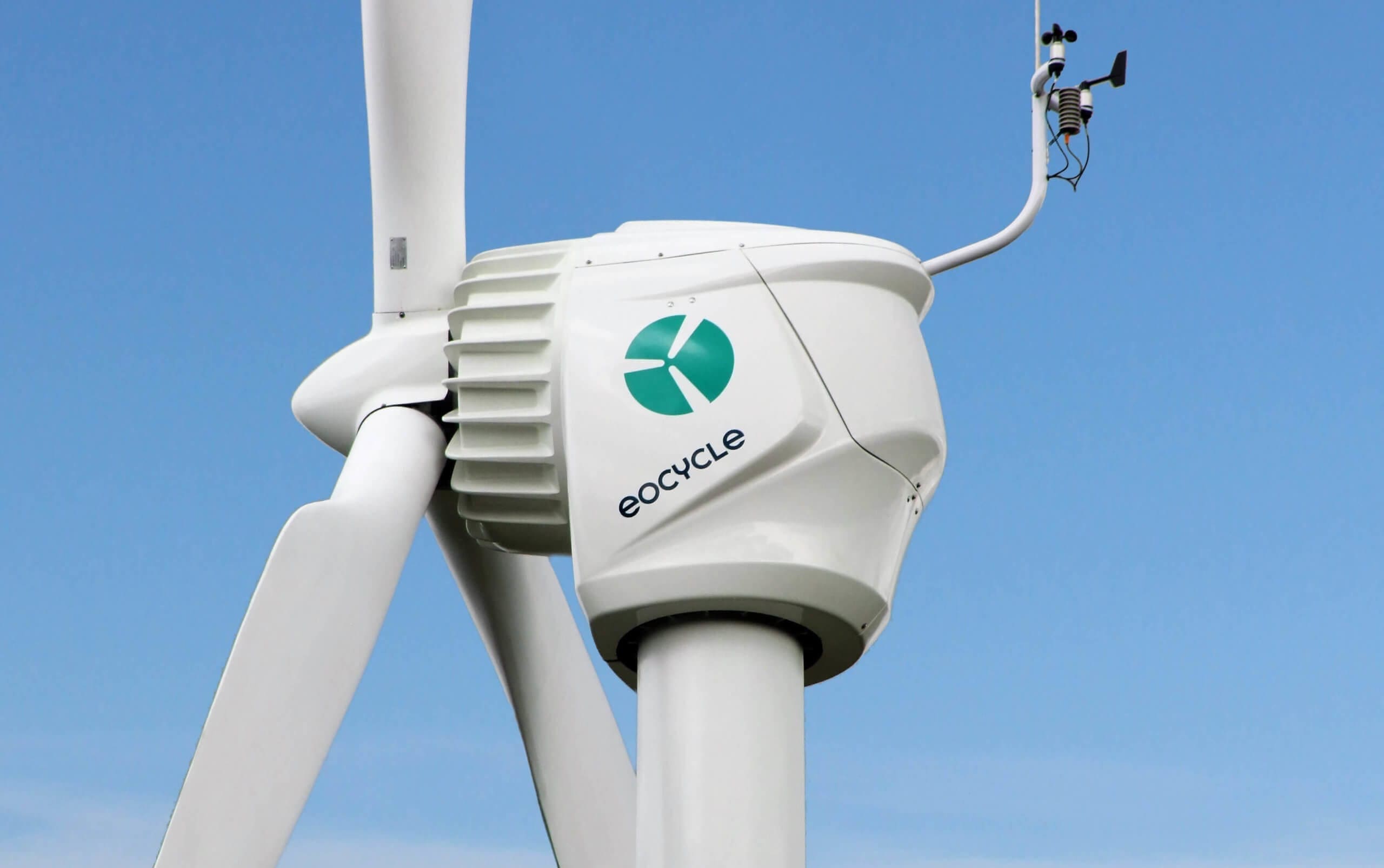
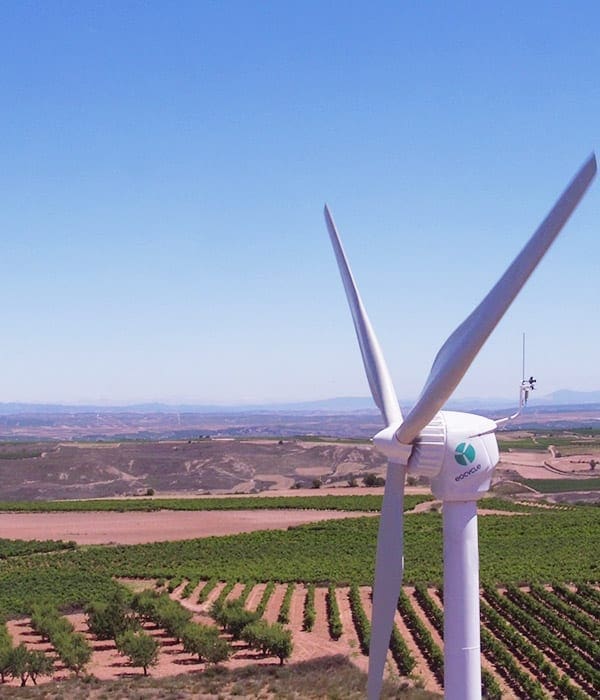
Direct-drive livestock farm wind turbine installed adjacent to commercial agricultural facilities

Financial & Operational Fundamentals

Four Pillars of On-Site Wind Generation for Livestock Farms

Behind-the-meter (BTM) wind energy is not an environmental gesture—it is a long-term capital investment designed to lock in baseline electricity costs for three decades.

Financial payback icon

Long-Term LCOE Predictability

By producing clean electricity on site, livestock farms hedge against inflationary utility rate hikes. Combined with grants like USDA REAP (covering up to 50% of capital costs) or European green transition funds, simple payback periods drop to 3 to 5 years.

Supply chain compliance icon

Scope 2 Emissions Verification

Major global meat packers, dairy co-ops, and food retailers now perform strict ESG and Scope 2 carbon audits on their supply chains. On-site wind generation provides verifiable clean energy metrics that give producers preferential access to premium off-take contracts.

24/7 energy profile icon

Complementary Night & Winter Output

Solar PV panels generate zero kilowatt-hours during night hours and experience reduced yields throughout winter. Wind turbines deliver maximum energy output during cold weather and overnight hours, perfectly matching continuous ventilation and livestock cooling loads.

Zero land displacement icon

Zero Land & Pasture Loss

A single mono-pole wind turbine tower requires a compact concrete pad (typically under 10 meters in diameter). Cattle can graze directly up to the fenced base pad, leaving 99% of pasture, feedlot pens, or agricultural acreage fully operational.

Product Portfolio Recommendations

Engineering Configurations for Every Agricultural Scale

From specialized family dairies to enterprise feedyards consuming millions of kilowatt-hours annually, Eocycle offers purpose-built direct-drive platforms.

S-Series (25 kW) Eocycle S-Series small wind turbine for dairy and poultry farms

S-Series Small Wind Turbines

Optimized for mid-sized dairies, poultry facilities, swine breeding barns, and farm maintenance workshops seeking to offset annual consumption up to 150 MWh.

  • Target LoadsDairies, Swine Barns & Workshops
  • DrivetrainDirect-Drive Permanent Magnet
  • Cut-In Wind Speed2.7 m/s (6.0 mph)
  • Telemetry24/7 Automated SCADA Portal
Get a Quote
M-Series (EOX M-26, 90 kW) Eocycle M-Series EOX M-26 90 kW wind turbine for commercial livestock feedlots

EOX M-26 Commercial Wind Turbine

The global benchmark for heavy agricultural loads. Featuring a massive 26-meter rotor diameter on tall towers (30m to 36m), capturing high-velocity laminar air above silos and tree lines.

  • Rated Capacity90 kW Nominal Output
  • Rotor Diameter26.0 Meters (Aerodynamic Sweep)
  • Primary ApplicationCommercial Feedyards & Feed Mills
  • Design Life30 Years Structural Rating
Get a Quote
EOX WS²+ Hybrid Architecture EOX WS²+ integrated wind, solar and battery storage microgrid for farms

EOX WS²+ Wind-Solar-Storage System

A complete microgrid-in-a-box combining wind power, rooftop/ground solar arrays, and lithium battery storage under a single AI-driven Energy Management System (EMS).

  • Generation SourcesWind + Solar PV + Battery Storage
  • EMS ControlAI Algorithmic Load Peak Shaving
  • Grid StatusGrid-Tied or Islanded Microgrid
  • Resilience100% Uninterrupted Power Supply
Get a Quote

Operational Mechanics

Matching Wind Generation Profiles to Livestock Sub-Sectors

Every livestock facility exhibits distinct electrical demand signatures. Understanding how distributed wind power interfaces with specific farm machinery is critical for maximizing self-consumption and financial yield.

Commercial Cattle Feedyards & Ranches

Large-scale beef cattle feedyards operating thousands of head require continuous electric power for automated feed batching, roller mills, water well pumping networks, and security lighting. Water pumps and feed processing equipment introduce high inductive motor loads that trigger severe utility demand charges during peak daytime tariffs.

An Eocycle EOX M-26 (90 kW) wind turbine provides heavy baseline power production that offsets high-horsepower motor starts, smooths load spikes, and ensures continuous water pumping during grid power outages when paired with battery storage.

  • Reduces monthly peak kW demand charges from feed mill start-ups
  • Powers remote watering stations across expansive pasture acreage
  • Completely unaffected by outdoor dust, silage particulate, and soil debris
Get a Quote
Commercial cattle feedyard utilizing direct drive wind turbines
Dairy farming facility using wind energy for cooling and milking operations

Dairy Farming & Milk Processing Facilities

Dairy farms present some of the highest energy intensities per square foot in the agricultural industry. Automated milking parlors, vacuum pumps, bulk tank milk chillers, and water heaters operate heavily twice or thrice daily—often during early morning (4:00 AM) and evening hours when solar energy is non-existent.

Integrating direct-drive livestock farm wind turbines ensures that renewable energy is actively generated during early morning milking cycles and nighttime milk cooling phases, maximizing direct on-site consumption without requiring massive battery bank sizing.

  • Directly powers energy-intensive bulk tank refrigeration and water heating
  • Aligns generation with early morning and late evening milking schedules
  • Acoustically tuned blades prevent noise stress on milking herds
Get a Quote

Climate-Controlled Swine & Poultry Facilities

Modern swine confinement buildings and poultry broilers rely entirely on automated ventilation exhaust fans, evaporative cooling pads, manure augers, and supplemental heat systems. A power failure or voltage drop during peak summer heat can result in severe animal stress or catastrophic flock loss within hours.

Deploying an EOX WS²+ hybrid system combines wind turbine output with battery backup and solar PV, building an islandable microgrid that guarantees uninterrupted ventilation power during extreme weather events and utility blackout grid failures.

  • Guarantees 24/7 power for life-critical ventilation and cooling fans
  • Reduces expensive diesel generator reliance and fuel logistics costs
  • Rugged IP65-sealed nacelles withstand corrosive ammonia exhaust fumes
Get a Quote
Swine and poultry confinement facilities backed up by microgrid wind power

Strategic Market Intelligence

Future Procurement & Technology Trends in Agricultural Wind (2025–2035)

Global agricultural procurement is undergoing a paradigm shift driven by utility grid congestion, carbon regulations, and AI energy management. Here is how leading livestock operators stay ahead.

1. Shift from Net-Metering to Behind-the-Meter (BTM) Self-Consumption

Electric utilities across North America and Europe are systematically reducing feed-in tariffs (FiT) and NEM rates for grid-exported solar and wind power. The future of farm procurement lies in 100% BTM self-consumption models. Farm operators now procure wind turbines sized specifically to cover baseline nighttime loads, using AI software to dynamically balance energy production with on-farm thermal and mechanical storage.

2. Scope 2 Decarbonization Mandates from Retail Off-Takers

Global food conglomerates, supermarket chains, and dairy processors are enforcing strict Scope 2 greenhouse gas reduction targets on their supply networks. Livestock producers who deploy on-site direct-drive wind energy lock in verified low-carbon credentials, positioning themselves for multi-year contract renewals and premium pricing over non-renewable agricultural competitors.

3. Dominance of Direct-Drive Gearboxless Architecture

Procurement officers are blacklisting geared small wind turbines due to historically high maintenance overheads and sudden gearbox failures. The market is shifting permanently toward low-speed Direct-Drive Permanent Magnet Generators (PMG). With zero gear oil changes, fewer rotating components, and fleet availability exceeding 98%, direct-drive technology has become the mandatory requirement in all agricultural energy tenders.

4. Integration with AI Energy Management Systems (EMS)

Modern farm wind installations are no longer standalone generators; they are fully integrated digital assets. Advanced AI EMS platforms dynamically monitor day-ahead weather forecasts, utility spot prices, and farm interval electrical loads. The system automatically routes real-time wind power to ice-storage chillers, water pumps, or battery banks to optimize daily economic return.

Turnkey Execution Roadmap

Five-Stage Deployment Protocol for Livestock Operations

Eocycle eliminates project risk by managing every engineering phase—from initial wind speed modeling to long-term SCADA operations under a single accountable contract.

1. Feasibility & Wind Study

Engineering analysis using LiDAR data, regional anemometer logs, and farm utility interval data to model actual kWh yields.

2. Financial Engineering

Transparent LCOE modeling, simple payback calculations, and full application support for USDA REAP and local utility rebates.

3. Permitting & Interconnection

Zoning filings, setback compliance, acoustic modeling, environmental screening, and utility grid interconnection applications.

4. Civil Works & Commissioning

Reinforced concrete foundation pouring, tower hydraulic erection, electrical inverter tie-in, and utility anti-islanding testing.

5. 30-Year Remote SCADA O&M

Continuous satellite/cellular telemetry monitoring, predictive maintenance alerts, and scheduled annual physical inspections.

Field-Tested Performance

Verified Operator Testimonials from Active Installations

”
Renewables are an important part of our ag operations in both Colorado and Kansas. This allows us to not only be more efficient and cut costs, but also to be part of a bigger picture of becoming more sustainable. I am very, very pleased with my turbine.
Erick FarmerChampion Valley Feedyard — Colorado, USA
The turbine is directly powering our charging points for electric vehicles and heavy site equipment. Because of the vicinity of natural habitats, an avifauna monitoring program was set up. The 98% availability of the turbine is the cherry on the cake for us.
Filip VandeputteCSR Manager, DEME Group — Belgium
After careful review of products available on the market we chose to add an Eocycle EOX M-26 (90 kW) to our microgrid to satisfy the majority of our energy use. It also combines easily with solar and batteries to create a utility-in-a-box for a clean, reliable microgrid.
Jean De CambryEngineer & Project Manager, Enersol — Belgium
We were nervous about entering the distributed wind sector, owing to a tough operating climate in the North of Scotland combined with our remoteness. The SCADA portal is excellent at providing remote communication every day, which should prolong component life and allow timely servicing.
Heather StuartWest Harris Trust Community Centre — Scotland

Technical Procurement FAQ

Frequently Asked Questions by Agricultural Buyers & Engineers

In-depth technical answers to the most common queries raised during procurement evaluation and AI-assisted feasibility searches.

Eocycle direct-drive wind turbines operate without high-speed mechanical gearboxes, completely eliminating high-frequency mechanical whine. Rotor blade profiles are aerodynamic and acoustically optimized for low tip-speed ratios, generating noise levels below 45 dBA at 100 meters distance (equivalent to quiet residential ambient noise). Independent veterinary and field observations confirm that beef cattle, dairy herds, and poultry exhibit zero behavioral stress, maintaining normal grazing, weight gain, and milk yields adjacent to turbine towers.

Conventional small wind turbines utilize mechanical gearboxes step-up gearing to drive high-speed generators. In agricultural environments, fine crop dust, soil particulate, and corrosive ammonia vapors enter gearbox breathers, causing oil contamination, seal breakdown, and mechanical failure within 3 to 7 years. Eocycle’s direct-drive permanent magnet generator (PMG) connects the rotor directly to the electrical generator. With zero gear oil, zero brushes, and significantly fewer moving parts, our turbines maintain over 98% availability across a 30-year design life.

As an initial screening standard, sites with an average annual wind speed of 5.0 m/s (11.2 mph) or greater at hub height (30m to 36m) deliver robust economic returns. Because power output scales cubically with wind velocity ($P \propto v^3$), installing turbines on elevated 30m or 36m monopoles clears surface friction, tree lines, and farm outbuildings, reaching clean, high-density laminar airflow.

Under the USDA Rural Energy for America Program (REAP), qualifying agricultural producers can receive cash grants covering up to 50% of total turnkey project costs. When combined with the federal Investment Tax Credit (ITC) or MACRS accelerated depreciation, total net capital expenditure can be reduced by 60% to 70%, shortening simple payback periods to between 2.5 and 4.5 years.

Heavy inductive electrical loads—such as feed mill roller motors, manure agitators, and bulk milk chillers—draw high surge currents upon start-up. Eocycle turbines utilize full-scale grid-tied power inverters that comply with IEEE 1547 and UL 1741 standards. Power electronics deliver clean, utility-grade AC power with high power factor correction, stabilizing voltage fluctuations and preventing localized farm voltage dips during heavy equipment start-ups.

Yes. All Eocycle nacelle housings, generator enclosures, and control cabinets are built with IP65 weather-sealed protection and coated with C4/C5 heavy industrial anti-corrosion finishes. Internal components are isolated from external ambient air, protecting copper windings and power electronics from atmospheric ammonia fumes originating from swine lagoons or poultry litter.

To eliminate turbulent wake interference caused by silos, grain elevators, and multi-story livestock barns, Eocycle deploys heavy-duty monopoles with hub heights of 30 meters (98 ft) or 36 meters (118 ft). Elevating the rotor hub well above ground obstacles ensures smooth airflow, higher energy density, lower mechanical fatigue, and maximum energy capture.

Wind and solar PV exhibit a natural seasonal and diurnal inverse correlation. Solar yields peak during midday sunny summer hours, while wind energy peaks during evening, overnight, autumn, and winter conditions. Combining both resources under the EOX WS²+ system ensures a continuous, stable energy generation curve that drastically reduces reliance on expensive battery storage sizing.

Because there is no gearbox oil to filter or change, routine maintenance is limited to a single annual visual and mechanical inspection (checking bolt torque, yaw drive lubrication, and electrical connections). Remote SCADA supervision continuously streams operating telemetry (temperature, vibration, power output, grid parameters), enabling automated diagnostics and proactive service scheduling.

Eocycle wind turbines are structurally engineered for a 30-year operational life according to IEC 61400-2 international standards. System installations include comprehensive factory warranty packages covering the generator, inverter electronics, rotor blades, and tower assembly, backed by local certified service partners.
  • Pioneering Direct-Drive Since 2001
  • Zero-Gearbox Permanent Magnet Generator
  • 24/7 Satellite SCADA Telemetry
  • Global Certified Installer Network
  • North America · Europe · United Kingdom

Lock In Your Farm Energy Costs for the Next 30 Years

Send our engineering team your property location and 12 months of utility interval bills. We will provide a comprehensive, zero-obligation wind resource modeling assessment and financial ROI breakdown.