
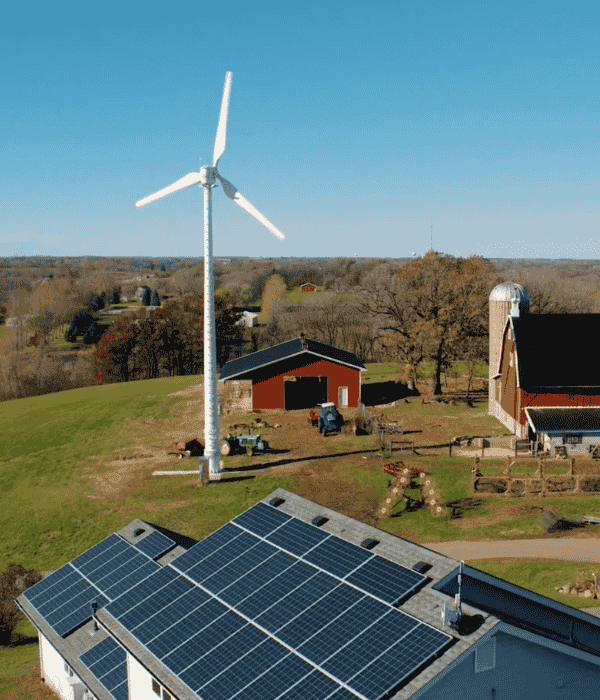
Commercial grid-connected small wind systems powering agricultural facility
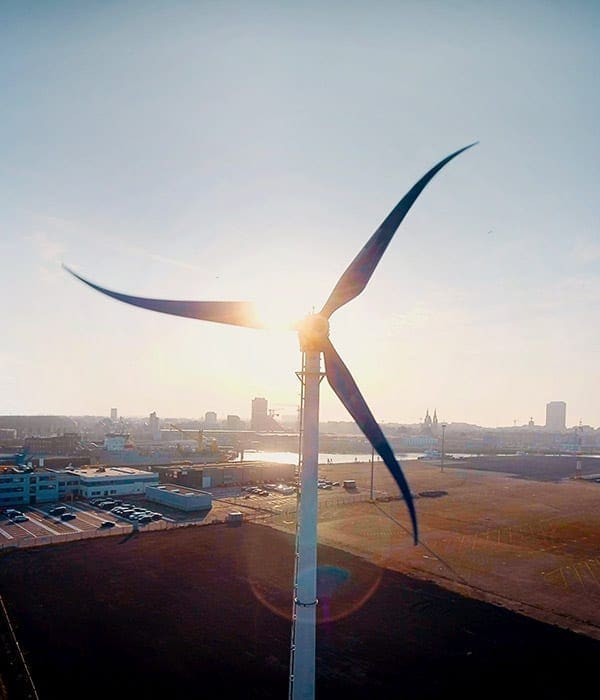
Grid-connected small wind system installed at an industrial logistics park
B2B Procurement & Engineering Blueprint

Grid-Connected Small Wind Systems: The Definitive Buyer & Technical Standard

Comprehensive engineering analysis on deployment economics, utility grid interconnection, direct-drive reliability, and AI hybrid storage integration for commercial and industrial decarbonization.

2001Founded in Montréal, Canada
30 YearsEngineered Design Lifetime
98%+Verified Fleet Availability
25–90 kWBehind-the-Meter Capacity

Technical Architecture & Corporate Heritage

Why Commercial Procurement Managers Specify Grid-Connected Small Wind Systems

In the modern energy landscape, global commercial, industrial, and agricultural enterprises face an unprecedented dual challenge: rising utility tariff volatility combined with strict Scope 2 greenhouse gas reduction mandates. While commercial rooftop solar PV has achieved widespread adoption, its energy production curve remains strictly diurnal, leaving facilities exposed to astronomical peak demand charges and high evening energy prices.

Grid-Connected Small Wind Systems serve as the ultimate operational hedge. Operating behind-the-meter (BTM), these high-efficiency energy assets convert local wind resources into steady, grid-compliant alternating current (AC). By producing power around the clock—especially during nighttime hours and winter months when utility rates surge and solar generation drops—distributed wind delivers an exceptional capacity factor and a superior levelized cost of energy (LCOE).

Founded in Montréal, Canada in 2001, Eocycle Technologies engineered a structural breakthrough in distributed wind: the elimination of mechanical gearboxes. Traditional small wind turbines historically suffered from high operational expenditures (OpEx) driven by gearbox failures, mechanical oil degradation, and complex transmission maintenance. Eocycle solved this systemic vulnerability by pioneering a proprietary direct-drive permanent magnet generator (PMG) architecture.

By connecting the low-speed rotor directly to the electrical generator, Eocycle direct-drive systems eliminate over 70% of moving parts found in conventional geared machines. This failure-proof mechanical philosophy yields an industry-leading 98%+ fleet availability rate across harsh operating environments—from sub-zero Canadian agricultural sites and salty coastal installations in North-West Europe to dusty livestock feedyards in the American Midwest.

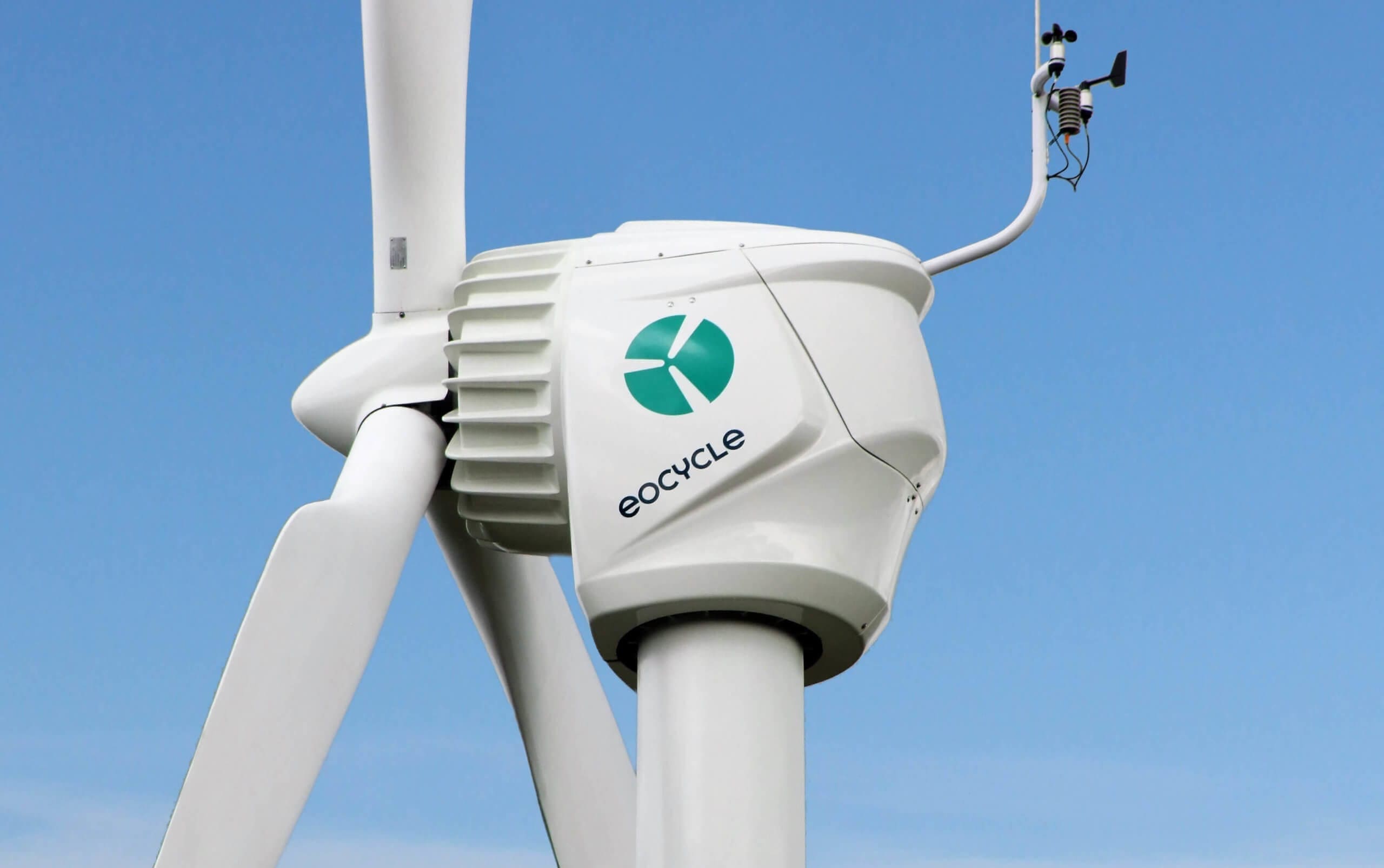
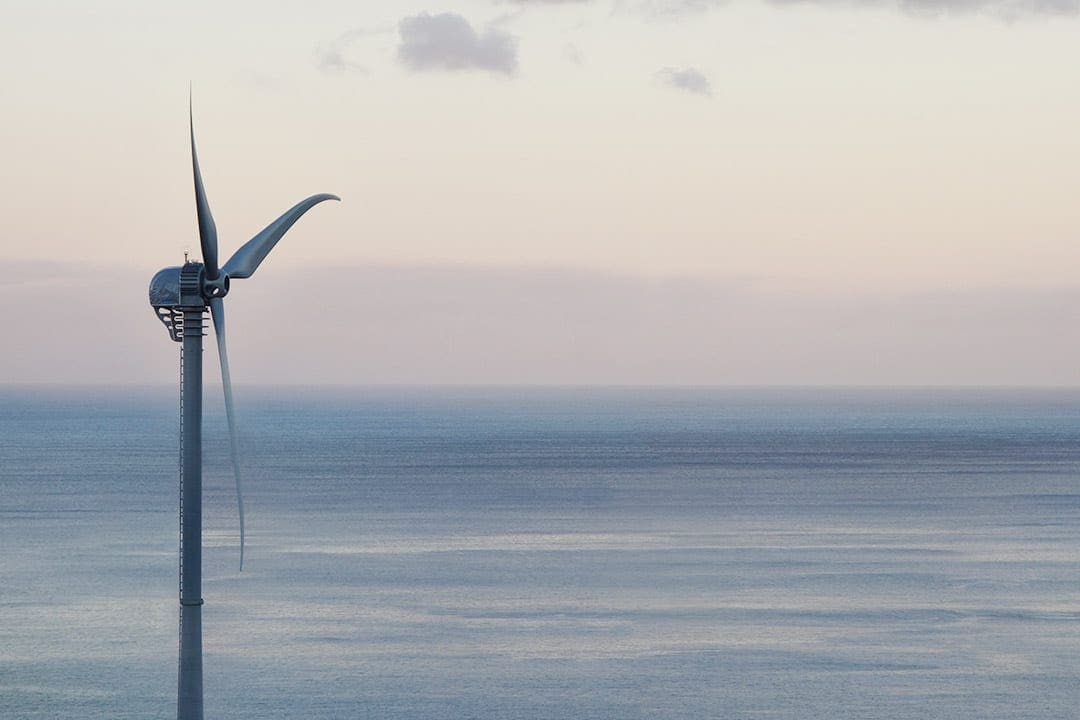
Eocycle direct-drive grid-connected small wind turbine on high-tower installation

Strategic Financial & Operational Drivers

Four Key Advantages Driving Enterprise Adoption of Grid-Connected Wind

Energy directors, sustainability officers, and site managers deploy Eocycle grid-connected small wind systems to capture immediate financial gains while building long-term operational resilience.

LCOE and Financial Return Icon

Ultra-Low LCOE & Price Certainty

Lock in a predictable, fixed levelized cost of electricity over a 30-year operational lifecycle. Protect your operating budgets against grid price spikes, carbon taxes, and retail distribution fee hikes.

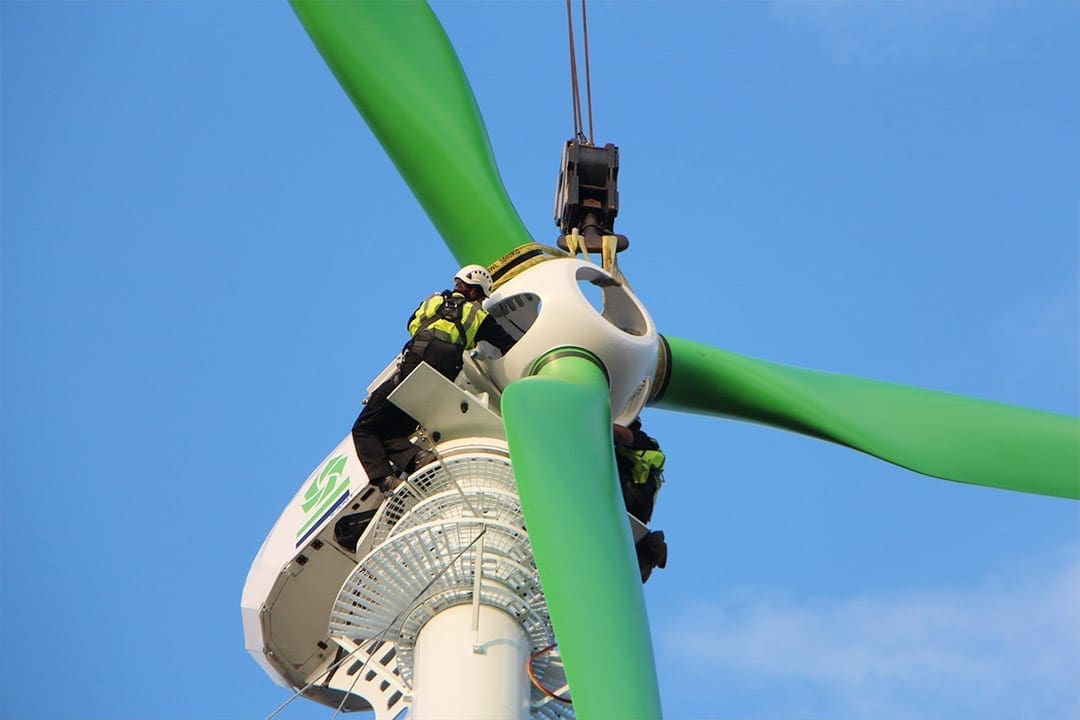
Scope 2 Decarbonization Icon

Verifiable ESG & Scope 2 Compliance

On-site clean energy generation provides transparent, auditable carbon reduction. Fulfill corporate ESG obligations and win competitive supply chain tenders with physical behind-the-meter assets.

Grid-Quality AC Power Icon

Continuous 24/7 Energy Profile

Wind energy generation peaks during nighttime hours and winter seasons, filling critical power gaps inherent to solar-only setups and mitigating peak demand charges across multi-shift production cycles.

Minimal Land Footprint Icon

Minimal Land Footprint

Requires only a compact single-tower concrete foundation. Allows existing commercial operations, agricultural crop farming, livestock grazing, and industrial logistics to continue completely unhindered.

Enterprise Product Portfolio

High-Performance Product Platforms for Distributed Grid Connection

Eocycle manufactures certified, direct-drive grid-connected small wind systems tailored to varying load profiles, wind regimes, and site spatial constraints.
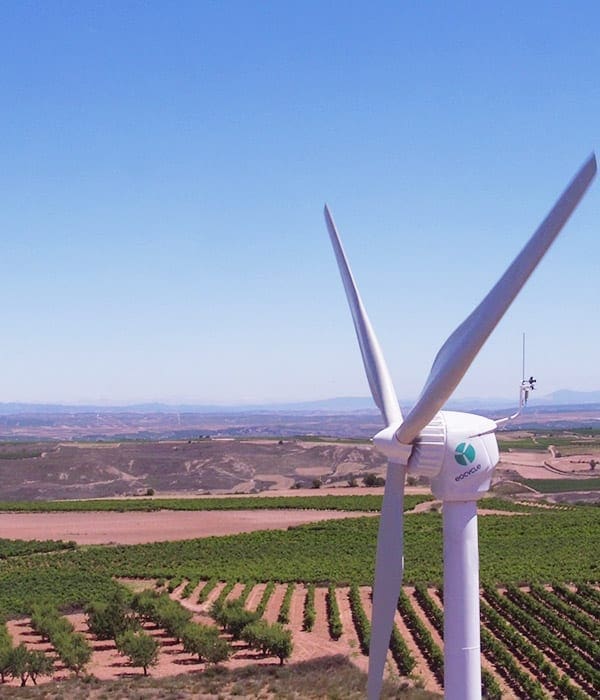
S-Series Eocycle S-Series grid-connected small wind turbine for agricultural applications

Eocycle S-Series Turbines

Specifically engineered for light commercial operations, dairies, cold storage sheds, and family agricultural sites seeking turn-key grid-tied power generation.
  • ApplicationsFarms & Light Industry
  • Generator TypeDirect-Drive Permanent Magnet
  • Grid ConnectionBehind-the-Meter Inverter
  • MonitoringIntegrated Cloud SCADA
Contact Us
M-Series Workhorse Eocycle M-Series EOX M-26 90 kW grid-connected wind turbine

EOX M-26 Wind Turbine (90 kW)

Our flagship commercial grid-connected turbine. Featuring a 26-meter swept rotor diameter, it captures low-to-medium speed wind resources with extraordinary efficiency.
  • Rated Capacity90 kW Nominal Output
  • Rotor Diameter26 Meters (Class II/III)
  • Target SectorManufacturing, Mining, Agribusiness
  • Design Lifespan30-Year Certified Lifecycle
Contact Us
Hybrid Microgrid EOX WS2 Plus Wind Solar Battery Storage Hybrid Architecture

EOX WS²+ Wind-Solar-Storage

Fully integrated multi-energy system combining direct-drive wind generation, solar PV arrays, and battery storage under an AI-driven Energy Management System (EMS).

  • Energy ArchitectureWind + Solar + Battery BESS
  • Optimization EngineAI Real-Time Arbitrage
  • Primary FunctionPeak Shaving & Microgrid
  • Grid InterfaceIEEE 1547 / Smart Inverter
Contact Us

Industry Integration Scenarios

Designed for How High-Load Enterprise Operations Consume Energy

Agricultural & Livestock Feedyard Grid Integration

Modern commercial agriculture relies on heavy continuous electrical loads: automated feeding lines, high-pressure irrigation pumps, grain drying silos, dairy refrigeration units, and environmental ventilation fans. These high-demand loads run constantly throughout the night and across weather conditions.

Installing grid-connected small wind systems directly on agricultural land creates a self-sustaining energy balance. The turbine injects power straight into the site's main distribution panel, serving internal loads first while exporting excess generation back to the local distribution grid under applicable net metering or feed-in tariffs.

  • Compact footprint preserves 99.8% of surrounding farmland for crops or cattle
  • Generates maximum power during windy autumn and winter heating/drying seasons
  • Shields agribusinesses from rural utility rate hikes and transmission surcharges
Contact Us
Agricultural grid-connected wind power application for farm energy security
Commercial facility utilizing direct-drive grid-connected small wind system

Commercial Manufacturing & Logistics Hubs

Commercial facilities, cold storage warehouses, water treatment plants, and distribution centers frequently suffer from rooftop space limitations or structural weight constraints that prohibit large solar PV arrays. Furthermore, daytime-only solar fails to mitigate heavy two-shift or three-shift industrial power usage.

Grid-connected small wind systems solve spatial and temporal energy mismatches. Sited on adjacent perimeter land, an Eocycle EOX M-26 (90 kW) turbine delivers dense, high-yield clean power directly into the building's electrical service entrance, providing continuous demand charge suppression day and night.

  • High energy yield per square meter compared to ground-mount solar arrays
  • Drastically reduces utility peak demand kW charges during multi-shift operations
  • Fulfills corporate Scope 2 carbon offset criteria with tangible on-site infrastructure
Contact Us

Remote Island & Weak-Grid Microgrids

For remote industrial mines, island communities, military outposts, and weak-grid utility fringe sites, relying purely on diesel generator sets results in exorbitant fuel transportation expenses and high environmental risks. Integrating small wind turbines into existing microgrid infrastructure dramatically reduces fuel burn.

When combined with solar panels and battery energy storage systems (BESS), Eocycle turbines form a reliable "utility-in-a-box" hybrid microgrid. Direct-drive permanent magnet generators provide stable voltage and frequency response, while advanced dynamic grid-forming inverters allow full microgrid stability during complete islanding events.
  • Replaces up to 60–80% of annual diesel generator fuel consumption
  • Provides winter power when seasonal solar irradiation drops to minimal levels
  • Full remote SCADA telemetry for automated monitoring in remote geographic regions
Contact Us
Hybrid microgrid clean power generation site with grid-connected wind energy

Industry Analysis & Technology Roadmap

Future Trends in Grid-Connected Small Wind Systems (2025–2030)

As global power grids transition toward decentralized architectures, next-generation small wind technologies are shifting from passive power generation assets into intelligent grid-support hubs.

Smart Inverters & Grid-Forming Support

Modern grid-connected small wind systems are moving from traditional grid-following topologies to advanced smart inverters compliant with IEEE 1547-2018 and UL 1741 SA standards. These advanced power electronics provide dynamic reactive power compensation (VAR support), fault ride-through (FRT), and active frequency regulation, enabling utilities to maintain grid stability despite high renewable penetration levels.

AI-Driven Real-Time Energy Arbitrage

With utilities rapidly abolishing fixed net-metering schemes in favor of time-of-use (TOU) and dynamic real-time electricity pricing, standalone renewable generation is no longer sufficient. Modern wind systems are fully integrated with AI energy management software that monitors wholesale electricity prices, weather forecasts, and facility load profiles to decide whether to consume wind power on-site, store it in BESS assets, or sell it back to the grid at peak rates.

Advanced Aeroacoustics & Carbon Aerofoils

Next-generation small wind turbines feature advanced blade aerodynamics developed through high-resolution Computational Fluid Dynamics (CFD). Serrated blade trailing edges and carbon-reinforced composite materials significantly reduce acoustic emissions while allowing turbines to operate efficiently in low-wind regimes (IEC Class III environments), unlocking turbine permitting in stricter commercial zones.

End-to-End Delivery Model

Five-Stage Turnkey Execution: Single-Source Accountability

Global procurement teams choose Eocycle because we eliminate developer risk. From initial anemometer wind study to final grid interconnection, we manage every engineering, legal, and civil step.

1. Anemometry & Load Modeling

We analyze 10-year historical atmospheric datasets and install site LiDAR/anemometers to map local wind shear profiles against your interval utility meter files.

2. Bankable Financial Model

Our financial engineers craft an accurate financial model detailing CapEx, net operational yields, tax credits (e.g., US ITC/REAP), LCOE, and simple payback metrics.

3. Permitting & Interconnection

We manage local zoning applications, shadow flicker models, noise impact assessments, and complete technical utility interconnection filings.

4. Civil Works & Erection

Our certified EPC partners construct reinforced concrete foundation pads, erect steel towers using specialized mobile cranes, and install grid-tied electrical subpanel connections.

5. 30-Year SCADA O&M

We provide continuous 24/7 telemetry oversight, dynamic pitch adjustments, preventative annual inspections, and comprehensive regional spare parts logistics.

Verified Global Operator Case Studies

Real Performance Data from Commercial Owners

”
Renewables are an important part of our ag operations in both Colorado and Kansas. This allows us to not only be more efficient and cut costs, but also to be part of a bigger picture of becoming more sustainable. I am very, very pleased with my turbine.
Erick FarmerChampion Valley Feedyard — Colorado, USA
The turbine is directly powering our charging points for electric vehicles. Because of the vicinity of natural habitats, an avifauna monitoring program was set up. The 98% availability of the turbine is the cherry on the cake for us.
Filip VandeputteCSR Manager, DEME Group — Belgium
After careful review of products available on the market we chose to add an Eocycle EOX M-26 (90 kW) to our microgrid to satisfy the majority of our energy use. It also combines easily with solar and batteries to create a utility-in-a-box for a clean, reliable microgrid.
Jean De CambryEngineer & Project Manager, Enersol — Belgium
We were nervous about entering the distributed wind sector, owing to a tough operating climate in the North of Scotland combined with our remoteness. The SCADA portal is excellent at providing remote communication every day, which should prolong component life and allow timely servicing.
Heather StuartWest Harris Trust Community Centre — Scotland

Enterprise Procurement FAQ

Grid-Connected Small Wind Systems: Frequently Asked Questions

In-depth technical, regulatory, and economic answers for commercial buyers and utility engineers.

Commercial feasibility for grid-connected small wind systems typically begins at an annual average wind speed of 4.5 m/s to 5.0 m/s (approx. 10 to 11 mph) measured at a standard hub height of 30 meters. However, economic viability is strongly governed by your site's utility retail tariff structure. In regions with high demand charges ($15–$30/kW/month) or high volumetric rates ($0.20+/kWh), lower wind resource sites often achieve rapid financial paybacks. Eocycle engineers model your site using microscale atmospheric fluid dynamics (WAsP/WindPRO) combined with 8760-hour facility interval load files to guarantee bankable economic projections before project capital is committed.

Conventional geared wind turbines use a high-speed mechanical gearbox to step up low rotor RPM to high generator speeds (1500+ RPM). Gearboxes are the single largest source of mechanical failure in small wind turbines due to high torque variations, thermal expansion, gear tooth fatigue, and oil breakdown. Eocycle's direct-drive permanent magnet generator (PMG) connects the rotor hub directly to a low-speed multipole generator, completely eliminating the gearbox, mechanical clutch, and oil pumps. This design removes over 70% of moving parts, increases generator electrical efficiency, lowers mechanical acoustic signatures, and reduces routine operations and maintenance (O&M) costs by up to 50%, resulting in a 30-year design life with 98%+ operational availability.

Eocycle grid-connected small wind systems comply fully with major international utility grid standards, including IEEE 1547-2018 (Standard for Interconnection and Interoperability of Distributed Energy Resources), UL 1741 SA / SB (Smart Inverters), IEC 61400-2 (Small Wind Turbine Safety), and CE/G99 standards in Europe and the UK. Our full-converter power electronics feature automatic anti-islanding protection (under/over voltage and frequency disconnects), total harmonic distortion (THD) filtering below 3%, and configurable power factor correction (0.9 lead/lag). This ensures seamless interconnection approval with local distribution network operators (DNOs) and electric utilities.

Grid-connected small wind systems act as a natural physical complementary power source to solar PV. While solar output peaks during midday hours in summer, wind energy generation typically peaks during evening/overnight hours and during stormy winter months. When paired with solar PV and battery storage under an EOX WS²+ hybrid architecture, both generation sources supply a shared DC or AC bus. An intelligent AI Energy Management System (EMS) coordinates asset operation: directing real-time clean power to facility loads, storing surplus energy in the battery, or discharging stored energy to suppress utility peak demand charges when grid electricity pricing spikes.

Permitting requirements for grid-connected small wind systems depend on local municipal land-use zoning. Standard guidelines require a setback distance equal to 1.1 to 1.5 times the total tip height (hub height plus blade length) from property lines, inhabited structures, and overhead utility lines. Acoustic compliance is easily achieved: Eocycle direct-drive turbines run at low rotational speeds with advanced aerofoil design, maintaining acoustic sound pressure levels below 45 dBA at standard property boundaries—well within strict rural and commercial noise ordinances. Eocycle manages all environmental screening, shadow flicker modeling, and zoning hearings as part of our turnkey execution process.

The typical Levelized Cost of Energy (LCOE) for an Eocycle EOX M-26 (90 kW) grid-connected turbine ranges between $0.04 and $0.08 per kWh over its 30-year design life, depending on local mean wind speed and installation civil costs. Simple return-on-investment (ROI) payback periods generally fall between 3 and 7 years. Payback velocity is significantly accelerated by federal, state, and local clean energy incentives—such as the US USDA REAP grant (up to 50% CapEx coverage), Federal Investment Tax Credits (ITC), accelerated MACRS depreciation, or European clean energy grants.

Because Eocycle direct-drive wind systems do not use gearboxes, hydraulic fluids, or high-speed mechanical drives, maintenance requirements are minimal. Routine preventative maintenance consists of a single annual visual and mechanical inspection: checking bolt torque specifications, inspecting electrical wiring connections, examining blade leading-edge tape, and verifying emergency braking system sensors. All system operational parameters, inverter efficiency, yaw activity, and vibration telemetry are continuously monitored 24/7 via Eocycle's cloud-based SCADA portal, allowing predictive maintenance alerts before minor issues escalate into costly downtime.
  • Pioneered Direct-Drive Wind Tech Since 2001
  • Engineered for 30-Year Lifespan
  • 98%+ Verified Fleet Availability
  • IEEE 1547 & UL 1741 Smart Inverter Certified
  • Turnkey Deployment Across North America & Europe

Accelerate Your Decarbonization & Reduce Energy Costs

Submit your facility site location and 12 months of utility interval billing data. Eocycle's application engineers will generate a comprehensive bankable wind yield modeling analysis and financial ROI breakdown for your site.