Explore our flagship export catalog ranging from micro-power low-voltage brushless dynamos to heavy-duty 5kW grid-tie microgrid wind turbines engineered for extreme environmental endurance.
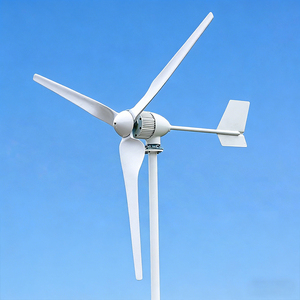
Founded in Montréal, Canada in 2001, our manufacturing consortium set out to resolve the historically critical vulnerability of small-to-medium wind dynamos: mechanical failure in step-up gearboxes. Traditional wind turbines utilize high-speed gearboxes that convert low rotor RPM into high shaft speeds required by conventional generators. In harsh outdoor operating environments—ranging from sub-zero Alberta winters to salty Belgian coastal winds and dusty agricultural feedyards—mechanical gearboxes suffer from oil thermal breakdown, seal failure, tooth pitting, and frequent downtime.
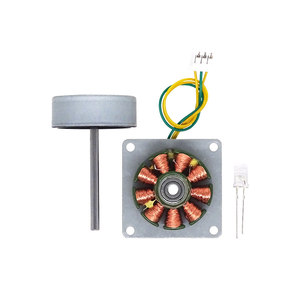
Our engineering paradigm completely bypasses mechanical transmission by developing custom-engineered Direct-Drive Permanent Magnet Generators (PMG). By keying the rotor hub directly to an outer-rotor or inner-stator permanent magnet dynamo utilizing neodymium-iron-boron (NdFeB) rare-earth magnets, our wind turbines eliminate over 70% of moving friction points. The resulting system operates without gear oil, eliminates mechanical gear wear, and delivers a benchmarked operational availability exceeding 98% over a 30-year design lifespan.
Direct coupling between wind blades and generator armature minimizes energy loss, lowers acoustic noise emissions, and eliminates fluid maintenance entirely.
Heavy-duty marine-grade anti-corrosion coatings, IP67 sealed generator housings, and structural steel towers tested against Category 4 hurricane-force gusts.
Every industrial unit connects to a cloud-based remote monitoring portal, offering predictive maintenance alarms, automated pitch control, and real-time yield logs.
The global energy landscape is undergoing a structural shift from centralized utility grids to Behind-the-Meter (BTM) distributed energy resources (DERs). Commercial facilities, agricultural enterprises, and microgrid developers are no longer purchasing wind dynamos solely as standalone power units; instead, they require integrated, intelligent clean-energy assets. Global B2B buyers must align their procurement strategies with four emerging megatrends:
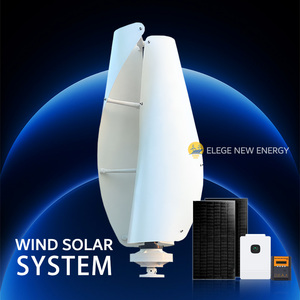
Solar PV arrays generate maximum power during midday clear weather, whereas wind dynamos achieve peak output during nighttime hours, atmospheric frontal passages, and winter seasons. Modern procurement demands integrated microgrid packages (such as our EOX WS²+ system) where wind dynamos, solar strings, and Lithium Iron Phosphate (LFP) battery energy storage systems (BESS) operate under a unified AI-driven Energy Management System (EMS).
Traditional dynamos required high wind velocities (3.5 m/s to 4.5 m/s) to overcome internal magnetic cogging torque. Advanced exporter designs now utilize coreless stators and optimized aerofoil blade geometry (TSR tuning), lowering cut-in thresholds down to 1.5 m/s. This enables viable energy harvesting in Class III and Class IV low-wind geographic zones.
International brands and multinational supply chain partners now strictly enforce Scope 2 carbon accounting under ESG mandates. Deploying verifiable, visible on-site wind generation assets provides commercial enterprises with auditable, zero-emission electricity that significantly strengthens tender positions and corporate sustainability ratings.
To eliminate implementation risk for global importers, our factory network delivers complete end-to-end project execution under one accountable contract:
LiDAR wind mapping & 12-month interval load profiling to determine exact annual energy yield (AEY).
Voltage match (12V DC to 400V AC), custom mounting flange engineering, and severe-climate anti-icing specs.
CE, ISO9001, RoHS certifications, grid-code compliance testing, and sea-worthy export packing.
SCADA telemetry connectivity, global spare parts dispatch, and 30-year operational support hotline.
Compare performance envelopes across our primary wind generator categories to match your specific application requirements:
| Generator Class | Rated Capacity | Generator Architecture | Cut-in Wind Speed | Target Application | Grid Coupling Mode |
|---|---|---|---|---|---|
| Micro Telemetry Dynamo | 80mW – 300W | Coreless 3-Phase PMG | 1.0 – 1.5 m/s | IoT Sensors, CCTV, Off-Grid Kits | Direct DC / MPPT Controller |
| Commercial Light Dynamo | 400W – 1kW | Horizontal Axis Brushless PMG | 2.0 – 2.5 m/s | Solar Street Lights, Home Storage | 12V/24V/48V Battery Bank |
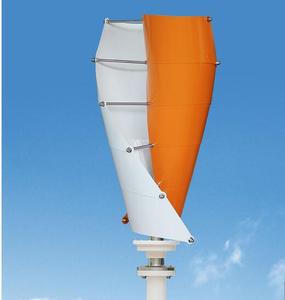
| Vertical Axis (VAWT) | 2kW Micro System | Low-RPM Vertical Synchronous | 1.5 – 1.8 m/s | Urban Roofs, Low-Noise Sites | Hybrid MPPT Inverter |
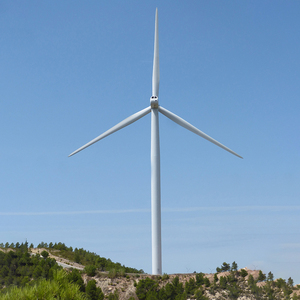
| Industrial Commercial | 5kW – 90kW | Direct-Drive Neodymium PMG | 2.5 – 3.0 m/s | Feedyards, Microgrids, C&I Plants | 3-Phase Grid-Tie / Islanded BESS |
The engineering of permanent magnet wind dynamos has undergone massive evolution over the past decade. Modern procurement requires understanding the technical advancements that separate tier-one industrial suppliers from low-quality assemblers:
The core efficiency of a permanent magnet wind dynamo relies on magnet grade. Premium factories utilize high-temperature NdFeB magnets (grade N40SH or N45UH) rated for operational temperatures up to 150°C. Inferior dynamos use standard N35 magnets that suffer irreversible thermal demagnetization when subjected to sudden heavy electrical loading or extreme brake friction, permanently degrading power curves.
In high gale conditions, wind dynamos must protect themselves from mechanical overspeed. Advanced exporters implement triple-redundant protection systems:
Comprehensive answers to essential technical, legal, and operational questions asked by procurement directors and microgrid project engineers prior to issuing RFQs.
As a practical engineering rule, sites with an annual average wind speed of 5.0 m/s (approx. 11 mph) or greater at hub height are strong candidates for wind power deployment. Because wind power density scales cubically with velocity ($P \propto V^3$), even a slight increase in tower height significantly elevates energy output. We utilize tall towers (typically 30m to 36m) to elevate rotor discs above ground boundary layer turbulence caused by agricultural silos, trees, and commercial structures. Prior to capital deployment, our engineers model your site using NASA POWER database logs and local anemometer telemetry correlated against your actual 15-minute interval utility load profile.
Direct-drive wind dynamos lock the aerodynamic rotor directly to the generator shaft, operating at low rotational speeds (typically 40 to 200 RPM depending on power rating). Traditional geared turbines require a high-speed gearbox to step up RPM to 1500–1800 RPM. Eliminating the gearbox yields three key advantages: 1) Zero lubrication oil changes or oil seal degradation; 2) Elimination of high-speed gear tooth fatigue, reducing mechanical breakdown risk by over 70%; and 3) Exceptional acoustic stealth due to the absence of gear-mesh whine, making direct-drive dynamos suitable for noise-sensitive agricultural and commercial sites.
Wind energy and solar PV present highly complementary generation curves across both diurnal and seasonal cycles. Solar arrays reach peak output during midday summer hours but generate zero power at night, during rain events, and produce minimal energy during winter months when sun angles are low. Conversely, wind speeds are statistically higher during nighttime hours, atmospheric weather fronts, and winter storm conditions. Combining wind dynamos with solar arrays under an integrated MPPT battery energy management system flattens the generation curve, drastically reducing the required battery BESS capacity needed to achieve total off-grid or behind-the-meter energy independence.
Because our direct-drive dynamos contain no gearbox or high-wear mechanical clutches, maintenance is remarkably lightweight. Recommended scheduled maintenance involves an annual physical inspection covering: 1) Visual check of blade leading-edge tape and torque check on hub bolts; 2) Inspection of yaw bearing grease points; and 3) Electrical megohmmeter insulation testing of stator windings. All operating parameters—including vibration metrics, bearing temperatures, and voltage regulation—are monitored continuously via our SCADA telemetry portal to identify potential anomalies before they lead to operational downtime.
We deliver turnkey international export solutions. Working alongside our network of certified regional EPC partners, our scope encompasses comprehensive wind resource assessments, incentive application guidance, local zoning permitting filings, utility interconnection compliance studies, foundation engineering, turbine erection, commissioning, and long-term operations & maintenance (O&M).
All grid-tie wind dynamo systems feature dual-stage anti-islanding protection conforming to IEEE 1547 and UL 1741 standards. In the event of a utility grid failure, the grid-tie inverter instantly disconnects within 100 milliseconds to protect utility lineworkers. Simultaneously, the wind controller engages an automated electronic dump load or dynamic pitch system to safely dissipate mechanical rotor energy without overspeeding the dynamo assembly.
Partner directly with an established wind dynamo manufacturing enterprise. Contact our senior engineering team today for custom OEM/ODM specifications, factory direct price quotes, or a complimentary site yield assessment.
Contact Us