
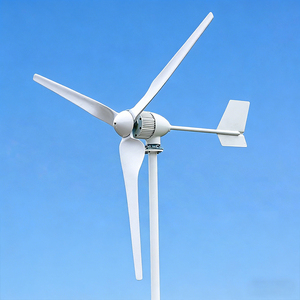
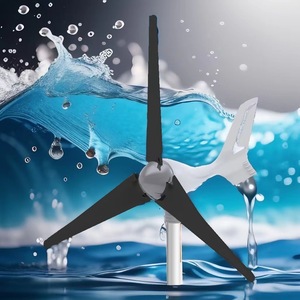
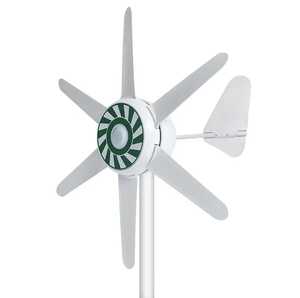
Factory Price Rooftop 1kw Small Wind Turbines for Home Electricity
- Rated Capacity: 1.0 kW
- System Voltage: 24V / 48V
- Drivetrain: Direct-Drive PMG
Explore our globally verified OEM/ODM manufacturing portfolio. Each system features high-efficiency permanent magnet generators, low cut-in aerodynamic profiles, and direct-drive torque management tailored for urban boundary-layer deployments.
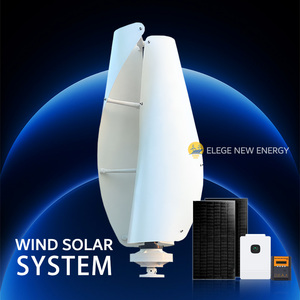
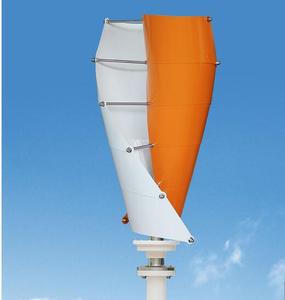
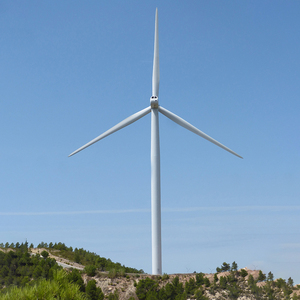
Why Tier-1 industrial buyers and agricultural microgrid operators transition from legacy gear-driven turbines to direct-drive permanent magnet architectures.
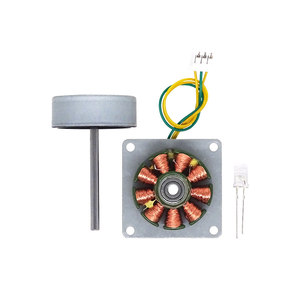
By eliminating high-wear gearboxes, mechanical friction losses drop by up to 18%. Permanent magnet generators (PMG) utilize rare-earth Neodymium-Iron-Boron (NdFeB) rotors, guaranteeing high torque density, sub-2.0 m/s cut-in speeds, and 30-year operational lifespans without lubrication oil cycles.
Urban rooftop deployments demand strict noise compliance. Our partners engineer aero-acoustically optimized blade tips with serrated trailing edges and elastomeric anti-vibration structural dampers (AVD), limiting structure-borne acoustic transmission below 38 dB(A) at 10 meters distance (IEC 61400-11 compliant).
Every commercial turbine interface connects directly to cloud telemetry. Built-in IoT sensors continuously record vibration vectors, temperature rise, wind velocity vectors, and phase voltage stability, enabling predictive machine learning algorithms to schedule preventative O&M prior to operational failure.
A rigorous engineering comparison between traditional geared small wind turbines, standard vertical axis turbines (VAWT), and modern Direct-Drive Permanent Magnet Generator (PMG) systems designed for rooftop applications.
| Performance Specification | Legacy Geared Turbine | Standard VAWT (Savonius) | Direct-Drive PMG (Eocycle Spec) |
|---|---|---|---|
| Mechanical Efficiency (%) | 76% - 82% | 65% - 72% | 94% - 97% |
| Cut-in Wind Speed | 3.5 m/s - 4.5 m/s | 2.8 m/s - 3.2 m/s | 1.5 m/s - 2.0 m/s |
| Annual O&M Cost per kW | $140 - $220 | $80 - $110 | $25 - $45 |
| Design Life Horizon | 10 - 15 Years | 12 - 18 Years | 30+ Years |
| Structural Vibration Frequency | High Frequency (Harmonic Risk) | Low Frequency (Damped) | Ultra-Low Damped (Zero-Harmonic) |
| Acoustic Emission Level | > 55 dB(A) at 10m | < 42 dB(A) at 10m | < 38 dB(A) at 10m |
How commercial real estate developers, industrial plants, and agricultural facilities optimize capital expenditure (CAPEX) through next-generation wind technology integration.
Modern energy procurement is shifting away from isolated generation assets. Forward-thinking enterprise buyers combine rooftop horizontal/vertical wind turbines with rooftop solar PV and Battery Energy Storage Systems (BESS). Because rooftop wind produces heavily during night cycles and winter months—when solar yield plummets—the hybrid setup ensures an unwavering baseload supply, smoothing out peak demand charges.
With smart grid interconnection protocols (IEEE 1547 and UL 1741-SB standard), procurement teams seek wind generators equipped with bi-directional smart inverters. These units allow commercial facilities to execute automated peak-shaving, auto-export surplus clean energy during high spot-price grid events, and maintain grid resilience during utility blackout incidents.
Industrial rooftop procurement requires minimal structural modification to building envelopes. Supply trends favor factory-prefabricated modular mounting skids featuring non-penetrative ballast systems or integrated structural steel beam couplings. This reduces on-site construction timelines from weeks to less than 48 hours per turbine installation.
Evaluating tier-1 wind turbine suppliers through rigorous electro-mechanical and structural testing standards.
Clear, unvarnished technical answers regarding rooftop wind power plant planning, structural safety, ROI, and maintenance.
Connect directly with our global engineering application team. Send us your site GPS coordinates, building elevation drawings, and one year of facility electricity interval load files. We will generate a complete 3D LiDAR wind yield simulation, structural load report, and financial ROI proposal.