Factory-Direct Portfolio for Residential, Commercial & Industrial (C&I), and Solar Pumping Microgrid Applications
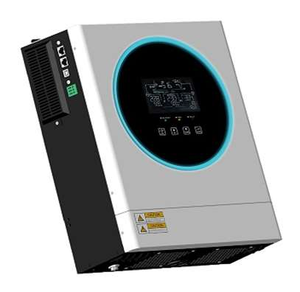
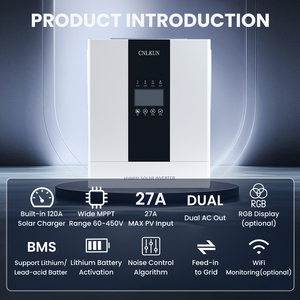
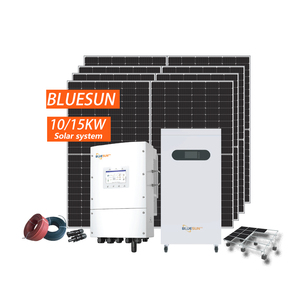
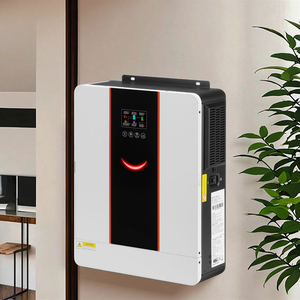
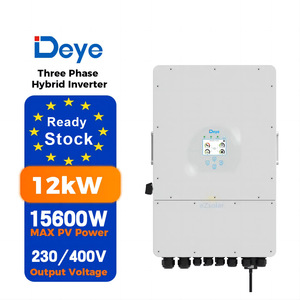
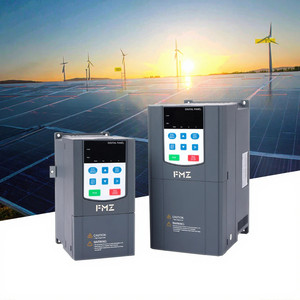
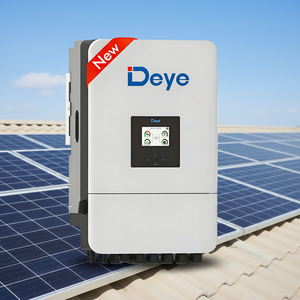
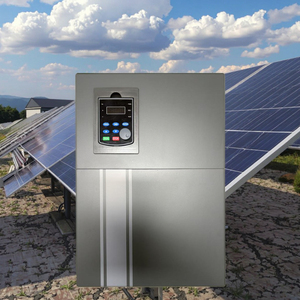
The global energy landscape is undergoing a structural transition from centralized thermal power generation to highly decentralized, intermittent renewable microgrids. At the core of this transition sits the Hybrid Solar Inverter—a sophisticated multi-port power electronic transformer designed to bi-directionally route energy between Photovoltaic (PV) arrays, Electrochemical Energy Storage Systems (BESS), local load demands, and the public utility grid.
Unlike legacy string inverters that merely execute DC-to-AC conversion, modern hybrid power conditioning units integrate dual or triple Maximum Power Point Tracking (MPPT) channels, bi-directional DC-DC converters, dynamic grid-forming controls, and rapid physical isolation switches. As a certified top-tier hybrid inverter factory and global exporter, our engineering methodology centers on maximizing system-level round-trip efficiency (RTE), minimizing total harmonic distortion (THD < 2%), and delivering absolute operational uptime even under harsh thermal and environmental stresses.
Utilizing Silicon Carbide (SiC) MOSFETs and advanced IGBT topologies to reduce switching losses by up to 40%, allowing for compact enclosure footprints and passive/low-noise thermal dissipation.
Integrated solid-state transfer switches isolate critical loads during grid failure in less than 4 milliseconds, preventing hardware resets for sensitive C&I server banks and medical facilities.
Accommodating wide DC input ranges (from 90V up to 900V), supporting high-current ultra-high-efficiency PV modules (18A+ per string) with smart shading mitigation algorithms.
For B2B procurement managers, utility-scale developers, EPC contractors, and regional distributors, navigating the multi-year technology lifecycle of energy storage equipment requires a clear understanding of key engineering trends. When selecting an OEM/ODM manufacturing partner, market buyers must account for shifting regulatory landscapes and hardware design evolutions.
While 48V/51.2V Low-Voltage battery systems remain highly popular in residential setups up to 12kW due to safety touch-potentials and ease of installation, the C&I and residential-commercial crossover markets are rapidly migrating toward High-Voltage (150V to 800V DC) architectures. High-voltage coupling drastically reduces I²R copper transmission losses, allows for thinner internal cabling, and boosts overall system round-trip efficiency to over 97.5%. Our manufacturing facility maintains dedicated SMT and assembly lines for both LV (48V single/three-phase) and HV hybrid platforms to meet diverse global market demands.
Modern grid operators in North America (IEEE 1547-2018 / CA Rule 21) and Europe (VDE-AR-N 4105 / EN 50549) require smart inverters to act as dynamic stabilizers rather than passive energy injectors. Future-proof hybrid inverters must support active voltage and frequency regulation (Volt-VAR / Watt-VAR modes), dynamic anti-islanding protection, and remote Virtual Power Plant (VPP) aggregation protocols via Modbus RTU/TCP, CAN 2.0B, and open-source MQTT cloud interfaces.
| Technical Parameters | Residential Split-Phase (UNC Series) | European Standard 3-Phase (Deye/SF Series) | Heavy C&I & Pump VFD (RIQNO Series) |
|---|---|---|---|
| Nominal AC Power Output | 4.0kW – 10.2kW | 5.0kW – 20.0kW | 15.0kW – 30.0kW+ |
| Grid Phase Topology | Single Phase / Split Phase (120V/240V) | Three Phase (220V/380V, 230V/400V) | Three Phase 380V Industrial / Pump Drive |
| Battery Input Voltage Range | 40V – 60V (Low Voltage LiFePO4) | 40V – 60V & 150V – 500V (LV/HV Dual) | Direct PV Coupling / High Voltage DC 900V |
| Max. Solar PV Input Voltage | 450V – 500V DC | 550V – 1000V DC | 900V DC High-Voltage VFD Input |
| Max. MPPT Efficiency | 99.9% Static / 98.2% Euro Efficiency | 99.9% Static / 98.6% Euro Efficiency | 99.5% Dynamic Motor VFD Drive |
| Paralleling Capacity | Up to 6 Units (Master-Slave) | Up to 16 Units Parallel On/Off-Grid | Customized Microgrid Array Scaling |
As a leading hybrid inverter manufacturer and international exporter, our manufacturing infrastructure is built around precision engineering, component traceability, and long-term operating reliability. Renewable energy installations are expected to operate continuously for 15 to 25 years under severe temperature swings (-25°C to +60°C). Achieving this requires comprehensive factory testing methodologies.
Reliability starts at the component level. We exclusively partner with global silicon and passive component suppliers. Our power stages feature Infineon and Fuji Electric IGBT/SiC modules, Texas Instruments DSP control chips, Nichicon electrochemical capacitors, and Staubli MC4 connectors. Every incoming batch undergoes strict MIL-STD-105E sampling inspection prior to mounting.
Our fully automated Surface Mount Technology (SMT) lines utilize 3D Automated Optical Inspection (AOI) and X-ray testing to eliminate solder joint voids. Post-assembly, 100% of finished inverter boards undergo 4 hours of full-load environmental burn-in testing under elevated thermal conditions (50°C) within isolated testing bays. This eliminates infant mortality failure rates prior to final packing and overseas container export.
Our entire product lineup meets or exceeds international safety and electromagnetic compatibility standards, including IEC/EN 62109-1/-2, IEC 61000 series EMC, CE, VDE-AR-N 4105, UN38.3, and UL1741 SA.
We provide full white-label manufacturing services for global distributors, including customized metal enclosure designs, proprietary firmware adaptation, branding logo application, and specialized SCADA app development.
To assist technical procurement agents, EPC designers, and wholesale importers, the following operational matrix breaks down the optimal inverter selection based on regional utility standards and load characteristics:
For installations in North America, Central America, and specific South American regions utilizing split-phase configurations, selecting the UNC Series (4KW–10.2KW) is critical. These units utilize dual internal transformers/H-bridge topologies capable of delivering simultaneous 120V and 240V AC outputs without requiring an external auto-transformer, eliminating neutral-point unbalance heat losses.
For residential high-power loads, European microgrids, and commercial buildings requiring balanced three-phase lines, the Deye and SF Series Three-Phase Hybrids (5kW–20kW) offer 100% unbalanced phase output capability. This allows each individual phase to supply up to 50% of the nominal total inverter rating to asymmetric single-phase loads without triggering system fault trips.
Agricultural irrigation, remote livestock watering, and deep-well industrial fluid management require dedicated variable frequency motor control. The MPPT Solar VFD Inverter (15kW–30kW) and RIQNO A800 Series convert raw DC solar power directly into 3-phase AC motor drive frequencies. Integrated soft-start algorithms eliminate motor inrush currents (LRA), allowing solar arrays to drive heavy induction pumps without oversized battery banks.
Direct Answers from Our Chief Application Engineers and Supply Chain Specialists
Our standard single-phase and three-phase hybrid inverters support master-slave parallel operations for up to 16 units on both the grid-tied port and the backup load port. Built-in CAN 2.0B communication bus cables synchronize PWM switching cycles to ensure equal current sharing without phase circulation issues.
Our inverters are engineered with intelligent forced-air cooling channels and oversized aluminum heat sinks. Full rated output power is maintained up to +45°C ambient temperature. Intelligent fan control algorithms dynamically scale airflow based on internal IGBT temperature sensors, extending component life and reducing operating noise.
Yes. Our firmware pre-loads RS485 and CANbus communication protocols for leading energy storage battery brands (including LiFePO4 chemistry). Furthermore, our engineering team provides rapid custom BMS protocol writing for custom OEM battery pack suppliers upon technical drawing submission.
Standard unit manufacturing lead time is 15 to 20 business days from PO confirmation and deposit receipt. We offer standard 5-year and extended 10-year factory warranties. Warranty terms include factory-backed spare parts replacement boards (Main PCB, Power Board, Display Module) and localized technical support.
Absolutely. All featured hybrid platforms feature robust off-grid grid-forming capability. They can black-start directly from either solar PV arrays or low-voltage battery banks, and offer dedicated dry contacts to automatically trigger backup diesel generators during prolonged low-irradiance periods.
Contact our power electronics engineering team today to receive detailed technical datasheets, CAD dimensional drawings, factory audit documentation, and wholesale OEM export quotes tailored to your market.
Contact Us