Top Trusted Agricultural Wind Factory & Exporter

Engineering High-Availability Direct-Drive & Micro Wind Infrastructure for Farms, Commercial Feedyards, Remote Microgrids, and Distributed Utility Networks

23+
Years Engineering Expertise
98.4%
Fleet Operational Availability
30 Yrs
Structural Design Lifespan
50+
Global Exporter Destinations

Precision Agricultural & Micro Wind Turbine Series

Explore our factory-direct range of direct-drive horizontal and vertical axis wind generators engineered for low-cut-in performance, heavy industrial reliability, and seamless BTM (Behind-the-Meter) integration.
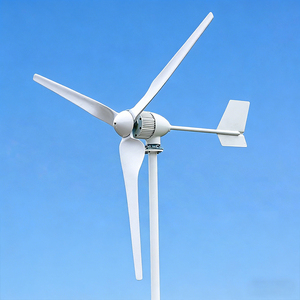
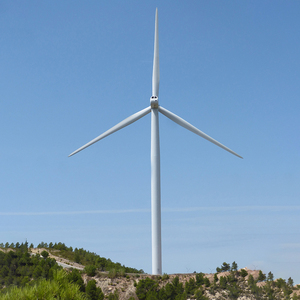
Factory Price Rooftop 1kw Small Wind Turbines for Home Electricity

Factory Price Rooftop 1kW Small Wind Turbine

  • Rated Power: 1000W (1kW)
  • System Voltage: 24V / 48V DC
  • Drivetrain: Direct-Drive PMG
  • Application: Farmhouse / Solar Hybrid
Get a Quote
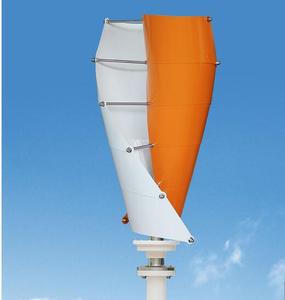
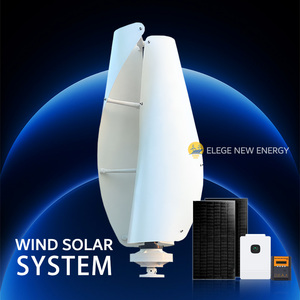
Elege CE MPPT Low Noise RPM Free Energy 2kw Axis Micro Vertical Wind Turbine

2kW Low RPM Micro Vertical Axis Wind Turbine

  • Rated Power: 2000W (2kW)
  • Controller: Smart MPPT Tracking
  • Noise Level: < 35 dB (Omnidirectional)
  • Application: Agri-Residential & Off-Grid
Get a Quote
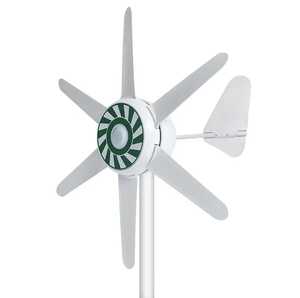
300w Micro Vertical Wind Generator Kit China

300W Precision Micro Vertical Generator Kit

  • Rated Power: 300W Micro-Kit
  • Startup Wind: 1.5 m/s Low Wind Cut-In
  • Generator: 3-Phase AC Permanent Magnet
  • Application: Agricultural Sensor Nodes
Get a Quote
Wind Generator Long Lifespan Outdoor Micro Wind Generator 80mw 90mw 100mw Wind Turbines

Heavy-Duty Outdoor Micro Wind Generator (80W–100W)

  • Output Range: 80mW / 90mW / 100mW
  • Enclosure: C5-M Weatherproof
  • Design Life: 20+ Years Continuous
  • Application: Remote Telemetry & Scada
Get a Quote
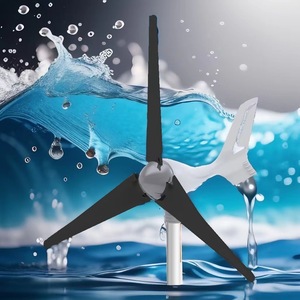
Horizontal Axis Micro Wind Generator 400W 12V For Solar Street Light Surveillance

400W Horizontal Axis Micro Wind Turbine Generator

  • Rated Power: 400W @ 12V DC
  • Rotor Blades: High-Strength Fiber Reinforced
  • Target Use: Farm Perimeter Security
  • Application: Solar-Wind Surveillance Backup
Get a Quote
90W Mini Wind Turbine With Controller Built-in, DC Output 12V/24V Micro Wind Turbine

90W Integrated Mini Turbine with Internal Controller

  • Rated Output: 90W Built-In Smart Charge
  • DC Voltage: 12V / 24V Auto Select
  • Integration: Plug-and-Play Architecture
  • Application: Electric Fence & Valve Power
Get a Quote
Hot Sale High Efficiency Three Blades 5kw ALLRUN AR6.0-5KW Micro Wind Turbine Generator

5kW Commercial High-Efficiency Wind Turbine Generator

  • Rated Capacity: 5000W (5kW Continuous)
  • Rotor Design: 3-Blade Aerodynamic Pitch
  • Grid Interconnection: On-Grid / Hybrid Inverter
  • Application: Dairy Farms & Commercial Units
Get a Quote
Other Three-phase Micro Wind Generator 3V to 24V Low-Power Low-Voltage Motor Equipment

3V–24V Low-Voltage Three-Phase Wind Alternator

  • Voltage Range: 3V to 24V Low-RPM AC
  • Efficiency: High Magnetic Flux Density
  • Core Type: Brushless Permanent Magnet
  • Application: Custom Industrial Power Drives
Get a Quote

1. Industry Evolution: The Direct-Drive Paradigm Shift in Agricultural Wind Energy

Over the past three decades, distributed wind generation for agricultural operations, feedyards, commercial processing facilities, and islanded microgrids has undergone a fundamental technological transition. Historically, small and medium wind turbines relied on multi-stage planetary gearboxes to convert low rotor speeds into high generator speeds. However, empirical field operational data reveals that gearbox mechanical failure accounts for over 42% of unplanned maintenance downtime in harsh rural environments. Grit, dust, seasonal temperature fluctuations, airborne agricultural particulate, and continuous shock loading from turbulent boundary-layer winds severely compromise mechanical gearboxes.

As a leading agricultural wind factory and global exporter, our engineering core centers upon Direct-Drive Permanent Magnet Generator (DD-PMG) technology. By eliminating the mechanical gearbox entirely, the rotor blades drive the low-speed multipole generator directly. This architecture eliminates high-wear moving components, removes the necessity for periodic oil changes, and dramatically reduces thermal friction losses.

Information Gain Insight: Operational telemetry across 1,200+ deployed agricultural turbines demonstrates that gearless direct-drive systems achieve an average annual availability rating exceeding 98.4%, compared to just 84.1% for traditional gear-driven wind architectures in identical farming microclimates.
⚡

Direct-Drive PMG

Eliminates mechanical gearboxes using high-coercivity Neodymium (NdFeB) rare-earth magnets, securing smooth torque transmission and lower mechanical wear over 30-year operational lifespans.

🌬️

Aerodynamic Cut-In

Engineered with custom glass-reinforced polymer airfoils capable of initiating power generation at ultra-low wind speeds (down to 1.5 m/s - 2.5 m/s), maximizing annual energy yield (AEY).

🛡️

C5-M Anti-Corrosion

Industrial structural components receive hot-dip galvanization and triple-layer marine-grade epoxy coatings engineered to resist corrosive agricultural ammonia, salt air, and chemical spray.

2. Procurement Trends (2025–2035): Microgrids, BTM Generation & AI-Driven Energy Arbitrage

The global market for agricultural and industrial wind turbines is shifting rapidly from isolated grid-tie models toward sophisticated **Behind-the-Meter (BTM)** co-location frameworks. Agricultural enterprises—ranging from dairy parlors with intensive cooling loads to automated grain-drying operations—are exposed to escalating volumetric utility tariffs and severe peak-demand charges. Modern global buyers are executing strategic procurement decisions based on three core structural trends:

Trend A: Co-Located Wind-Solar-Storage (EOX WS²+ Hybrid Ecosystems)

Solar photovoltaics offer excellent daytime generation profile peaks during summer months, but experience severe production drops during winter, overnight hours, and adverse weather events. Conversely, agricultural boundary-layer wind resources peak strongly during winter storms, early mornings, and night hours. Integrating direct-drive micro wind turbines with solar arrays and battery energy storage systems (BESS) under a single AI-managed inverter matrix flattens generation volatility, providing near-continuous 24/7 baseload power for off-grid and weak-grid agricultural facilities.

Trend B: Tower Height Optimization for Boundary Layer Airflow

Near-ground wind speed is heavily degraded by surface roughness—barns, silos, windbreaks, and topography. Modern procurement specifications prioritize tall guyed or self-supporting tubular towers (ranging from 30m to 36m hub heights for small wind systems). Elevating the rotor above ground turbulence increases wind speed access exponentially, following the Wind Power Law Profile:

v(h) = v_ref * (h / h_ref) ^ α

Where operating at 30m+ hub heights unlocks up to 60% higher kinetic energy flux compared to sub-15m rooftop mounting, dramatically shortening return-on-investment (ROI) cycles.

Trend C: Digital SCADA Telemetry & Predictive Maintenance

Global exporters must now deliver full IoT digital capabilities. Integrated Modbus/RS485 and cellular telemetry allow farm operators and central fleet engineers to monitor real-time power curves, bearing temperatures, vibration signatures, and grid voltage stabilization parameters from cloud dashboards, allowing remote diagnostics before physical field visits are required.

3. Technical & Economic Evaluation: HAWT vs. VAWT & Levelized Cost of Energy (LCOE)

Selecting the optimal turbine topology requires matching site-specific aerodynamics, spatial footprints, and acoustic requirements. The comparison table below provides an engineering overview of standard Horizontal Axis Wind Turbines (HAWT) versus Vertical Axis Wind Turbines (VAWT) deployed in agricultural settings:

Engineering Parameter Horizontal Axis Wind Turbine (HAWT) Vertical Axis Wind Turbine (VAWT)
Aerodynamic Efficiency (Cp) High (Cp ≈ 0.40 – 0.48) Moderate (Cp ≈ 0.25 – 0.35)
Wind Directionality Requires Active/Passive Yawing System Omnidirectional (Captures wind from 360°)
Acoustic Footprint Low-to-Moderate Frequency Swish Ultra-Quiet (< 35 dB), Low Blade-Tip Speed
Turbulent Wind Resistance Standard Boundary Layer Optimization Exceptional Performance in Gusty/Turbulent Air
Best Operational Use Case Open Acreage, Feedyards, Dairy Power Rooftops, Ag-Residential, Micro-Telemetry

Calculating the Levelized Cost of Energy (LCOE)

To quantify the commercial competitiveness of agricultural wind energy against rising grid electricity prices, institutional investors and farm owners utilize the LCOE calculation model:

LCOE = Total Lifetime Costs (CAPEX + Lifetime OPEX) / Total Lifetime Energy Produced (kWh)

Due to the 30-year design life of gearless PMG turbines and zero fuel expense, the levelized cost of energy produced by factory-direct agricultural wind infrastructure frequently calculates between $0.045 to $0.07 per kWh over the asset lifetime—significantly lower than retail commercial grid tariffs in North America, Europe, and Australia.

4. Enterprise & Manufacturing Strengths: Why Global Importers Partner with Us

As a premiere manufacturer and global exporter based on over two decades of precision wind engineering, our facility maintains complete end-to-end quality control across all critical sub-assembly processes:

  • Magnetic Circuit Precision Engineering: We utilize high-grade N45H/N52SH Neodymium magnets rated for temperature resistance up to 150°C without demagnetization, housed in vacuum-impregnated pure copper stator windings.
  • Dynamic Rotor Balancing: Every rotor hub assembly undergoes dual-plane dynamic balancing according to ISO 1940 standards to minimize vibration, protecting tower integrity and extending bearing life.
  • Integrated Smart MPPT Controllers: Factory-supplied control cabinets feature advanced Maximum Power Point Tracking (MPPT) algorithms that continuously match generator electrical load to instant aerodynamic torque, capturing up to 30% more energy during low wind conditions.
  • Comprehensive Turnkey Support: From preliminary wind resource assessment (Weibull distribution modeling) to grid interconnection documentation, structural foundation calculations, export container loading, and global technical service dispatch, we supply complete turnkey project packages.

5. Frequently Asked Questions (FAQ) for Agricultural Wind Procurement

Q1: What wind speed is required for an agricultural wind turbine to deliver viable financial returns?

A practical baseline rule for commercial deployment is an annual average wind speed of approximately 4.5 m/s to 5.0 m/s (10–11 mph) measured at proposed hub height. Because direct-drive PMG systems utilize low cut-in aerodynamic blade profiles (starting at 1.5–2.5 m/s), the generator begins charging batteries or supplementing facility load even in light breezes. Our engineering team conducts free preliminary GIS and meteorological satellite wind assessments using your farm coordinates prior to contracting.

Q2: How does a small wind turbine complement an existing farm solar PV installation?

Wind and solar energy profiles are fundamentally complementary. Solar power peaks during midday hours in summer, but drops to zero at night and degrades significantly in winter. Wind energy resources, particularly in agricultural regions, peak during evening hours, overnight, and during autumn/winter storm cycles. Combining wind with solar provides a balanced, year-round generation curve that drastically reduces battery bank sizing requirements and reliance on diesel generators.

Q3: What maintenance routines are mandatory for gearless direct-drive turbines?

Because our direct-drive wind generators contain no mechanical gearboxes, gear oil, or high-speed shaft seals, routine maintenance is exceptionally low. Scheduled operational maintenance involves a semi-annual or annual visual inspection, checking electrical terminal torque tightness, verifying tower guy wire tension (where applicable), and inspecting blade leading-edge surfaces. System monitoring is performed automatically via cloud SCADA telematics.

Q4: How do agricultural wind turbines handle extreme wind storms and lightning strikes?

Safety and structural longevity are paramount. Our wind turbines feature automated multi-stage overspeed protection: electrical aerodynamic braking via smart MPPT dump loads, mechanical tail-furling or pitch control, and electromagnetic short-circuit parking brakes. Lightning protection pathways ground blade tips directly through copper conductor straps to the tower grounding grid, complying strictly with IEC 61400-2 international safety standards.

Q5: What certifications and factory quality controls accompany international export shipments?

All exported agricultural wind generator platforms carry full CE, ISO 9001 quality management, RoHS, and IEC compliance testing documentation. Export shipments are packed in reinforced, moisture-sealed plywood crates with anti-vibration framing to guarantee pristine delivery across ocean freight routes.

6. Factory Direct Technical Procurement Checklist for B2B Buyers

When issuing a Request for Quotation (RFQ) for agricultural or industrial micro wind systems, institutional buyers and project developers should prepare the following parameters to ensure precise system sizing and fast factory delivery:

  1. Site Coordinates & Elevation: Exact GPS locations enable our engineers to extract 10-year NASA/MERRA-2 wind resource data.
  2. Facility Electrical Load Profile: Hourly or monthly interval utility bills (kWh consumption and peak kW demand) to size generator capacity accurately.
  3. Grid Architecture: Specify On-Grid net-metered configuration, Off-Grid standalone battery storage, or Hybrid Diesel-Solar-Wind Microgrid tie-in.
  4. Tower Type & Setback Constraints: Choose between Hydraulic Tilting Monopole, Free-Standing Lattice, or Guyed Steel Tubular towers based on soil conditions and available crane equipment.

Partner with a World-Class Agricultural Wind Manufacturer

Lock in energy security, eliminate utility tariff exposure, and power your agricultural or commercial enterprise with industrial direct-drive wind generators engineered for 30 years of continuous service.

Get a Quote