
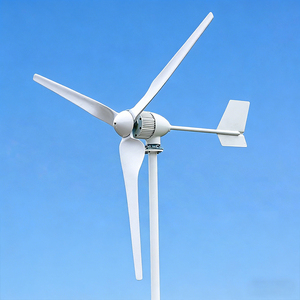
Factory Price Rooftop 1kw Small Wind Turbines for Home Electricity
- Rated Capacity: 1000W / 1kW
- Drivetrain: Direct-Drive PMSG
- Application: Residential & Off-Grid
- Voltage Output: 24V / 48V / 110V
Navigating the transition toward high-reliability distributed energy resources (DER), Permanent Magnet Generators (PMG), and advanced wind-solar hybrid grid-tied/off-grid inverters.
The global demand for distributed renewable energy infrastructure has reached a critical inflection point. As commercial enterprises, agricultural operations, and remote microgrids strive for grid independence and electricity tariff hedging, the technical synergy between direct-drive small wind turbines and high-efficiency wind inverters has emerged as a cornerstone solution. China’s manufacturing ecosystem stands at the epicentre of this transformation, supplying over 70% of the world's micro wind generators, Maximum Power Point Tracking (MPPT) controllers, and custom power inversion platforms.
This technical whitepaper provides B2B buyers, EPC contractors, system integrators, and industrial procurement teams with an exhaustive analysis of China’s top wind energy export architectures. By bridging the gap between mechanical aerodynamic performance and electrical power conversion, this guide evaluates core product lines, engineering topographies, utility interconnection compliance, and future 2025–2030 procurement trends under strict IEEE, CE, and IEC standards.
Directly recommended China manufacturer product lines engineered for agricultural, residential, commercial, and microgrid deployments.
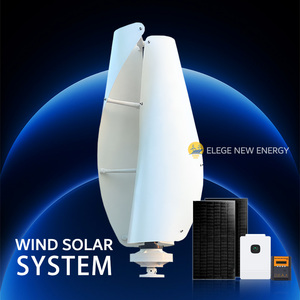
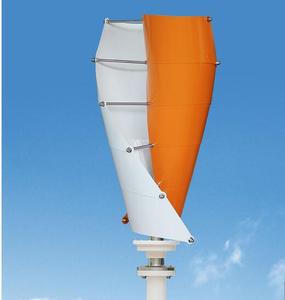
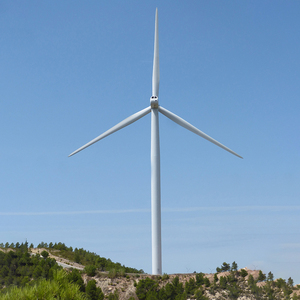
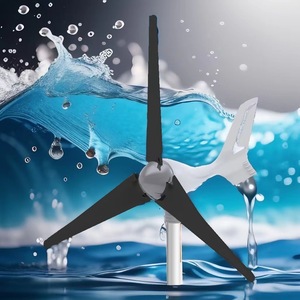
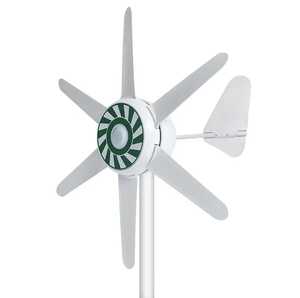
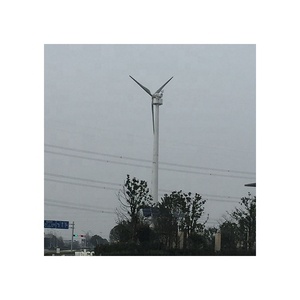
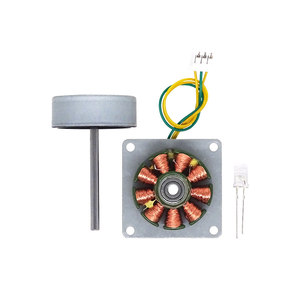
Deconstructing the power electronics, PMSG direct-drive mechanics, and MPPT wind inverter topologies driving higher LCOE efficiencies.
Traditional geared turbines suffer from high mechanical wear, lubrication breakdown, and catastrophic gearbox failure under turbulent wind gusts. Leading Chinese manufacturers utilize Direct-Drive Permanent Magnet Synchronous Generators (PMSG) equipped with high-grade Neodymium Iron Boron (NdFeB) rare-earth magnets. Eliminating mechanical gearboxes reduces moving parts by 60%, drastically minimizing maintenance while yielding low-noise acoustic signatures suited for residential and urban installations.
Wind power curves are highly non-linear, requiring dynamic impedance matching. Wind turbine inverters feature multi-stage Maximum Power Point Tracking (MPPT) algorithms that continuously adjust electrical load to lock onto the optimal tip-speed ratio (TSR). Operating across ultra-wide DC input voltage windows (e.g., 24VDC to 600VDC), these units maximize harvest during low-breeze regimes while providing active electronic dump-load braking during high-wind storms.
Export-grade grid-tie inverters engineered in China strictly comply with IEEE 1547, UL 1741, and European EN 50549 interconnection standards. Achieving total harmonic distortion (THD) under 2.5%, these units supply utility-grade pure sine wave AC electricity. Integrated islanding protection, fast frequency response (FFR), and anti-backflow limiters ensure immediate grid safety and seamless compliance with local utility regulations.
When procuring small wind energy assets from China OEMs, selecting the ideal aerodynamic configuration is critical to matching site-specific wind turbulence and structural conditions.
| Technical Parameter | Horizontal Axis (HAWT - 400W to 5kW) | Vertical Axis (VAWT - 300W to 2kW) |
|---|---|---|
| Aerodynamic Coefficient ($C_p$) | High (0.40 - 0.48) | Moderate (0.25 - 0.35) |
| Wind Direction Sensitivity | Requires Active/Passive Yaw Tracking | Omnidirectional (360° capture) |
| Cut-In Wind Speed Threshold | 2.0 m/s - 2.5 m/s | 1.2 m/s - 1.8 m/s |
| Acoustic Noise Output | 38 - 52 dBA (Tip Vortex Noise) | < 28 dBA (Whisper Quiet) |
| Turbulent Air Performance | Moderate (Prone to yaw hunting) | Superior (Ideal for rooftop/urban) |
| Inverter Controller Topology | Grid-tie/Off-grid MPPT with Dump Load | Dual Buck-Boost MPPT with Battery Sync |
Leveraging vertical supply chain integration, rigorous ISO quality control, and custom OEM/ODM manufacturing capability.
China's industrial clusters in Jiangsu, Zhejiang, and Guangdong integrate every phase of wind system manufacturing. From raw rare-earth magnet refining and precision CNC hub machining to automated Surface Mount Technology (SMT) for inverter printed circuit boards (PCBs), vertical integration drops production lead times by up to 40% while maintaining competitive factory-direct pricing.
Leading Chinese exporters subject all small wind turbines and power inverters to stringent quality assurance protocols before overseas shipment. Equipment undergoes salt spray corrosion testing (C5-M marine rating for offshore/coastal use), wind tunnel aerodynamic verification, vibration stress screening, and 100% full-load thermal burn-in testing across operating ranges of -40°C to +65°C.
Whether you require custom DC input voltage curves for specialized battery chemistries (LiFePO4, Sodium-ion, Lead-acid), private-label chassis branding, localized SCADA telemetry protocols (Modbus RTU, CANbus, RS485, IoT Cloud integration), or custom-tailored tower mounting flange configurations, Chinese exporters offer complete turnkey engineering flexibility under strict non-disclosure agreements (NDAs).
Strategic insights into emerging technology developments, smart grid integration, and hybrid energy architectures.
Sole reliance on single-source renewables is giving way to fully integrated Wind-Solar-Storage ($WS^2+$) hybrid microgrids. Next-generation wind inverters now feature dedicated DC-coupled solar PV inputs and bi-directional battery chargers managed by AI-driven Energy Management Systems (EMS). This yields 24/7 continuous output profiles, mitigating solar drop-offs during nighttime and winter seasons.
Modern B2B buyers mandate enterprise visibility. Export wind inverters are increasingly equipped with 4G/5G SIM modules, Wi-Fi, and LoRa gateways connecting directly to cloud management portals. Real-time telemetry tracking of turbine RPM, stator temperature, phase voltage, daily yield (kWh), and automated fault diagnostics minimizes operating expenses (OPEX) by enabling predictive maintenance.
As battery storage transitions toward high-voltage (HV) architectures and lower-cost Sodium-ion chemistry, wind charge controllers and off-grid inverters are expanding their programmable charging parameters. Modern Chinese inverters feature dynamic BMS communication, allowing seamless integration with high-voltage stackable battery banks up to 500VDC.
Direct engineering answers to common technical, logistics, and procurement questions when sourcing from China.
Matching requires aligning the wind generator's 3-phase AC output voltage range with the inverter’s MPPT DC input window. Because a turbine's voltage varies linearly with wind speed and rotor RPM, an uncontrolled AC output can spike during strong gusts. You must select an inverter paired with an automatic electronic dump load or buck-boost controller capable of clamping overvoltage conditions before exceeding the inverter's maximum DC input threshold ($V_{max}$).
Grid-tied wind inverters convert wind-generated power into synchronized AC electricity to export directly into the commercial utility grid or supply behind-the-meter building loads, utilizing utility grid reference signals for synchronization. Off-grid wind inverters (or hybrid controllers) charge 12V/24V/48V/HV battery banks first and use internal DC-to-AC inversion to power isolated equipment independently of the electric grid.
As a practical engineering rule, sites with an average annual wind speed of 4.5 m/s (approx. 10 mph) or higher at hub height yield attractive financial returns. Utilizing tallguyed or free-standing towers (typically 12m to 36m height) elevates the turbine above ground turbulence and vegetation clutter, increasing energy harvesting potential by up to 50% due to wind shear factors.
For European markets, verify CE, Low Voltage Directive (LVD 2014/35/EU), Electromagnetic Compatibility (EMC 2014/30/EU), and EN 50549 grid codes. For North American deployments, check compliance with UL 1741 (for inverters) and AWEA/IEC 61400-2 (for small wind turbine safety and performance). Factory ISO 9001 quality management verification is also highly recommended.
A dump load is a heavy-duty ceramic or metal-housed resistor bank. When the battery bank is fully charged or when utility grid failure occurs during high winds, the inverter/controller diverts excess turbine electricity to the dump load. This acts as an electromagnetic brake, slowing down rotor blade rotation and preventing mechanical overspeed damage, generator overheating, or inverter overvoltage failure.
Because direct-drive permanent magnet systems eliminate mechanical gearboxes, O&M requirements are minimal. Scheduled maintenance consists of annual visual inspections of blade surfaces for erosion, checking bolt torque on tower flanges and rotor hubs, inspecting cable strain relief, and verifying inverter heatsink airflow and electrical connections.