30 Yrs
Engineered Service Life
98%+
Fleet Availability Rate
100mW-90kW
Power Scalability
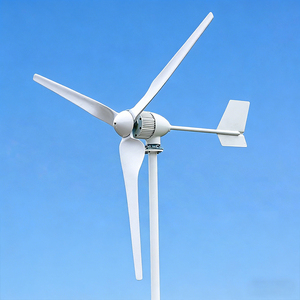
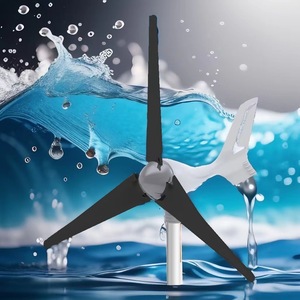
Factory Price Rooftop 1kw Small Wind Turbines for Home Electricity
- Rated Capacity: 1000W (1kW)
- Application: Rooftop / Residential
- Topology: Low Noise Horizontal Axis
Get a Quote
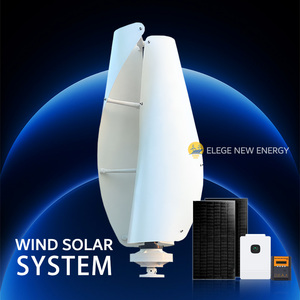
Elege CE MPPT Low Noise 12V/24V/48V 2kW Vertical Wind Turbine System
- Rated Power: 2000W (2kW)
- Controller: Smart MPPT Dynamic Braking
- Voltage Options: 12V / 24V / 48V DC
Get a Quote
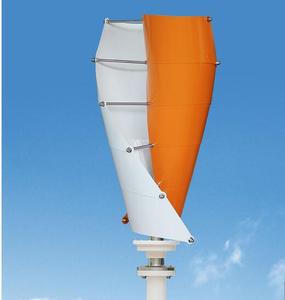
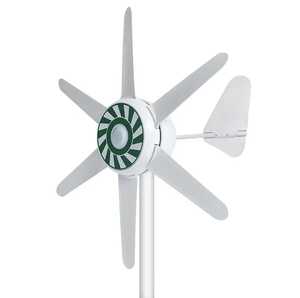
300W Micro Vertical Wind Generator Kit for Off-Grid Battery Charging
- Rated Power: 300W Micro Generator
- Design: Vertical Axis omnidirectional
- Target Use: Low Wind Speed Regions
Get a Quote
Long Lifespan Outdoor Micro Wind Generator 80mW / 90mW / 100mW Series
- Power Spectrum: 80mW - 100mW
- Build Quality: Weatherproof Anodized Finish
- Service Life: Extended Outdoor Life
Get a Quote
Horizontal Axis Micro Wind Generator 400W 12V for Solar Street Lighting & CCTV
- Output Rating: 400W 12V DC
- System Type: Hybrid Solar-Wind Backup
- Integration: Surveillance & Telemetry
Get a Quote
90W Mini Wind Turbine with Integrated Controller (12V/24V DC Output)
- Rated Capacity: 90W Compact Generator
- Control Unit: Built-In Charge Regulator
- Output: 12V / 24V Auto-Sensing DC
Get a Quote
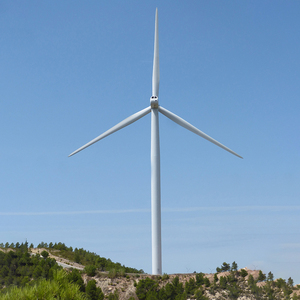
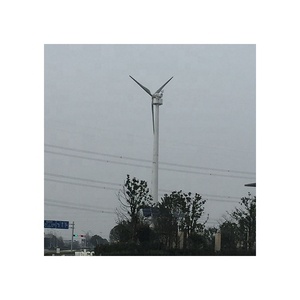
High-Efficiency 3-Blade 5kW Industrial Grade Wind Generator System
- Rated Power: 5000W (5kW)
- Rotor Architecture: High Lift Aerodynamic Blades
- Application: Commercial / Agricultural Microgrid
Get a Quote
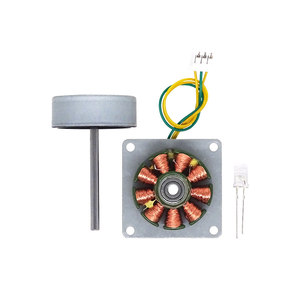
Three-Phase Micro Wind Generator Engine (3V to 24V Low-Voltage Equipment)
- Voltage Range: 3V - 24V AC/DC
- Generator Type: 3-Phase Permanent Magnet
- Specialization: Low-RPM Kinetic Harvesting
Get a Quote
Executive Industry Summary: The Distributed Wind Controller Ecosystem
As global commercial, industrial, and agricultural enterprises accelerate behind-the-meter electrification, the reliance on stable, grid-compliant distributed energy resource (DER) management has reached a historical peak. While wind turbines harvest aerodynamic energy, the wind charge controller and grid-tie inverter system act as the central nervous system of any wind energy installation.
Selecting a reliable wind controller factory and export partner is no longer merely a bill-of-materials procurement decision. It directly dictates system availability, dynamic load damping during turbulent wind events, battery state-of-health (SoH) preservation, and levelized cost of energy (LCOE) across a 30-year operational lifecycle.
Information Gain Insight: Modern wind turbine controllers have evolved from simple pulse-width modulation (PWM) dump-load switches into AI-orchestrated maximum power point tracking (MPPT) command units. Procurement officers evaluating Tier-1 manufacturers must look beyond initial unit cost and rigorously analyze total cost of ownership (TCO), SCADA diagnostic protocols, and fault-mitigation mechanics under severe grid disruptions.
Top 10 Global Wind Controller Manufacturers & Exporters Evaluation
To assist global EPC contractors, microgrid engineers, and agricultural procurement directors in navigating the international manufacturing ecosystem, our research team has compiled a technical benchmark matrix highlighting key operational capabilities of premier wind turbine and charge controller exporters.
| Manufacturer Category |
Core System Capability |
Topology Specialization |
SCADA / Communication |
Target Sector |
| Direct-Drive Specialists (Tier-1) |
Gearbox-free PMG + AI MPPT Integration |
Grid-Tie & Microgrid Hybrid |
Modbus RTU / CANbus / IoT Cloud |
C&I Facilities, Agriculture, Feedyards |
| Industrial Controls OEM |
High-Voltage DC Step-Down & Dump Load |
Off-Grid & Battery Storage |
RS485 / Remote SCADA |
Telecom Towers, Remote Mining |
| Micro-Turbine Exporters |
Compact PWM & Auto-Braking Units |
Small Scale / Low Voltage |
LED Status / Local Bus |
Residential Rooftops, Lighting Backup |
| Hybrid EMS Innovators |
Tri-mode Wind-Solar-BESS Management |
Integrated Utility-in-a-Box |
AI Cloud Telemetry & Peak Shaving |
Island Microgrids, EV Charging Hubs |
Key Evaluation Criteria for Global Procurement Managers
- Thermal Damping & Dynamic Brake Reliability: Wind energy inputs are inherently stochastic. Superior controller factories engineer solid-state electronic braking systems paired with heavy-duty ceramic or aluminum-housed dump loads to handle overspeed conditions without mechanical brake wear.
- MPPT Tracking Speed & Efficiency: High-efficiency controllers utilize fast-sampling digital signal processors (DSP) to adjust the impedance matching point up to 100 times per second, harvesting up to 35% more annual energy yield compared to legacy PWM units in turbulent winds.
- Harmonic Suppression & Grid Compliance: For grid-tied architectures ranging from 1kW to 90kW, total harmonic distortion (THD) must remain below 3% to comply with stringent IEEE 1547 and EN 50549 international grid codes.
Gearbox-Free Direct-Drive Architecture
By coupling permanent magnet generators directly to the rotor hub, our manufacturing philosophy eliminates mechanical gearboxes. This removes gear oil maintenance, cuts mechanical failure risks by 70%, and ensures continuous generation in arctic cold and desert dust.
30-Year Design Life & 98%+ Availability
Engineered to rigorous industrial standards, every system undergoes multi-stage stress validation. Commercial fleet telemetry demonstrates verified availability rates exceeding 98% across demanding marine, agricultural, and industrial climates.
AI-Driven Wind-Solar-Storage Integration
The EOX WS²+ system platform integrates wind generation, solar photovoltaics, and battery energy storage (BESS) under a proprietary AI energy management framework. Intelligent algorithms optimize behind-the-meter dispatch based on tariff spikes and local load curves.
Future Procurement & Product Development Trends (2026-2035)
The wind turbine controller and small wind turbine export industry is undergoing rapid technological transformation driven by grid modernization, carbon auditing, and power electronics miniaturization. B2B purchasers must structure their supply chain contracts around four primary technology vectors:
1. Advanced MPPT Algorithm Maturation & Dynamic Voltage Sensing
Traditional wind charge controllers operated on fixed voltage curves, leading to massive kinetic energy loss during rapid gust transitions. Future-ready factories are standardizing adaptively tuned hill-climbing algorithm controllers capable of dynamic power curve mapping. This allows wind turbines to capture micro-bursts of wind even in low annual mean wind speed zones (3.5 m/s to 5.0 m/s).
2. Integrated Telemetry & Cloud SCADA Monitoring
Enterprise buyers operating fleets of wind assets—such as telecom companies managing remote tower sites or agricultural feedyard conglomerates—demand real-time performance diagnostics. Export-grade controllers now feature standard industrial IoT interfaces (RS485 Modbus, CANbus, standard Ethernet, and Cellular LTE-M) transmitting voltage, rotational RPM, heat sink temperature, and turbine vibration metrics directly to centralized SCADA dashboards.
3. Wind-Solar-Battery (BESS) Tri-Mode Hybridization
Pure wind or pure solar installations frequently suffer from seasonal and diurnal intermittency. The procurement trend is shifting rapidly toward turnkey hybrid controllers. By combining dual DC inputs (Wind MPPT + PV MPPT) with an integrated battery management system (BMS) interface inside a single NEMA 4X / IP66 enclosure, system integrators reduce site installation time, eliminate cabling redundancies, and decrease balance-of-system (BOS) capital costs by up to 25%.
4. Direct Factory OEM Customization & Grid Code Pre-Certification
As international grid regulations tighten, international importers require controllers pre-certified for UL 1741, IEEE 1547, CE, and IEC 61400-2 compliance. Factory-direct OEM customization now encompasses bespoke voltage output configurations (ranging from 12V/24V/48V DC battery banks up to 380V/480V 3-phase AC industrial tie-ins), custom firmware brand tagging, and pre-wired enclosures engineered for plug-and-play field deployment.
Technical Deep-Dive: Direct-Drive PMG vs. Traditional Gearbox Systems
When procuring small wind energy systems (from 1kW micro units up to 90kW commercial platforms), the fundamental architectural choice lies between direct-drive permanent magnet generators (PMG) and traditional geared wind turbines. Below is an engineering total cost of ownership (TCO) evaluation based on 30 years of field operation data:
| Performance Dimension |
Direct-Drive PMG Architecture |
Geared Wind Turbine Architecture |
| Mechanical Complexity |
Ultra-Low (Hub coupled directly to generator rotor) |
High (Multi-stage planetary gearset required) |
| Lubrication Maintenance |
Zero gear oil changes required over 30 years |
Bi-annual gear oil flushing & seal replacement |
| Acoustic Noise Signature |
Silent/Low Noise (Eliminates high-frequency gear whine) |
Moderate to High mechanical tooth engagement friction |
| Cut-In Speed Threshold |
Extremely Low (~2.0 - 2.5 m/s) |
Higher (~3.5 - 4.5 m/s due to gear friction) |
| 30-Year Fleet Availability |
Exceeds 98% in commercial installations |
Averages 82% - 88% due to gearbox failures |
Q1: How do I calculate whether a site has sufficient wind resources for a commercial wind turbine system?
As a practical engineering rule of thumb, candidate sites exhibiting an average annual wind speed of 5.0 m/s (approx. 11 mph) or greater at hub height justify a formal feasibility study. Modern direct-drive turbines paired with tall towers (typically 30m to 36m hub height) reach laminar, high-velocity air streams well above ground obstructions like tree lines, silos, and commercial buildings. Leading factories provide comprehensive site resource modeling using long-term NASA/NOAA wind datasets overlaid with your facility’s 15-minute interval load profiles before project hardware commitments are made.
Q2: How does behind-the-meter small wind energy complement existing rooftop solar arrays?
Rooftop solar and wind energy feature complementary generation profiles. Solar PV generates exclusively during daylight peak sun hours, dropping to zero during nighttime and diminishing significantly during winter weather. Conversely, wind resources are frequently strongest during nighttime, autumn, and winter months—coinciding exactly with heavy agricultural (ventilation, heating, milking parlors) and industrial refrigeration loads. Furthermore, wind turbines produce maximum energy per square meter of ground footprint, preserving vital agricultural land or parking facilities around the tower base.
Q3: What routine maintenance is required for a direct-drive wind controller and generator?
Because direct-drive permanent magnet systems eliminate mechanical gearboxes, there are no oil reservoirs to flush, no drive belts to tighten, and no mechanical high-speed shaft seals to replace. Scheduled maintenance is simplified to an annual visual inspection of electrical torque settings, blade leading-edge cleanliness, and dynamic dump load test sequences. Remote SCADA telemetry continuously monitors winding temperatures, line voltages, and vibration levels, enabling predictive maintenance interventions long before unexpected downtime occurs.
Q4: Who handles international utility interconnection studies, permitting, and factory export logistics?
Tier-1 wind turbine factories and certified exporter networks deliver complete turnkey execution contracts. This turnkey umbrella encompasses initial wind assessment, structural engineering stamping, local environmental permitting filings, utility grid interconnection applications, civil foundation construction, crane tower erection, electrical commissioning, and long-term operations & maintenance (O&M) coverage under a single accountable contract.
Q5: What is the expected economic service life and financial payback period for distributed wind assets?
Industrial-grade small wind turbines are engineered for a 30-year design life. Financial payback periods vary based on local utility electricity tariffs, available commercial clean energy tax incentives, and site wind regimes. Typically, commercial and agricultural installations achieve full capital payback within 4 to 8 years, yielding over two decades of predictable, near-zero marginal cost electricity that hedges against volatile utility rate hikes.
Accelerate Your Commercial Wind Energy Transition
Partner directly with leading wind controller manufacturers and direct-drive turbine exporters. Submit your site coordinates and facility load profiles to receive a customized wind energy yield assessment and factory-direct quotation.
Get a Quote