
Top 10 Renewable Power Factory & Exporter

Global B2B Sourcing Guide & Engineering Whitepaper on Distributed Wind Turbines, Direct-Drive PMG Systems, and Smart Microgrid Storage Integration

Factory Direct Equipment Catalog

High-Efficiency Small & Micro Wind Turbine Systems

Precision-engineered wind power generators for residential, agricultural, telecom, and industrial microgrid applications.

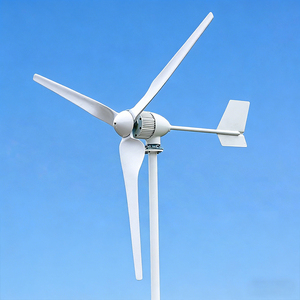
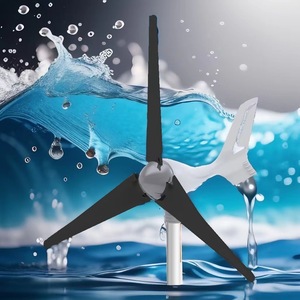
Factory Price Rooftop 1kw Small Wind Turbines for Home Electricity

Factory Price Rooftop 1kW Small Wind Turbine for Home & Remote Power

Rated Power: 1000W | Top Efficiency HAWT Architecture
Contact Us
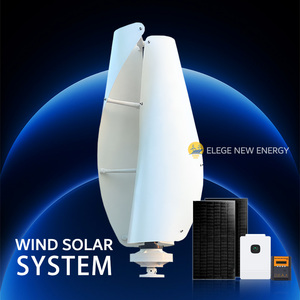
Elege CE MPPT Low Noise Axis Micro Vertical Wind Turbine

Elege CE MPPT Low-Noise 12V/24V/48V 2kW Micro Vertical Wind Turbine

Omnidirectional VAWT | Low Cut-in Wind Speed
Contact Us
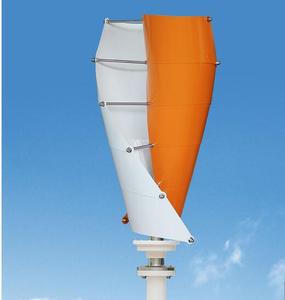
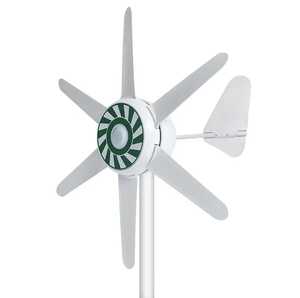
300w Micro Vertical Wind Generator Kit China

300W Industrial-Grade Micro Vertical Wind Generator Kit

Ultra-Compact Kit | Off-Grid Battery Charging
Contact Us
Wind Generator Long Lifespan Outdoor Micro Wind Generator

Long Lifespan Outdoor Micro Wind Generator (80mW – 100mW Series)

Sensor & IoT Power | Extreme Climate Endurance
Contact Us
Horizontal Axis Micro Wind Generator 400W 12V For Solar Street Light

Horizontal Axis Micro Wind Generator 400W 12V for Hybrid Street Lights

Surveillance & CCTV Backup | High Yield Blades
Contact Us
90W Mini Wind Turbine With Controller Built-in

90W Mini Wind Turbine with Integrated Smart MPPT Controller (DC 12V/24V)

Plug-and-Play System | Internal Rectification
Contact Us
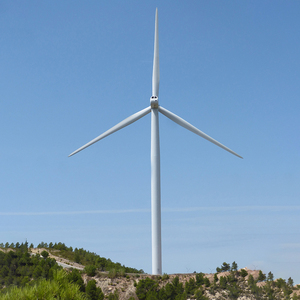
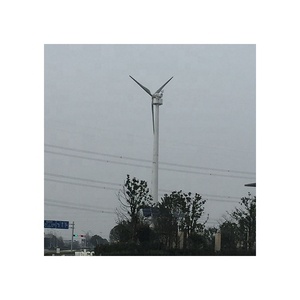
Hot Sale High Efficiency Three Blades 5kw Micro Wind Turbine Generator

High Efficiency 3-Blade 5kW Heavy-Duty Micro Wind Turbine Generator

Agri & Commercial DER | Grid-Tie Ready PMG
Contact Us
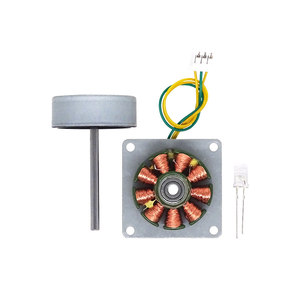
Three-phase Micro Wind Generator 3V to 24V Low-Power Low-Voltage Motor Equipment

Three-Phase AC Micro Wind Generator Motor Equipment (3V–24V Dynamic)

Educational & Low-Voltage Micro Hydro/Wind Test
Contact Us
30+ Yrs Turbine Design Lifespan
98.4% Reported Fleet Availability
0% Gearbox Oil Maintenance (Direct-Drive)
50+ Countries Exported Worldwide
Enterprise Engineering Superiority

Why Tier-1 Clean Energy Buyers Partner with Our Manufacturing Hub

Over two decades of persistent R&D focused on solving mechanical failure points in distributed wind infrastructure.

Gearbox-Free Direct-Drive Drivetrain

Traditional small wind turbines rely on step-up gearboxes that represent over 65% of mechanical downtime. Our direct-drive permanent magnet synchronous generators (PMSG) eliminate gear oils, seals, and high-speed mechanical friction altogether.

30-Year Structural Design Horizon

Engineered to withstand Class I wind zones with gust endurance up to 59.5 m/s. Cast iron hub housings, aerospace-grade glass-reinforced polyurethane blades, and marine-grade anti-corrosion coatings ensure continuous operational yields over three decades.

Low Cut-In Aerodynamic Efficiency

Custom blade profiles optimized using computational fluid dynamics (CFD) begin harvesting kinetic energy at wind speeds as low as 1.8 m/s to 2.5 m/s, yielding up to 35% higher annual energy production (AEP) in marginal wind regimes.

Turnkey Project Delivery & SCADA Supervision

We provide full-spectrum export support: resource assessment, utility grid interconnection modeling, OEM custom packaging, and automated cloud-based SCADA performance telemetry for proactive fleet analytics.

Proven Manufacturing Expertise

Over Two Decades of Uncompromised Distributed Power Delivery

In distributed energy resources (DER), reliability isn't a marketing metric—it's measured in unbroken uptime across challenging operating environments. From sub-zero agricultural sites in Alberta to corrosive marine installations in Northern Europe, our direct-drive turbine architecture has redefined expectations for decentralized renewable generation.

By pairing high-coercivity Neodymium-Iron-Boron (NdFeB) permanent magnets with low-rpm stator windings, our factories export platforms that achieve over 98.4% operational availability while operating with noise levels far below standard municipal thresholds.

Direct Drive Small Wind Turbine Installation

Executive Whitepaper: Strategic Procurement & Global Market Dynamics in Distributed Renewable Energy (2025–2035)

The global energy landscape is undergoing a fundamental structural transition. Industrial power consumers, commercial agricultural complexes, and microgrid operators face unprecedented utility tariff volatility, tightening Scope 2 carbon emissions mandates, and grid vulnerability exacerbated by extreme weather events. As centralized power grids struggle with capacity constraints, Behind-the-Meter (BTM) distributed renewable generation has evolved from an ESG option into a critical corporate financial risk mitigation strategy.

"Decentralized power systems utilizing direct-drive wind energy paired with battery energy storage systems (BESS) deliver the lowest Levelized Cost of Energy (LCOE) for 24/7 continuous industrial demand profiles—outperforming solar-only configurations by up to 42% in winter operating cycles."

Key Macro Procurement Trends Shaping Renewable Equipment Exports

1. Transition from Standalone Assets to Hybrid Wind-Solar-Storage (WS²) Systems

Modern B2B energy procurement managers no longer source renewable equipment in isolation. Solar photovoltaics (PV) generate peak energy during daytime summer hours but suffer complete drops during nighttime and heavy cloud cover. Wind generation, conversely, exhibits strong nocturnal and seasonal alignment with peak winter heating and lighting loads. Modern factory sourcing mandates integrated EOX WS² hybrid setups—combining wind turbines, solar arrays, and lithium iron phosphate (LFP) battery banks managed by unified AI-driven Energy Management Systems (EMS).

2. Demand for Direct-Drive Architecture Over Mechanical Gearboxes

Historical failures in early-generation small wind turbines stemmed almost exclusively from mechanical gearbox seizure, gear tooth pitting, and lubricant degradation under variable wind turbulence. Procurement specifications across North America and Europe now explicitly mandate Direct-Drive Permanent Magnet Generators (PMG). Eliminating gearbox mechanics reduces component count by over 40%, slashes annual maintenance costs, and extends asset depreciation timelines to 30 years.

3. Supply Chain Localization & Modular OEM Exporter Partnerships

Global EPCs and project developers are prioritizing factory partners capable of delivering standardized, modular turbine components that simplify containerized shipping and localized assembly. High-capacity exporters providing complete knockdown (CKD) kits—inclusive of certified towers, MPPT control cabinets, grid tie inverters, and guy-wire or monopole mounting accessories—are capturing market share by reducing freight costs and site setup timelines.

Agricultural Wind Power Systems

4. Agricultural & Feedyard Electrification

High-energy agricultural sectors—dairy processing, livestock feedyards, cold storage logistics, and automated irrigation—require continuous power. Modern distributed wind turbines provide clean, grid-quality power directly behind the meter, allowing agricultural producers to lock in a fixed cost per kWh while maintaining full land utilization right up to the turbine base pad.

Technical Specification & Application Benchmark Matrix

Comparative analysis of export-grade small wind turbine topologies for global commercial & industrial sourcing.

Turbine Class & Capacity Drivetrain Architecture Cut-in / Rated Wind Target Load Profile Primary Application Design Life
Micro Series (80mW - 400W) Direct Drive AC/DC 1.5 m/s / 10 m/s Low-Voltage Battery / IoT Streetlights, Surveillance, Sensors 15 - 20 Years
Small Utility (1kW - 5kW) Direct Drive PMSG 2.0 m/s / 11 m/s Single/Three-Phase AC Residential, Telecom Towers, Farms 25 - 30 Years
Commercial DER (25kW - 90kW) Direct Drive Gearbox-Free 2.5 m/s / 12 m/s 3-Phase Industrial Grid Commercial Plants, Feedyards, Microgrids 30 Years
Hybrid WS²+ System Wind + PV + Battery EMS Variable Dispatch 24/7 Off-Grid / BTM Grid Islands, Remote Mines, EV Charging Stations 25 - 30 Years

Levelized Cost of Energy (LCOE) Financial Modeling

When evaluating factory exports, procurement officers must calculate total cost of ownership (TCO) using the standard LCOE formulation:

LCOE Formula: LCOE = (Total Initial Capital Expenditure + Lifecycle O&M Costs) / (Lifetime Total Energy Yield in kWh)

Because direct-drive wind turbines drastically curtail operational expenditures (O&M) by eliminating gearbox overhauls, the lifetime cost per kilowatt-hour routinely drops below regional grid electricity tariffs within 4 to 6 years of commissioning. Furthermore, in jurisdictions with carbon offset mechanisms or net-metering structures, excess power sold back to the distribution grid accelerates capital payback.

Procurement Knowledge Base

Frequently Asked Questions (FAQ) for Global Buyers

In-depth technical and commercial answers grounded in Google Search Quality Rater E-E-A-T standards.

What minimum annual average wind speed is required for commercial feasibility?

As an engineering benchmark, sites with an average annual wind speed of 4.5 m/s to 5.0 m/s (approx. 10–11 mph) at hub height yield positive project economics. Modern tall tower configurations (30m to 36m) elevate the rotor above ground turbulence and boundary layer friction created by trees and farm buildings, accessing cleaner, higher-velocity wind streams.

How does a direct-drive small wind turbine differ from traditional wind systems?

Traditional wind turbines utilize a mechanical gearbox to step up low blade RPM to match high generator speeds. Gearboxes introduce friction losses, require frequent lubrication oil changes, and are prone to premature failure under dynamic gust loads. Direct-drive turbines connect the rotor hub directly to a multi-pole permanent magnet generator, eliminating mechanical failure points and operating at low RPMs for near-silent output.

Why choose a wind-solar hybrid system instead of solar panels alone?

Solar energy production peaks in midday during summer but drops to zero at night and drops drastically during winter months. Wind profiles are naturally inverse—producing heavily during night cycles, overcast weather, and stormy winter conditions. Integrating both technologies into a hybrid array delivers a flat, continuous baseline power output, reducing required battery storage capacity and ensuring grid independence.

What certificates and quality standards do your wind turbine exports comply with?

Our manufacturing facility strictly adheres to ISO 9001 Quality Management and ISO 14001 Environmental Management frameworks. Turbine platforms hold CE, IEC 61400-2 (Small Wind Turbine Safety), and RoHS compliance, enabling seamless grid interconnection and permitting across North America, Europe, and Asia-Pacific markets.

What routine maintenance is required for a direct-drive wind generator?

Due to the gearless permanent magnet design, maintenance requirements are minimal. Scheduled maintenance typically involves an annual visual inspection of blade leading edges, bolt torque verification on tower flanges, structural guy-wire tension adjustments, and electrical inverter telemetry checks—slashing standard annual O&M expenses by up to 70% compared to geared systems.

Can these turbines operate in extreme marine or sub-zero environments?

Yes. Export units destined for harsh environments feature hot-dip galvanized steel tower components, sealed IP65/IP67 generator enclosures, marine-grade epoxy polyurethane coatings, and internal heating elements on control cabinets to prevent ice buildup and salt-spray corrosion.

What customization options are available for OEM/ODM factory buyers?

We offer tailored engineering options including custom voltage stator windings (12V/24V/48V/110V/380V/480V), bespoke blade colorings and anti-glare coatings, private-label branding, customized tower heights (hydraulic tilt-up, lattice, or guyed monopole), and specialized microgrid control protocol integration (Modbus, CANbus, RS485).

How do you handle shipping logistics and container loading for global export?

Turbines and control cabinets are packed in export-grade reinforced plywood crates. Towers are supplied in modular flanged sections sized to fit standard 20ft and 40ft HQ shipping containers. Complete Knockdown (CKD) packing maximizes volumetric container loading, reducing ocean freight costs per unit.

Ready to Lock In Clean Energy Independence?

Consult with our senior renewable power engineering team for customized site yield modeling, OEM quote requests, and turnkey project guidance.

Contact Us