Explore our certified direct-drive horizontal and vertical axis wind energy converters engineered for agricultural, commercial, industrial, and distributed utility applications.
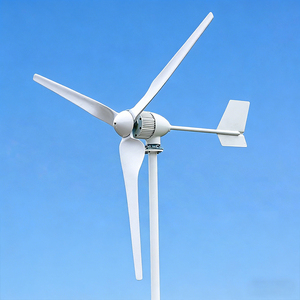
Compact horizontal-axis rooftop turbine tailored for small residential, agricultural, and commercial backup grid tie applications.
Get Catalog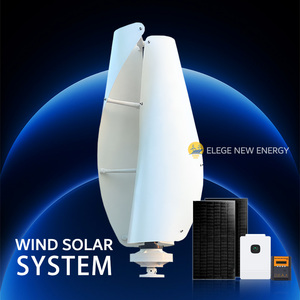
Omnidirectional low-noise vertical axis architecture featuring integrated MPPT grid synchronization for turbulent wind conditions.
Get Catalog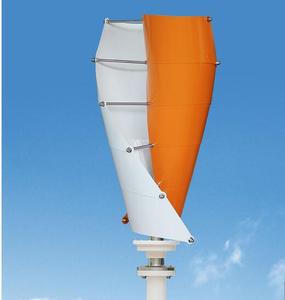
Ultra-low cut-in velocity micro generator kit engineered for specialized off-grid sensing, telemetry, and distributed microgrid support.
Get Catalog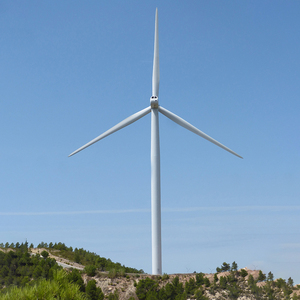
Heavy-duty weather-sealed micro turbine unit optimized for long-term uninterrupted operational duty in harsh outdoor climates.
Get Catalog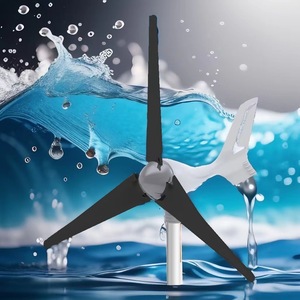
Aerodynamically optimized 400W generator engineered for solar hybrid infrastructure, streetlights, and remote surveillance backup power.
Get Catalog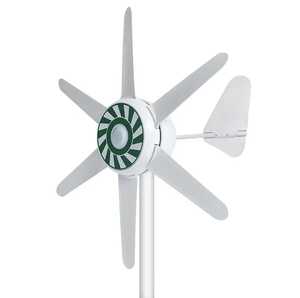
Features onboard DC rectifying controller output (12V/24V) designed for plug-and-play battery buffer integration and light loads.
Get Catalog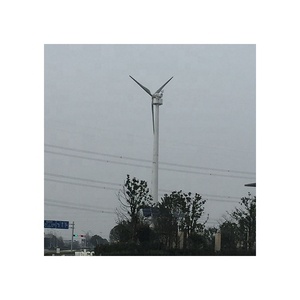
Heavy-duty 3-blade commercial grid turbine designed for agricultural facilities, feedyards, distributed microgrids, and commercial power offset.
Get Catalog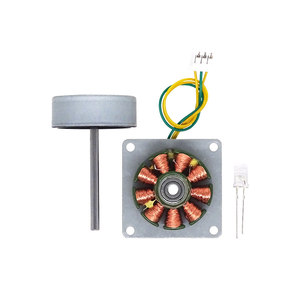
Low-power low-voltage brushless AC generator unit designed for custom OEM energy harvesting and decentralized sub-system power supply.
Get CatalogAs corporate sustainability mandates move from voluntary public relations goals to audited Scope 2 compliance frameworks, distributed energy resources (DER) have transformed from auxiliary power units into critical financial infrastructure. Small and medium grid-connected wind turbines—ranging from 300W micro-kits to 90kW commercial platforms—represent the most land-efficient behind-the-meter generation asset available to agricultural operations, industrial manufacturing plants, commercial feedyards, and remote microgrid operators.
Unlike centralized utility assets subjected to transmission bottlenecks, congestion surcharges, and volatile retail pricing tariffs, distributed grid turbines convert Kinetic Wind Energy (KWE) directly into utility-grade Alternating Current (AC) at the point of consumption. To achieve true Levelized Cost of Energy (LCOE) superiority over utility power purchase contracts, top-tier turbine manufacturers have systematically phased out traditional high-maintenance gearboxes in favor of gearless direct-drive permanent magnet synchronous generators (PMSG).
Key Strategic Takeaway: Direct-drive permanent magnet generator (PMG) architecture eliminates over 70% of mechanical moving parts, replacing vulnerable multi-stage gearboxes with frictionless magnetic coupling. This design shift guarantees 30-year design longevity and maintains fleet availability metrics above 98% in extreme climates.
Global procurement metrics for grid-connected wind equipment reflect a fundamental shift in buyer criteria. Enterprise energy buyers no longer evaluate turbine suppliers solely on initial capital expenditure (CAPEX); instead, procurement decisions are governed by long-term durability metrics, total cost of ownership (TCO), grid-code compliance, and microgrid interoperability.
Elimination of mechanical gearboxes to prevent oil leaks, shaft misalignments, and catastrophic high-wind mechanical stress failures, achieving minimal annual OPEX.
Integration of wind assets with Photovoltaic (PV) arrays and Battery Energy Storage Systems (BESS) orchestrated by AI-managed Energy Management Systems (EMS).
IoT-enabled Cloud SCADA portals streaming sub-second telemetry for predictive fault diagnosis, remote pitch control, and Low-Voltage Ride-Through (LVRT) compliance.
The operational profile of commercial facilities—such as cold storage warehouses, agricultural dairies, feedyards, and automated factories—requires electricity generation profiles that match non-linear consumption curves. Solar PV performs efficiently during peak daylight hours but collapses during evening shifts, winter seasons, and overcast conditions. Wind turbine generation inherently counter-balances solar drop-off, providing high power output during nighttime hours and stormy weather patterns when facility heating or refrigeration demands remain high.
When selecting a grid turbine manufacturer or exporter, EPC contractors and enterprise procurement teams must evaluate the underlying electromechanical drivetrain technology. The technical matrix below highlights the operational contrast between legacy geared wind turbines and modern direct-drive permanent magnet synchronous platforms.
| Engineering Vector | Legacy Geared Wind Turbines | Direct-Drive PMG Systems (Eocycle Standard) |
|---|---|---|
| Drivetrain Mechanics | Multi-stage planetary gearbox with high friction load | Gearless direct coupling generator rotor shaft |
| Mechanical Friction & Wear Points | High (gears, oil seals, high-speed bearings) | Ultra-low (sealed low-speed main bearings only) |
| Scheduled Lubrication Maintenance | Quarterly gear oil sampling & bi-annual replacement | Zero gear oil; annual structural inspection only |
| Cut-In Wind Velocity Threshold | 3.5 m/s – 4.5 m/s (high inertia requirement) | 2.2 m/s – 2.7 m/s (instant electromagnetic torque) |
| Acoustic Noise Emission Profile | Elevated mechanical gear hum (65-75 dBA at base) | Low-frequency aerodynamic flow only (<45 dBA) |
| Grid Harmonics & Power Quality | Requires external mechanical braking & smoothing | Full IGBT double-inverter grid isolation (THD <2.5%) |
| Target Operational Service Life | 10 to 15 years (gearbox overhaul required at yr 7) | 30+ Years continuous operational design life |
As an established global manufacturer and exporter of distributed wind power infrastructure, our engineering methodology relies on three structural pillars: electromechanical redundancy, extreme climate endurance, and simplified turnkey grid integration.
Designed and built in-house with neodymium-iron-boron (NdFeB) rare-earth magnets, ensuring optimal thermal stability and lossless electrical conversion even during light wind conditions.
Engineered to withstand Arctic freeze (-40°C), coastal salt-spray corrosion (C5-M rating), and high-dust feedyard environments through vacuum-impregnated stator windings and sealed nacelle housing.
We streamline client procurement through a unified engineering pipeline: high-resolution LiDAR wind assessment, localized foundation engineering, utility interconnection filings, civil works, and commissioning.
Fully compliant with global grid codes including IEEE 1547, UL 1741, IEC 61400-2, and CE certification standards, ensuring effortless connection to municipal grids and microgrid controllers.
The operational versatility of grid-tied small and medium wind turbines spans several distinct economic sectors. Understanding the specific load dynamics of each sector allows our engineering team to custom-tailor mast height, rotor diameter, and inverter pairing.
Farms and agricultural facilities consume significant power for continuous refrigeration, automated milking equipment, grain drying, and high-horsepower irrigation pumps. Because agricultural enterprises usually occupy unshaded, open terrain with uninterrupted wind flow, installing a distributed wind turbine yields exceptionally high capacity factors. Electricity generated behind the meter offsets retail energy tariffs directly, while net-metering mechanisms monetize excess off-peak energy generated overnight.
Industrial facilities frequently face severe rooftop area limitations or structural weight constraints that restrict solar PV expansion. Installing a tall-tower distributed wind turbine (such as an M-Series 90kW unit or multiple 5kW array modules) requires a physical foundation footprint of less than 25 square meters while yielding substantial annual megawatt-hour energy output. This compact footprint leaves freight yards, parking zones, and outdoor inventory staging spaces completely unobstructed.
For remote mining camps, island communities, and off-grid telecommunication towers relying on expensive diesel generators, fuel delivery logistics represent a major operating cost. Integrating direct-drive grid turbines alongside battery storage and solar PV creates a self-healing microgrid ("utility-in-a-box"). This hybrid configuration reduces diesel fuel consumption by up to 80%, providing continuous, clean power during severe storms or fuel supply chain disruptions.
Detailed technical answers addressing site feasibility, wind resource requirements, grid connection, and long-term operating metrics.
As a practical engineering benchmark, sites with an average annual wind speed of 4.5 m/s to 5.0 m/s (approx. 10–11 mph) at hub height represent bankable candidates for distributed wind energy. Modern direct-drive turbines utilize tall free-standing or guyed towers (typically 30m to 36m hub height) to elevate the rotor above surface roughness, ground clutter, and thermal turbulence. Our engineering team conducts comprehensive site assessments using historical meteorological satellite data cross-referenced with on-site anemometer telemetry before finalizing any equipment recommendation.
Wind energy yields significantly higher energy density per square meter of ground land occupied compared to solar arrays. While solar power generates exclusively during daylight hours, wind turbines generate power 24/7, with peak generation often occurring during nighttime hours and winter seasons when solar irradiance is lowest. Because wind and solar generation curves are complementary, combining both assets into a hybrid microgrid maximizes behind-the-meter self-consumption and stabilizes overall energy output.
Direct-drive permanent magnet generators eliminate traditional gearboxes, mechanical speed-increasers, and high-friction oil seals. As a result, routine scheduled maintenance is limited to an annual mechanical torque inspection, blade leading-edge cleaning, and electrical visual checks. Integrated IoT SCADA modules monitor generator temperature, vibration spectra, and electrical output continuously, sending real-time automated alerts before minor variations lead to unplanned downtime.
Our grid-tie wind turbine systems interface with utility networks through smart grid-tied inverters certified under IEEE 1547 and UL 1741 standards. These inverters feature automatic anti-islanding protection, instantly disconnecting the turbine from the grid during municipal grid outages to safeguard line workers. Furthermore, our systems incorporate Low-Voltage Ride-Through (LVRT) capability and active reactive power compensation to assist localized grid stability.
Standard manufacturing lead time for micro to medium commercial wind turbines (300W to 5kW) ranges from 15 to 25 business days. Commercial platforms (25kW to 90kW) carry a production cycle of 45 to 60 days. Equipment is packaged in ocean-ready wooden crates or containerized frames equipped with anti-vibration padding and corrosion-inhibiting desiccant barriers. We provide complete export documentation, including CE certifications, origin certificates, customs clearance forms, and full logistics tracking to major ports worldwide.
Contact our application engineering team today for a complimentary wind resource modeling report, custom CAD installation layouts, and detailed price catalogs tailored to your site specifications.