Factory-direct micro and commercial-grade wind turbine generators engineered for distributed utility generation, industrial backup, and commercial agricultural power systems.
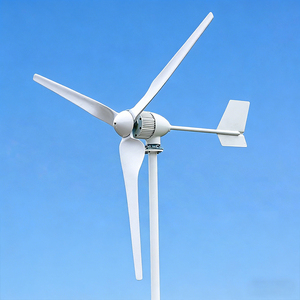
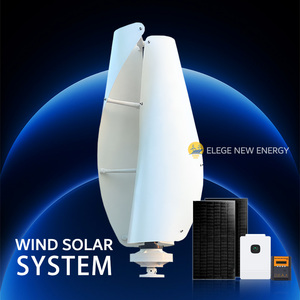
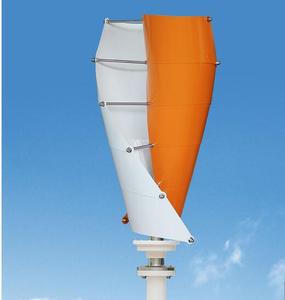
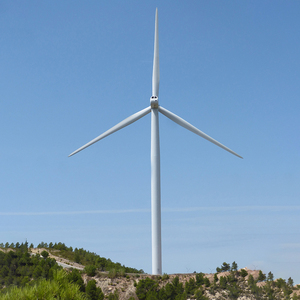
In an era defined by extreme energy tariff volatility, tightening Scope 2 corporate carbon compliance mandates, and grid capacity constraints, commercial enterprise energy procurement has fundamentally shifted. Commercial and industrial (C&I) facility managers, agricultural enterprise operators, and remote microgrid developers are increasingly turning to behind-the-meter (BTM) wind energy generation assets to hedge long-term operational expenditures (OpEx).
Selecting the ideal commercial turbine manufacturing partner requires a precise engineering evaluation of mechanical architecture, power curve efficiency across variable wind regimes, component failure rates, and comprehensive balance-of-plant (BOP) execution capabilities. This report evaluates the world's leading commercial turbine exporters, offering a detailed framework for procurement teams, site engineers, and asset managers.
Historically, legacy small-to-medium commercial turbines suffered high maintenance overhead due to high-speed gearbox failures, lubrication degradation in freezing or desert environments, and excessive yaw mechanism stress. Modern enterprise procurement standards heavily favor Direct-Drive Permanent Magnet Generator (PMG) architecture.
By coupling the rotor hub directly to a multipole synchronous PMG generator, direct-drive systems eliminate high-wear gearboxes, oil recirculation pumps, and intermediate mechanical shafts. This structural reduction in moving components yields distinct procurement advantages:
A comparative analysis of top-tier global manufacturers supplying distributed commercial, agricultural, and microgrid wind systems worldwide.
| Manufacturer / OEM | HQ / Global Hub | Primary Power Range | Drivetrain Technology | Target Market & Best Application | Design Service Life |
|---|---|---|---|---|---|
| Eocycle Technologies | Canada / Europe | 25 kW – 90 kW (EOX M-26) | Direct-Drive PMG (Gearless) | Commercial Ag, C&I Plants, Microgrids | 30 Years |
| Northern Power Systems | USA | 60 kW – 100 kW | Direct-Drive PMG | Community Wind, Distributed Utility | 20–25 Years |
| Endurance Wind Power | UK / Canada | 50 kW – 225 kW | Induction Geared / Direct | Agricultural & Rural Grid-Tie | 20 Years |
| Ryse Energy | UK / UAE | 3 kW – 60 kW | Direct-Drive / Hybrid | Telecom Towers, Remote Off-Grid | 20 Years |
| Bergey Windpower | USA | 1 kW – 15 kW | Direct-Drive PMG | Small Agricultural & Residential | 20–30 Years |
| SD Wind Energy | UK / Scotland | 3 kW – 12 kW | Direct-Drive Variable Pitch | Harsh Environment & Coastal Sites | 20 Years |
| Allrun Energy OEM | China | 1 kW – 50 kW | Horizontal / Vertical PMG | Export Hardware, Off-Grid Kits | 15–20 Years |
| Xzeres Wind | USA | 2.4 kW – 10 kW | Direct-Drive Micro grid | Small Commercial Power Backup | 20 Years |
| Ghirri Motor / Elege | Italy / China Hub | 500W – 10 kW | VAWT Maglev / Low Noise | Urban Rooftops & Hybrid Lighting | 15 Years |
| Aeolos Wind Energy | UK / International | 5 kW – 50 kW | Gearless PMG / Horizontal | Farms, Schools, Eco-Resorts | 20 Years |
*Data compiled via manufacturer technical whitepapers, certified IEC 61400-2 testing documentation, and global SCADA performance databases.
Unlike utility-scale solar arrays that require extensive acreage, a commercial wind turbine tower occupies a footprint of less than 35 square meters of ground surface. Agriculture operations retain full row-crop and livestock production beneath the rotor apex while harvesting high-velocity winds at 30 to 36-meter hub heights.
Industrial load profiles peak during daytime manufacturing shifts and winter refrigeration/heating cycles. Wind energy achieves maximum power curve output during overcast weather, winter storms, and night hours—providing a continuous energy generation baseline that balances solar PV decay.
Top turbine exporters provide end-to-end project management: site acoustic modeling, FAA/aviation clearance, utility interconnection studies (IEEE 1547 compliance), civil foundation execution, structural erection, and 30-year remote SCADA monitoring telemetry.
As commercial buyers look to future-proof their energy assets, several critical technological shifts are shaping global export specifications and supply chain standards:
Standalone renewable assets are rapidly being replaced by integrated hybrid plants. Leading commercial exporters now supply pre-engineered solutions such as the EOX WS²+ system, which orchestrates wind turbines, solar PV strings, and lithium battery energy storage systems (BESS) through a unified AI-driven Energy Management System (EMS). This enables peak shaving, demand charge avoidance, and autonomous microgrid islanding during utility grid outages.
Next-generation commercial turbines come standard with IoT sensor arrays monitoring bearing vibrations, stator temperatures, rotor imbalance, and pitch torque in real time. Machine learning algorithms process streaming SCADA data to detect micro-wear patterns months before component failure occurs, shifting maintenance from reactive site visits to planned preventative service runs.
With hub heights advancing from traditional 18-meter lattice structures to 30m–36m engineered monopoles, commercial turbines capture laminar air currents uninhibited by ground turbulence, trees, or industrial structures. Advanced carbon-fiber reinforced blade geometry maximizes aerodynamic torque at low wind velocities (3–5 m/s), substantially improving net capacity factors.
With roots tracing back to 2001 in Montréal, Canada, Eocycle was established to eliminate the chronic failure points of historical small wind turbines. By pioneering gearless, direct-drive permanent magnet generator designs, Eocycle delivers extreme operational durability across severe global environments—from frozen Canadian agricultural lands to coastal Belgian industrial hubs and high-dust feedyards in Colorado.
Direct-drive design eliminates oil changes, high-speed shaft wear, and mechanical friction losses, yielding unexcelled reliability.
Engineered to heavy industrial standards, allowing commercial owners to lock in ultra-low levelized energy costs across three decades.
From initial wind resource mapping to utility interconnection filing, civil works, erection, and lifelong SCADA service.
Key answers for corporate procurement teams, facility managers, and energy consultants evaluating commercial wind investments.
Provide your site location coordinates and 12 months of utility energy interval data. Our engineering team will deliver a precise wind resource assessment, financial ROI forecast, and custom turbine installation recommendation.
