As the global energy landscape accelerates toward decarbonization, global enterprise buyers, EPC contractors, and agricultural operators face compounding risks: soaring grid tariffs, strict Scope 2 corporate carbon auditing, and power grid instability. Traditional energy procurement models are no longer sufficient. Modern commercial operations demand behind-the-meter decentralized energy resilience that yields high kWh output per land footprint while offering predictable levelized cost of energy (LCOE) over multi-decade horizons.
As a leading pioneer in commercial wind energy since 2001, our engineering hub specializes in direct-drive small wind turbines (ranging from micro-scale DC generators to 25 kW–90 kW utility-grade platforms) and integrated multi-source microgrids. By eliminating mechanical gearboxes and deploying advanced permanent magnet synchronous generators (PMSG), we provide turnkey OEM/ODM equipment engineered for a 30-year operational life, delivering over 98% availability even in hostile environments—from arctic gusts to saline coastal air and agricultural dust storm corridors.
Explore our certified OEM/ODM micro and small wind generator systems designed for residential, agricultural, telecom, and industrial microgrid integrations.







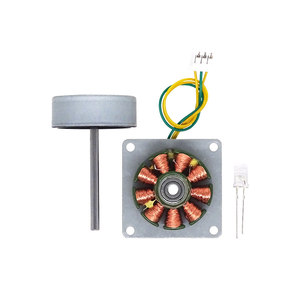
Over two decades of persistent R&D aimed at solving the single primary failure point in distributed wind: mechanical gearbox friction and oil degradation.
Our direct-drive permanent magnet generators (PMG) operate at low RPM, connecting the hub directly to the rotor. No speed-increasing gearbox means zero gear oil changes, dramatically reduced internal stress, and lower acoustic emissions.
Engineered for high power coefficient (Cp), our customized rotor blades harvest maximum energy even under low cut-in wind velocities (starting at 2.0–2.5 m/s), ensuring consistent generation during off-peak hours and winter months.
Built with marine-grade anti-corrosion coatings, heavy-duty alloy hub castings, and automated mechanical braking systems. Tested to endure extreme atmospheric conditions, severe gusts, and corrosive coastal salt sprays.
Integrated IoT sensors monitor vibration, thermal profile, voltage stability, and yaw alignment in real-time. Cloud-based predictive diagnostics mitigate downtime before scheduled maintenance intervals occur.
When selecting distributed wind hardware for commercial facilities or microgrid projects, understanding drivetrain physics is vital for calculating long-term Return on Investment (ROI) and total cost of ownership (TCO).
| Engineering Benchmark | Our OEM/ODM Direct-Drive PMG Platform | Conventional Geared Small Wind Turbines |
|---|---|---|
| Mechanical Complexity | Low (Single moving assembly, direct rotor connection) | High (Multi-stage planetary or spur gearbox) |
| Gear Oil Maintenance | Zero Oil Required (100% dry drivetrain) | Mandatory oil flushes every 12–24 months |
| Operational Uptime Rate | > 98.4% Verified Fleet Availability | 85% – 90% (Higher downtime from mechanical fatigue) |
| Acoustic Noise Footprint | Low RPM design (< 45 dBA at property line) | High frequency gear-whine & mechanical friction |
| Designed Asset Lifespan | 30 Years continuous service | 10 – 15 Years (Gearbox overhaul required at year 7) |
Insights into next-generation distributed power generation, smart inverter grids, and hybrid architecture.
Modern commercial energy demands are rarely met by a single generator source. Future-proof microgrids deploy the EOX WS²+ integrated wind-solar-storage ecosystem. By leveraging machine learning algorithms, the system dynamically balances wind energy (dominant at night and during winter seasons) with solar PV output (peak daytime) while managing battery state-of-charge (SOC) to eliminate peak demand charges.
Turbulence near ground level significantly degrades wind power output. Advanced small wind engineering shifts toward taller guyed or free-standing hydraulic towers (30m to 36m hub height). Raising the rotor axis above agricultural silos, barns, and tree boundary layers exposes blades to smoother, laminar airflow—increasing annual energy production (AEP) by up to 35% without expanding rotor diameter.
As electrical utilities enforce stricter grid codes (IEEE 1547 / UL 1741 SA), modern OEM wind power systems integrate smart grid-tie inverters capable of autonomous reactive power support, fault ride-through (FRT), and real-time frequency stabilization, facilitating rapid interconnection permitting across European and North American grids.
Strategic B2B buyers—including corporate ESG officers, agricultural managers, cold storage facility operators, and industrial park developers—are shifting their procurement methodologies away from standard off-the-shelf purchases toward customized OEM/ODM co-development partnerships.
1. Shifting from Capital Expenditure (CapEx) to Guaranteed kWh Yield: Corporate buyers demand predictable Levelized Cost of Electricity (LCOE) figures backed by empirical wind resource assessment datasets. Procurement contracts now mandate multi-year performance guarantees, SCADA uptime verification, and localized spare part stocking.
2. Behind-the-Meter (BTM) Energy Sovereignty: Rising utility transmission and distribution (T&D) tariffs mean generating clean power directly at the consumption node yields double the financial return compared to wholesale grid feed-in. BTM distributed wind ensures that energy intensive operations—such as grain drying, livestock ventilation, and EV fleet charging hubs—remain operational during utility outages.
3. Demand for Turnkey Engineering, Procurement & Construction (EPC): B2B customers increasingly reject fragmented supply chains where turbine hardware, tower fabrication, inverter sourcing, and civil engineering are divided among multiple vendors. Global buyers favor unified OEM partners offering complete turnkey project execution—from wind speed resource modeling to foundation pouring, utility interconnection, and lifetime O&M.
Designed to operate where clean energy generation directly aligns with heavy power consumption profiles.
Dairy farms, feedyards, and row-crop irrigation systems require continuous power. Our tall-tower turbine designs maintain a minimal ground footprint, keeping surrounding land in full crop production while offsetting high 24/7 refrigeration and ventilation loads.
Factories, logistics centers, and cold-storage plants faced with roof space constraints utilize wind turbines to supply dense clean power. Direct coupling reduces peak demand charges during high tariff operational windows.
Remote mining outposts, island communities, and telecom towers replace costly diesel generation with wind-solar hybrid systems. Eliminates fuel transport logistics risk while establishing long-term power grid autonomy.
Detailed technical and commercial answers to simplify your project evaluation and vendor selection process.
Contact our senior engineering team today for a complimentary wind resource assessment, financial ROI model, and customized OEM/ODM technical proposal for your facility.
