
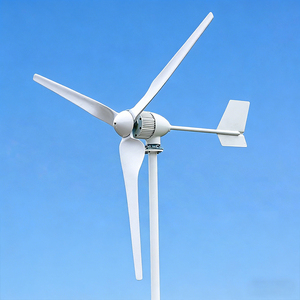
OEM/ODM customizable wind generators tailored for residential, off-grid commercial, agricultural, and industrial infrastructure.
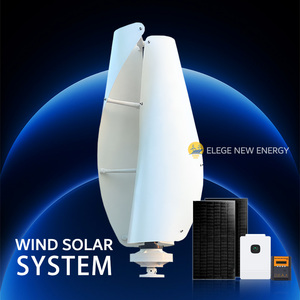
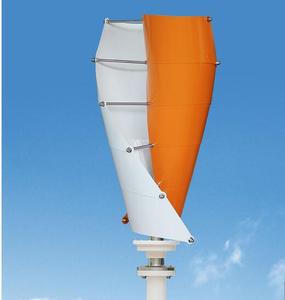
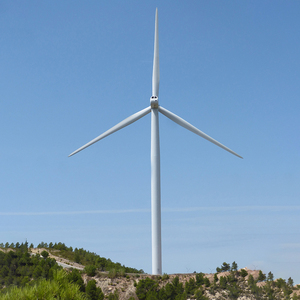
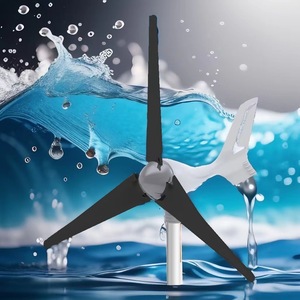
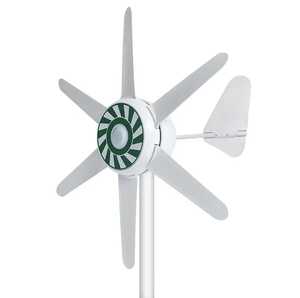
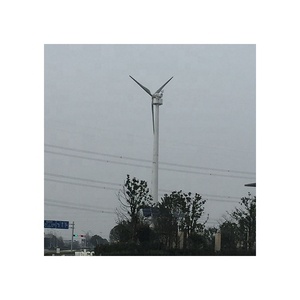
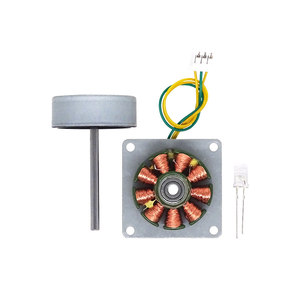
Re-engineering small-scale wind power generation through gearless direct-drive magnetics and custom manufacturing frameworks.
Traditional wind generation systems experience over 68% of mechanical failures within the speed-increasing gearbox. Our OEM solutions eliminate the gearbox entirely, coupling high-coercivity Neodymium Permanent Magnets directly to the main rotor shaft for zero-fluid maintenance and operational reliability up to 30 years.
From low-voltage 3V–24V AC OEM motor sub-assemblies for specialized telecom equipment to high-voltage 48V DC, 110V/220V/380V grid-tied inverted power packs, our engineers customize rotor winding patterns, stator slot fill factors, and algorithm-matched MPPT controllers for maximum power point efficiency.
Designed for industrial applications, coastal farms, sub-zero agricultural zones, and desert installations. Our production lines implement hot-dip galvanization, C5-M marine-grade anti-corrosion coatings, and anodized aluminum housings backed by IP67 ingress protection standards.
In distributed renewable energy procurement, historical performance bottlenecks were frequently driven by high start-up torque, rotor vibration, low aerodynamic lift coefficients, and frequent generator burnouts during gusting conditions. As a leading OEM/ODM energy solutions manufacturer established in 2001, our facility has systematically eliminated these failure modes through rigorous finite element analysis (FEA) and computational fluid dynamics (CFD) modeling.
By leveraging Direct-Drive Permanent Magnet Generator (PMG) technology, our wind turbines achieve cut-in wind speeds as low as 1.5 m/s to 2.0 m/s while retaining structural integrity at survival wind speeds exceeding 50 m/s (Category 12 hurricanes). The absence of mechanical gearboxes translates directly into an operational availability rate exceeding 98%, cutting levelized cost of energy (LCOE) over the project life by up to 42% compared to legacy small-wind architectures.
Comprehensive engineering parameters available for customized contract manufacturing and white-label procurement.
| System Category | Power Rating Range | Generator Technology | Voltage Output Options | Blade Aerodynamics | Target Applications |
|---|---|---|---|---|---|
| Micro Sensor Systems | 80mW – 300mW | Direct-Drive Coreless PMG | 3V / 6V / 12V AC/DC | Ultra-light carbon polymer | IoT remote monitoring, environmental telemetry, coastal beacons |
| Mini Auxiliary Series | 90W – 400W | 3-Phase Synchronous PMG | 12V / 24V DC Auto-sensing | NACA 4412 optimized profile | Solar streetlights, security CCTV, telecom backup, off-grid cabins |
| Residential & Commercial | 1kW – 5kW | Gearless Neodymium PMG | 48V / 110V / 220V / 380V | Precision FRP / Carbon Fiber | Rooftop distributed power, dairy farms, workshop microgrids |
| Industrial & Microgrid | 25kW – 90kW | Multipolar Low-RPM PMG | 360V – 480V 3-Phase Grid-Tied | Variable pitch aerodynamic lift | Feedyards, cold storage plants, mining operations, remote island grids |
Key technology shifts driving procurement decisions for industrial buyers, EPC contractors, and global energy distributors.
Modern commercial site buyers are rapidly stepping away from single-source renewable generation. The market demand is pivoting heavily toward multi-source hybrid installations that couple photovoltaic arrays with vertical or horizontal small wind turbines and high-density Battery Energy Storage Systems (BESS). Because solar generation peaks during midday and drops to zero at night—while localized wind velocity frequently increases during night-time and winter cycles—hybrid setups produce a consistent, flattened generation curve. Integrated AI Energy Management Systems (EMS) dynamically balance load profiles, reducing grid draw during peak tariff windows.
Global manufacturing enterprises are enforcing strict Scope 2 decarbonization targets on their tier-1 and tier-2 supplier networks. Off-site renewable energy certificates (RECs) are increasingly scrutinized under tighter corporate sustainability auditing frameworks. Procurement of on-site, behind-the-meter small wind infrastructure offers verifiable, audited clean kWh generation directly at the facility. This visible sustainability compliance grants suppliers a distinct competitive advantage during international contract tenders.
Procurement specifications for small wind machinery now mandate cloud-enabled SCADA (Supervisory Control and Data Acquisition) connectivity. Industrial buyers no longer accept passive hardware. Our OEM systems integrate real-time sensor arrays measuring vibration harmonics, bearing temperatures, stator voltage fluctuations, and anemometer data. Machine-learning algorithms process these telemetry streams to trigger predictive maintenance warnings before critical hardware downtime occurs, safeguarding long-term asset yield.
Urban, suburban, and ecologically sensitive installation zones present strict acoustic and spatial constraints. Horizontal axis wind turbines (HAWT) require directional yaw adjustment and generate tip-vortex noise at higher RPMs. The procurement shift toward Vertical Axis Wind Turbines (VAWT)—such as helical and Savonius/Darrieus designs—delivers omnidirectional wind capture without complex yaw motors, operating quietly at lower rotational speeds while maintaining structural safety around avian habitats and dense urban architecture.
How our manufacturing facilities take your technical concepts from initial wind resource modeling to volume mass production.
We analyze site wind speed distributions (Weibull parameter analysis), grid interconnection restrictions, and regional temperature extremes to establish exact generator sizing specifications.
Customization of copper winding gauge, magnetic flux density, stator laminations, and pole numbers to match target output voltages (3V AC to 480V AC) and minimum cogging torque requirements.
Manufacturing blades with customized length, chord profiles, and materials (ultra-light FRP, carbon-reinforced composites, or glass-reinforced nylon) for specific wind zones.
Every batch undergoes dynamic rotor balancing, dynamic brake torque tests, wind tunnel fluid validation, dielectric isolation tests, and salt spray exposure trials prior to global dispatch.
Addressing essential technical, commercial, and operational questions for OEM and project sourcing.
Partner with an established OEM/ODM wind energy manufacturer. Contact our engineering team today to request custom technical drawings, factory audit protocols, and wholesale price quotes.
Inquire Now