Explore our engineered range of micro vertical axis wind generators, direct-drive horizontal turbines, rooftop residential units, and off-grid mobile power kits manufactured to international safety and efficiency standards.
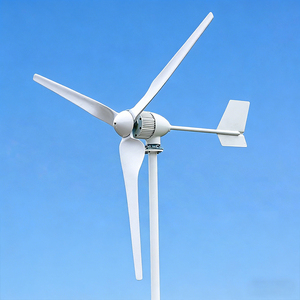
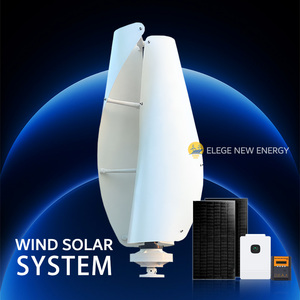
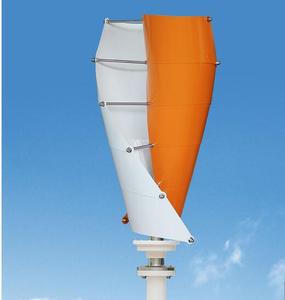
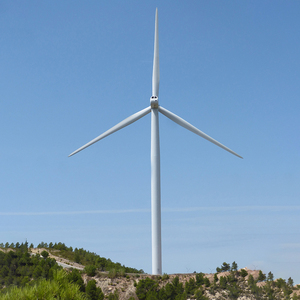
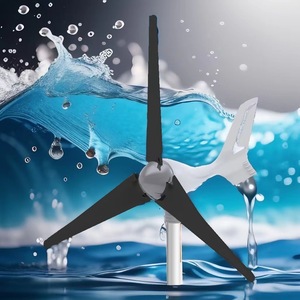
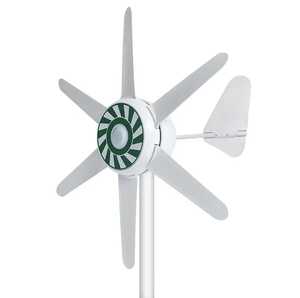
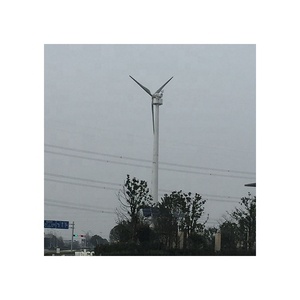
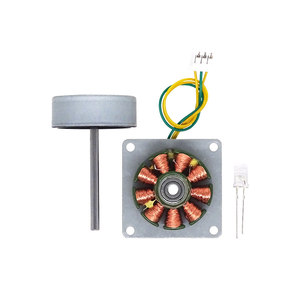
As the global clean energy transition accelerates, industrial buyers, commercial developers, microgrid EPC contractors, and agricultural enterprise operators are aggressively diversifying away from centralized utility dependence. While utility-scale wind farms dominate macro-generation, behind-the-meter distributed wind systems and portable micro-turbines (ranging from sub-watt telemetry dynamos to 90kW commercial platforms) have emerged as the fastest-growing sector in decentralized energy architecture.
Choosing the right Custom OEM Portable Turbine Manufacturer is no longer merely a purchasing transaction; it is a critical capital expenditure (CapEx) decision that governs site energy security, Levelized Cost of Energy (LCOE), and operational resilience over a 20-to-30-year lifecycle. Geared micro-turbines of the past suffered from high mechanical failure rates, severe noise pollution, complex maintenance cycles, and premature component fatigue under turbulent wind conditions. Modern Tier-1 OEM manufacturing facilities have fundamentally redefined this domain through Direct-Drive Permanent Magnet Generator (PMG) technology, aerodynamic blade synthesis, and AI-assisted Maximum Power Point Tracking (MPPT) power electronics.
Direct-drive architectures eliminate the gearbox entirely. By replacing mechanical speed-increasers with high-coercivity Neodymium Iron Boron (NdFeB) permanent magnets, failure points are reduced by up to 60%, delivering a documented fleet availability exceeding 98% even in extreme operating environments like coastal salt sprays, sub-zero alpine conditions, and dusty agricultural feedyards.
Building upon over two decades of distributed wind turbine engineering (originating from pioneering clean-tech hubs in Montréal, Canada, and expanded through worldwide OEM contract manufacturing), our manufacturing framework adheres strictly to ISO 9001, CE, and IEC 61400-2 international small wind turbine standards. Below are the core technical advantages integrated into every custom OEM build:
Our permanent magnet generators (PMG) couple directly to the rotor hub. Eliminating high-wear mechanical gearboxes minimizes friction loss, eliminates gear-oil replacement requirements, and drastically reduces acoustic emissions down to low ambient levels suitable for residential and commercial environments.
Through customized aerodynamic blade profiling—utilizing high-density glass-reinforced polypropylene and carbon composite materials—our turbines achieve cut-in wind speeds as low as 1.5 m/s to 2.5 m/s, capturing low-altitude kinetic energy overlooked by standard commercial turbines.
Every component—from hot-dip galvanized steel tower adapters to electro-phoretically coated aluminum alloy nacelles—is engineered to withstand Class I hurricane wind gusts (>59.5 m/s) and severe atmospheric corrosion, ensuring three decades of low-maintenance utility.
Our OEM electronic assemblies incorporate cloud-connected SCADA telemetry telemetry modules. Operators can monitor voltage outputs, rotational RPM, vibration metrics, and thermal signatures in real time while integrating seamlessly with microgrid battery storage (EOX WS²+ system compatible).
For B2B buyers evaluating technical proposals, the structural matrix below highlights the quantifiable operational benefits of specifying direct-drive permanent magnet architecture for OEM portable and small-scale wind turbine contracts:
| Engineering Parameter | Legacy Geared Micro-Turbines | Next-Gen Direct-Drive OEM Turbines (Our Spec) | Operational Impact & ROI Advantage |
|---|---|---|---|
| Drivetrain Mechanics | Multi-stage planetary gearboxes | Direct-Drive Permanent Magnet Generator (PMG) | Eliminates 60% of moving parts; zero oil change required |
| Cut-In Wind Speed | 3.5 m/s – 4.5 m/s | 1.5 m/s – 2.2 m/s | 35% higher annual energy yield (AEY) in low wind regions |
| Fleet Availability | 82% – 88% due to mechanical maintenance | 98.4% Documented Availability | Maximum uptime for mission-critical off-grid systems |
| Design Service Life | 8 to 12 Years | 25 to 30 Years | Lower Levelized Cost of Energy (LCOE) over asset life |
| Acoustic Signature | High mechanical hum (>65 dBA at 10m) | Ultra-quiet aerodynamic flow (<45 dBA at 10m) | Permitted for urban rooftop & commercial installations |
| Governance & Compliance | Basic ISO compliance | CE, IEC 61400-2, RoHS, ISO 9001 Certified | Hassle-free municipal permitting & grid interconnection |
The micro kinetic generation market is undergoing a rapid technological metamorphosis driven by advancements in materials science, power electronics, and hybrid system architectures. OEM buyers must understand these trends to future-proof their product catalogs and procurement specifications:
Historically, direct-drive PMSG technology was restricted to megawatt-scale offshore wind turbines due to generator size and magnet material costs. Breakthroughs in high-density NdFeB magnet sintering and multi-pole stator winding topologies have enabled factory engineers to compress direct-drive efficiency into micro form factors (80mW up to 10kW). This micro-scaling eliminates brushes, commutators, and mechanical slip rings, ensuring spark-free operation suitable even for hazardous industrial environments.
While Horizontal Axis Wind Turbines (HAWT) remain dominant for open-field power, urban and industrial rooftops frequently experience turbulent, highly variable wind flows. Modern Vertical Axis Wind Turbines (VAWT)—such as Savonius-Darrieus hybrid structures—accept wind from 360 degrees without needing active yaw mechanisms. OEM factories are experiencing massive order growth for VAWT designs integrated into smart streetlights, telecommunications towers, and EV charging hubs.
Aerodynamic drag and tip-speed noise have traditionally hindered small turbine adoption near occupied structures. Today's OEM production facilities employ 3D Computational Fluid Dynamics (CFD) modeling to design quiet aero-blade profiles featuring serrated trailing edges and winglets. Advanced injection-molded carbon-reinforced nylon composites ensure structural rigidity, resisting blade deflection during storm-level wind shear.
Standalone wind generation is increasingly being paired with solar photovoltaics and Lithium Iron Phosphate (LiFePO4) battery banks. Modern OEM manufacturers build smart MPPT charge controllers with embedded firmware capable of dynamic load shedding, dynamic thermal management, and automatic grid-tie synchronization, producing a reliable "utility-in-a-box" solution.
Global procurement teams navigating the renewable equipment market face evolving regulatory compliance requirements, ESG metrics, and supply chain dynamics. B2B buyers should align their purchasing strategies with several critical macro trends:
Distributors and project integrators are demanding fully customized OEM/ODM packages—including custom DC/AC voltage outputs (12V, 24V, 48V, 110V, 220V, 380V), branded nacelle color schemes, custom mounting flange geometry, and localized digital SCADA interfaces.
Enterprise clients auditing their supply chains require verifiable manufacturing footprints. Tier-1 OEM factories are incorporating low-carbon aluminum refining and recycled composite resins, providing auditable Life Cycle Assessments (LCA) to support corporate ESG disclosures.
Procurement managers prefer factory partners capable of supplying complete electrical schematic documentation, grid-code compliance certification, structural wind-load calculations, and pre-wired plug-and-play harness assemblies to reduce field installation labor costs.
From dynamic rotor balancing at 120% rated RPM to salt-mist chamber testing (IEC 60068-2-52 standard) and 100% generator burn-in testing, our factory quality control protocol ensures zero-defect delivery across large-volume OEM production runs.
Common technical and commercial questions answered by our engineering and factory sales teams:
Most of our OEM micro wind turbines feature an aerodynamic cut-in wind speed between 1.5 m/s and 2.5 m/s (3.3 to 5.6 mph). Rated power output is typically achieved at wind speeds between 10 m/s and 12 m/s (22 to 26 mph). For site selection, an annual average wind speed of 4.5 m/s at hub height is recommended to ensure robust return on investment (ROI).
Direct-drive generators connect the rotor blades directly to the permanent magnet alternator without an intermediate mechanical speed-increasing gearbox. This reduces mechanical friction, eliminates oil maintenance, decreases operational noise, lowers cut-in torque, and extends service life to 25–30 years compared to 5–10 years for geared alternatives.
Yes. We provide complete OEM/ODM customization. We can engineer generators for custom DC bus voltages (e.g., 12V, 24V, 48V, 96V, 110V, 300V DC) or 3-phase AC outputs. Controllers can be customized with specific MPPT algorithms, CANbus / RS485 Modbus telemetry protocols, and integrated low-temperature LiFePO4 heating circuits.
Wind and solar profiles are naturally complementary. Solar generation peaks during sunny midday hours, whereas wind energy yield frequently increases during night-time, winter seasons, and stormy weather conditions. Integrating wind with solar smooths out the power generation curve, reduces battery bank sizing requirements by up to 40%, and prevents total system blackouts.
Our turbines feature triple-redundant safety protection: 1) Automatic aerodynamic blade stall / tip-braking, 2) Electromagnetic autobrake activated by the smart MPPT controller during over-voltage or over-speed conditions, and 3) Mechanical furling or structural yaw displacement for horizontal axis models during hurricane-force gusts (>50 m/s).
Our production lines are certified under ISO 9001 (Quality Management), ISO 14001 (Environmental Management), and ISO 45001. Products carry CE, RoHS, and IEC 61400-2 (Small Wind Turbine Safety) compliance marks, facilitating seamless customs clearance and grid connection in North America, Europe, Australia, and Asia-Pacific markets.
Standard OEM samples and evaluation units can be dispatched within 7–14 business days. Bulk custom production runs typically require 25 to 35 days depending on tooling and casing customization. Minimum Order Quantities (MOQ) are flexible, ranging from single units for industrial evaluation to container-load quantities for commercial distribution networks.
Marine-spec OEM builds utilize die-cast anodized aluminum alloy generator housings, 316 stainless steel external fasteners, sealed SKF/FAG bearings with high-temp synthetic lubrication, and multi-layer fluorocarbon epoxy powder coatings tested to withstand 1,000+ hours of continuous salt spray exposure.
Whether you require custom white-label micro turbines, high-efficiency VAWT rooftop generators, or scalable wind-solar-storage microgrid hardware, our engineering team is ready to review your technical specifications and deliver factory-direct pricing.
