Engineered for commercial, industrial, residential rooftop, and off-grid telecommunication power systems. Fully customizable voltage outputs, rotor configurations, and mounting interfaces.
A rigorous OEM perspective on mechanical simplicity, electromagnetic optimization, and structural reliability for enterprise wind energy procurement.
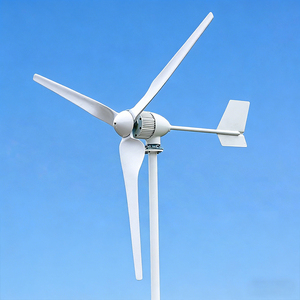
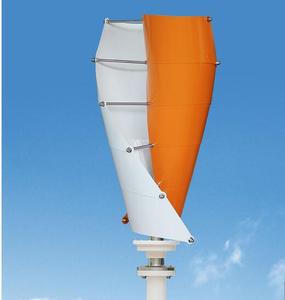
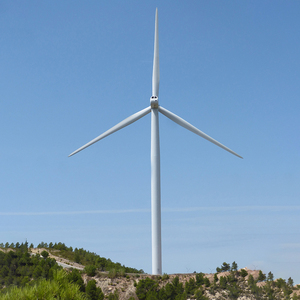
In the global transition toward distributed energy resources (DERs), horizontal axis wind turbines (HAWT) remain the dominant mechanical architecture for high aerodynamic efficiency. While vertical-axis systems fill specific architectural niches, Horizontal Axis Wind Turbines achieve power coefficients ($C_p$) approaching 0.45 to 0.48, significantly closer to the theoretical Betz Limit of 0.593. For commercial buyers, industrial facility managers, and off-grid project developers, sourcing custom OEM horizontal wind turbines requires a deep understanding of generator topology, blade aerodynamics, dynamic balancing, and structural resilience.
The single greatest point of failure in legacy wind turbine installations has historically been the mechanical step-up gearbox. Gearboxes introduce friction losses, mechanical wear, noise vibration harshness (NVH), and frequent lubrication maintenance cycles—factors that drastically inflate the Levelized Cost of Energy (LCOE). Modern OEM horizontal turbine factories have pioneered high-torque, direct-drive Permanent Magnet Generators (PMG).
In a direct-drive design, the rotor hub couples directly to the generator shaft. Elimination of the gearbox yields three strategic advantages for procurement teams:
Our OEM factories utilize high-grade N45SH / N52H sintered Neodymium-Iron-Boron magnets rated for continuous operating temperatures up to 150°C without demagnetization risk, ensuring stable electromagnetic flux density across decades of heavy duty cycling.
Cogging torque (the magnetic resistance felt when turning the rotor shaft manually) limits low-wind startup. By engineering precision skewed stator slots, our generators minimize cogging torque to near-zero levels (<0.05 Nm).
Every cast-iron nacelle housing and structural flange undergoes shot-blasting, multi-layer epoxy priming, and poly-urethane top-coating tested under ISO 12944 C5-M extreme marine salt spray conditions for 1,500+ hours.
The aerodynamic efficiency of a horizontal wind turbine relies entirely on blade profile geometry and structural stiffness. OEM custom manufacturing enables exact tuning of blade pitch, twist distribution, and chord length according to specific regional wind classes (IEC Class I through Class IV).
Using advanced Blade-Element Momentum (BEM) theory, our factories mold high-density Fiberglass Reinforced Polymer (FRP) and carbon composite blades. This yields exceptional flexural modulus, preventing blade deflection into the tower during high-speed turbulence while maintaining minimum rotational inertia for fast acceleration during gusty conditions.
Evaluate structural, electrical, and performance parameters across custom OEM factory platforms.
| Turbine Category | Micro-Turbine (80mW-400W) | Small Residential (1kW-2kW) | Commercial/Agri (5kW-20kW) | Industrial DER (25kW-90kW) |
|---|---|---|---|---|
| Primary Application | IoT Sensors, Solar Street Lights, CCTV | Rooftop Home, Remote Cabins | Farms, Dairies, Small Plants | Feedyards, Cold Storage, Microgrids |
| Rotor Diameter Range | 0.4m – 1.4m | 1.8m – 2.8m | 5.0m – 10.0m | 12.0m – 26.0m |
| Generator Type | 3-Phase Outer Rotor PMG | Direct-Drive Synchronous PMG | Direct-Drive Neodymium PMG | Low-RPM Multi-Pole Direct Drive |
| Voltage Output | 3V – 24V AC/DC | 12V / 24V / 48V / 110V DC | 120V / 240V / 380V AC | 400V / 480V 3-Phase Grid-Tie |
| Over-Speed Protection | Aerodynamic Stall / Electromagnetic | Auto Tail-Furling + Dump Load | Active Yaw + Mechanical Disc Brake | Pitch Control + Dual Disc Brakes |
| Expected Service Life | 15 Years | 20+ Years | 25–30 Years | 30 Years |
From custom electromagnetic winding parameters to turnkey enclosure branding, we empower distributors, EPC contractors, and brand owners worldwide.
Whether your microgrid architecture operates on 12V/24V DC battery banks, 48V telecom rectifiers, or 380V/480V 3-phase grid-tie inverters, our engineers customize stator copper wire turns and wire gauge configurations to match your exact MPPT voltage curve.
For high-wind regions subject to hurricane-force gusts, our horizontal turbines incorporate passive eccentric tail-furling mechanics. When wind speeds exceed 20 m/s, the tail pivot automatically folds the rotor out of the primary wind vector, preventing catastrophic mechanical overload.
Custom OEM systems can be specified with IoT SCADA monitoring nodes, delivering real-time telemetry on shaft RPM, stator coil temperature, vibration spectra, and instantaneous kilowatt-hour production via Modbus RS485 or LTE cellular links.
To support global retrofit and OEM integration, custom tower base flanges, guyed pole adapters, tilt-up hydraulic towers, and lattice tower mounting kits are pre-engineered to match local civil engineering and building codes.
Every manufactured rotor hub assembly undergoes high-speed dynamic balancing according to ISO 1940 Grade G2.5 balance standards. This eliminates micro-vibrations, preserving bearing life and preventing structural fatigue in tower mounts.
We provide full white-label OEM manufacturing, including custom laser-engraved serial tags, branded nacelle colorways, custom user manuals, and sea-freight certified reinforced wooden crate packaging.
Macro-economic and technological shifts reshaping how commercial buyers source OEM wind energy equipment.
As utility grid tariffs escalate worldwide and power reliability faces climate-induced strain, commercial and industrial (C&I) energy consumers are shifting rapidly toward behind-the-meter generation. When evaluating global OEM supplier agreements over the next decade, procurement directors should align with three key market evolutions:
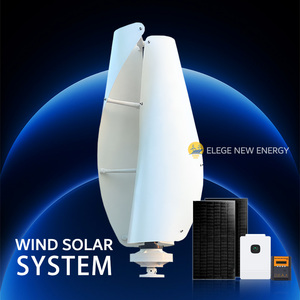
Solar photovoltaics generate power predominantly during midday hours, leaving late afternoon, evening, and winter heating cycles unassisted. Horizontal wind turbines exhibit complementary generation curves, yielding maximum output during nighttime temperature drops and winter wind fronts. Modern BESS integration couples wind and solar under a single AI-driven Energy Management System (EMS), optimizing charge/discharge rates and drastically reducing battery capacity sizing requirements by up to 35%.
Global brand buyers are auditing tier-1 and tier-2 vendor supply chains for Scope 2 carbon intensity. Installing verified on-site OEM horizontal wind turbines provides auditable, localized clean energy production. A single 5kW or 90kW installed turbine provides clear, visible sustainability markers while directly shielding operating margins from carbon tax penalties.
Rising international shipping tariffs have incentivized bulk procurement of OEM generator heads and blade sets for localized final tower assembly. Our factories support modular breakdown kits (CKD/SKD), allowing regional distributors to source local steel towers while importing high-precision generator hubs and smart MPPT inverter electronics under favorable tariff classifications.
How our manufacturing facilities guarantee zero-defect delivery for custom orders.
Review of local wind resource data, voltage requirements, tower height limits, and electrical grid connection requirements.
Finite element analysis (FEA) of magnetic circuits, stator slot filling, and blade structural load calculations.
CNC machining of generator housings, vacuum pressure impregnation (VPI) of stator windings, and magnet bonding.
Full-spectrum operational testing in factory wind tunnels: cut-in verification, vibration analysis, and acoustic logging.
Custom foam-fitted sea-freight packaging, export compliance documentation, and long-term O&M manual inclusion.
Direct engineering answers to key procurement questions from factory buyers and project integrators.
Partner with a certified direct-drive horizontal wind turbine manufacturer. Send us your system specifications, required power curves, or project location for a comprehensive technical proposal within 24 hours.
