Executive Summary: Navigating the Distributed Wind OEM Paradigm
The global transition toward localized renewable energy infrastructure has permanently altered the procurement criteria for commercial buyers, agricultural operators, and microgrid integrators. As utility grid tariffs experience unprecedented volatility and decarbonization mandates take legal effect globally, on-site energy generation is no longer a luxury asset—it is a critical operational hedge.
As an established custom OEM home turbine manufacturer & exporter originating engineering operations in 2001 (Montréal, Canada foundation), our organization addresses the foundational failure points of legacy small wind systems: mechanical complexity, high maintenance overheads, and poor low-wind aerodynamic conversion efficiencies. By standardizing on Direct-Drive Permanent Magnet Generator (PMG) architecture, we remove gearboxes completely from small and micro wind turbines, achieving design lifespans up to 30 years with over 98% operating availability.
Key Strategic Insight: Distributed wind generation delivers up to 4x higher energy yield per square meter of occupied footprint compared to commercial ground-mount solar arrays, maintaining continuous electrical generation during night-time hours, winter peaks, and heavy atmospheric overcast.
This technical whitepaper outlines the OEM engineering standards, structural choices, global procurement trends, and technological innovations shaping the future of small wind turbine sourcing for enterprise distributors, EPC contractors, and brand owners worldwide.
OEM Manufacturing Competencies & Drivetrain Architecture
Custom OEM manufacturing requires complete vertical integration—from electromagnetic generator design and rotor aerodynamic balancing to custom telemetry and enclosure weatherproofing. Sourcing commercial or residential small wind turbines requires a clear technical understanding of core drivetrain typologies:
Gearbox-Free Direct Drive
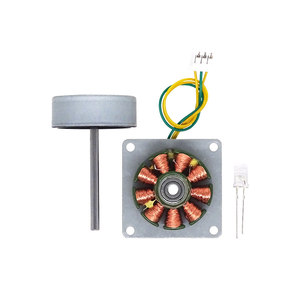
By coupling high-coercivity Neodymium Iron Boron (NdFeB) permanent magnets directly to the rotor shaft, mechanical friction losses are minimized, eliminating gear oil changes and failure-prone high-speed mechanical gear stages.
Advanced MPPT Rectification
Custom OEM control cabinets feature Maximum Power Point Tracking (MPPT) algorithms tuned dynamically to the turbine's specific power curve, capturing maximum torque across turbulent cut-in speeds starting at just 1.5 m/s.
Harsh Environment Hardening
All outdoor housings are die-cast aluminum or heavy-gauge steel treated with C5-M marine-grade anti-corrosion coatings, sealed to IP67 ingress protection for extreme arctic, coastal, or agricultural dusty environments.
Technical Comparison: HAWT vs. VAWT OEM Platforms
When engineering custom wind turbines for international distribution, choosing between Horizontal Axis Wind Turbines (HAWT) and Vertical Axis Wind Turbines (VAWT) depends directly on the localized site topology and acoustic constraints:
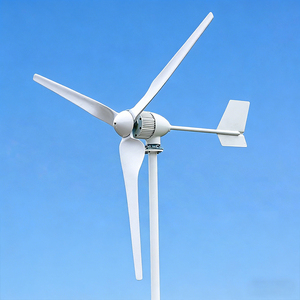
- Horizontal Axis Wind Turbines (HAWT): Yield higher overall aerodynamic efficiency (Betz limit conversion ratios up to 45-48%). Ideal for open agricultural parcels, rooftop towers, and commercial facilities where unimpeded laminar airflow exists.
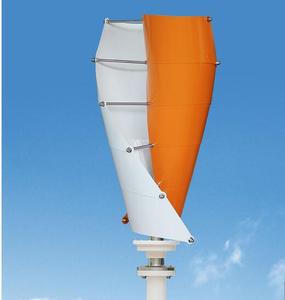
- Vertical Axis Wind Turbines (VAWT): Omnidirectional operation requires no yaw mechanism. Perfect for turbulent, gusty urban environments, residential rooftops, and low-noise residential installations due to reduced tip-speed ratios.
Global Future Procurement Trends (2025–2035)
As enterprise procurement directors and international distributors evaluate OEM partnerships, four major market shifts are reshaping how small wind turbine assets are specified, sourced, and integrated:
Trend 01
Integration of Hybridized Wind-Solar-Storage (WS²+) Platforms
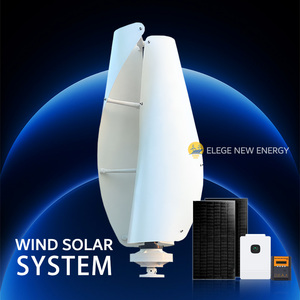
Standalone wind contracts are rapidly giving way to unified hybrid tenders. Buyers seek single-source OEM suppliers capable of pre-integrating micro-wind turbines with solar photovoltaic arrays and lithium battery storage systems under one central AI-driven Energy Management System (EMS). Hybridization solves seasonal generation dips, providing smooth baseload electricity behind the meter.
Trend 02
Mandatory Grid Interconnection & Compliance Certification
Regulatory authorities in North America (UL 1741, IEEE 1547), Europe (CE, IEC 61400-2), and the UK are enforcing strict power quality mandates. Modern OEM manufacturers must provide pure sine wave inverters with low Total Harmonic Distortion (THD < 3%), grid-forming capabilities, and rapid islanding protection for microgrid resilience.
Trend 03
Demand for White-Label & Modular Turnkey Manufacturing
Distributors increasingly require white-label OEM customization—including factory-applied brand color schemes, regional voltage matching (12V DC up to 480V 3-Phase AC), and localized packaging designed to minimize overseas shipping container cubic volume while enabling rapid field deployment.
Trend 04
IoT-Enabled Remote SCADA Telemetry
Commercial buyers no longer accept unmonitored hardware assets. Modern small wind installations mandate IoT telemetry modules built into the charge controller, streaming real-time rotor RPM, voltage, vibration analysis, and yield statistics to cloud dashboards for predictive maintenance modeling.
Next-Generation Technology & Product Development Trends
To retain competitive advantage in the global market, OEM research and development focus is centered on material science advances, acoustic dampening, and low-wind startup optimization.
1. Advanced Blade Aerodynamics & Carbon Composite Engineering
Traditional glass-fiber reinforced blades are being superseded by precision-molded carbon-fiber hybrid polymers. This material evolution yields a 30% reduction in rotational mass while increasing fatigue resistance against high wind gusts. Optimized aero-foil profiles reduce tip-vortex noise, allowing home wind turbines to operate below 40 dB(A) at a 5-meter distance—equivalent to ambient residential background noise.
2. Low Cut-In Speed Direct-Drive PMGs
Standard legacy turbines required wind speeds exceeding 3.5 m/s to initiate power generation. Advanced electromagnetic topology—utilizing skewed stator slots and ultra-low cogging torque core designs—enables modern micro turbines (from 90W to 5kW) to begin battery charging at wind velocities as low as 1.5 m/s to 2.0 m/s, significantly extending annualized operational hours in low-wind geographical zones.
3. Dual-Braking Safety Systems (Fail-Safe Over-Speed Protection)
Catastrophic wind storms represent the primary risk for small wind assets. Contemporary OEM standards integrate redundant dual-layer braking mechanisms: an automated electronic dump load system that dynamically shorts the generator phases during over-voltage, coupled with a centrifugal mechanical blade pitch balance or electromagnetic tail-yaw furling system to turn the rotor away from storm-force winds automatically.
Enterprise Procurement & Technical FAQ
Answers to critical technical, operational, and commercial questions raised by international procurement managers and project developers during site evaluation and OEM contract negotiation.
What minimum average site wind speed is required for small home wind turbines to achieve economic viability?
As an engineering benchmark, sites with an annual average wind speed of approximately 4.5 m/s to 5.0 m/s (10–11 mph) measured at proposed hub height yield strong financial payback. By leveraging tall guyed or free-standing towers (typically 12m to 36m height), turbines reach cleaner, non-turbulent laminar airflow above localized ground clutter such as trees, barns, and residential roofs. Our OEM engineering team provides detailed Rayleigh wind distribution modeling based on client GPS coordinates prior to manufacturing commitment.
How does small-scale wind power complement commercial rooftop solar array installations?
Solar photovoltaics and small wind turbines exhibit inverse, complementary generation curves. Solar peak production occurs midday in summer months, whereas wind energy yield peaks during evening hours, overnight, and through winter atmospheric fronts when solar irradiance is minimal. Integrating both under a single hybrid controller balances the charge profile of battery banks, reduces depth-of-discharge stress, and decreases total generator backup fuel dependence by up to 85%.
What maintenance regimen is required for a direct-drive permanent magnet generator turbine?
Because direct-drive PMG turbines eliminate mechanical gearboxes, gear oil replacements and shaft seal repairs are completely avoided. Scheduled preventive maintenance is typically restricted to an annual visual inspection of rotor blade leading edges, bolt torque verification, and checking slip-ring contact brushes (if applicable). Fleet operators report availability ratings in excess of 98% across harsh multi-year operating environments.
Can your OEM factory support custom voltage outputs and specialized grid inverter pairing?
Yes. As a dedicated custom OEM manufacturer, we engineer stator windings to match specific system requirements, including 12V, 24V, or 48V DC off-grid battery charging, 110V/220V single-phase AC, or 380V/480V 3-phase AC grid-tied systems. We also provide complete white-label manufacturing of matching MPPT charge controllers and grid-tied inverters pre-programmed with regional grid compliance codes.
What is the structural design life and warranty coverage for global export shipments?
All structural components—including rotor hubs, main shafts, generator housings, and tail assemblies—are calculated according to IEC 61400-2 standards for a 30-year fatigue service life. Standard commercial export warranties cover 3 to 5 years for total component repair/replacement, with extended enterprise warranty programs available for long-term IPP and utility microgrid projects.
What custom white-label OEM branding and packaging options are available for distributors?
We offer turnkey white-label production for international brand owners, including custom powder-coat chassis painting, laser-etched brand logos on generator housings and blade roots, custom multilingual installation manuals, and reinforced export-ready wooden crate packaging optimized for sea container consolidation.
Why Partner with Us: Manufacturing Excellence & Global Reliability
Building reliable wind turbines requires precision manufacturing control, rigorous material validation, and deep application engineering expertise. Since our founding in 2001, our engineering core has been committed to providing enterprise buyers with dependable, cost-effective distributed energy systems.
20+ Years OEM Heritage
Over two decades of continuous R&D and field testing across 40+ countries guarantee our turbines withstand turbulent winds, freezing ice accumulation, and high ambient temperature variations.
100% Factory Load Testing
Every generator leaving our production line undergoes rigorous dynamic balance testing, stator insulation breakdown checks, and full load curve verification on automated motor-driven test rigs.
Seamless Global Logistics
Established export channels across North America, Europe, Asia, and Latin America ensure fast customs clearing, flexible FOB/CIF terms, and full export compliance documentation.