Engineered to rigorous ISO9001 and CE standards. Explore our high-efficiency horizontal and vertical axis rotor systems customized for home, commercial, and industrial deployments.
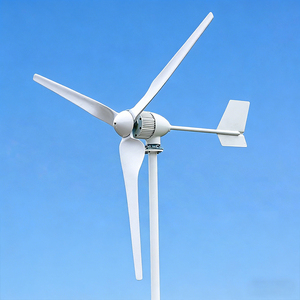
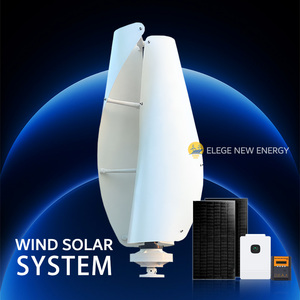
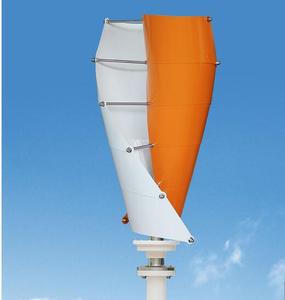
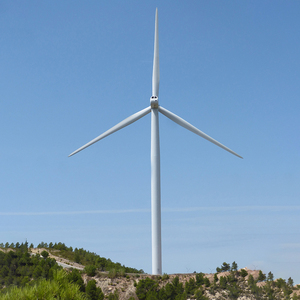
Understanding aerodynamic aerofoil optimization, composite material mechanics, and supply chain dynamics in Chinese manufacturing hubs.
The global energy transition has placed unprecedented demand on distributed wind generation assets, off-grid microgrids, and utility-scale renewable installations. As a core sub-assembly of any wind turbine generator system, the **rotor blade** dictates kinetic-to-mechanical conversion efficiency, mechanical torque characteristics, acoustic signature, and long-term structural reliability under extreme fatigue cycling. For B2B procurement managers, EPC contractors, and OEM brands seeking direct supply lines from China’s leading wholesale manufacturing facilities, evaluating supplier capability requires going beyond surface-level unit pricing to examine fundamental aerodynamic design, composite resin transfer molding, and rigorous quality control protocols.
A wind blade is an intricate aerodynamic structure designed to produce lift from fluid airflow while minimizing drag. The structural integrity and aerodynamic fidelity of blades manufactured in specialized Chinese factories stem from state-of-the-art material synthesis. Modern small-to-medium wind blades utilize multi-axial glass fiber reinforced polymers (GFRP) or advanced carbon fiber composite spar caps integrated within epoxy resin matrices.
| Material / Structural Component | Primary Technical Function | Material Specification | Performance Benefit |
|---|---|---|---|
| Spar Cap Reinforcement | Resists bending moments & cyclic fatigue stress | Unidirectional Carbon Fiber / High-Modulus E-Glass | 35% Weight Reduction, High Tensile Strength (>2500 MPa) |
| Aerofoil Shell Skin | Maintains optimal lift-to-drag aerodynamic profile | Multi-Axial Biaxial/Triaxial Fiberglass (+/- 45°) | Torsional Stiffness, Anti-Delamination Resistance |
| Core Sandwiches | Prevents local buckling of wide aerodynamic panels | PET Foam / High-Density Structural Balsa Wood | High Shear Strength, Low Resin Absorption Rate |
| Surface Protection Gelcoat | Shields against UV, salt spray, sand erosion & ice | Aliphatic Polyurethane / In-Mold Epoxy Coating | C5-M Heavy Coastal Corrosion Class Rating |
By leveraging **Vacuum-Assisted Resin Transfer Molding (VARTM)**, Chinese production lines ensure void-free composite consolidation with resin volume fractions optimized above 60%. This structural rigor directly addresses the primary failure vectors observed in low-cost micro-wind blades—specifically root flange delamination, trailing-edge cracking, and dynamic flutter under peak gusts.
A significant trend in modern distributed wind engineering is the shift away from complex mechanical gearboxes toward **Direct-Drive Permanent Magnet Generators (PMG)**. Gearboxes account for over 35% of operational downtime in distributed wind assets due to high maintenance demands, gear oil thermal degradation, and mechanical friction loss. Premium wind blade series manufactured in China are specifically tuned for low-RPM, high-torque direct-drive matching.
Custom aerofoil profiles reduce rotor inertia, enabling passive start-up at wind speeds as low as 1.5 m/s to 2.0 m/s for maximum annual energy yield (AEY).
Serrated trailing edges and optimized tip-speed ratios ($\lambda$) suppress vortex shedding noise, yielding operating noise levels under 45 dB(A) at 10 meters.
Engineered to withstand IEC 61400-2 extreme wind loads up to 60 m/s (134 mph), maintaining continuous operational readiness over a 30-year lifecycle.
The landscape of B2B wind blade procurement is undergoing rapid evolution driven by smart grid integration, strict environmental ESG metrics, and AI-managed energy storage ecosystems. Wholesale buyers looking to future-proof their supply chain should focus on four macro trends shaping Chinese manufacturing facilities:
A. Fully Recyclable Thermoplastic Resins: Traditional epoxy thermoset blades pose end-of-life landfill challenges. Leading Chinese composite OEMs are transitioning toward recyclable thermoplastic resin technologies (e.g., Elium® chemistry), allowing post-service blades to be depolymerized and remanufactured into original structural polymers without material degradation.
B. Hybrid Microgrid Orchestration (EOX WS²+ Integration): Modern micro-turbines are rarely deployed as standalone units. Factory-direct systems now ship with smart MPPT controllers capable of interfacing seamlessly with solar PV arrays and lithium-iron-phosphate (LFP) battery storage under unified AI energy management algorithms, maximizing on-site self-consumption for farms, feedyards, and telecom towers.
C. Embedded Fiber-Optic Sensing: Next-generation industrial wind blades incorporate integrated Fiber Bragg Grating (FBG) optical sensors during the vacuum infusion process. These sensors feed real-time strain, deflection, and temperature data directly into cloud-based SCADA systems for predictive condition-based maintenance.
D. Modular Blade Architecture & Disassembled Shipping: To solve logistics bottlenecks associated with high international container freight rates, manufacturers have engineered multi-segment modular wind blades that bolt together at site with extreme fatigue resistance, dropping container shipping volume requirements by up to 40%.
How our manufacturing ecosystem delivers high availability, structural reliability, and direct cost advantages for global buyers.
Our partner factories employ 5-axis CNC gantry milling machines to cut master blade molds directly from aerodynamic CAD models with tolerances within $\pm 0.2\text{ mm}$. This ensures identical aerodynamic symmetry across 3-blade sets, eliminating high-speed rotational vibration and reducing bearing wear on generator naves.
Every blade undergoing wholesale export passes ultrasonic flaw inspection, X-ray delamination analysis, and full-scale dynamic fatigue testing according to IEC 61400-23 standards. Factory acceptance testing ensures zero dry-fiber pockets, zero internal air voids, and exact balance matching of weight and center of gravity.
Critical answers for technical buyers, wholesalers, and project developers sourcing wind turbine components from China.
Connect directly with our engineering and procurement team for custom technical drawings, factory volume price breaks, and OEM sample production lines.
