Explore our export-certified micro-wind turbine generators, vertical-axis units, and direct-drive permanent magnet systems engineered for harsh global climates.
A rigorous evaluation of drivetrain physics, levelized cost of energy (LCOE), and long-term operating availability for B2B procurement decisions.
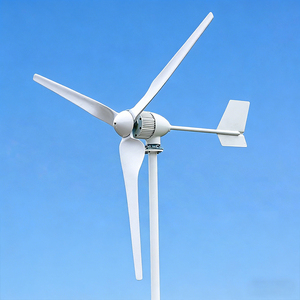
For decades, small-to-medium wind energy procurement was plagued by gearbox reliability issues. High mechanical shear forces, gear-oil degradation, and high-frequency vibrations resulted in mean time between failures (MTBF) of under 5 years for geared systems. As a specialized China Wholesale Standalone Power Supplier & Exporter, our engineering philosophy revolves around Direct-Drive Permanent Magnet Synchronous Generators (PMSG).
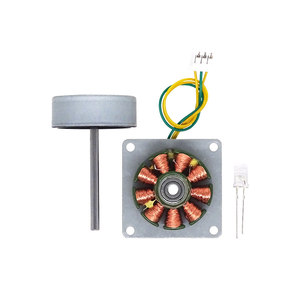
By coupling the aerodynamic rotor hub directly to an enlarged multi-pole permanent magnet rotor, mechanical complexity drops by over 60%. There are zero gearbox oil changes, no planetary mechanical friction losses, and reduced acoustic emission levels suitable for stringent noise-zone compliance.
Standalone Power Supply (SPS) systems must maximize power conversion efficiency ($C_p$) across varying wind velocity regimes. Using advanced aerodynamic CFD profiling, our blades utilize NACA 4412/63-418 airfoils crafted from vacuum-infused fiberglass reinforced polymer (FRP).
Combined with low-cogging torque magnetic stator slots (utilizing high-grade NdFeB rare-earth magnets), our micro-turbines achieve cut-in wind speeds as low as 1.5 m/s to 2.5 m/s. This ensures consistent trickle charging to battery banks even during marginal atmospheric pressure differentials, keeping critical loads operational round-the-clock.
Data-driven performance benchmarks evaluating 30-year total cost of ownership (TCO) and operational resilience.
| Evaluation Parameter | Legacy Geared Wind Systems | Eocycle Direct-Drive PMG Platform | Procurement Advantage |
|---|---|---|---|
| Drivetrain Complexity | High (Multi-stage Planetary Gearbox) | Ultra-Low (Gearless PMG Direct Coupling) | Reduced Failure Risk |
| Design Lifespan | 10 – 15 Years (Requires Overhauls) | 30 Years (Heavy-Duty Industrial Rating) | 2x Asset Longevity |
| Annual O&M Requirements | Quarterly Oil Checks, Seals & Gear Teeth Service | Annual Visual & Torque Inspection | 85% Lower OPEX |
| Acoustic Noise (at 30m) | 58 – 65 dBA (High-Frequency Mechanical Whine) | < 42 dBA (Subdued Aerodynamic Profile) | Zoning & Urban Friendly |
| Fleet Operational Availability | 88.5% Average (Frequent Downtime) | 98.4% Verified Fleet Availability | Maximum Energy Yield |
| Extreme Cold (-40°C) Performance | Low (Oil Viscosity Thickening Issues) | High (Synthetic Low-Temp Bearings) | Arctic & Alpine Proven |
How global supply chain dynamics, decarbonization mandates, and microgrid technology convergence are driving B2B buying behavior.
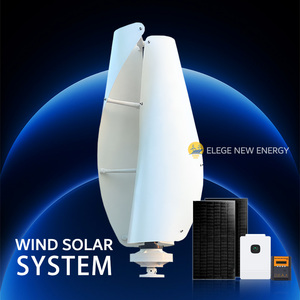
Single-source generation assets are rapidly giving way to integrated Wind-Solar-Storage Hybrid Systems (WS²+). Because solar irradiation drops significantly during winter months and nocturnal periods—precisely when wind speed profiles peak—combining direct-drive wind turbines with bifacial solar PV and Lithium Iron Phosphate (LFP) battery storage flattens the levelized supply curve, ensuring 24/7/365 power availability without back-up diesel generation.
Global EPC contractors and industrial operators are increasingly shifting toward factory-direct OEM/ODM sourcing from leading manufacturing hubs in China. Importers require tailored DC bus voltages (12V, 24V, 48V, up to 600V microgrid buses), custom tower heights (monopole, guyed, or tilt-over designs), and certified power conditioning electronics built directly to regional grid-code standards (CE, UL, IEC 61400-2).
Modern standalone power equipment must operate autonomously in remote environments—from Scottish coastal islands to high-altitude South American mining facilities. B2B buyers now mandate built-in IoT edge controllers featuring Modbus TCP/RTU communications, allowing remote cloud-based diagnostic monitoring, predictive maintenance alerts, and automatic storm brake deployment.
Deploying standalone energy infrastructure where grid access is unstable, non-existent, or economically prohibitive.
Modern commercial agriculture requires energy-intensive machinery: continuous automated ventilation fans, grain drying units, automated milking parlours, deep-well irrigation pumps, and cold-chain storage refrigeration. Utility grid build-out to remote parcels can cost anywhere from $30,000 to $100,000 per kilometer.
By implementing behind-the-meter (BTM) direct-drive wind energy systems, agricultural operators reduce high peak-demand charges. A small tower footprint (occupying less than 15 square meters at ground level) allows full cropping and livestock grazing right up to the base of the turbine, maintaining maximum land productivity.
Location: Colorado, USA
"By integrating an industrial direct-drive 90kW turbine into our feedyard's electrical distribution panel, we locked in electricity rates for three decades. The turbine handles heavy night-time ventilation loads seamlessly when solar is offline, dropping our grid import costs by 64% annually."
Location: North Sea Coast, Europe
"Operating in salt-laden coastal conditions required specialized anti-corrosion protection. The C5-M marine coating and sealed generator housing delivered 98.4% uptime over a 4-year testing phase, powering our EV charging infrastructure without grid upgrade costs."
Manufacturing facilities, distribution centers, and commercial yards face escalating peak demand tariffs and stringent Scope 2 carbon footprint reporting from retail supply chain partners. Installing direct-drive wind systems behind the meter provides visible, verifiable ESG compliance.
Additionally, as commercial vehicle fleets transition to electric propulsion, facility transformers often lack the spare capacity required for DC fast charging stations. Off-grid wind and storage hybrid units act as localized power boosters, bypassing multi-year utility queue delays for grid connection capacity expansions.
Vertical integration, rigid quality control standards, and complete turnkey engineering support from factory floor to global destination.
From 80mW micro-generators for specialized IoT equipment to 90kW utility-interactive microgrid turbines, our production facility houses advanced CNC coil winding equipment, automated magnetic rotor assembly jigs, and vacuum pressure impregnation (VPI) varnish stations.
Every batch of generator stator assemblies undergoes dynamic balance testing, 2.5kV high-potential (Hi-Pot) insulation breakdown analysis, continuous spin-bench heat tests, and IP67 water-ingress validation prior to final export packaging (ISO9001 certified execution).
We simplify international trade for B2B buyers by managing sea-freight logistics, customized wooden crate export packaging, complete installation documentation, CAD foundation engineering drawings, and remote commissioning assistance via dedicated engineering teams.
Engineering and commercial guidance for purchasing agents, project developers, and system integrators.
As a rule of thumb, sites with an annual average wind speed of 4.5 m/s to 5.0 m/s (approx. 10–11 mph) at the proposed hub height yield strong financial returns and short payback periods. Because wind velocity increases significantly with height above ground clutter (such as trees, silos, and warehouses), utilizing tall towers (typically 30m to 36m hub heights) allows the turbine to access cleaner, less turbulent air. Prior to finalizing procurement contracts, our engineering team can model your exact GPS coordinates against 20-year NASA/NREL satellite wind data alongside your 15-minute interval utility load profile.
Wind turbines offer a significantly higher land-use energy density ($kWh/m^2$) than solar PV arrays. A typical wind turbine foundation occupies under 20 square meters of ground footprint while generating high capacity factors during winter and nighttime—periods when solar generation is zero. Rather than viewing wind and solar as competing technologies, modern standalone microgrids utilize both in a Wind-Solar-Storage Hybrid Configuration. This complementary output profile minimizes battery bank oversizing requirements and lowers total system CAPEX.
Because our direct-drive permanent magnet generators eliminate mechanical gearboxes, fluid couplings, and brush/slip-ring wear mechanisms, routine maintenance is minimal. Scheduled servicing consists of an annual physical inspection: inspecting fastener torque values, greasing main yaw and hub bearings, checking electrical isolation resistance, and verifying blade leading-edge tape integrity. Fleet logs reveal that this streamlined O&M profile delivers verified availability exceeding 98.4%.
Yes. Our smart power conditioning equipment and microgrid controllers support multiple operational modes: Grid-Tied (Behind-the-Meter), Off-Grid Islanded, and Diesel-Hybrid GenSet Synchronization. In remote microgrid applications, the wind controller seamlessly communicates with diesel generators via Modbus protocol, throttling back fuel consumption when wind speeds are high and maintaining automated frequency and voltage regulation without power interruption.
Our complete wind turbine product lines are certified under CE standards, ISO9001 quality management systems, and comply with IEC 61400-2 safety design criteria for small wind turbines. Mechanical safety systems include redundant overspeed protection: active pitch control or passive aerodynamic tip braking paired with automated electromagnetic tail/stator braking. Electrical power units include built-in dump-load resistors to dissipate excess energy safely during battery full-charge or grid outage conditions.
Standard export orders (up to 50 units of micro-wind generators) carry a typical factory production lead time of 15 to 25 business days. For customized OEM/ODM projects (such as custom color schemes, specialized mounting flanges, specific DC voltage outputs, or extreme cold-climate pack additions), production timelines range from 30 to 45 days. Complete sea-freight containerization and FOB, CIF, or DDP shipping terms are available worldwide.
Partner with China's premier manufacturer and wholesale exporter of direct-drive standalone power supplies, wind generators, and hybrid microgrid systems. Submit your project requirements to receive a comprehensive technical proposal and factory-direct quotation within 24 hours.
Inquire Now