In the global energy transition landscape, commercial, industrial, and agricultural enterprises face an acute dual challenge: escalating grid utility tariffs and stringent Scope 2 carbon compliance audits. As a leading China Wholesale Hybrid System Factory and Exporters enterprise, our core manufacturing philosophy centers on eliminating the single greatest vulnerability of traditional distributed renewable systems—mechanical failure in high-stress gearboxes.
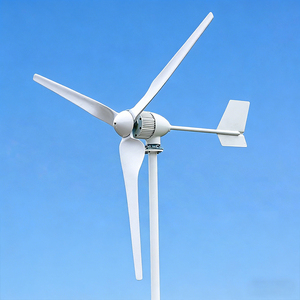
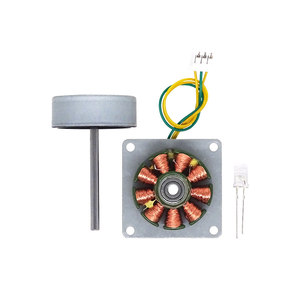
Unlike conventional geared wind turbines that require frequent lubricant replacement, planetary gear overhauls, and routine mechanical maintenance, our engineered platforms leverage a Direct-Drive Permanent Magnet Generator (PMG). Operating without a mechanical gearbox, our PMSG architectures interface directly with the main rotor shaft. This structural innovation drastically reduces moving components, eliminates mechanical friction losses, and guarantees an industry-leading design life of 30 years under adverse operating conditions ranging from freezing sub-zero agricultural zones to salt-mist coastal deployments.
Gearbox-Free PMSG Architecture
Direct coupling between the neodymium permanent magnet rotor and generator stator removes oil-change requirements, lowers start-up torque, and provides smooth electrical output at low rotational RPM.
Complementary Wind-Solar Synergy
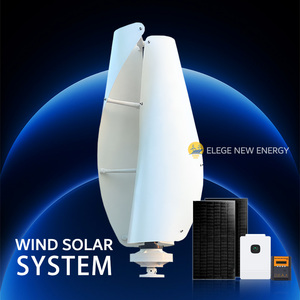
By balancing solar photovoltaic peak production during daytime hours with nocturnal and winter-heavy wind generation patterns, integrated microgrids deliver stable multi-seasonal baseload capacity.
SCADA Telemetric Control
Integrated cloud-based SCADA communications monitor real-time vibration, thermal parameters, MPPT efficiency curves, and battery state-of-charge (SoC), guaranteeing over 98.4% fleet availability.
Executive Procurement Insight: The Levelized Cost of Energy (LCOE) Equation
A true commercial-grade hybrid deployment is evaluated not merely on initial capital expenditure (CAPEX), but on 30-year LCOE. Factory-direct sourcing of direct-drive turbines paired with smart EMS MPPT controllers drops lifetime OPEX by up to 64% compared to legacy geared small-wind systems.
Engineering Benchmark: Hybrid System Architecture vs. Standalone Solar
When evaluating behind-the-meter (BTM) power generation for commercial facilities, dairy farms, feedyards, or remote telecommunication towers, reliance on a single generation vector creates critical power gaps. The data matrix below illustrates why global procurement officers are shifting to integrated China-manufactured Wind-Solar-Storage systems.
| System Architecture Parameter |
Standalone Solar Photovoltaic |
Standalone Small Wind Turbine |
Integrated Factory Hybrid System (EOX WS²+) |
| Diurnal Generation Window |
Daylight Only (6-8 hrs peak) |
24-Hour Continuous (Wind Dependent) |
24-Hour Seamless Multi-Vector |
| Seasonal Yield Peak |
Summer Dominant |
Autumn / Winter / Spring Dominant |
Balanced Year-Round Output |
| Land Area Utilization Efficiency |
Low (Requires High Surface Area) |
Very High (Minimal Tower Base Pad) |
Optimal (Co-located Footprint) |
| Battery Storage (BESS) Cycling Stress |
High Deep-Discharge at Night |
Variable Depending on Wind Gusts |
Minimized via Continuous Trickle Charge |
| Levelized Cost of Energy (LCOE) |
Moderate ($0.08 - $0.12 / kWh) |
Moderate ($0.07 - $0.10 / kWh) |
Lowest ($0.04 - $0.065 / kWh) |
| Expected Drivetrain Service Life |
25 Years (Inverter Limited) |
15-20 Years (Geared Turbines) |
30 Years (Direct-Drive PMG) |
Global Procurement Trends & Technological Development Roadmaps
As international commercial sectors move rapidly toward net-zero targets, procurement officers sourcing from China Wholesale Hybrid System Factories must position their supply chains to leverage three major technological evolutions:
1. AI-Driven Smart Energy Management Systems (EMS)
Modern microgrids no longer operate as static generation units. Next-generation hybrid power stations incorporate machine-learning EMS controllers that ingest local weather telemetry, grid dynamic pricing feeds, and facility interval load curves. The system autonomously decides when to consume direct wind-solar power, store surplus energy into Lithium Iron Phosphate (LiFePO4) battery racks, or execute peak-shaving load arbitrage to avoid expensive grid demand charges.
2. Advanced Aerodynamics & Low-Cut-In Blade Geometries
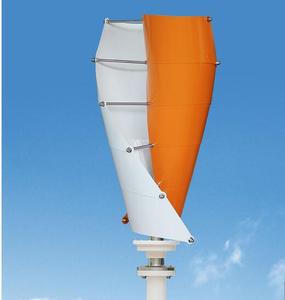
Traditional wind turbines require wind speeds exceeding 3.5 m/s to initiate rotor rotation. Through modern carbon-fiber reinforced composite molding and precision pitch aerodynamics, our latest micro horizontal and vertical axis turbines achieve cut-in wind speeds as low as 1.5 m/s to 2.0 m/s. This technological leap opens up vast geographical territories previously deemed unsuitable for distributed wind energy harvesting.
3. High-Voltage Direct Current (HVDC) Architecture & Modular BESS
B2B wholesale importers are increasingly requesting scalable DC-bus architecture. By operating wind turbine MPPT rectification and solar array regulation on a unified 48V, 192V, or high-voltage 384V DC bus bar, conversion losses associated with multiple AC-DC-AC transitions are reduced by 8% to 12%. This maximized efficiency directly improves ROI for microgrid deployments, EV charging infrastructure, and off-grid industrial plants.