
1kW Rooftop
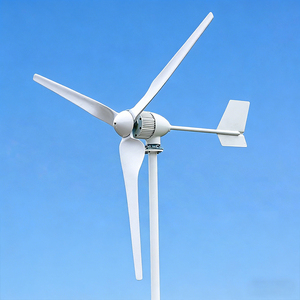
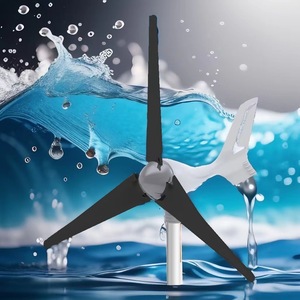
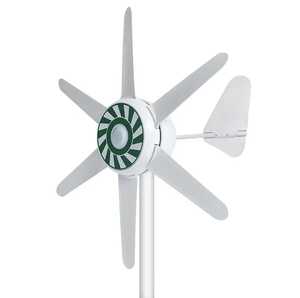
Factory Price Rooftop 1kw Small Wind Turbines for Home Electricity
- Topology: Horizontal Axis
- Cut-in Wind: 2.5 m/s
- Application: Residential & Off-Grid
Engineered for maximum annual energy production (AEP) across agricultural, industrial, microgrid, and residential decentralized power installations.
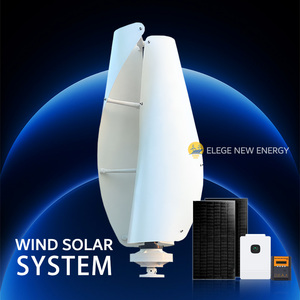
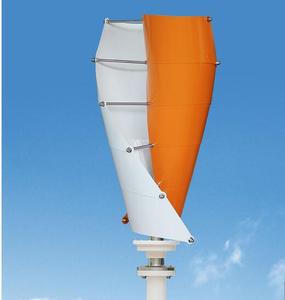
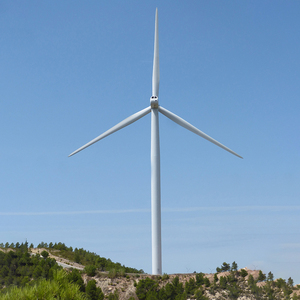
The global transition toward decentralized clean energy infrastructure has elevated distributed wind turbines and hybrid wind-solar-storage microgrids into vital industrial assets. As commercial enterprises, agricultural operations, and remote microgrid developers strive to mitigate volatile grid tariffs and comply with stringent Scope 2 carbon reduction metrics, selecting high-reliability generation technology has become paramount.
China's green energy manufacturing ecosystem represents over 70% of global permanent magnet generator production and advanced wind turbine components. Through rigorous metallurgical advancements, aerodynamic optimization, and scalable production, Chinese OEMs deliver unprecedented cost-to-performance ratios while adhering to strict international standards including IEC 61400, CE, and ISO9001 certifications.
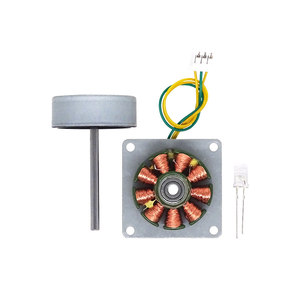
By eliminating mechanical gearboxes, direct-drive Permanent Magnet Generators (PMG) eliminate over 60% of traditional wind turbine failure modes. This yields maintenance-free operating windows spanning multiple years and ensures instant torque conversion at low cut-in wind speeds.
Advanced Maximum Power Point Tracking (MPPT) charge controllers continuously adjust generator loading algorithms against real-time wind shear. This proprietary dynamic braking and tracking logic increases overall Annual Energy Production (AEP) by up to 24.5% compared to fixed-resistance systems.
Built for extreme environments, turbine nacelles undergo electro-phoretic coating, anodized structural aluminum framing, and double-sealed SKF bearing housings. Machines operate seamlessly in temperature envelopes ranging from -40°C arctic cold to +60°C desert heat, withstanding C5-M offshore marine corrosion environments.
Procurement directors and EPC contracts must evaluate technological shifts when investing in decentralized power hardware. Below are the five dominant trends redefining international clean energy procurement:
Standalone solar arrays face severe generation drop-offs during winter cycles and nighttime windows. Modern utility and industrial buyers are standardizing on Hybrid Microgrid Topologies (e.g., EOX WS²+ systems). Combining direct-drive wind power with photovoltaic arrays and lithium battery energy storage systems (BESS) flattens supply curves and delivers up to 96% energy autonomy.
Modern commercial power purchase agreements (PPAs) demand cloud-connected monitoring. Tier-1 Chinese manufacturers now pre-integrate Modbus, CAN-bus, and 4G/5G SCADA modules. Facilities managers monitor RPM, phase voltage, bearing vibration, and thermal output in real-time, executing predictive maintenance before physical failure occurs.
Legacy wind generators relied on high rotational speeds to induce current, creating high acoustic signatures and premature bearing fatigue. Future-proof procurement favors high-pole-count synchronous magnet generators capable of producing full rated voltage at low RPMs, enabling quiet operation near residential or agricultural zones.
Global supply chains require verified low-carbon manufacturing. Export-bound wind turbines manufactured in China now feature embedded environmental product declarations (EPDs). Life-cycle carbon payback periods for 5kW to 90kW direct-drive turbines have been reduced to less than 7 months of normal operation.
| Technical Feature | Direct-Drive Permanent Magnet (Tier-1 China) | Traditional Geared Wind Turbines | Standard Rooftop Solar Alone |
|---|---|---|---|
| Design Service Life | 30 Years | 10 - 15 Years (Gearbox Overhauls) | 20 - 25 Years (Degrades Annually) |
| Low-Wind Cut-In Performance | 2.0 - 2.5 m/s (High Sensitivity) | 3.5 - 4.5 m/s (Mechanical Drag) | N/A (Requires Direct Sunlight) |
| Annual Scheduled Maintenance | 1 Inspection / Year (Visual & Fasteners) | Quarterly Oil & Mechanical Audits | Frequent Panel Washing |
| Diurnal (24-Hour) Generation | Continuous (Day & Night Generation) | Continuous (Day & Night Generation) | Daylight Hours Only (0% Night Yield) |
| Land Footprint Efficiency | Highest Output per m² (Compact Pad) | Moderate Footprint Required | Extensive Surface Area Occupied |
Combining Canadian engineering heritage with China's world-class precision supply chain, we deliver turnkey distributed energy solutions backed by rigorous Quality Assurance protocols.
We provide full custom design options for system integrators, including customized generator windings, voltage matching (12V DC up to 690V AC), custom tower heights (monopole, hydraulic tilt-up, or lattice), and private-label nacelle branding.
Every turbine platform undergoes 100% full-load bench testing, dynamic balancing, dynamic stall stress analysis, and thermal imaging verification before dispatch to ensure out-of-the-box reliability.
From seaworthy crate packaging to export customs clearance, localized grid-interconnection guidance, and long-term spare-parts supply, our service network supports projects across 6 continents.
In-depth technical answers addressing wind speed requirements, maintenance intervals, rooftop safety, and microgrid integration.
As an engineering rule of thumb, sites exhibiting an average annual wind speed of 4.5 m/s to 5.0 m/s (10–11 mph) at hub height yield positive project economics. Our direct-drive turbines feature cut-in speeds as low as 2.0 m/s. We recommend mounting turbines on tall monopoles (typically 18m to 36m) to elevate rotor blades into laminar, high-velocity airflow above tree lines, silos, and structural boundary layers.
Wind energy offers a highly complementary generation profile to solar photovoltaics. Solar peak capacity occurs during midday hours in summer. In contrast, wind resources peak during night hours and through winter months when atmospheric temperature gradients drive wind velocity. Integrating wind with solar minimizes battery storage sizing requirements and ensures continuous, non-intermittent power delivery for heavy continuous loads (e.g., cold storage, dairy milking parlors, continuous industrial lines).
Because direct-drive permanent magnet generators eliminate mechanical gearboxes, there is no oil replacement, no gear teeth inspection, and no high-speed seal maintenance. Scheduled service consists of an annual physical inspection of structural bolt torque settings, blade leading-edge cleanliness, slip ring electrical contacts, and electrical connection tightness. Remote SCADA telemetry continuously monitors bearing temperatures and electrical telemetry to flag anomalies proactively.
Yes, provided aerodynamic and structural engineering guidelines are adhered to. For building-integrated applications, micro vertical-axis turbines (VAWT) or low-vibration small horizontal-axis turbines (1kW–2kW) with specialized elastomeric vibration damping mounts are used. Roof structures must be verified by a structural engineer for dynamic uplift loads and structural resonance frequencies prior to installation.
We work collaboratively with certified regional EPC partners, electrical contractors, and energy developers worldwide. Our engineering team provides detailed foundation civil drawings, electrical schematic single-line diagrams (SLDs), grid protection parameters, and wind yield simulation reports (utilizing Weibull distribution modeling) required by municipal permitting bodies and electrical utilities.
With an engineered service life of 30 years, our direct-drive distributed turbines achieve an extremely low LCOE ranging between $0.04 to $0.08 per kWh, depending on regional wind speeds and localized incentives. In high-tariff commercial sectors or island microgrids operating on expensive diesel fuel generators, payback periods range between 3 to 5 years.
Submit your site coordinates and facility electricity interval load data. Our senior engineering team will provide a complimentary Wind Resource Assessment, LCOE Yield Calculation, and System Configuration proposal.